How is the infrared (IR) region of the electromagnetic spectrum defined by wavelength?
Answer
Wavelengths longer than visible light but shorter than radio waves.
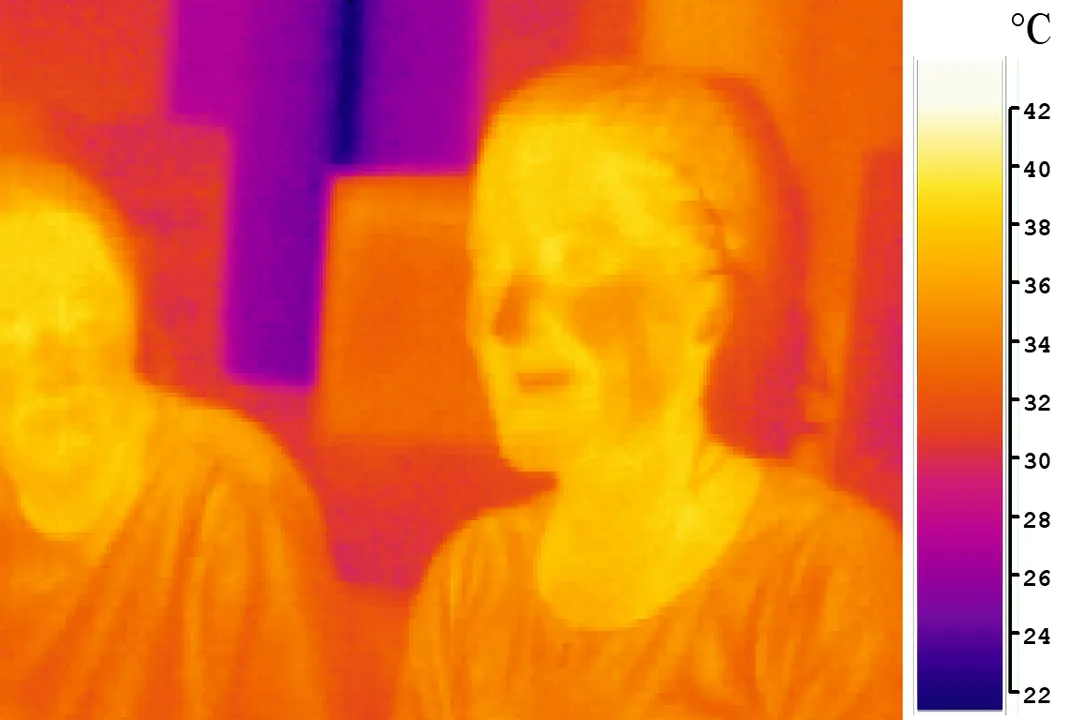
Infrared (IR) radiation occupies a specific segment within the broader electromagnetic spectrum. It is characterized by its placement relative to the visible light spectrum that the human eye can perceive. Specifically, infrared radiation consists of electromagnetic waves possessing wavelengths that are physically longer than those associated with visible light. Conversely, infrared waves are shorter in wavelength than the waves categorized as radio waves. This specific spectral positioning means that objects emit IR energy due to their temperature, a phenomenon Herschel first measured.
Related Questions
What did Sir William Herschel measure just beyond the visible red band in 1800?How does a thermopile convert infrared radiation into a signal?What physical change does Samuel Langley's bolometer measure upon absorbing thermal radiation?How is the infrared (IR) region of the electromagnetic spectrum defined by wavelength?What is the fundamental operational difference between thermal detectors and quantum detectors?What mechanism describes the operation of Photovoltaic Detectors?What do Passive Infrared (PIR) sensors, often pyroelectric, primarily look for in a moving target?Which existing technology did Sir William Herschel use as his primary detector for measuring radiation effects?In quantum detectors, what specific energy transition occurs when an incoming infrared photon interacts with the material?What specific contribution did Sir William Herschel make regarding the infrared sensor lineage?