How old was the person who invented earmuffs?
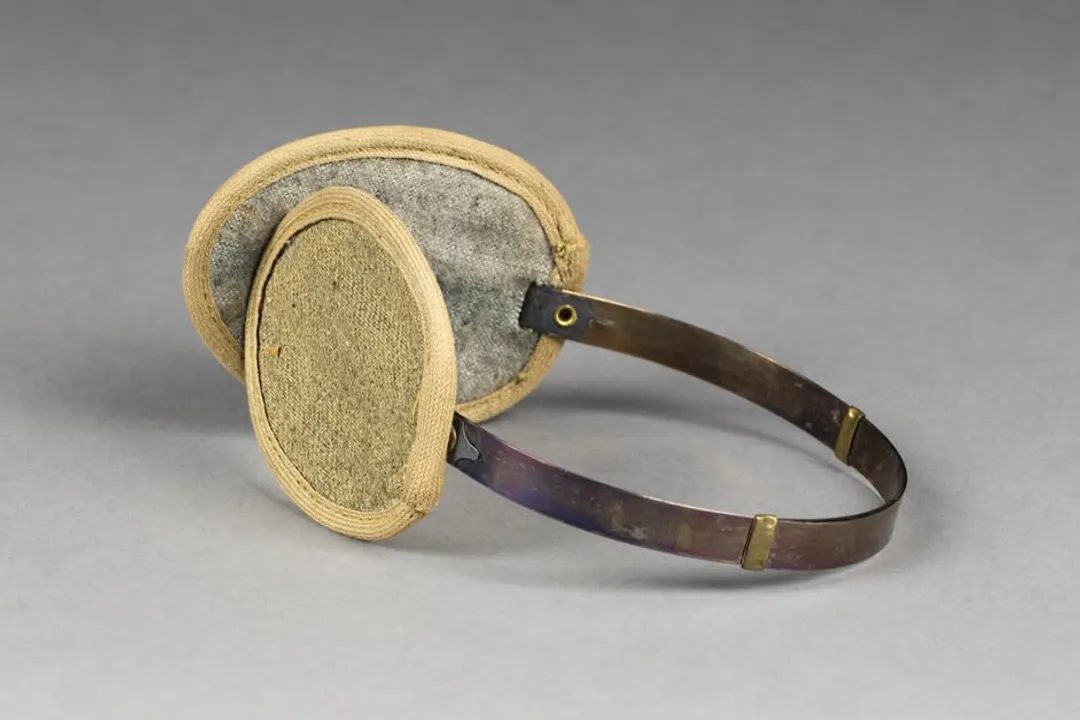
The individual credited with creating the earmuff was remarkably young when the idea struck him: just 15 years old. [4][5][6] This significant contribution to cold-weather comfort belongs to a Maine native named Chester Greenwood. [2][4][5][7][8][9][10] The story of the earmuff isn't one of a corporate lab or a seasoned engineer, but of a teenager grappling with the simple, biting cold of a New England winter. [1][4]
# Boy's Origin
Chester Greenwood was born in 1858. [3] Growing up in Farmington, Maine, provided him with firsthand experience of the harshness that the winter season could bring to the northern climate. [3] This direct experience with the elements undoubtedly informed his later ingenuity. While the specific context of his early life suggests a rugged upbringing, the historical record points to a bright, perhaps bored, young mind looking for solutions to everyday annoyances. [1][3] The foundational knowledge that allowed him to conceive of the design likely came from observing traditional methods of staying warm, which often proved cumbersome or ineffective for active pursuits. [4]
# Cold Weather
The specific moment of invention is famously tied to a particularly frigid day when young Chester was outside. [4][8] Accounts often place the genesis of the earmuffs around the year 1873. [1][4][5][8][10] As the story goes, he found that wrapping a scarf or hat string around his head was insufficient to keep his ears truly warm while out in the cold air. [4][6] He needed something more substantial than a simple piece of fabric could offer, yet less cumbersome than pulling a heavy coat hood tightly over his head, which might obstruct hearing or vision needed for whatever activity he was engaged in. [1][7]
The need was basic: protection for the ears from the freezing temperatures common in Maine during winter months. [6]

# Simple Design
The solution Chester devised was elegant in its simplicity, proving that groundbreaking inventions don't always require complex mechanics. [1][4] He essentially took two small, circular pads, likely made of felt or a similar soft, insulating material, and attached them to a thin, flexible piece of wire. [1][4] This wire acted as a headband, allowing the felt pads to curve perfectly over the ears and hold them snugly in place. [1][7] This design was revolutionary because it provided focused thermal protection for the ears while leaving the rest of the head and the top of the ear unobstructed, allowing for better peripheral hearing and less overall bulk than traditional headwear. [1] An interesting observation one can make when looking at this early design is how it perfectly occupies a niche: it is better than pulling a hat down too far, and far superior to holding one's cold hands up over one's ears, which is tiring and impractical for any sustained outdoor activity, be it skating, walking, or working. [4][6] The invention essentially provided localized, dedicated insulation where it was most needed.
# Patent Filing
Recognizing that he had stumbled upon something truly useful, Chester Greenwood didn't just keep the idea to himself; he sought official protection for his design. [5][9] By the time he was securing his patent, he was still a young man, perhaps slightly older than his initial 15-year-old inspiration, as the patent process takes time. [5][9] The patent granted him the official recognition for his invention of the ear muff. [1][5] The date associated with this formal acknowledgment is often cited as 1877, [5] though the original concept dates back to 1873. [1][4][5][8][10] Having a patent, like a registration number for a product, transforms an idea into a recognized piece of intellectual property, allowing the inventor to control its manufacture and sale. [9] While the sources don't detail the manufacturing scale, the fact that the item is still universally recognized today suggests that the initial patent was successful enough to permit commercial viability, a major hurdle for many teenage inventors. [9]

# Lasting Recognition
The success of the earmuff is cemented not just by its continued use, but by the ongoing cultural memory surrounding its creator. [2][10] In a testament to the lasting impact of his creation, the state of Maine celebrates the inventor annually. [3][9][10] This celebration is known as Chester Greenwood Day, [3][9][10] held in his hometown of Farmington. [3] This event is a significant point of local pride, often marked by parades and festivities where participants frequently wear earmuffs in his honor. [3][10]
Furthermore, Chester Greenwood has been recognized posthumously for his contribution to practical invention. [5] He was inducted into the National Inventors Hall of Fame, [5] an honor reserved for those whose creations have profoundly impacted society. [2] Being included in such a prestigious group underscores that the invention, while simple, addressed a widespread human need effectively and enduringly. [5] This honor places him alongside inventors who created much more mechanically complex devices, showing that true innovation is about solving problems elegantly, regardless of the apparatus's sophistication. [2]
Another layer of institutional recognition comes from the fact that the Maine State Museum acknowledges his contribution. [3] This speaks to the item's historical importance within the state's narrative. For a young person to generate an idea that secures both local civic celebration and national historical acknowledgment is a rare feat. [3][5]
# Innovation Insight
It is fascinating to consider the economic context surrounding such a simple, effective invention coming from a youth in the late 19th century. While large corporations were beginning to form around industrial machinery and new technologies, a product like the earmuff filled a gap in consumer goods that was dictated purely by climate and daily outdoor life. [1][4] Many inventors of that era focused on things like improvements to farm equipment or new office machinery. Greenwood’s success highlights that even in an era of rapid industrialization, there was ample room for problem-focused, consumer-level invention that required minimal capital investment to prototype—chiefly wire and fabric—but significant foresight regarding personal comfort. [4] The fact that he was able to file a patent at such a young age suggests a certain level of business acumen or parental support that helped bridge the gap between having an idea and formalizing ownership of that idea. [9]

# Earmuff Evolution
While the original design was a wire frame with felt pads, [1][4] the modern earmuff has certainly undergone material changes. Contemporary versions often feature plastic headbands, adjustable sizing mechanisms, and padding made from foam or synthetic furs chosen for superior warmth retention and durability against moisture. [1] However, the core functionality—two opposing ear cups connected by an overhead band—remains precisely the same as the one Chester designed as a boy in Farmington. [7] This illustrates the enduring strength of his initial conceptual framework. Whether worn by a construction worker in Chicago, a skier in the Alps, or a child waiting for a school bus today, the fundamental engineering problem was solved by a 15-year-old over a century ago. [4][6]
The endurance of the earmuff design, compared to other short-lived inventions of the 1870s, is a compelling case study in utility over complexity. [1][9] Many patents from that decade addressed niche mechanical issues that became obsolete as technology progressed, such as improvements to specific types of looms or steam engines. The earmuff, conversely, solved a fundamental, unchanging human problem—ears getting cold—using a mechanism so clear that it resisted meaningful alteration for nearly 150 years. [1][5] It is a testament to the fact that the most successful inventions are often the ones that simplify an already existing, universal human discomfort.
#Videos
The history of how earmuffs were invented by a Maine teenager
Related Questions
#Citations
Chester Greenwood, Maine Inventor: Home - Subject Guides
Chester Greenwood - Lemelson-MIT Program
Maine State Museum
The history of how earmuffs were invented by a Maine teenager
Chester Greenwood, Age 15 (Continued)
The history of how a Maine teenager invented earmuffs
Ear Muff Inventor Celebrated
Who Invented Earmuffs?, First Grade Reading Passage
This Day in Patent History - Chester Greenwood Day" is ...
December 21 is Chester Greenwood Day - he invented ...