Who invented the ultrasonic sensor?
Pinpointing a single individual who “invented” the ultrasonic sensor is challenging because the device as we know it today—a common component in everything from parking aids to industrial robotics—is the result of decades of parallel development across physics, military technology, and medicine. The core concept relies on generating high-frequency sound waves, generally defined as those above , and then analyzing the returning echoes to determine distance or presence. [2] The true genesis lies in understanding and generating these inaudible frequencies.
# Early Physics
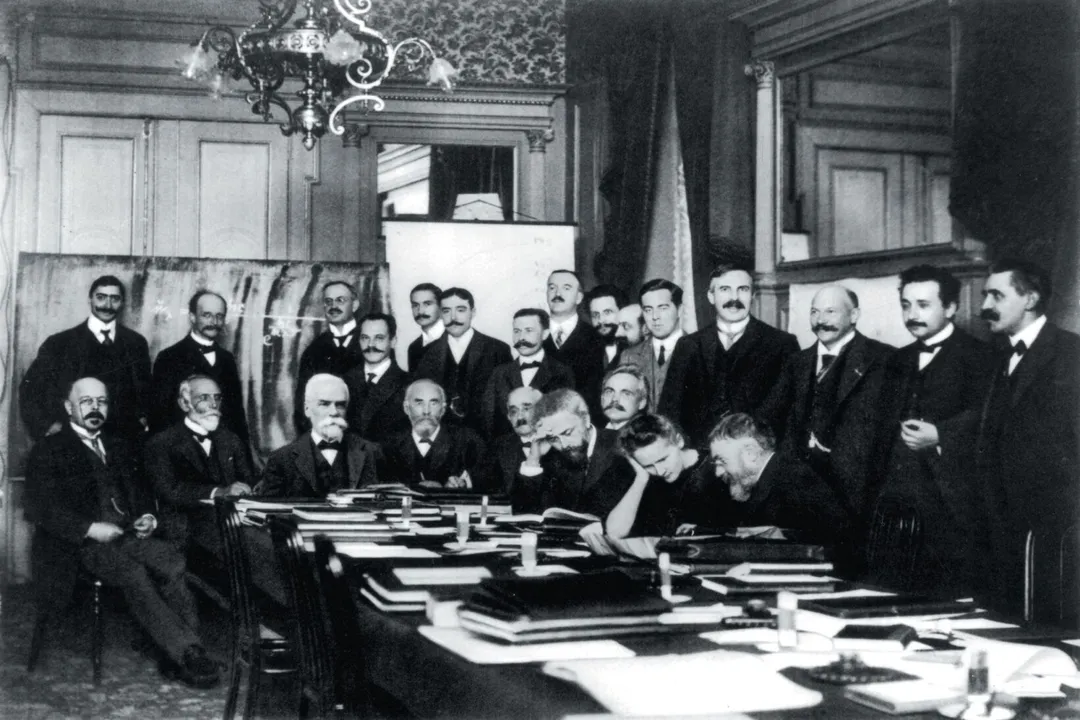
The theoretical foundation for ultrasonics predates the practical hardware. While the science of sound itself is ancient, the ability to generate and detect frequencies well beyond human hearing began to solidify in the late 19th and early 20th centuries. [1] A significant breakthrough involved understanding piezoelectricity—the phenomenon where certain materials generate an electric charge when subjected to mechanical stress, and conversely, vibrate when an electric field is applied. [3] This principle became the heart of virtually every successful ultrasonic transducer, the component responsible for turning electrical energy into sound waves and back again. [3] Although the piezoelectric effect itself was discovered by the Curie brothers in $1880$, it took time for engineers to adapt this principle to create reliable, high-frequency emitters and receivers necessary for practical applications. [1][3]
# Wartime Necessity
The real push toward developing practical ultrasonic detection devices came from military needs, particularly during World War I. Before the war, attempts to use high-frequency sound for detection were known, but they lacked the power and reliable frequency control needed for effective range finding. [6] The search for a way to detect enemy submarines underwater became the primary driver for applied ultrasonics, directly leading to the ancestor of the modern sensor: SONAR (Sound Navigation and Ranging). [5][6]
The most widely recognized pioneer in this applied field is the French physicist Paul Langevin. [6] In collaboration with others, Langevin was instrumental in developing the first practical apparatus that used high-frequency sound waves for detection, specifically focusing on reflecting sound off submerged objects. [6][5] His work, carried out around $1917$, involved using thin quartz plates, which exhibit piezoelectric properties, mounted between metal plates to create a powerful ultrasonic source. [6] This was a massive leap from earlier, less efficient methods. Langevin’s early apparatus was not a small, packaged sensor, but rather a complex system designed for a specific, high-stakes task: detecting U-boats. [6] While this invention was crucial for underwater detection, it was not yet the small, dedicated ranging sensor used in consumer or industrial settings today. The focus was on transmission power and echo reception over long distances, not precise, short-range measurement. [5]
# Medical Beginnings

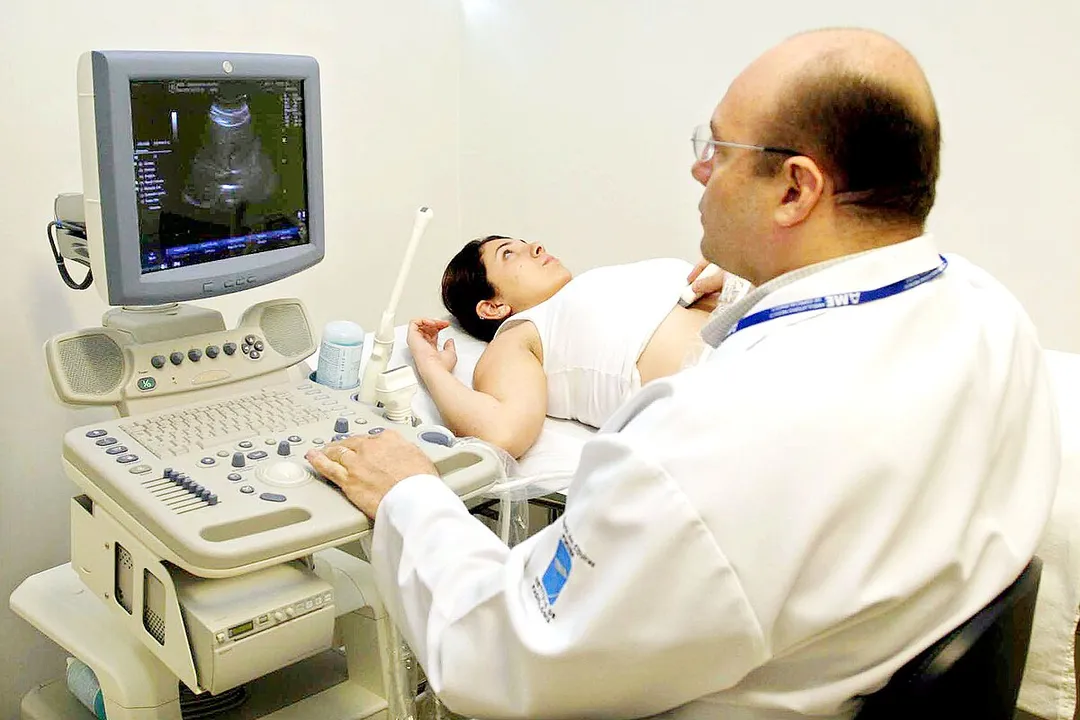
As the technology matured, researchers realized that these powerful, high-frequency sound waves interacted with biological tissues in useful ways. The introduction of ultrasonics into the medical field is often traced back to the $1940$s, although theoretical work and initial non-imaging experiments occurred earlier. [9] Early medical uses focused on exploring the material properties of tissue, such as distinguishing between healthy and diseased states, or even locating foreign objects within the body, drawing heavily on the established principles of acoustic reflection. [9][1]
This medical progression further refined the transducer—the physical component that converts electrical signals into mechanical vibrations (sound) and back again. [1] For medical imaging, the requirements shifted significantly from those of submarine detection. Instead of sheer power, precision became paramount. [9] This necessitated smaller, highly focused transducers capable of generating frequencies in the megahertz range ( to over ) to achieve better resolution through soft tissue. [2][9] The necessity of creating clear images pushed the engineering envelope for what a sound-based sensor could achieve in terms of accuracy and detail.
# Industrial Sensor Evolution
The ultrasonic sensor as commonly understood today—the small, self-contained module used for non-contact distance measurement (like parking sensors or level detection)—is a direct descendant of these earlier military and medical developments, but tailored for proximity and ranging. [4] The fundamental operating principle remains the same: time-of-flight measurement. [4][8] The sensor emits a burst of sound (a 'ping') at a frequency usually between and . [4] It then measures the time it takes for the echo to return after striking a target object. [8] Since the speed of sound in air is relatively constant (though variable based on temperature and humidity), the distance can be calculated with reasonable accuracy. [4]
What distinguishes the modern industrial sensor package is its integration. It packages the piezoelectric element, the necessary driving electronics to generate the pulse, and the receiver circuitry to interpret the faint returning echo, all into a single, hardened enclosure. [8] While Langevin created the concept of using quartz for powerful acoustic transmission, and medical professionals refined the precision of the receiver, the industrial sensor inventor is the engineer who successfully miniaturized, cost-reduced, and packaged that technology for common sensing tasks. [4] There isn't one patent for the entire module, but rather hundreds of incremental inventions improving the casing, the electrical tuning, and the packaging techniques.
To better appreciate the specialization required, one might compare the typical specifications required for common applications:
| Application Type | Typical Frequency Range | Primary Design Goal |
|---|---|---|
| Industrial Ranging Sensor | to | Low cost, rugged enclosure, medium range ( to ) [4] |
| Medical Imaging | to | High resolution, complex beamforming arrays |
| Deep Sub-Bottom Profiling (Sonar) | to | Maximum penetration and range |
This differentiation shows that while the underlying physics ties them together, the "inventor" of the simple ultrasonic sensor is distinct from the inventor of the medical imaging machine or the inventor of WWI sonar.
# The Physics of Perception
Understanding how these devices work helps clarify the engineering challenge faced by early developers. The heart of any ultrasonic sensor is its ability to send and receive energy efficiently. The transducer uses the piezoelectric material to resonate at a precise frequency. [3] A successful measurement requires a strong outgoing pulse that is sharp enough to generate a measurable echo without exciting the receiver too much, and a receiver sensitive enough to detect the very weak returning signal after it has attenuated over distance. [8]
A critical factor that any early developer would have wrestled with, and which modern users must still account for, is the environment itself. Unlike light-based sensors, where the speed of propagation is fixed and extremely fast, sound speed is slow and highly dependent on the medium it travels through. [4] The speed of sound in air, for example, changes noticeably with temperature. [4] A change in air temperature can alter the effective speed of sound by about . For a sensor requiring millimeter precision, this small variation accumulates rapidly over distance and time. For instance, at , sound travels at approximately . If the environment cools to , the speed drops to about . This means that for a target away, the round trip time changes by roughly $1.1$ microseconds. While modern integrated circuits can correct for this with temperature compensation, this inherent physical dependency posed a significant hurdle for early, purely mechanical or analog systems trying to establish accurate ranging without digital processing. [4]
# Piezoelectricity's Role
The mastery of piezoelectric materials is inseparable from the invention of practical ultrasonics. While Langevin’s use of quartz was foundational, later research focused on synthetic ceramics that offered better coupling—meaning a more efficient conversion between electrical and mechanical energy—and were easier and cheaper to manufacture into specific shapes required for transducers. [3] The development of materials like PZT (lead zirconate titanate) allowed for the creation of much more durable, cost-effective, and specialized sonic emitters and receivers than natural quartz ever could. [3] This shift from natural crystal experimentation to engineered ceramic production represents a key evolution from pure physics demonstration to mass-producible sensing technology.
If we look at the modern landscape, the inventor of the sensor as a commercial product is more likely to be found among the engineers at companies that specialized in sensing technology post-$1960$s, building upon the foundational work of pioneers like Langevin and the medical researchers who perfected acoustic imaging techniques. The transition occurred when the technology moved out of the lab and into the factory floor, requiring units that could withstand vibration, dust, and temperature fluctuations while maintaining calibration across a fixed frequency band suitable for air-based detection, which is a very different challenge than piercing water or biological tissue. [5][7] The sensor, therefore, stands as an achievement in applied systems integration more than a single, dramatic invention moment.
Related Questions
#Citations
History of ultrasonics, a summary
Ultrasound
History of the Development of Ultrasound Technology
Ultrasonic Sensors | muxindia - WordPress.com
History of Ultrasonics
Paul Langevin, U-boats, and ultrasonics - Physics Today
The Father of Modern Ultrasonic Technology
ULTRASONIC SENSOR HISTORY OF...
History of ultrasound in medicine
Who Invented Ultrasound?