Who invented the infrared sensor?
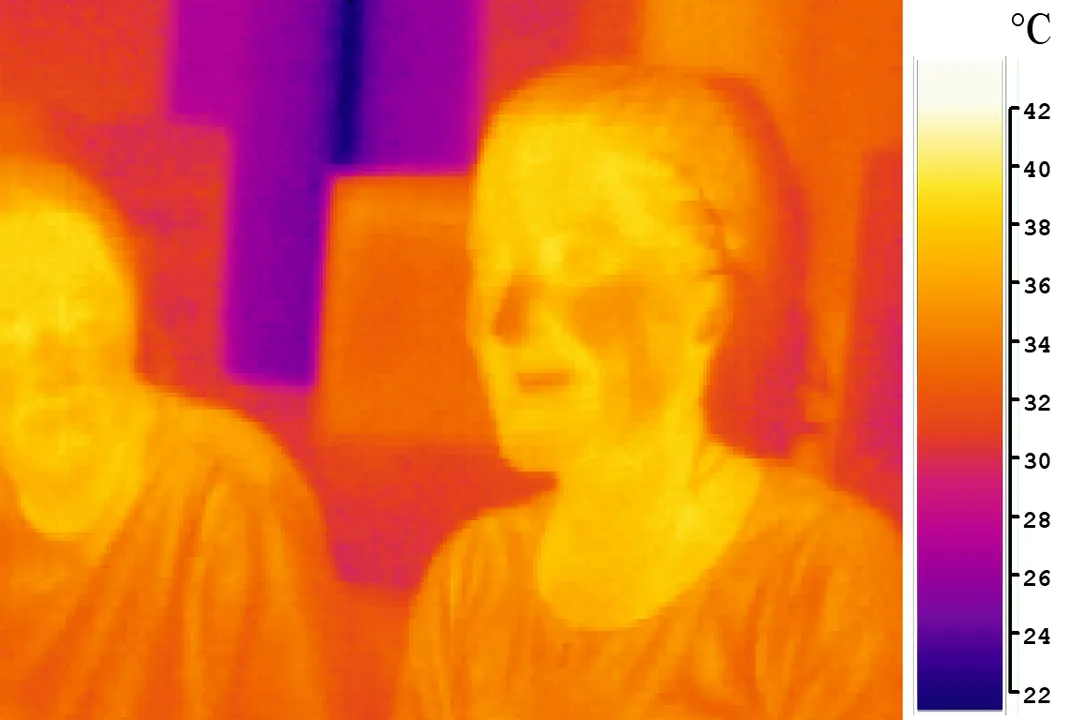
The true origin of the infrared sensor is less about a single 'aha!' moment from one person and more about a gradual, multi-generational scientific pursuit that began with the discovery of the radiation itself. That foundational moment belongs to Sir William Herschel, an astronomer whose curiosity about the heating effects of sunlight led him, in 1800, to reveal a spectrum of light invisible to the human eye. [4][5][7] Herschel was investigating which colors of the visible spectrum—the rainbow produced by passing sunlight through a prism—carried the most heat. [4][7]
# Herschel's Discovery
Herschel famously used a simple setup: a prism to split sunlight into its constituent colors and three thermometers to measure the temperature at different points along that spectrum. [4][7] He confirmed that the red end of the visible light was the hottest, as expected. However, when he placed a thermometer just beyond the visible red band, where no light could be seen, the temperature reading continued to rise, registering even higher than in the red light itself. [4][5][7] This observation was revolutionary. He had detected invisible rays that carried heat, which he logically termed calorific rays. [4] This discovery established that light was not just what we see; it was part of a much broader electromagnetic phenomenon. [1][4]
It is crucial to distinguish between the discovery of infrared radiation and the invention of the infrared sensor. Herschel invented the method to prove its existence, using existing technology—the thermometer—as his primary detector. He didn't invent a modern electronic sensor, but he pinpointed the specific electromagnetic region—the infrared—that future sensors would be designed to capture. [2] This region is defined as having wavelengths longer than visible light but shorter than radio waves. [1]
# The Invisible Spectrum
To appreciate the subsequent invention of the sensor, one must understand the nature of what Herschel found. Infrared (IR) radiation is a form of electromagnetic energy, just like visible light, X-rays, or radio waves. [1] All objects with a temperature above absolute zero emit some level of thermal radiation, much of which falls into the infrared part of the spectrum. [1][10] This means that the very air we breathe, the ground beneath us, and our own bodies are constantly emitting infrared energy—the energy Herschel first measured. [10]
The challenge for subsequent inventors was to create a device sensitive enough to convert this subtle, invisible energy into a quantifiable, usable signal, moving far beyond the relatively crude thermal measurement offered by a standard glass bulb thermometer. The shift required was from detecting bulk heat accumulation to measuring minute energy flux and converting it into an electrical output. [2]
# Early Detection Methods
The immediate scientific follow-up to Herschel's work involved refining the measurement tools. The thermometer was the first "sensor," but its limitations—slowness, poor resolution, and need for direct contact with the radiation beam—quickly became apparent. [4] Scientists needed something that could measure smaller variations in intensity and perhaps record the data more easily.
One significant early step was the development of the thermopile. A thermopile is essentially an array of thermocouples connected electrically in series. [9] When infrared radiation strikes the junctions of the dissimilar metals in the thermopile, it generates a small voltage proportional to the intensity of the radiation absorbed. [9] This represented a major conceptual leap: the conversion of thermal energy (heat) directly into an electrical potential, the very essence of an electrical sensor.
Another key advancement in early thermal detection was the bolometer. Invented later in the nineteenth century by Samuel Langley, the bolometer measures thermal radiation by observing the change in electrical resistance of a small, blackened foil or wire when it absorbs the energy. [2] While Herschel proved IR existed using temperature change, the bolometer measured resistance change due to that temperature increase, offering better sensitivity for precise scientific work, especially in astronomy. [2][4] These devices, the thermopile and the bolometer, were the direct technological descendants of Herschel’s original thermometer experiment, serving as the proto-sensors of the infrared world. [2]
If we think of invention as the creation of a device that meets a specific functional requirement, then the thermopile and bolometer are the earliest infrared detectors. They are sensitive to the thermal effects of IR radiation, often called thermal detectors. [2]
# The Shift to Quantum Sensing
The history of infrared detection shows a distinct divergence around the mid-20th century, moving from devices relying on bulk heating effects (thermal detectors) to devices relying on the quantum interaction of photons with matter (quantum detectors). [2] This transition is what truly ushered in the modern era of high-speed, high-sensitivity infrared sensors.
Quantum detectors operate on the principle that an incoming infrared photon can impart enough energy to an electron in a material to cause it to jump from a bound state (valence band) to a conducting state (conduction band). [2] This process generates a measurable electrical signal—either a current or a change in resistance—much faster and often more sensitively than waiting for the entire detector element to heat up.
The primary types of quantum infrared sensors include:
- Photoconductive Detectors: These rely on the change in electrical conductivity of a semiconductor material when IR photons strike it, similar to the principle behind the bolometer but driven by photon interaction rather than bulk heating. [2]
- Photovoltaic Detectors: These create a measurable voltage when IR photons strike a semiconductor junction, essentially acting as a light-powered battery tuned to infrared wavelengths. [2]
The development of these quantum-effect sensors was not instantaneous; it depended heavily on advances in semiconductor physics and materials science, fields that blossomed significantly following World War II. While no single patent document definitively names the inventor of the first electronic IR sensor, the creation of effective photovoltaic or photoconductive arrays represents the true technological leap that enabled devices like modern night vision or security motion detectors. [6][10] The historical trajectory suggests that early military or astronomical demands for faster, more sensitive detection capabilities were the primary drivers for refining these quantum devices. [2]
An interesting way to view this historical progression is through the lens of required signal processing. Herschel's method required manual measurement of a mercury level or alcohol expansion—an analog, low-bandwidth process. The transition to a thermopile or bolometer allowed for electrical recording, meaning the signal could be plotted over time, which is essential for understanding rapidly changing phenomena. However, the true breakthrough for mass-market applications like home security (motion detection) came when the response time was fast enough to register a moving heat signature instantaneously, which demanded the speed of quantum detectors, allowing systems to monitor changes in real-time rather than relying on slow thermal equilibrium.
# IR in Imaging and Practical Applications
Concurrent with the evolution of pure detectors, the concept of creating an image using infrared light took shape. Early attempts at infrared photography, which captures the reflected or emitted IR energy onto a medium, required special materials sensitive to these longer wavelengths. [8] Early photographic plates had limited sensitivity, often requiring long exposure times, which meant capturing only the steady, strong IR reflection or emission from an object. [8]
The need for practical, non-astronomical applications spurred further development. The knowledge gained from astronomy—where IR helps us look through dust clouds or determine the temperature of distant objects—was translated into terrestrial uses. [4]
For instance, modern security systems rely on Passive Infrared (PIR) sensors, which are a specific type of quantum detector, usually pyroelectric. [6] A pyroelectric material generates a temporary electrical charge when its temperature changes. [2] PIR sensors often look for the change in the IR signature caused by a person moving across their field of view, rather than measuring the absolute temperature of the person. [6] This distinction is key: the sensor isn't measuring what the temperature is, but that the temperature has changed across its sensor elements. [6]
# The Unnamed Engineer
When discussing who invented the infrared sensor, we must acknowledge that the sources point to a cumulative effort rather than a singular inventor for the electronic device. Sir William Herschel provided the target in 1800. [4][5][7] Scientists like Langley advanced the thermal measurement capabilities with the bolometer. [2] Later, unknown material scientists and electrical engineers, driven by military and space programs, developed the semiconductor materials necessary for the fast, reliable quantum sensors used today. [2]
Therefore, the lineage of invention might be summarized as follows:
| Era | Key Figure / Technology | Contribution to Sensing | Primary Mechanism |
|---|---|---|---|
| 1800 | Sir William Herschel / Thermometer | Discovery of the radiation region | Thermal Absorption |
| 19th Century | Developers of Thermopiles/Bolometers | Conversion of heat to measurable electrical signal | Thermal Resistance/Voltage |
| Mid-20th Century | Semiconductor Physicists | Development of quantum-based detectors | Photon Absorption (Quantum Effect) |
*It is worth noting that the transition from thermal to quantum detection also allowed for a crucial feature in modern sensor arrays: focal plane arrays (FPAs). Unlike a single thermopile that only gives one temperature reading for the whole area it sees, an FPA uses thousands of tiny quantum detectors, each acting as a pixel. This allows a single device to build up a complete thermal image instantaneously. This innovation, while not tied to a single name in these sources, represents the most significant evolution from Herschel's single-point measurement to the sophisticated thermal cameras available today, effectively marrying the detection method with imaging technology.*
The invention of the sensor is inherently tied to the need for better measurement. Herschel wanted to map the Sun's energy; early astronomers wanted to map the faint heat signatures of planets or distant stars, requiring higher sensitivity than a simple thermometer could offer. [4][7] Later, military applications demanded devices that could operate at night or through smoke, which required sensors capable of very fast response times to differentiate between background noise and moving targets. [6]
In summary, while Sir William Herschel is the undisputed discoverer of the physical phenomenon that necessitated the infrared sensor, the actual invention of the infrared sensor—the device that converts IR radiation into a reliable electrical signal—is an evolutionary achievement, standing on the shoulders of many unnamed innovators across nearly two centuries of materials science, physics, and engineering refinement. [2]
Related Questions
#Citations
Infrared
History of infrared detectors
History of Infrared Detectors and Systems
Herschel and the Puzzle of Infrared
Discovery of Infrared Radiation
The History of Infrared Thermography
Sir Frederick William Herschel Discovery of Infrared Light
The History of Infrared Photography
How Infrared Light was Discovered
An Introduction to IR Sensor Systems