Who invented multi-room audio?
The desire to hear music or audio content in more than one room simultaneously is not a recent phenomenon, yet pinning down a single inventor for multi-room audio proves much like trying to find the singular inventor of the wheel; it’s an evolution built on decades of technological maturation. The concept truly blossomed when audio systems moved from being centralized behemoths to distributed, user-friendly networks. To understand who brought this convenience to the masses, we must trace the lineage from early high-fidelity concepts through to the age of digital networking.[5]
# Stereo Context
While the direct lineage to multi-room audio is complicated, the groundwork for high-quality distributed sound was significantly advanced by individuals focused on immersive listening. A key figure in improving audio fidelity was Alan Blumlein. Working at EMI, Blumlein is credited with inventing stereo sound reproduction. His groundbreaking work involved developing the concept of two independent audio channels to create a more realistic, spatial sound field, which he patented in 1931. [1] This dedication to realistic sound staging, involving cross-fed signals and the principles of stereophony, set a high bar for what consumers expected from their home audio systems, even if his invention was initially focused on creating depth within a single listening area, not breadth across a house. [1][7]
This move from monaural (single-channel) sound to binaural, and subsequently stereo, was a crucial step. Once people experienced high-fidelity, immersive sound, the next logical step for affluent listeners was to extend that experience beyond the dedicated listening room. The challenge was not just getting the sound out of the stereo receiver, but managing multiple speaker zones with adequate power and control without creating a tangled mess of wires or introducing noise and crosstalk between zones.[5]
# Early Zone Control
Before digital networking made this distribution simple, early multi-room setups were often the domain of custom installers catering to high-end clients or commercial spaces. These initial systems relied heavily on complex, analog wiring and dedicated switching matrices. [5] Think of it less like an app on a phone and more like a sophisticated, hard-wired telephone switchboard for audio. A central hub, often a large receiver or preamplifier, would distribute amplified signals to different zones throughout the home.[5]
These setups required significant upfront planning, often done during the initial construction or major renovation of a home. The components themselves were typically bulky, proprietary, and expensive. For instance, high-end audio manufacturers began offering multi-zone controllers and amplifiers that could route different audio sources—perhaps a turntable in the living room and a radio in the kitchen—to separate areas simultaneously. The main limitation here was scalability and flexibility; moving a speaker or adding a new zone required ripping into walls to pull new speaker wire, making expansion difficult for the average homeowner. [5]
A related area of advancement came from companies like Acoustic Research (AR), known for their contributions to speaker design and high-fidelity components. While AR’s primary focus was on driver technology and acoustic principles, the general progression in home audio quality during the mid-to-late 20th century created the demand for whole-house systems that could carry that quality signal reliably. [6]

# The Digital Transition
The true inflection point for making multi-room audio accessible beyond the custom installation niche arrived with the digital revolution and the maturation of home networking technologies. Early digital solutions began to appear, often involving proprietary digital bus systems, but the real game-changer was the convergence of audio streaming and the ubiquity of the Internet Protocol (IP) network in homes.[5]
This shift meant that audio signals could be digitized, compressed (or uncompressed, depending on the desired quality), and sent over standard Ethernet or Wi-Fi connections rather than dedicated speaker wire runs. This separation of content delivery from physical wiring opened up massive possibilities for user control and system expansion. [5]
# Networked Audio Pioneers
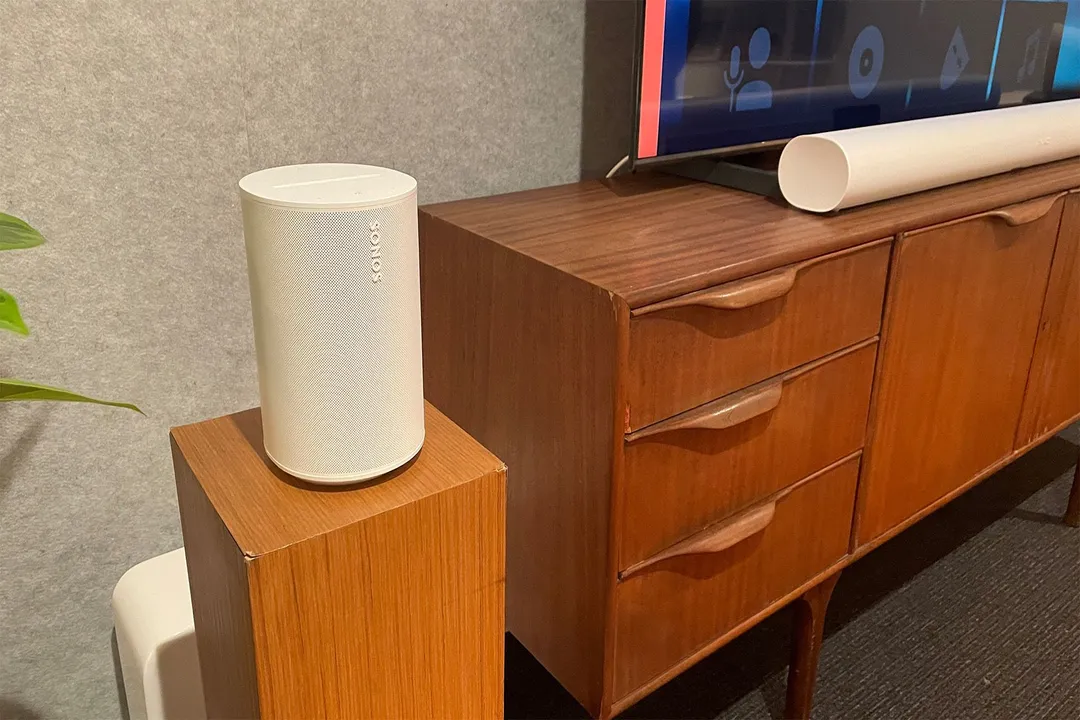
While historical records might not name a single individual who conceived of "distributing music around a house," certain companies are recognized for successfully productizing the modern, networked version of multi-room audio, making it mainstream. Sonos, for example, is frequently cited as transforming the market starting in the early 2000s. [3]
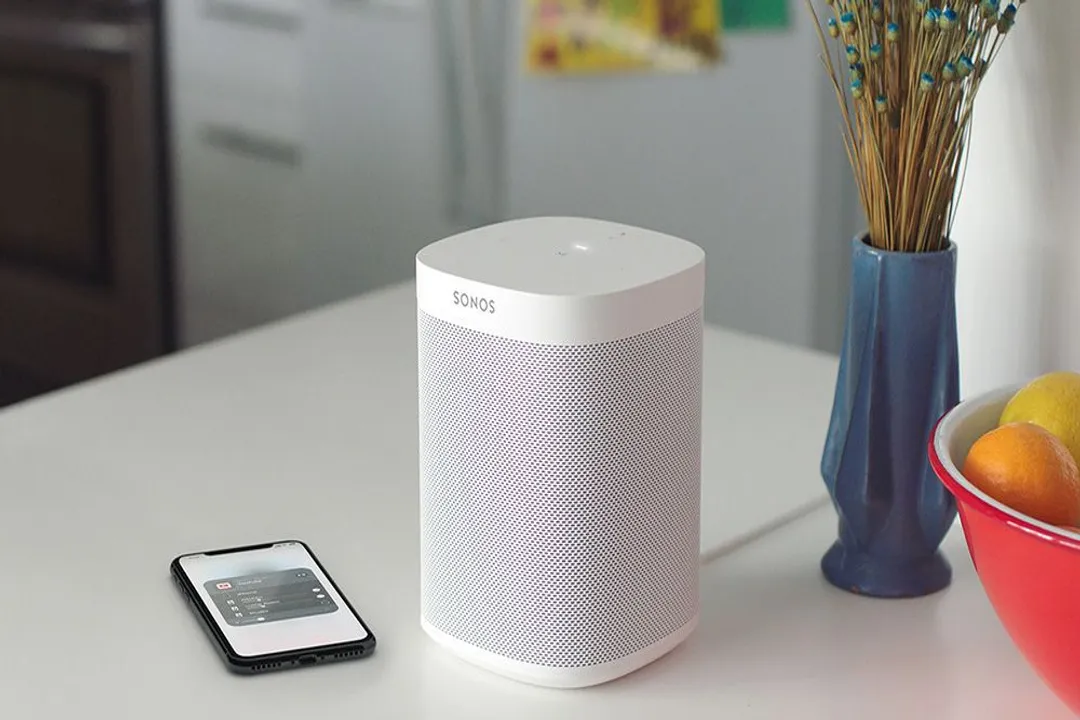
Sonos introduced a system where multiple wireless speakers could communicate with a central hub or directly with each other over a standard Wi-Fi network. The innovation wasn't just in the wireless connection itself, but in the software layer that allowed users to easily group, ungroup, and control playback across all zones from a single interface, often a dedicated controller or a smartphone app. [3] This solved the usability problem that plagued earlier, complex wired systems. They made grouping the speakers in the "kitchen" and "dining room" as simple as tapping a button, allowing for perfectly synchronized playback across the house—a feature that earlier analog systems struggled to achieve without introducing audible delays or phase issues between zones. [3]
When looking at the evolution, it is important to realize that the invention of multi-room audio is really the invention of user-friendly, wireless, synchronized, networked audio distribution. The older wired systems were proof of concept; the IP-based systems were the realization of the consumer dream.
# Infrastructural Requirements for Adoption
A subtle but important aspect of multi-room audio's history is that its true widespread adoption was gated not just by electronics, but by home infrastructure. Before the late 1990s and early 2000s, most homes had basic phone jacks and coax cable runs, but reliable, high-bandwidth Wi-Fi was not a given throughout an entire structure. [5]
The mass appeal of wireless multi-room audio systems inherently required a corresponding maturation in general home networking. A system that promises synchronized music in the backyard, the upstairs office, and the basement workshop is only as good as the underlying wireless signal. If the network drops a packet, the music stutters. This interdependence means that the "invention" of the usable system is partially tied to the broader industry's move toward creating better whole-home mesh networks and higher-speed internet access, allowing the audio system to simply plug into this existing infrastructure rather than needing its own dedicated wiring plant. [5]
It is fascinating to consider that the original, hard-wired systems, while inconvenient, likely offered more guaranteed, low-latency synchronization than the very first generation of consumer Wi-Fi multi-room systems. Those early Wi-Fi adopters were essentially betting on their router's quality to maintain perfect phase alignment across multiple speakers, a compromise they were willing to make for the convenience of cutting the wires. This tradeoff between convenience (wireless) and absolute technical reliability (wired) characterizes much of the early digital adoption curve.
# Key Components Defined
To better categorize the advancements, we can separate the concept into functional layers that needed independent invention or maturation:
| Component/Function | Primary Historical Driver | Modern Manifestation |
|---|---|---|
| Audio Quality | Stereo invention (Blumlein) [1] | High-resolution streaming codecs |
| Source Distribution | Analog switching/amplification | IP-based streaming protocols |
| Zone Control | Physical switches/knobs | Mobile applications |
| Inter-Speaker Sync | Analog cable length matching | Network synchronization algorithms |
# Control Interface Evolution
Another necessary invention for making multi-room audio practical was the control interface. Early systems relied on bulky, in-wall volume knobs or dedicated remote controls that might only manage a single zone or source. The ability to manage all sources and all zones from a single point—which is central to the modern multi-room experience—required the development of sophisticated, centralized software that could communicate bi-directionally with all endpoints. [3]
The introduction of the smartphone as a ubiquitous remote control accelerated this. Once users had a powerful, constantly available touchscreen device in their pocket, the incentive to develop elegant software interfaces skyrocketed. Companies like Sonos built their entire model around this ease of use, making the software as important as the hardware itself. [3] This contrasts sharply with the mid-century approach, where adding a new zone meant adding another dedicated piece of hardware to the central rack.
# Considering the Spectrum of Control
While the modern definition of multi-room audio centers on wireless networking, it is important to remember that any system allowing independent selection of audio in different locations qualifies. If we look back through the lens of pure functionality, certain luxury home automation systems from the 1980s and 1990s, often employing technologies like IR blasters or rudimentary digital buses, could technically route audio signals to different rooms based on pre-programmed scenes or user input. [5] However, these systems were often prohibitively expensive, complex to program, and tied to proprietary hardware that lacked the internet-connected music libraries we take for granted today. They were the concept, but they lacked the engine of modern adoption.
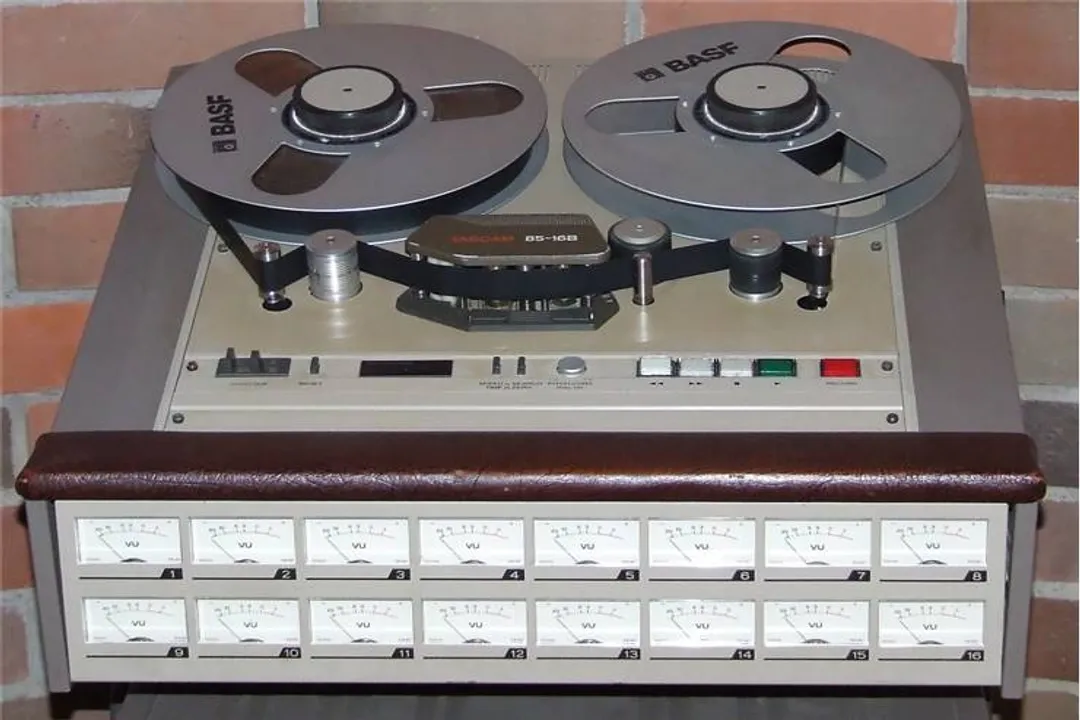
Furthermore, the very act of multi-track recording, which involves recording different instruments or sounds onto separate tracks for later mixing, shares a conceptual ancestor with multi-room distribution: the idea of managing discrete audio elements independently before combining them for final output. [4] While technically different—one is creation, the other is consumption—both required an understanding of signal management across multiple distinct channels.
# Actionable Insight on System Planning
For anyone looking to set up a contemporary multi-room system today, understanding the difference between wired backbone and wireless access points is key. A common mistake is placing a single, powerful router centrally and expecting it to cover a sprawling, multi-story house effectively. Because multi-room audio demands low latency and high bandwidth simultaneously across many nodes, the placement of wireless access points (APs) is more critical than the placement of the speakers themselves. A system designer in the 1970s worried about running speaker wire through plaster walls; today's homeowner worries about interference patterns caused by dense building materials blocking the Wi-Fi signal between the main router and the speaker in the garage. Investing in a properly designed mesh Wi-Fi system—one that creates true overlap and redundancy—is the modern equivalent of running high-gauge, low-resistance copper speaker cable throughout the walls decades ago. The underlying requirement for robust signal integrity remains constant, even if the medium has changed from copper to radio waves.
# Defining the "Invention" Moment
Ultimately, the question of "who invented multi-room audio" does not yield a singular name like Blumlein for stereo. [1][7] Instead, the history is marked by significant evolutionary milestones:
- The first realization that audio could be wired to multiple zones (the custom installer era).
- The development of powerful, standardized IP networking in homes (the infrastructure enabler).
- The creation of user-friendly, software-driven, wireless grouping technology (the consumer breakthrough, exemplified by companies like Sonos). [3][5]
If we must assign credit for bringing this functionality to the mass market in a way that feels intuitive and modern, the credit goes to the convergence of high-speed home networking and the development of sophisticated, user-centric software control platforms that abstracted away the complexity of managing discrete zones. The invention, therefore, is less about the wires and amplifiers and more about the software and networking protocols that tied it all together reliably. [5]
The contemporary experience, where you can ask a voice assistant to play jazz only in the living room and the kids' room, but not the main bedroom, is the culmination of these decades of work across signal theory, analog distribution, and finally, digital networking. It’s a communal invention built by many innovators across different fields, rather than the stroke of genius from one solitary engineer.[5]
#Videos
Les Paul Talks About The Birth of Multi-track Recording - YouTube
History of Audio Technology with Peter Moses - Webinar - YouTube
Related Questions
#Citations
The fascinating story of the man who invented stereo (and ... - CNET
Les Paul Talks About The Birth of Multi-track Recording - YouTube
How it Started - Sonos
Multitrack Recording History and Invention
Multi-room audio - Wikipedia
The History Of Acoustic Research / AR - Aural HiFi
The Man Who Invented Stereo : r/vintageaudio - Reddit
Multi-room audio systems: everything you need to know - What Hi-Fi?