Which time span is frequently referred to as the "Golden Age of Neon"?
Answer
The late 1920s through the 1950s
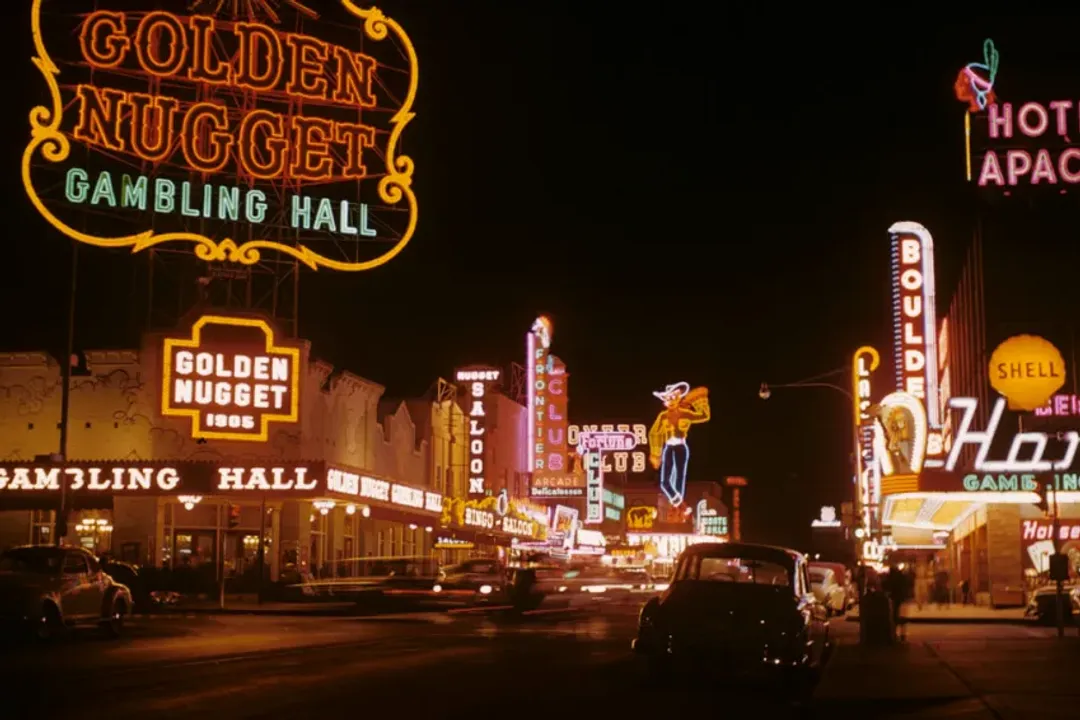
The period recognized as the "Golden Age of Neon" signifies the era when the technology achieved widespread, affordable adoption, moving beyond an expensive novelty to become ubiquitous in urban environments, especially in commercial centers. This era is dated as spanning from the late 1920s, when adoption rapidly accelerated, through the 1950s. During these decades, neon became deeply intertwined with the visual identity of city nightlife, entertainment districts, theaters, and general roadside advertising, establishing a landmark aesthetic that provided unparalleled visibility after dark compared to traditional incandescent lighting.
Related Questions
What engineering breakthrough did Georges Claude perfect for neon light viability?What did the very first electric neon sign installed in the United States advertise in 1923?Which time span is frequently referred to as the "Golden Age of Neon"?How are blues, greens, and whites achieved in classic neon displays besides using pure neon gas?Where and when was the first neon lamp publicly demonstrated by Georges Claude?For how much money did Georges Claude sell the neon technology rights in the United States in 1923?By the 1970s, how was the perception of neon signs beginning to change in the United States?When did neon lights move from curiosity to a common commercial fixture in the United States?What characteristic reddish-orange hue is produced when pure neon gas is energized?What primarily drives the modern resurgence of neon signs compared to the Golden Age necessity?