How are blues, greens, and whites achieved in classic neon displays besides using pure neon gas?
By using argon or coating the inside of the glass tubes with phosphors
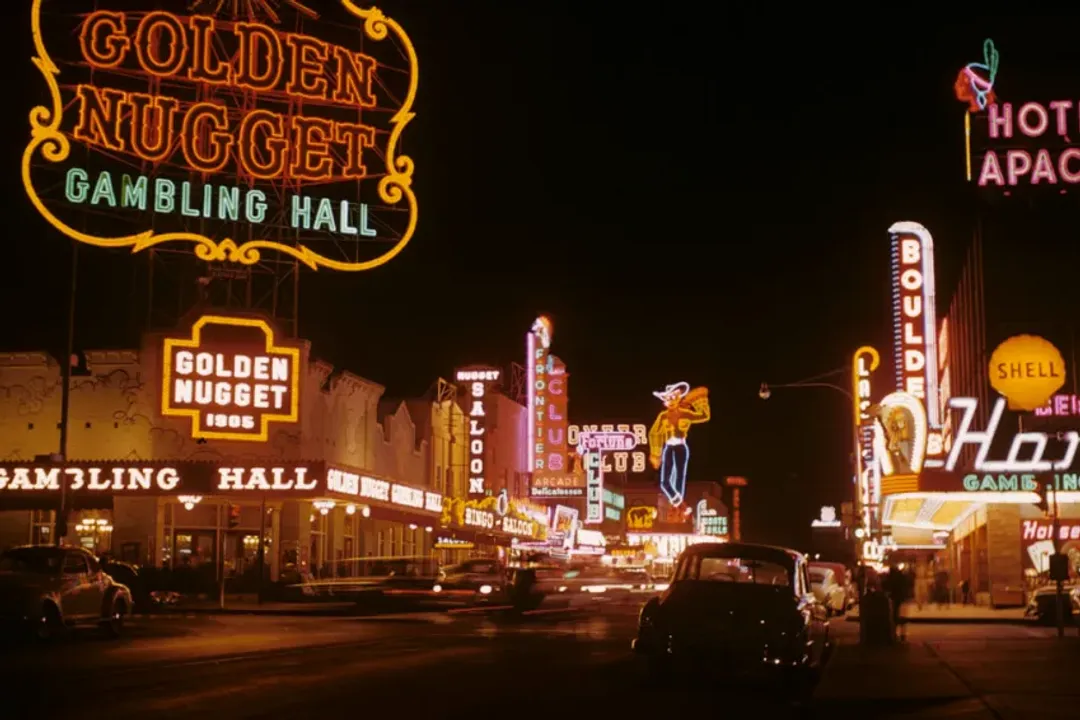
While the name 'neon' is often used generically for all such signage, the gas itself has a specific color output. Pure neon gas, when energized, naturally emits a distinct reddish-orange glow. To create the broader palette of colors seen in classic vintage displays—such as blues, greens, and various shades of white—engineers relied on manipulating the gas mixture or the tube interior. Specifically, they would employ other noble gases like argon, which produces different light spectra, or they would coat the inner surface of the glass tubing with specialized phosphor materials. These phosphors react to the electrical discharge, emitting light in the desired color, which provided the technical flexibility necessary for diverse branding requirements.