Who invented the light dimmer?
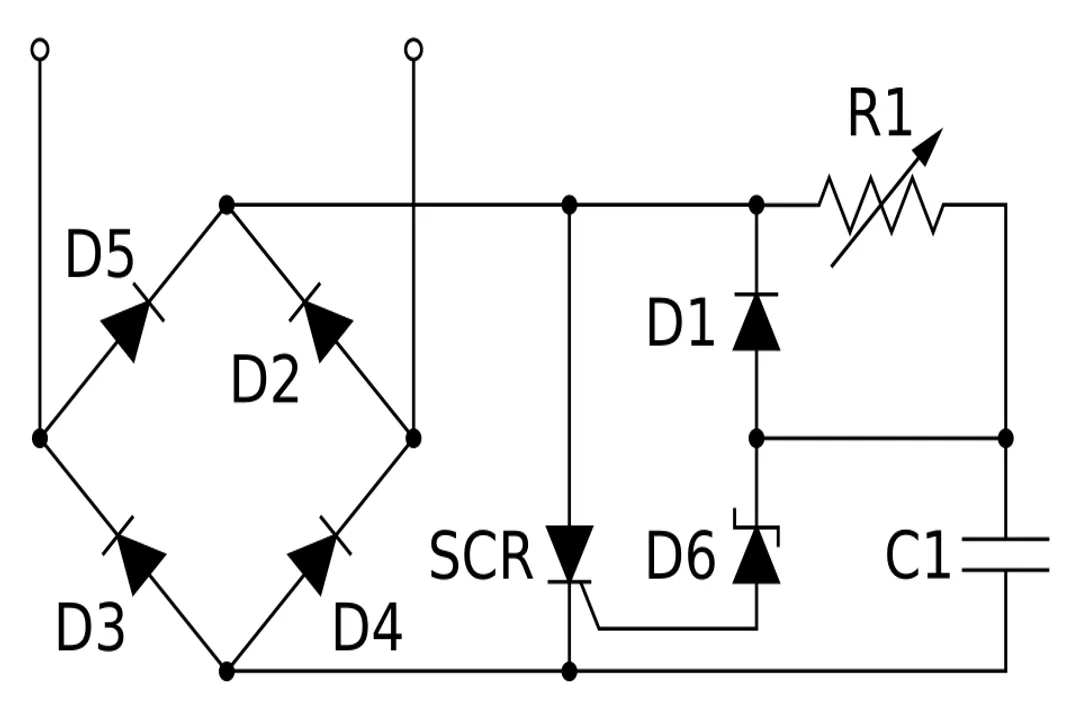
The invention that allowed homeowners to seamlessly shift the mood of a room from bright utility to soft ambiance didn't come from a committee of lighting engineers, but from the mind of a young physicist frustrated by the limitations of 1950s electrical controls. While crude methods for reducing light output had existed for decades, the true modern dimmer switch—one that was safe, compact, and energy-conscious—is credited to Joel Spira. [4][10] He realized that existing technology was wasting power just to turn the lights down, a realization that would eventually transform interior lighting worldwide and lead to the creation of the multinational company Lutron Electronics. [5][6]
# The Problem

Before Spira’s breakthrough, adjusting light levels was generally an inefficient, clumsy affair. The common method involved using a rheostat, essentially a variable resistor, connected in series with the light bulb. [3] This system worked, but it had significant drawbacks that limited its appeal in residential settings.
When you turned a rheostat to dim a light, the electrical energy that didn't go to the bulb was dissipated as heat. [4] Think of it like an old-fashioned stove burner cranked down; much of the power is still being drawn, just converted into unwanted thermal energy rather than light. [5] This method was inherently wasteful, creating unnecessary heat inside walls, which could even pose a safety concern if poorly installed. [3] Furthermore, these resistive controls were often large, bulky, and quite expensive for the average consumer to install, making them a novelty rather than a standard household fixture. [4]
It is important to note that the concept of dimming predates Spira significantly. Early patents for light control mechanisms existed, often employing mechanical switching or the aforementioned resistive methods for controlling the flow of electricity to the incandescent filament. [1] However, these devices were functionally limited by the physics of resistance, essentially forcing the user to buy a device that was inefficient by design.
# Spira's Insight
Joel Spira, who studied physics and engineering, took a different approach rooted in the emerging field of solid-state electronics. [10] He recognized that instead of resisting the flow of electricity and wasting the excess energy as heat, a better solution would be to modulate the flow using a semiconductor component. [4]
The pivotal moment often cited involves Spira noticing the limitations in his New York City apartment sometime around 1959. [4][8] He was a physicist, and the existing technology simply did not meet his expectations for performance, efficiency, and elegance. [6][10] He began working on a novel way to control the amount of voltage delivered to the light bulb by rapidly switching the current on and off thousands of times per second—a technique called phase control. [4]
The breakthrough concept involved using a semiconductor device, specifically a Silicon Controlled Rectifier (SCR), to chop the AC current waveform. [7] By controlling when in the cycle the current was allowed to pass, he could effectively control the average power delivered to the lamp without burning off the excess as heat. [4] This was revolutionary because it meant the control device itself generated very little heat and could be made small enough to fit into a standard wall box, directly replacing an existing light switch. [5][7]
An interesting way to consider the magnitude of this change is to look at the physics involved in a simplified sense. A traditional rheostat acts like a variable friction point in a water pipe, constantly fighting the flow. Spira's solid-state switch, however, acts more like a perfectly timed gate; it either opens fully or closes fully, but does so so fast that the light bulb averages the reduced power without noticing the rapid switching. This distinction between dissipation and modulation is the heart of his genius, moving lighting control from brute-force mechanics to elegant electronics. [4][5]

# Patent and Launch
Spira filed for his patent for the solid-state dimmer switch in 1960, and it was granted in 1961. [6][7] This patent covered the control circuit using the SCR, which allowed for dimming incandescent bulbs efficiently. [7]
With the core technology secured, Spira partnered with his wife, Ruth, to form a company dedicated to bringing this innovation to the public. They began their venture, initially named Lutron, out of a small apartment in Queens, New York. [8][6] Financial backing was secured through a small loan. [8] The first product they brought to market was the Caseta dimmer switch, designed specifically for incandescent lights. [7][9]
The introduction of the Caseta switch marked a significant step in residential electrification. Lutron was one of the first companies to manufacture and market these solid-state devices specifically for the home consumer market. [7][9]
# Market Adoption
While the technology was superior, overcoming existing building codes and consumer skepticism required effort. Early adoption often relied on custom installations or forward-thinking designers. [4] However, the ability to easily change the light level—from a full, bright light for cleaning to a warm glow for entertaining—without excessive heat or energy waste began to win over consumers and builders. [3][5]
The impact of Spira’s invention spread across various sectors. While the initial focus was residential, the efficiency and improved aesthetics quickly made dimmers desirable in commercial spaces like restaurants, theaters, and hotels, where ambiance control is paramount. [1][4] The fact that the technology was fundamentally solid-state meant it was far more reliable and required less maintenance than older, mechanical controls. [7]

# Evolution of Control
Spira's initial invention was tailored for the technology of the day: the incandescent light bulb. Incandescent bulbs operate on the principle of heating a filament until it glows, and they respond very well to simple voltage reduction via phase control. [1]
As lighting technology evolved throughout the late 20th and early 21st centuries, the core principle established by Spira had to adapt to new light sources, which function very differently:
- Halogen Lamps: Early halogen systems could often be dimmed using modified versions of the original SCR circuitry because their operation is closely related to incandescent technology. [1]
- Fluorescent Lamps: Dimming these required more complex circuitry, often involving magnetic ballasts that needed specialized electronic controls. [1]
- LED Lamps: Light Emitting Diodes (LEDs) are electronic loads that demand entirely different control methods. Spira and Lutron continued to innovate, developing sophisticated drivers and control systems that precisely regulate the power to LEDs to ensure flicker-free, smooth dimming across various brands and types of bulbs. [7]
This ongoing adaptation speaks to the authority Spira and his company established in the field of light control. They did not just invent one product; they established the engineering discipline around modulating electric light. [7]
Thinking about the adoption curve, one can see a distinct pattern. The initial obstacle wasn't technical refinement but standardization. For decades after Spira’s patent, if a homeowner wanted a dimmer, they had to buy a specific dimmer designed for the specific wattage and bulb type they were using. The true second revolution, after Spira’s initial patent, was the development of universal dimmers—the ones Lutron introduced later that could handle a wide range of loads reliably. This allowed the product to shift from a specialist component to a generic, accessible appliance, much like the standard toggle switch it replaced. [7]
# A Legacy of Light Shaping
Joel Spira passed away in 2015 at the age of 88. [2][10] His passing marked the end of an era for a man who fundamentally changed how people interacted with their indoor environments. [2] He was recognized not just as an inventor but as an entrepreneur who built a major business around his singular idea. [6]
His work led to significant energy savings over the decades. By allowing users to operate lights at lower levels, the technology inherently reduced electricity consumption compared to simply turning lights fully on or off. [5] While the efficiency gains from the switch itself were primary in the early days, the cumulative effect of people choosing to dim lights rather than burn them at full capacity has been substantial in reducing overall load on power grids. [5]
The history of the dimmer switch, therefore, is not just a story of a single device, but a demonstration of how a focused application of scientific principle—in this case, solid-state electronics—can yield massive, widespread practical benefits in daily life, moving from an expensive novelty to an invisible utility. [4][7] From his initial, small-scale work in a Queens apartment, Joel Spira provided the tool that allowed everyone to set the mood, conserve power, and see their homes in a softer, more controlled light. [8][10]
Related Questions
#Citations
Dimmer - Wikipedia
Joel Spira, Inventor of the Dimmer Switch, Passes at 88
History of the Dimmer Switch - KB Electric LLC
A Light Bulb Moment: How The Dimmer Switch Set Lusts Ablaze - NPR
Inventor Turned Up Energy Savings by Dimming the Lights
[PDF] 50 years of history and innovation - Lutron
The True Story of the Man Who Invented the Dimmer
Story of Lutron | Hawkeye Communication, IA
Joel Spira, Physicist Who Softened the Lights in Homes Everywhere ...