Who invented street lights in the USA?
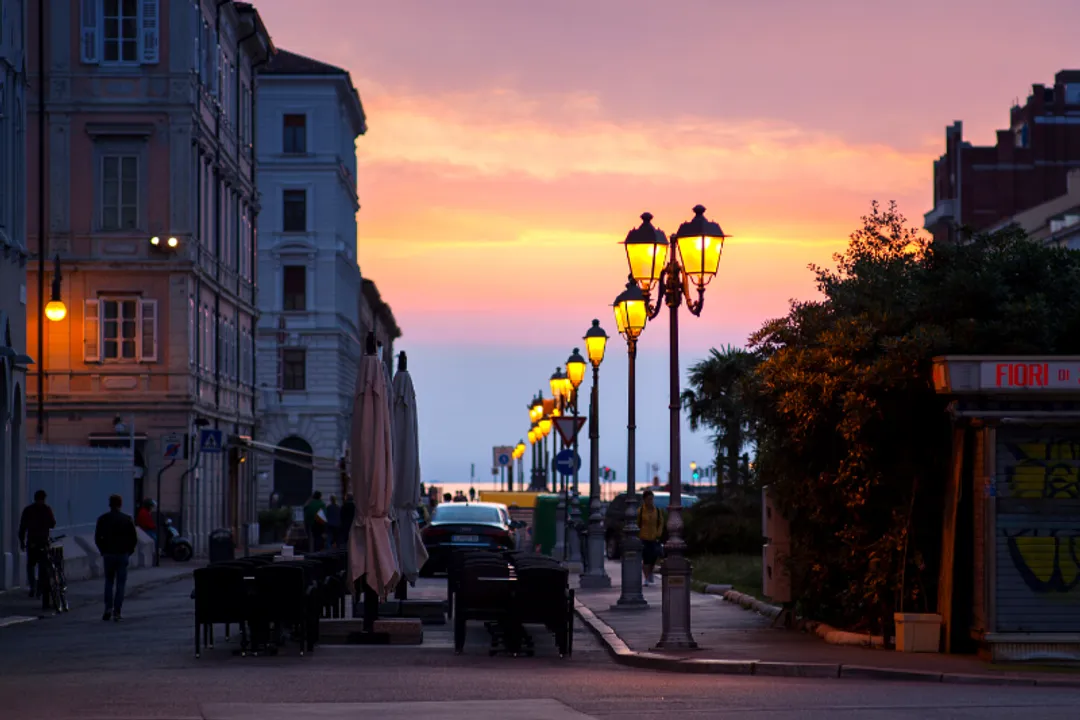
The story of how American streets went from dark, hazardous paths to safely illuminated avenues involves several key figures and a slow, uneven adoption of new technology. While pinpointing a single "inventor" of the street light in the USA is tricky—since illumination evolved from simple oil lamps to complex electric grids—the transition point centers squarely on the arrival of practical electric lighting in the late 1870s. [1][8] Before this era, cities relied on manual processes, often employing watchmen or lamplighters to tend to gas or oil-burning street lamps. [3]
# Night Watch
For much of the nineteenth century, street lighting relied heavily on gas illumination, a significant improvement over candles or oil. [3] Cities gradually established municipal gasworks to supply these lamps. [2] In the US, Philadelphia was one of the earliest adopters, installing gas streetlights by 1833. [7] Following Philadelphia, other major cities began implementing similar systems, though consistency varied widely based on local governance and available capital. [4] The process was labor-intensive; for instance, a lamplighter was required to physically move from lamp to lamp to ignite the flame at dusk and extinguish it before dawn. [3] This manual system was inherently slow to scale and expensive to maintain, creating a clear incentive for a more reliable, automated solution. [2]
# Arc Lamps
The true turning point, which answers the question of who brought electric street lighting to the US, involves the implementation of the arc lamp. This technology, which generates light by creating an electric arc between two carbon electrodes, proved powerful enough for illuminating large, open spaces like city streets, something early incandescent bulbs could not yet manage. [1][8] While the arc lamp itself was developed and patented in Europe, its successful introduction and deployment across American municipalities mark the start of modern street lighting history. [1]
One critical early step involved the demonstration of arc lighting technology. Charles F. Brush, an American inventor, was instrumental in developing a commercially viable arc lighting system. [1] By 1878, Brush demonstrated his new arc lights in Galveston, Texas, illuminating the city’s wharf area. [1] This demonstration, alongside similar tests occurring around the same time, proved that intense, reliable electric light was feasible for public use. [4]
It is important to note the difference between a general lighting inventor and the pioneer of the application. While figures like Thomas Edison focused heavily on the incandescent bulb for interior domestic use, the requirement for high-intensity exterior illumination pushed municipal governments toward the arc lamp first. [8] The arc lamps provided a stark, almost harsh, white light, but their output dwarfed that of gaslight, making streets dramatically safer after dark. [3]

# City Adoptions
The installation of electric streetlights was rarely a unified, national rollout; instead, it occurred city by city, often spurred by local entrepreneurs or competing utility interests. [2][4] Following the early demonstrations, major cities began testing and installing these electric systems in the late 1870s and early 1880s. [1]
Consider the initial cost versus the benefit. While the technology was transformative, the infrastructure needed to support arc lighting—the massive dynamos, thick overhead wiring, and specialized lamp posts—represented an enormous upfront capital expenditure for any municipality. [4] This reality meant that initial installations were often confined to commercial districts or areas of high civic importance, rather than immediately encompassing every neighborhood. A town might feature a few dozen powerful arc lamps downtown while residential side streets remained under the dimmer gaslight system for another decade. This uneven infrastructure development created pockets of intense modern illumination against a backdrop of older safety standards.
A comparative analysis of early implementation costs versus ongoing maintenance shows an interesting trade-off. Gas systems had lower initial setup costs but required constant manual tending and recurring fuel expenses. Electric arc systems demanded a massive initial investment in power generation but, once running, were significantly cheaper to operate per unit of light provided, especially as the technology improved and more lights could be powered from a single generating station. [1][8]
# Signal Invention
While the core topic concerns illumination, the history of street control often intersects with street lighting because early electrical systems were adapted for traffic management. This aspect of street infrastructure is frequently attributed to Garrett Morgan. [6] Morgan, an African American inventor, did not invent the street light but rather an essential component for modern street safety: the three-position traffic signal. [6]
Before Morgan’s invention, traffic control was rudimentary, often relying on human police officers directing vehicles, especially after the advent of the automobile. [6] Morgan received a patent for his manually operated, T-shaped traffic signal in 1923. [6] This device featured signals for "Stop" and "Go," and an all-stop position that served as a warning signal before changing directions—a crucial precursor to the automated yellow light we know today. [6] While this innovation dramatically changed urban traffic flow, it is distinct from the ongoing effort to illuminate the roadways for safety and visibility, which was primarily driven by Brush and others focused on arc lighting. [9] The first electric traffic signal installed in the US was in Cleveland, Ohio, on August 5, 1914, an earlier version developed by James Hoge, further separating the history of electrical control from electrical illumination. [9]

# Modern Lights
The dominance of the harsh, flickering arc lamp was not permanent. As technology advanced through the early 1900s, the incandescent light bulb, perfected by Edison and others, became powerful enough to be adapted for street use. [1][8] The incandescent bulb provided a warmer, steadier light than the arc lamp, which many found preferable for residential areas and general ambiance. [3]
The shift from arc to incandescent, and later to mercury vapor and high-pressure sodium lamps, shows that the "invention" of the street light wasn't a single event but a continuous process of technological refinement driven by better efficiency and cost management. [8] Furthermore, the eventual standardization of street lighting—moving toward uniform height, spacing, and fixture design across cities—was less about a single inventor and more about engineering standards developed by organizations tasked with urban planning and electrical safety throughout the 20th century. For cities planning upgrades today, understanding this historical progression helps explain why different neighborhoods might still feature fixtures that look distinctly 1940s (incandescent/low-pressure sodium) versus post-1980s (high-pressure sodium or metal halide), reflecting the local budget cycles when their last major lighting overhaul occurred. This layered approach to infrastructure updates is common in aging American cities, creating an unintended visual timeline of technological adoption on the streets themselves. [4]
#Videos
What Is The History Of Street Lights? - CountyOffice.org - YouTube
Related Questions
#Citations
History of street lighting in the United States - Wikipedia
History of Street Lighting in the USA - Stouch Lighting
History of Street Lighting - LampLight Decorative Lighting
Lighting America: The Early Adoption of Electric Light
What Is The History Of Street Lights? - CountyOffice.org - YouTube
Garrett Morgan: Inventor of the Three-Position Traffic Signal
History of street lighting in the United States Facts for Kids
The History of Street Lights from Invention to Innovation | SLD Solar ...
First electric traffic signal installed | August 5, 1914 - History.com