Who invented the automated traffic light?
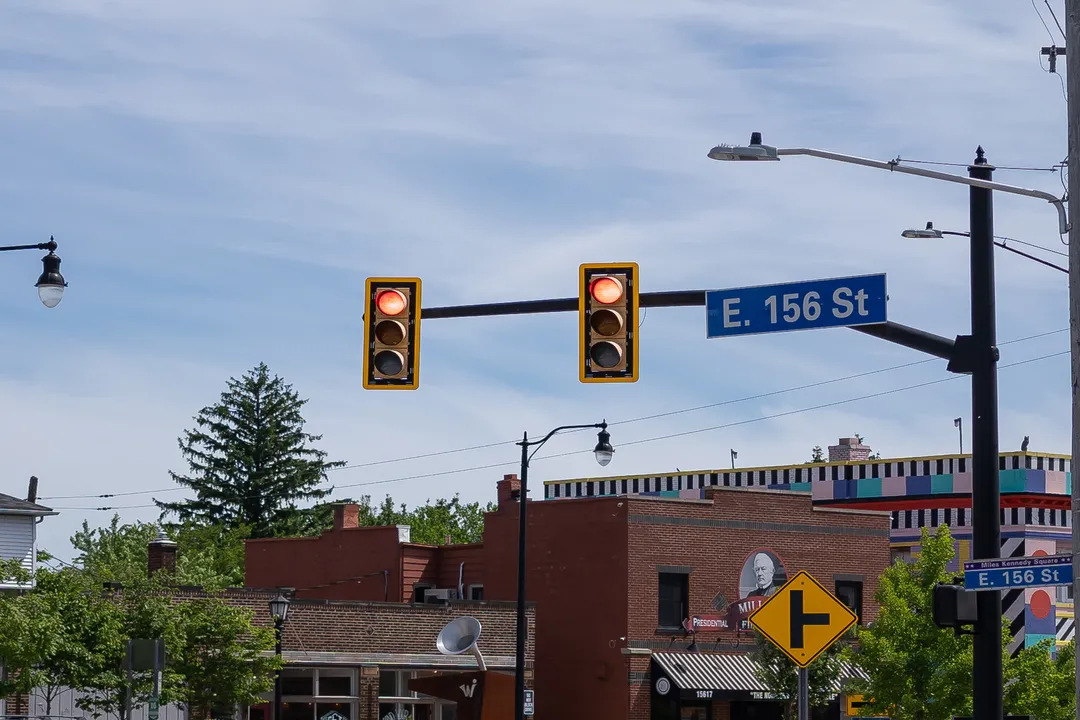
The story of who brought the automated traffic light to our busy intersections is less a single "aha!" moment and more a relay race involving several dedicated individuals across different decades and continents. While many associate the invention with one famous name, the reality involves pioneering efforts with gas lamps, early electric systems, and specialized, manually controlled three-position devices that laid the groundwork for what we now consider standard automation. The quest for safer, more orderly movement of vehicles and pedestrians required several distinct breakthroughs before true automation took hold.[4][1]
# Gas Light Start

One of the earliest attempts to regulate urban traffic using mechanical signals occurred far before the automobile became commonplace. In 1868, near the British Houses of Parliament in London, a gas-lit signal was put into use. [4] This system was designed by J.P. Knight and operated by a police officer using ropes or levers. [4] The intention was sound: to control traffic flow where pedestrians and carriages frequently clashed. However, this predecessor to the modern traffic signal suffered a catastrophic failure just one month after its installation when a leak in the gas line caused the device to explode. [4] This early, dangerous experiment demonstrated the need for a safer, more reliable power source and control mechanism.
# Electric First
The next major leap toward modern traffic control came in the United States, specifically in Cleveland, Ohio, where traffic congestion was clearly becoming an issue for early motorists. [6][4] In 1914, the first electric traffic signal was installed at the busy corner of East 105th Street and Euclid Avenue. [6] This device, featuring both red and green lights, was the creation of James Hoge. [4] Although electric, this system was not fully automatic; it relied on a police officer stationed nearby to manually switch the signals from one indication to the next. [4] Hoge’s contribution was significant because it successfully integrated electricity into the signaling process, removing the fire hazard inherent in the earlier gas-powered design.
# Morgan Signal
Around the time Hoge was pioneering electric signaling, another inventor in Cleveland, Garrett Morgan, was deeply involved in safety innovations. [3] Morgan, an African American inventor known for developing an early version of the gas mask or safety hood, turned his attention to traffic control. [2][3] His design arrived slightly later than Hoge’s electric installation but introduced a critical feature that would influence future designs. Morgan secured a patent for his traffic signal in 1923. [1][3]
Morgan’s device was distinct because it was T-shaped and featured three distinct positions. [1][5] The positions were: stop, go, and, crucially, an all-stop position. [1][5] This intermediate all-stop signal served as a warning that the lights were about to change, allowing traffic to clear the intersection safely before the opposing direction received a green light. [1][5] This feature shows a keen understanding of driver psychology and reaction time, aiming to prevent crashes during the transition period. [1] While Morgan’s design was still manually operated, the structure and the inclusion of the warning phase provided a conceptual blueprint for future automated systems. [5] Morgan’s business acumen was sharp; he sold the rights to his invention to General Electric a few years later, receiving $$40,000$ for the patent in 1928. [1][3]
# Evolution Path
When tracking the progression of the traffic light, it becomes clear that the definition of "inventor" depends on what feature one prioritizes: the first electric signal, the first three-color signal, or the first signal with a warning feature. [4][1] Before true automation (which involves timed, repeating cycles without human input), further manual refinements occurred. For instance, William Potts is credited with developing a manually operated, four-way signal that used red, amber, and green lights in 1928. [4] Potts’ inclusion of the amber or yellow light—the caution indicator—is essential to modern signaling, making his contribution a significant step toward the fully automated, three-color standard we expect today. [4]
Considering that the 1914 Hoge signal was installed in Cleveland, the same city where Morgan later developed his, one can appreciate how local traffic density must have pushed these Ohio-based inventors toward solutions simultaneously. [6][3] The move from Knight's volatile gas system to Hoge's electric setup solved the immediate safety hazard, but it was Morgan and Potts who grappled with the operational safety of the changeover itself. [4][1]
An interesting point often overlooked when discussing Morgan is the enduring value of that intermediate "all-stop" phase he engineered. While modern fully automated lights operate on precise timers, that initial second or two where all directions are red is essential for clearing queued vehicles or responding to emergency situations. This added layer of safety foresight is key to his contribution, even if the mechanism for automation (the timer circuit) came from engineers working on top of these manually controlled concepts. [1][5] The fact that General Electric purchased the rights suggests they saw immediate commercial viability in his design principles, likely incorporating the three-position idea into their later automatic models.[3]
# Inventor Legacy
Garrett Morgan’s legacy is often highlighted as the inventor of the modern traffic signal prototype, a designation supported by his influential patent and the subsequent sale of those rights. [5][2] He passed away in 1963, having built a significant career as a businessman and philanthropist. [2] However, acknowledging Morgan as the sole inventor risks overshadowing the critical, preceding work done by Hoge in deploying the first electric signal, and Knight in establishing the initial concept of mechanical traffic control. [4][6]
If we view the invention as a sequence, each person solved the most pressing problem of their era:
| Inventor | Year | Power Source | Control Method | Key Feature |
|---|---|---|---|---|
| J.P. Knight | 1868 | Gas | Manual (Police) | First physical traffic signal [4] |
| James Hoge | 1914 | Electric | Manual Switch | First electric signal (Red/Green) [4][6] |
| Garrett Morgan | 1923 | Manual | Manual Lever | Three-position (including all-stop warning) [1][5] |
| William Potts | 1928 | Electric (Implied) | Manual Switch | Four-way, three-color (Red, Amber, Green) [4] |
The transition from manual switching—whether by rope or lever—to the fully automated, timed circuit that became standard in the 1920s and 1930s represents the final stage of development, moving beyond the specific contributions of these named pioneers. [4]
Ultimately, the automated traffic light is a communal invention, built upon successive improvements in power, color coding, and safety phasing. Garrett Morgan’s specific genius lay in recognizing the necessity of the transition warning, which provided the necessary structure for the automatic systems that soon followed. [1][5] His role is cemented not just by the patent, but by the successful commercialization of a system that addressed potential chaos at the crossroads. [3]
Related Questions
#Citations
Safer Stop and Go: Garrett Morgan's Traffic Signal Legacy
Garrett Morgan
Garrett Morgan: Inventor of the Three-Position Traffic Signal
Traffic signals: A brief history - Washington State Magazine
Garrett Morgan: Inventor, Creator of the Stoplight Prototype
First electric traffic signal installed | August 5, 1914
Who invented the first electric traffic signal in 1912?