When did the first traffic lights appear?
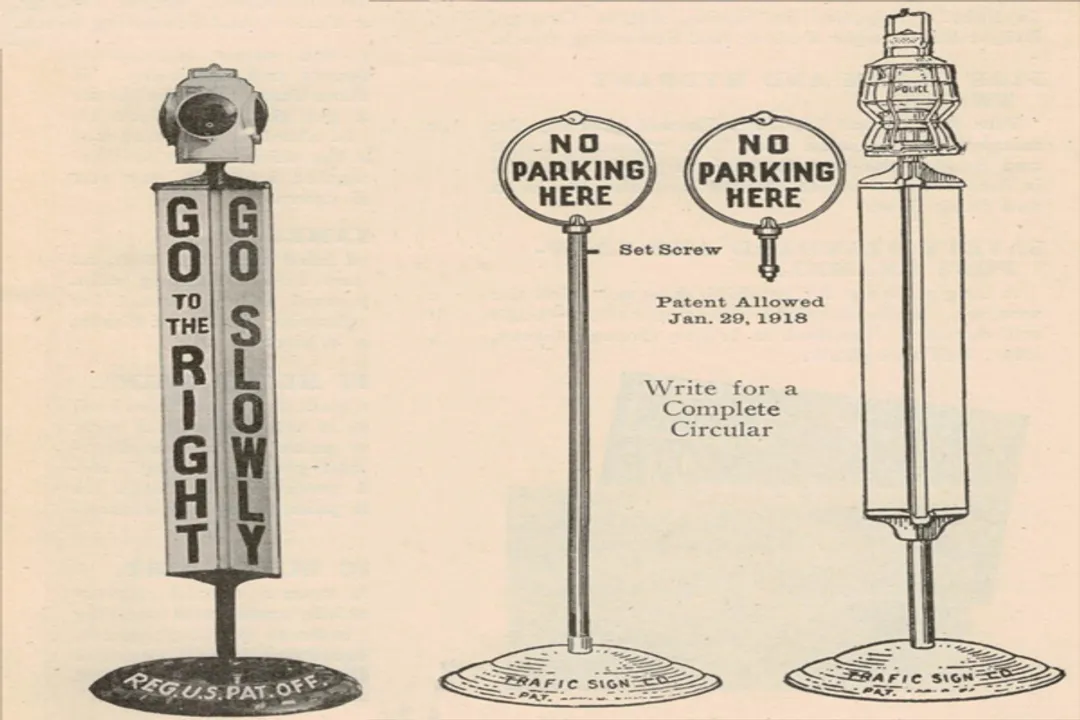
The history of managing road traffic might seem like a story that begins and ends with the automobile, but the need to control human movement in crowded spaces predates the roaring engine by decades. The first true traffic light was not humming with electricity or blinking in sequence; it was fueled by gas, operated by hand, and positioned right in the political heart of the British Empire.
# Gas Beginnings
The very first iteration of a traffic signal was installed in London, near the Houses of Parliament, back in 1868. [1][6] This Victorian contraption was designed by railway engineer J.P. Knight, who clearly recognized the chaos brewing as horse-drawn vehicles, pedestrians, and the occasional early bicycle vied for space on narrow city streets. [1][7] His creation was far removed from the sleek aluminum posts we see today. It utilized semaphore arms during the day—similar to those used on railways—and employed red and green gas lamps at night. [1][7]
Operation was decidedly low-tech: a police officer was required to physically stand by the mechanism and manually change the signals to direct the flow of traffic. [7] For just a few weeks, this system served its purpose, bringing a novel sense of order to a congested crossing. [1] However, this early experiment ended in disaster. In early January 1869, one of the gas lines either leaked or malfunctioned, causing the signal to explode, which unfortunately injured the police officer operating it. [1][7] Following this dramatic failure, the experiment was abandoned, and Londoners returned to relying solely on police direction for several decades. [1]
# The Electric Dawn
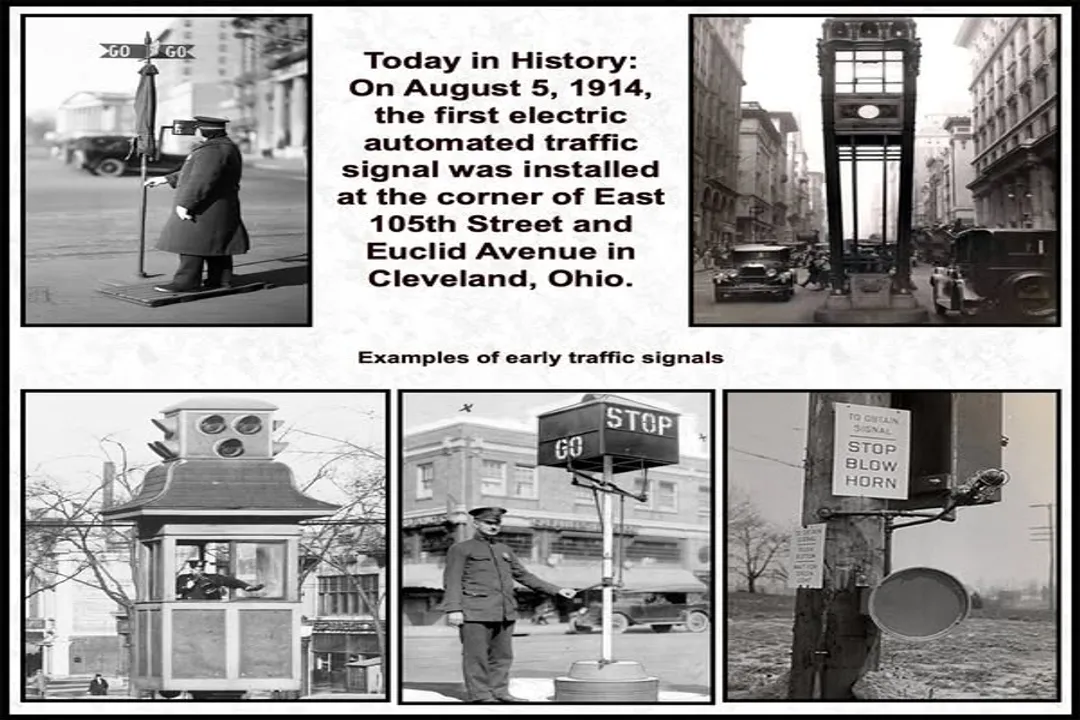
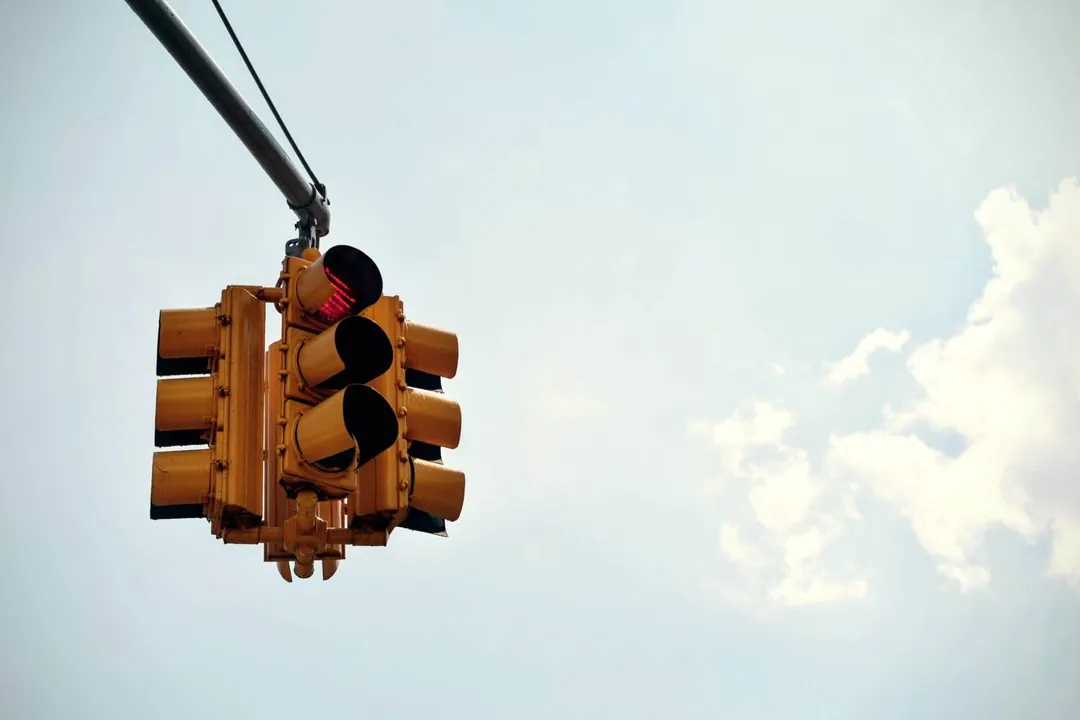
After the failure of the gas-powered predecessor, the concept of automated traffic control lay dormant until the rise of the automobile necessitated a more permanent solution. [4] The next major milestone arrived across the Atlantic, ushering in the electrical age of traffic regulation. On August 5, 1914, the first electric automated traffic signal system was installed in the United States. [3][8]
This initial electric device appeared at the intersection of Euclid Avenue and East 105th Street in Cleveland, Ohio. [3][8] While early sources sometimes credit different individuals for the idea, the physical installation in Cleveland marked a significant technological jump from the manual gas system. [7] This early electric signal used just two colors: red and green. [1] It provided a timed sequence to halt traffic in one direction and permit it in the other, significantly reducing the need for a constant police presence at busy junctions. [4] This shift represented more than just a change in fuel source; it meant traffic management could be standardized and automated, though likely still on simple timers rather than reacting to actual traffic volumes. [2]
# Adding Cautionary Yellow
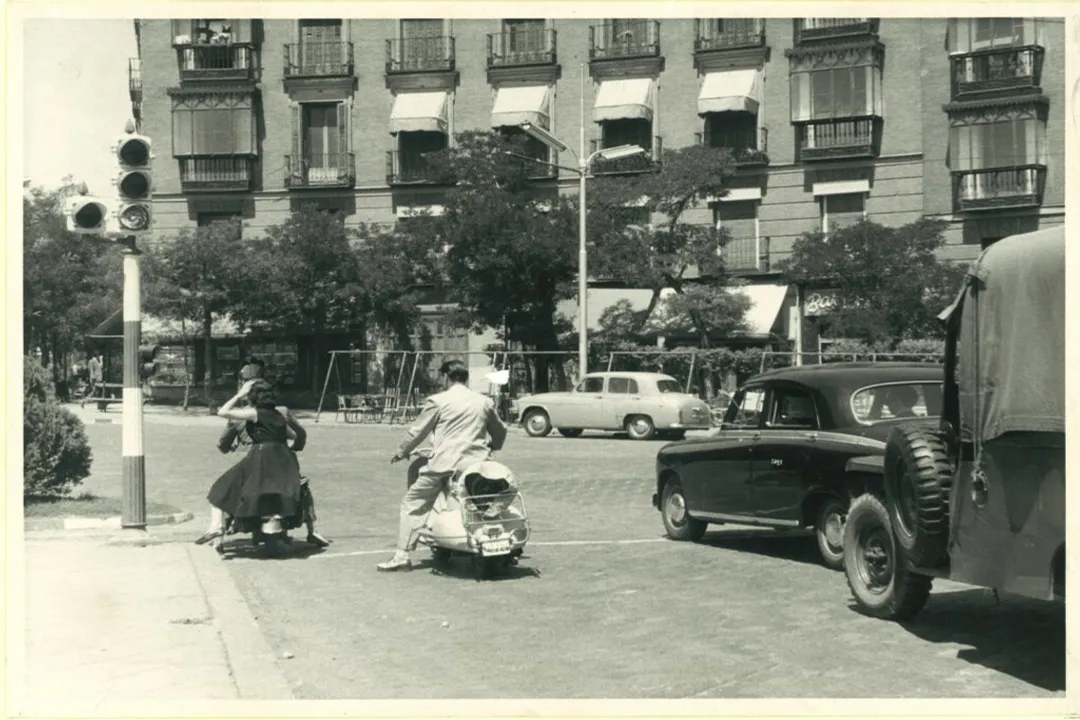
Even with the introduction of electric signals, the simple two-color system presented a practical challenge for drivers. A sudden change from "Go" (green) to "Stop" (red) gave drivers very little time to react, especially in older, less responsive vehicles. [1] This inherent danger in abrupt transitions spurred further innovation.
While some records point toward earlier, localized attempts, the universally adopted three-color system—incorporating the amber or yellow "caution" signal—became standard because it managed driver psychology as much as traffic flow. [1] The inclusion of the intermediate yellow light provided a vital buffer. It signals the imminent change to red, allowing drivers time to safely slow down or proceed with caution if already too close to stop comfortably. [1] This addition was not just an aesthetic change but a necessary refinement built on driver experience, demonstrating that traffic control had to account for human reaction capabilities, not just the mechanical switching of lights. [1]
# Morgan's Design Refinement
The evolution continued through the 1920s, as more cities adopted and adapted the basic electric signal. A key figure in solidifying the safety features of traffic control was Garrett Morgan, an African American inventor known for several key safety devices. [5] Morgan patented an improved traffic signal in 1923. [5]
His design was distinct because it introduced a T-shaped post that held three arms, which could be manually positioned to indicate Stop, Go, or a Cautionary position (which later influenced the standard yellow light). [5] Morgan's patent protected a three-position signal—Stop, Caution, and Proceed—that operated with a movable arm, ensuring that conflicting directions would never have a green signal simultaneously. [5] Though electric signals were already in use, Morgan's contribution was crucial because it focused explicitly on providing a dedicated, clearly visible warning signal to prevent crashes at the point of transition. [5] His approach was a significant step toward the standardized, fail-safe systems that would later become universal, emphasizing operational safety over simple on-off switching. [5]
# Global Spread and Comparison
By comparing the early efforts, we can chart the path from localized necessity to widespread standardization. The 1868 London signal was a one-off emergency response powered by volatile gas. [7] The 1914 Cleveland electric signal was the first functional, timed automation, proving the concept could work electrically. [3] Morgan’s 1923 patent then provided a safer mechanical structure that influenced future electrical designs. [5]
Other centers of innovation quickly followed suit. Salt Lake City utilized a system incorporating the three-color sequence around 1917, although the exact authorship and adoption timeline vary across historical accounts. [1] Later, in 1920, Detroit’s William Potts added the amber light to an existing system there, solidifying the modern sequence of red, yellow, and green lights in a major urban center. [1]
| Year | Location | Power Source | Colors/Positions | Key Feature |
|---|---|---|---|---|
| 1868 | London, UK | Gas | Red/Green (Semaphore arms) | Manually operated by police [7] |
| 1914 | Cleveland, USA | Electricity | Red/Green | First automated electric signal [3] |
| c. 1920 | Detroit, USA | Electricity | Red/Yellow/Green | Introduction of the yellow caution light [1] |
| 1923 | USA (Patent) | N/A | Three positions (Stop, Caution, Go) | T-shaped signal structure designed for improved safety [5] |
The progression shows a clear trend: complexity was introduced to enhance safety and manage driver expectation rather than just controlling volume. [1][5] The sheer persistence required to solve this simple problem—how to stop traffic safely—is interesting, given that the first attempt failed spectacularly within weeks. [1] This suggests that even when the technology is primitive, the need for ordered movement is absolute in dense environments.
# Modern Perspective
Looking back from the current era of networked, sensor-driven "smart" signals, it is easy to overlook the massive leap represented by the 1914 installation. [2] While the 1914 signal was automated in the sense that it switched colors on a timer without an operator present, it lacked the intelligence we associate with traffic control today. True automation, which monitors traffic volume using sensors embedded in the pavement or optical scanners, arrived much later, making the system reactive rather than merely pre-programmed. [2]
The very first traffic light in 1868 was designed to manage horse-drawn chaos, and the 1914 electric version was built for the first wave of mass-produced automobiles. [4] Each iteration was a direct, specific response to the dominant mode of transport and the resulting congestion patterns of its time. The journey from Knight’s exploding gas lantern to Morgan's patented three-position arm to today's synchronized, adaptive networks illustrates that infrastructural necessities often outpace technological readiness, requiring numerous inventors to slowly chip away at the problem over many decades. [1][5]
#Videos
Invention of the traffic light by Garrett Morgan was in Cleveland in 1923
Related Questions
#Citations
History of traffic lights - Wikipedia
1868-2019: A Brief History of Traffic Lights - Inclusive City Maker
First electric traffic signal installed | August 5, 1914 - History.com
Traffic signals: A brief history - Washington State Magazine
Safer Stop and Go: Garrett Morgan's Traffic Signal Legacy | FHWA
The traffic light: 150 years of history | SICE
Invention of First Traffic Light | RoadtrafficSigns.com
On August 5, 1914, the first electric automated traffic signal was ...
Invention of the traffic light by Garrett Morgan was in Cleveland in 1923