Who invented the automatic traffic light?
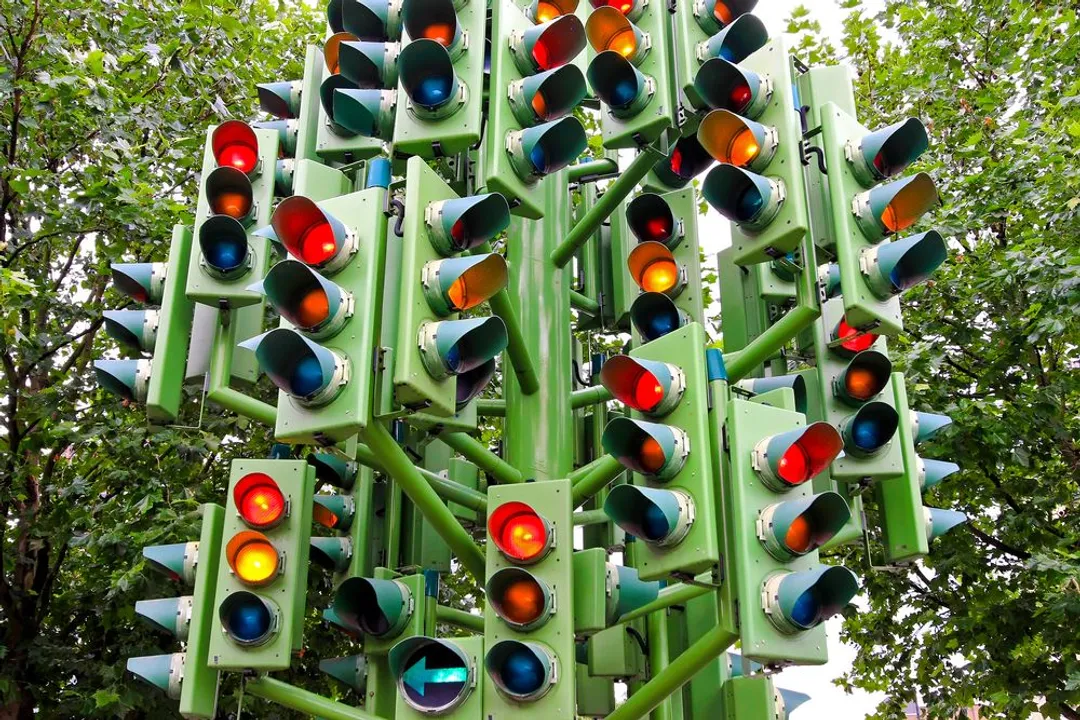
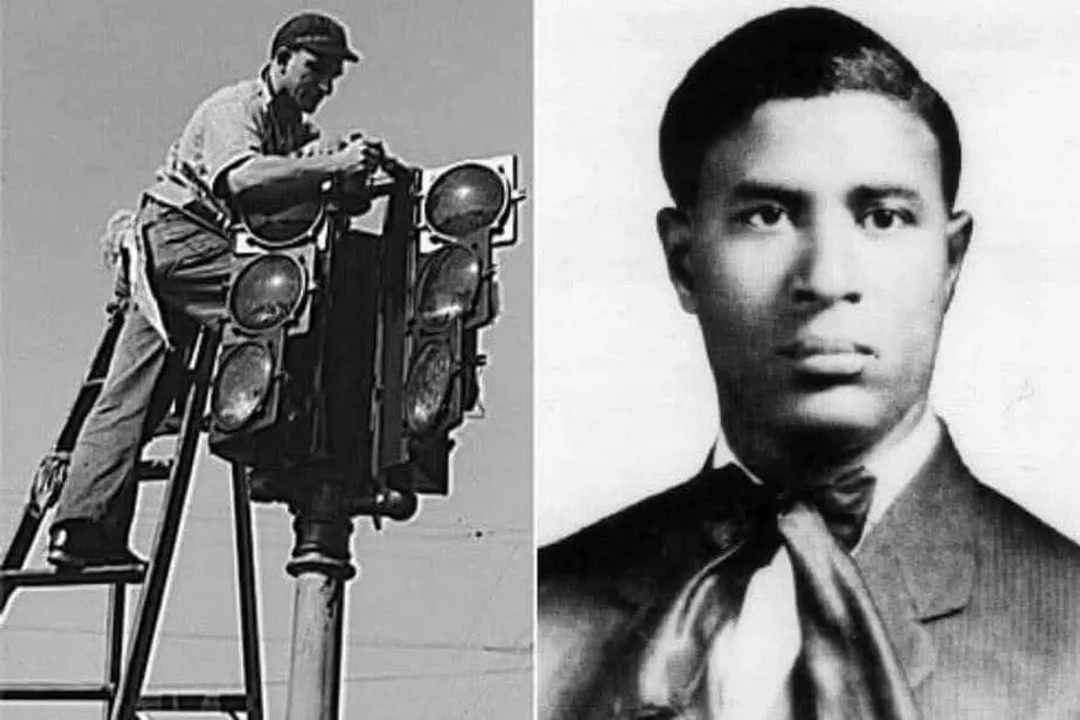
The simple act of crossing a street in a busy city today relies on an invention with a surprisingly complex and contested history, one that saw several inventors contribute critical pieces before achieving its modern form. While many figures played roles in managing the burgeoning chaos of early 20th-century automobile traffic, the development of the truly automatic, multi-position traffic control device is often credited to Garrett Morgan, an African American inventor from Cleveland, Ohio. His contributions moved the system beyond simple stop-and-go signaling toward a design that prioritized driver awareness and safety through an audible warning.
# Initial Chaos
The rise of the automobile in the early 1900s created unprecedented challenges for urban planners. Roads designed for pedestrians and horse-drawn carriages were suddenly flooded with fast-moving vehicles, leading to frequent accidents and gridlock. Before any automated solution, controlling intersections relied on human officers, who were prone to fatigue and limited in their ability to direct complex flows of traffic, especially at large or high-volume crossings. This necessity spurred inventors to seek a mechanical, non-stop solution to maintain order.
# First Attempts
To understand the significance of Morgan’s later patent, it is important to look at the very first widely adopted electrical traffic signaling system. The earliest known gas-burning traffic signal system installed in the United States appeared in Cleveland in 1914. This initial design, which likely featured just two positions—stop and go—was a notable step forward from manual control, but it represented a significant safety gap compared to what followed.
It is crucial to note that the technology did not spring fully formed from a single mind. Another key development preceding Morgan's was a manually operated traffic signal erected in Detroit in 1920, which used four arms that could be moved to signal traffic directions, but this still lacked true automation. The existing two-light systems, while better than nothing, presented an abrupt transition: a driver seeing "go" would suddenly face "stop" with no intermediate warning.
This abrupt transition from movement to immediate cessation in early two-light signals represented a significant design flaw. An effective safety system requires anticipation; without a transitional state, such as an amber light, the potential for rear-end collisions and driver confusion remained high, especially as vehicle speeds increased. Morgan recognized this gap where safety required more than just binary signaling.
# Morgan's Signal
Garrett Morgan’s innovation centered on introducing that crucial element of anticipation. His design was a T-shaped signal post that incorporated three distinct positions for traffic control. This three-position device added a warning indicator between the "stop" and "go" commands.
Morgan’s signal provided three distinct operational modes:
- Stop: Signaling traffic to halt.
- Go: Signaling traffic to proceed.
- Warning/All Stop: This intermediate state served as an alert, often accompanied by an audible warning, giving drivers a moment to prepare to stop before the signal switched to red.
This addition of the warning signal significantly enhanced the safety of automated traffic control, making the transition between directions smoother and less jarring for drivers. While the concept of a three-light signal system is commonplace now, Morgan’s mechanism was a patented improvement over the existing infrastructure, aiming to mitigate accidents through better communication. Morgan was also granted a patent for a traffic control signal system, specifically in November 1923.
The very nature of invention often involves iterative improvement rather than a singular flash of genius. Morgan’s success in patenting his refinement underscores the value of addressing known shortcomings in existing technology. If one looks at the progression from a human police officer to a two-light system, and then to Morgan’s three-light system, it illustrates a steady professionalization of traffic engineering, with each inventor building on the preceding setup to solve the next layer of complexity.
# Patent Success
Morgan’s inventive spirit was not limited to traffic control; he held numerous patents, including one for an early version of a gas mask, which brought him considerable recognition later. His traffic signal invention, however, secured his place in transportation history.
The official documentation shows that Morgan was granted U.S. Patent No. 1,475,024 for his traffic control signal system. His work was revolutionary enough that his rights were eventually sold to the General Electric Company for approximately $40,000. This substantial sale price reflects the perceived value of owning the rights to such a critical piece of urban infrastructure technology at the time. While the Wikipedia entry on Morgan notes that the original 1914 Cleveland signal system was installed and patented by James Hoge, it is Morgan who is widely credited with inventing the automatic three-position signal that formed the basis for modern intersection management. This distinction—between the first electrical signal and the first comprehensive, automated warning system—is key to understanding the narrative surrounding the invention.
# Lasting Impact
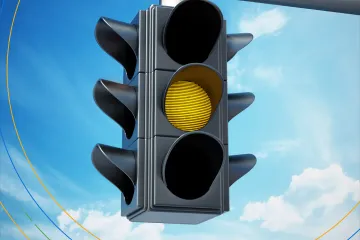
The influence of Garrett Morgan’s patented design is evident in the standard intersection signals we encounter daily. Every time a driver sees the amber light illuminate, indicating an imminent change from green to red, they are experiencing the direct legacy of that T-shaped warning signal developed decades ago.
Modern traffic control is far more sophisticated, incorporating sensors, cameras, and network synchronization, but the fundamental concept of giving drivers an advanced, audible, or visual warning remains paramount. It is perhaps an underappreciated fact that the structure Morgan formalized—a clear sequence with a distinct preparatory phase—is a universal requirement for managing kinetic energy flow safely in any complex system, whether it is traffic, data packets, or manufacturing processes. The challenge for today’s traffic engineers, much like Morgan’s a century ago, is ensuring that communication at high speeds is clear, unambiguous, and timed perfectly for human reaction.
By introducing the standardized intermediate warning into the automatic system, Morgan didn't just invent a light; he established a principle of managed transition that underpins traffic safety worldwide. While the specific hardware has changed, the requirement for that "cushion" of time remains the defining characteristic of an effective, automatic traffic control device.
Related Questions
#Citations
Garrett Morgan - Wikipedia
Safer Stop and Go: Garrett Morgan's Traffic Signal Legacy | FHWA
Garrett Morgan: Inventor, Creator of the Stoplight Prototype
Garrett Morgan: Inventor of the Three-Position Traffic Signal
The Inventor of the automatic traffic light was an African American ...
Traffic Light Inventor | Fast Facts Friday - YouTube
Inventor Garrett Morgan Granted Patent for the Automatic Traffic Signal
Garrett A. Morgan: Traffic Signal and Gas Mask Inventor
Traffic signals: A brief history - Washington State Magazine
Who Invented the Traffic Light? | Live Science