Why was James Watt's improvement of Newcomen's steam engine important?
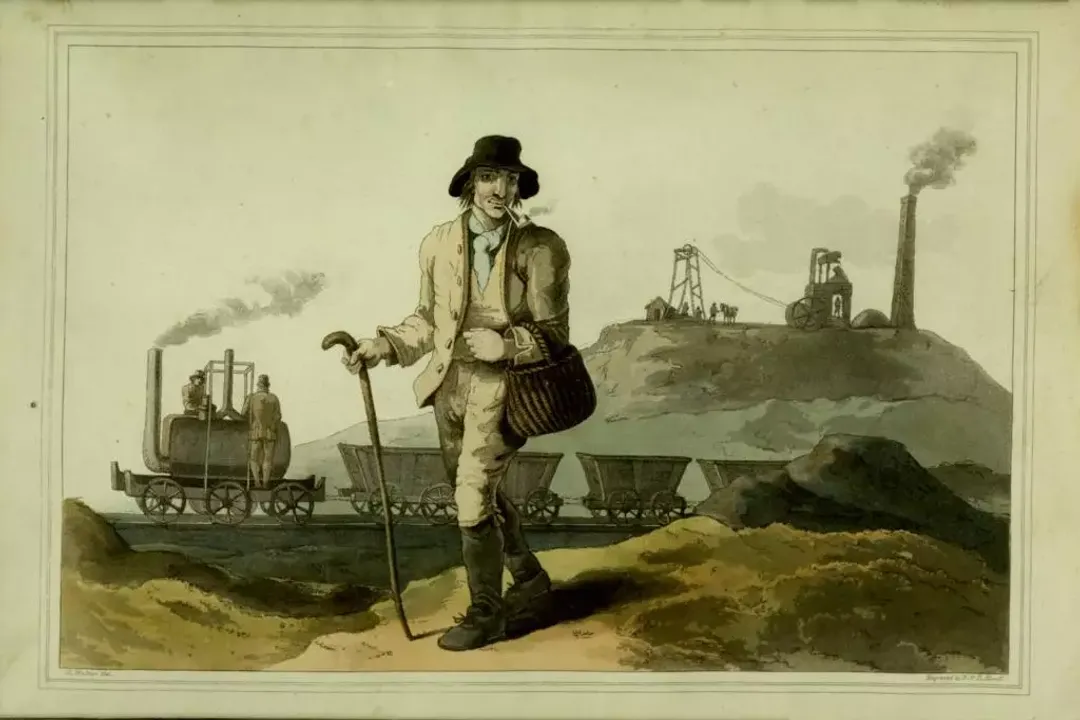
The introduction of James Watt’s modifications to the existing steam engine technology did far more than just slightly increase efficiency; it fundamentally altered the calculus of industrial production, making reliable mechanical power accessible where it had previously been prohibitively expensive or simply unavailable. Before his intervention, the prime mover of the Industrial Revolution—the Newcomen atmospheric engine—was a colossal, thirsty machine, effective primarily for pumping water out of deep mines but enormously costly to run due to its constant, massive fuel consumption. [4][8] Watt’s genius was not in inventing the concept of using steam to do work, but in solving the engine's most crippling inherent flaw, unlocking energy potential that would soon reshape entire economies and societies. [1][7]
# Newcomen's Engine
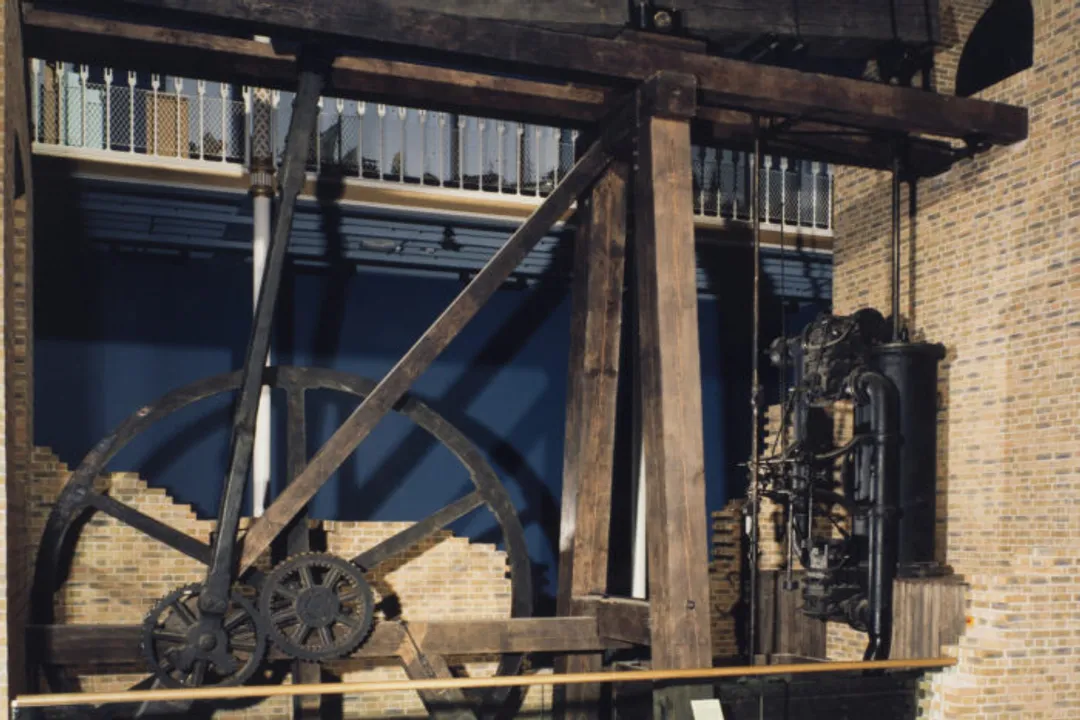
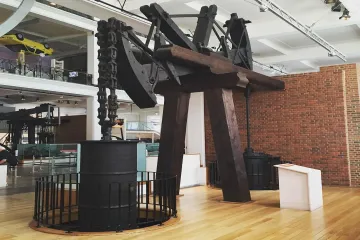
Thomas Newcomen developed his atmospheric engine around 1712. [8] This machine was designed primarily to overcome the flooding that plagued coal mines, allowing deeper excavation and thus greater access to fuel. [4] The operation relied on creating a vacuum. Steam was introduced into a large cylinder, lifting a piston. Then, a jet of cold water was injected into the cylinder to condense the steam rapidly. [8] The resulting vacuum allowed the atmospheric pressure pressing down on the outer side of the piston to force it downward, which powered the pump beam. [8]
While revolutionary, Newcomen’s design was inherently wasteful. To make the next stroke, the entire massive cylinder had to be reheated with fresh steam, meaning the cylinder walls were alternately heated and then cooled with condensation water on every single stroke. [1][3][8] This constant cycle of heating and cooling conducted heat away from the working steam, requiring vast amounts of coal to keep the process going. [1][8] In practical terms, this meant the engine was largely restricted to sites near abundant, cheap coal supplies, limiting its application primarily to the collieries that needed it most. [2][4]
# The Separate Condenser
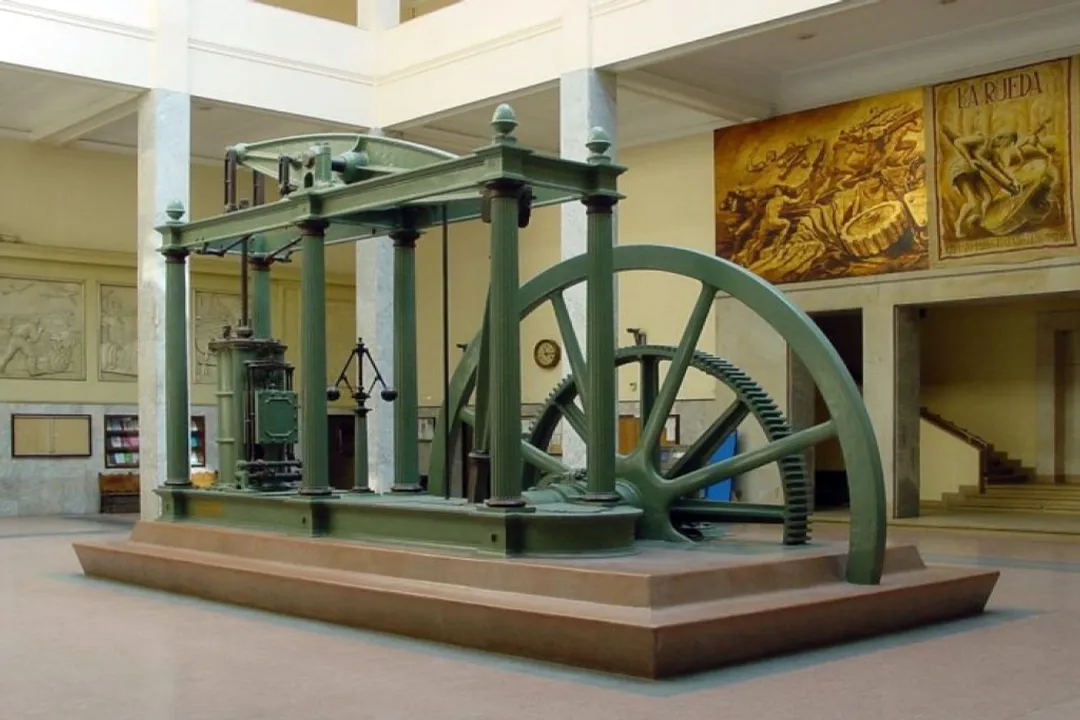
James Watt, working as an instrument maker at the University of Glasgow, encountered a model of the Newcomen engine in 1763. [7][9] He was tasked with repairing it and quickly noticed the engine’s inefficiency. [7][9] He calculated that the steam used for condensation wasted up to 75 percent of the heat energy supplied by the boiler, as the cylinder walls absorbed and dissipated significant heat with every downstroke. [1][3]
Watt’s breakthrough, which he conceived in 1765, was the realization that the condensation process did not need to happen inside the main working cylinder. [7][3] His improvement was the invention of the separate condenser. [1][2] In this system, a second, smaller chamber was connected to the main cylinder by a pipe, fitted with valves. [3] When the cylinder was filled with steam, the steam was allowed to rush into the separate, cooler condenser, where it turned back into water. [2] Crucially, the main working cylinder could then remain hot, ready to receive the next pulse of steam without needing to reheat its own walls. [1][3]
This simple architectural separation had a dramatic effect. By keeping the cylinder hot, the engine required significantly less fuel for each stroke. [1][7] Watt’s initial estimates suggested that this innovation alone could reduce fuel consumption by as much as 75 percent compared to the Newcomen engine. [3][7]
An analytical perspective on this efficiency gain shows that it moved the engine from being a localized necessity to a viable economic tool elsewhere. If a Newcomen engine consumed, say, 10 tons of coal per day to pump a specific volume of water, Watt’s engine, using only 2.5 tons for the same task, instantly opened up industrial possibilities in regions where coal cost four times as much, or where transport costs made mining marginally profitable operations suddenly very lucrative.
# Commercial Partnership
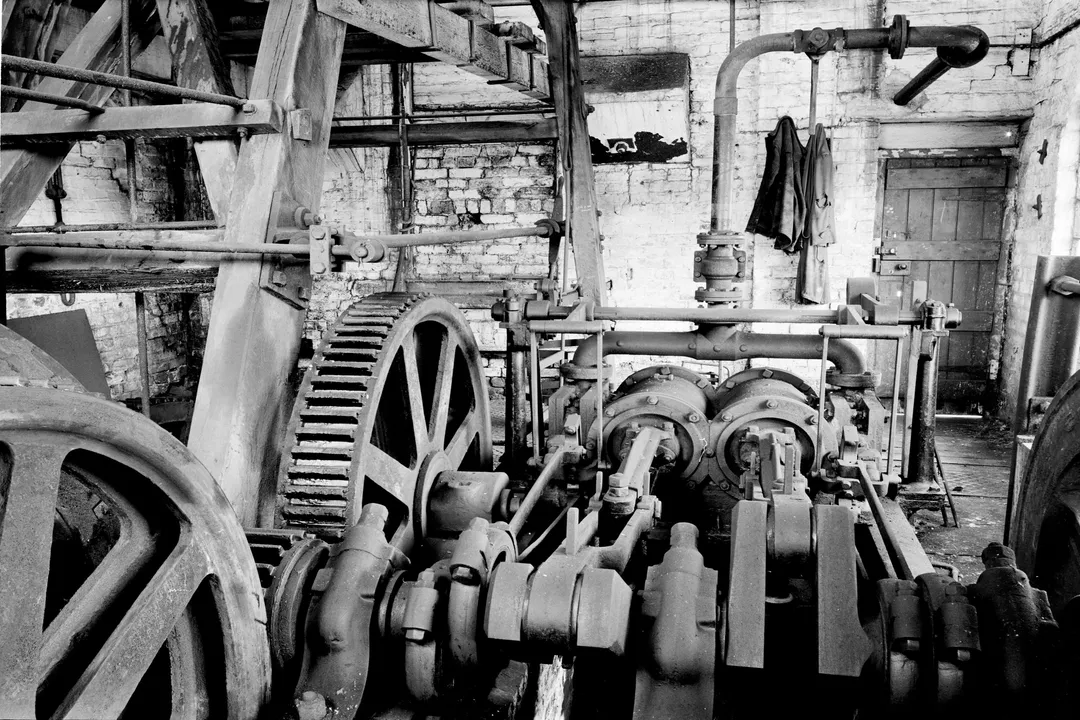
While the technical insight was profound, bringing the improved engine to market required capital and engineering expertise beyond what Watt possessed alone. [6] This necessity led to his critical partnership with the wealthy industrialist Matthew Boulton in 1775. [6][9] Boulton provided the necessary financial backing, workshop space, and business acumen to manufacture the new, more complex engines reliably and on a larger scale. [6][9] Their firm, Boulton & Watt, became the powerhouse for steam technology for decades. [6]
Boulton was essential in navigating the legal and commercial challenges, including securing an extension of Watt’s patent rights for his separate condenser, which was granted in 1776. [2][6] This partnership allowed the engine to move beyond the coalfields and into general manufacturing, provided they could overcome the next mechanical hurdle: converting the engine’s reciprocating up-and-down motion into rotary motion. [4][6]
# Rotary Motion Added
The Newcomen engine was only capable of a linear push or pull, making it excellent for pumps but useless for driving machinery like lathes, spinning frames, or mills. [4] Watt’s next major development was the invention of a mechanism to convert the piston’s linear motion into continuous rotation. [2][7]
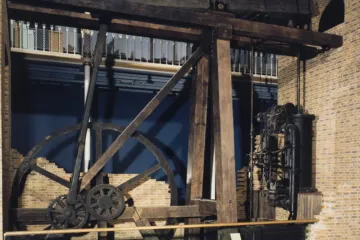
In 1781, Watt patented the sun and planet gear system, which achieved this rotary motion. [3][6] This development marked the true point of departure from the engine’s origin as a simple mine pump. The rotary engine could now power factory equipment directly. [4] This invention opened the floodgates for applying steam power to textile mills, flour mills, and workshops located away from rivers (which previously powered water wheels) or away from coal seams. [2][9]
# Advanced Engine Features
Watt’s dedication to refinement did not stop with the condenser and the rotary mechanism. His goal was always to extract the maximum work from the minimum amount of fuel, leading to several other interconnected innovations that built the highly efficient, modern engine concept. [1][5]
# Double Action
Early engines, including Newcomen’s and Watt’s first rotary designs, were single-acting: steam pressure only drove the piston in one direction (downward), with the return stroke relying on the weight of the machinery or an external force. [3] Watt introduced the double-acting engine. [1][3] In this configuration, steam was admitted alternately on both sides of the piston. [3] When one side was pushing the piston down, the other side was being filled with steam for the return stroke. [5] This meant that the engine produced power continuously on both the upstroke and the downstroke, resulting in a smoother, more consistent, and far more powerful output for the same size cylinder. [1][5]
# Steam Economy
The drive for fuel economy spurred further refinement in how steam was used. Watt introduced the concept of the steam cutoff. [1] In a less advanced engine, steam is admitted for the entire power stroke. Watt realized that once the piston had achieved sufficient initial velocity, the steam did not need to push for the remainder of the stroke; allowing the steam to expand after the initial cutoff significantly increased efficiency. [1]
He also introduced a mechanism for the steam jacket—a covering of hot steam around the main cylinder—to keep the cylinder walls consistently hot, further reducing heat loss to the environment. [3] Further compounding these improvements, Watt and his team developed parallel motion, an ingenious linkage system that allowed the piston rod to move vertically while connecting to the beam that drove the rotary motion without binding—a significant mechanical solution to maintain the integrity of the system. [3]
# Industrial Transformation
The culmination of Watt's improvements—the separate condenser, rotary motion, double-acting cylinder, and improved steam management—created an engine that was powerful, reliable, adaptable, and vastly more economical to run than anything preceding it. [2][4]
The impact on industrial location and scale was profound. Water power had dictated where industries could settle, tying factories to fast-flowing rivers. [4] Watt’s engine broke this geographical constraint. Factories could now be built in cities, near labor pools, or close to raw materials other than coal, like iron ore. [9] Furthermore, the reliability meant that industrial output was no longer subject to seasonal variations like drought or freezing rivers. [4]
The shift to steam power also fundamentally altered capital investment strategy for entrepreneurs. A water-powered mill represented a fixed geographical asset; if the river conditions changed or a more optimal site opened up, the mill was essentially stuck. The reliable, scalable, and relocatable power source provided by the Boulton & Watt engine lowered the risk associated with building large new factories, encouraging much higher capital commitments in fixed machinery, knowing the energy source could be maintained and expanded almost indefinitely in any chosen location.
The importance extended beyond factory floors. While Newcomen’s engine was a boon for mining, Watt’s more efficient engine made the extraction of other resources, like iron ore, more economically viable because the energy cost per unit of production dropped. [5] This, in turn, fueled the growth of metallurgy, which supplied the material for building even more steam engines and machinery. [5] Later still, the principles of the rotary engine would directly influence the development of steam locomotives and steamships, taking the industrial revolution mobile. [7]
# Lasting Principles
Even as later engineers like Richard Trevithick and Oliver Evans pushed the boundaries toward high-pressure steam, which Watt famously resisted due to safety concerns about the materials available in his era, the foundational concepts remained. [1][5] Watt’s work established the fundamental thermodynamic cycle that governed early modern power generation. [1] His approach emphasized economy and precision in converting heat to mechanical work—a focus that drove subsequent engineering progress. [2][5]
The final improvement, as some contemporaries noted, was ensuring that the complex, powerful new machine could be built and maintained with consistent quality and that its rights were protected long enough for its benefits to be fully realized. [5] Through the partnership with Boulton and the relentless refinement of the design, James Watt ensured that the steam engine transitioned from a cumbersome necessity for drainage into the defining technology of the manufacturing age. [6][7] The legacy is clear: the engine was made efficient enough, and adaptable enough, to power the modern world. [4]
Related Questions
#Citations
Watt steam engine | Definition, History, & Facts
Watt's Steam Engine | Research Starters
Watt steam engine
The Rise of the Steam Engine
The Final Improvement of the Steam-Engine | Proceedings
Boulton & Watt engine - Age of Revolution
James Watt - Magnet Academy
Thomas Newcomen and the Steam Engine
Boulton and Watt | World History