Who was the first engine manufacturer?
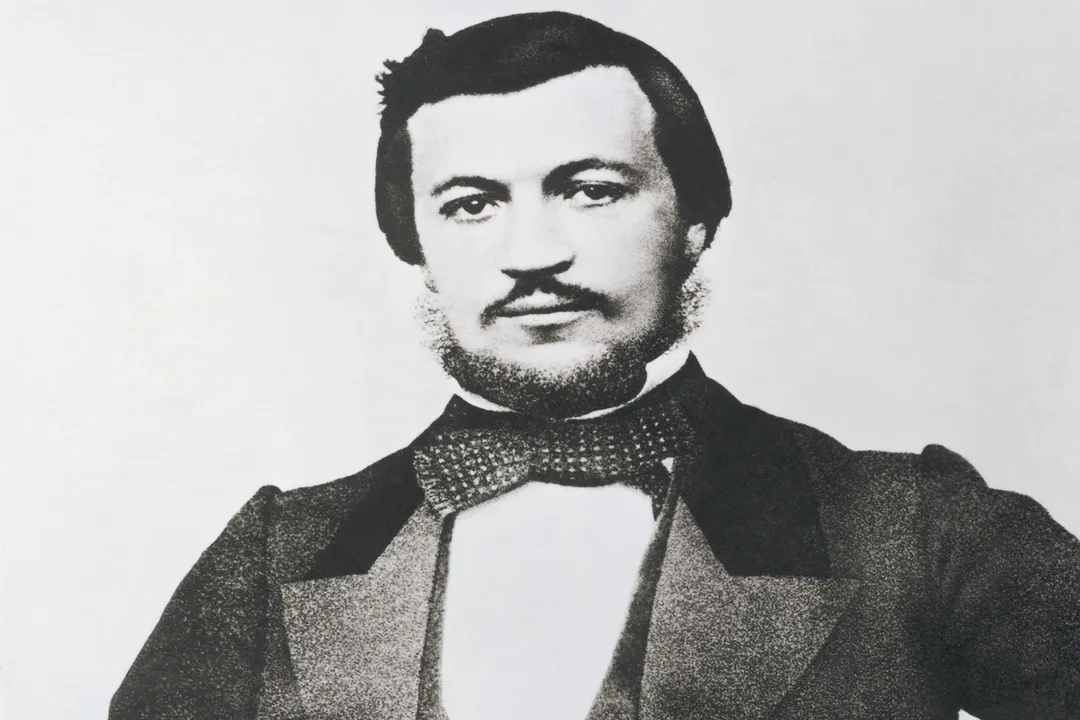
The quest to name the very first engine manufacturer invariably leads to a tangle of brilliant inventors, competing patents, and diverging definitions of what constitutes a "successful" or "commercial" engine. The title of "first" rarely belongs to a single moment, but rather an evolution spanning decades and crossing several national borders. However, when tracing the lineage of the dedicated company established explicitly for the purpose of mass-producing internal combustion machines, the spotlight shines brightly on a German partnership forged in the mid-1860s.
# Founding The Factory
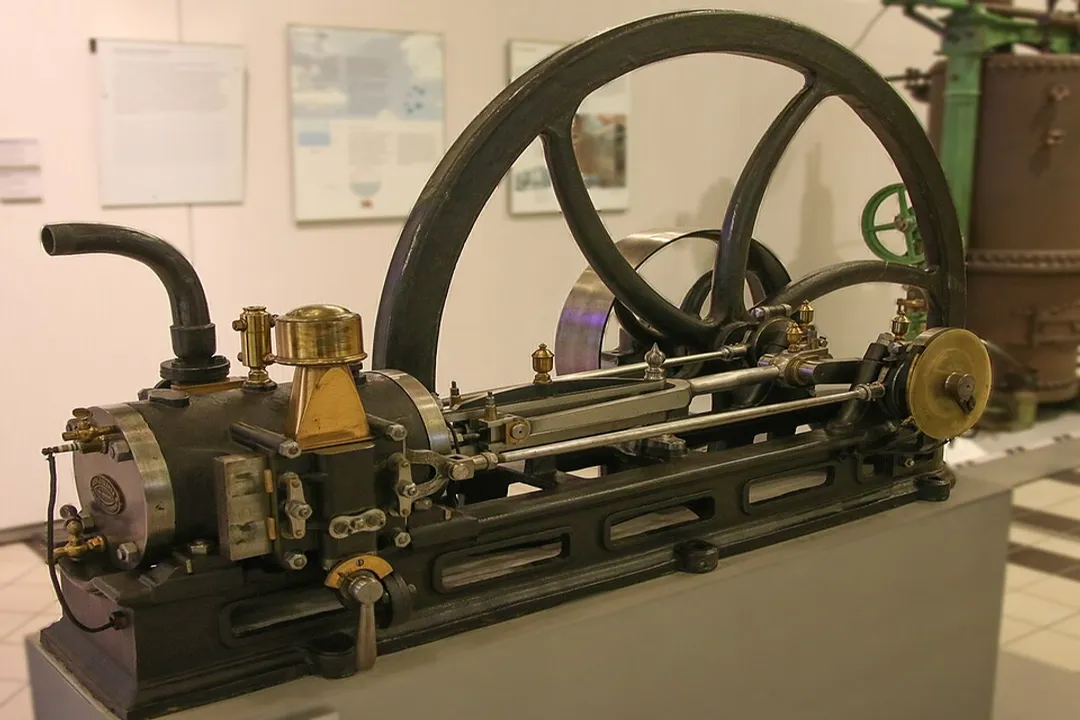
The critical turning point in formalizing engine manufacturing came with the collaboration between Nicolaus August Otto and Eugen Langen. Otto, an engineer whose primary interest lay in science and technology, had been captivated by the earlier work of Jean Joseph Etienne Lenoir. By 1864, Otto and Langen cemented their partnership, founding N.A. Otto & Cie. in Cologne. This entity is significant because it was established as the world's first company focused entirely on the design and production of internal combustion engines. While Lenoir had produced engines commercially in 1860, it was Otto and Langen who created the dedicated manufacturing factory with long-term ambitions for industrial and vehicular power. This company, through subsequent transformations, eventually became what is known today as DEUTZ AG.
The initial product from this new enterprise, the Otto–Langen engine, was a free-piston atmospheric engine. This design used an explosion to create a vacuum, relying on atmospheric pressure to force the piston down for the power stroke. Though not utilizing the compression cycle that would later define Otto's legacy, this atmospheric engine proved to be a substantial commercial success for the new company.
# Commercial Triumph
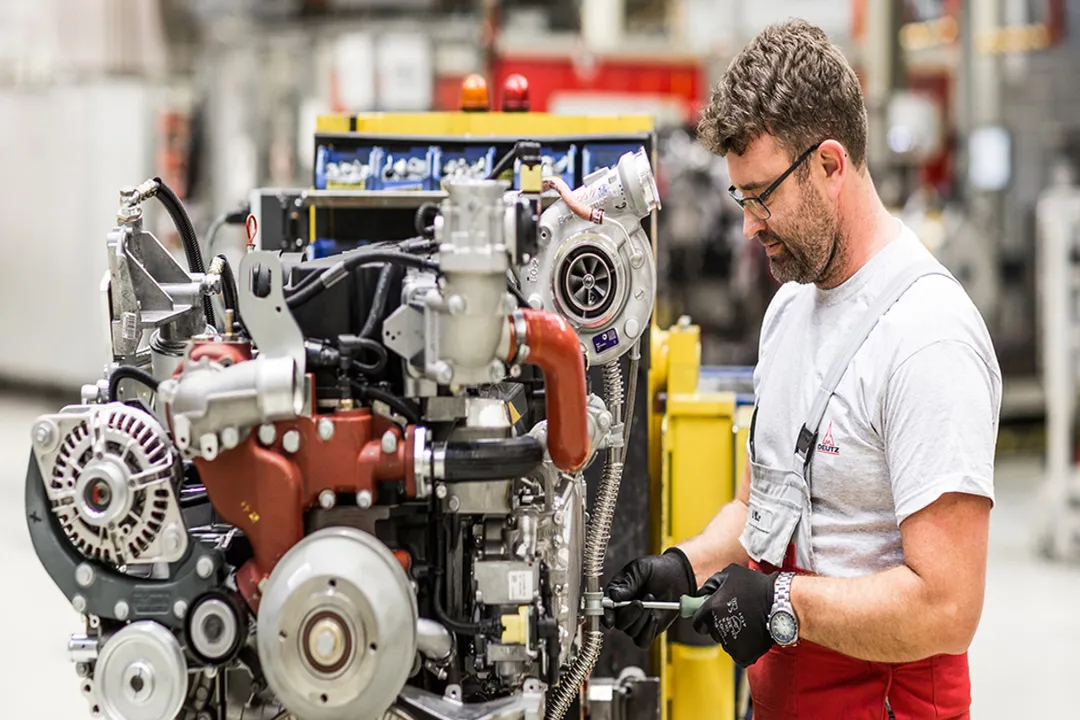
The Paris Expo of 1867 became the stage for this early success. The Otto–Langen atmospheric gas-powered engine was unveiled to the global public, where it received the gold medal as the “most efficient drive machine”. Its efficiency was compelling; it required only one-third the amount of gas for propulsion compared to the earlier Lenoir engine. This event signaled the beginning of the mass-produced combustion engine for the organization. By 1875, the company was producing 634 engines annually. This initial success allowed Otto to finance further, more ambitious research away from the atmospheric engine's technical limitations.
# Lenoir's Initial Step
Any discussion of the first engine manufacturer must acknowledge the work of Belgian-French engineer Jean Joseph Etienne Lenoir. In 1860, Lenoir produced a gas-fired, non-compression atmospheric engine. Critically, several of these Lenoir engines were allegedly built and used commercially in Paris in 1860. By 1867, roughly 280 units had been constructed, and Lenoir eventually sold approximately 700 engines. Some historians consider the Lenoir engine the first functional internal combustion engine due to this early serial production. The distinction between Lenoir and Otto/Langen often comes down to intent and longevity: Lenoir produced the first commercially used engines, while Otto and Langen established the first dedicated, enduring factory focused solely on engine production, which survived and evolved into a major industrial entity.
A parallel development also occurred earlier in the 1850s with Italian inventors Eugenio Barsanti and Felice Matteucci, who patented a free-piston engine principle in 1853/1854, though their design, while theoretically sound, was a two-stroke atmospheric engine and did not achieve the same level of commercial production as Lenoir's, let alone the sustained manufacturing effort of Otto & Cie..
# The Four-Stroke Revolution
While the atmospheric engine provided the necessary capital, it was technically limited, often producing only around 3 horsepower and requiring significant vertical space. Nicolaus Otto turned his attention back to a concept he had failed with in 1862: the four-stroke, compressed charge cycle. Working with engineers like Franz Rings and Herman Schumm, Otto succeeded in developing the Otto Silent Engine in 1876. This engine compressed the air/fuel mixture before combustion, a breakthrough that dramatically improved efficiency over atmospheric designs.
This 1876 engine is what the world now recognizes as the Otto cycle engine, the foundation for nearly all modern internal combustion engines. The German Association of Engineers (VDI) later codified this by decreeing that "Ottomotor" applies to all engines using this specific process: intake, compression, power, and exhaust. The commercial viability of this new design was immediate; the company discontinued production of the older atmospheric engine in 1882 after making over 2,600 units, demonstrating a willingness to discard a successful but outdated product line in favor of technical advancement. This dedication to advancing the technology while maintaining a manufacturing base—exemplified by the continuous operation of the company that became Deutz—is a core element of their claim to pioneering status.
The development path of internal combustion engines shows that the manufacturer must often precede the inventor of the final product. For instance, Wilhelm Maybach later improved Otto’s 1876 engine by refining the connecting rod and piston design to allow for series production, highlighting that the factory itself (Deutz/N.A. Otto & Cie.) was the incubator where iterative manufacturing improvements were applied to the theoretical breakthroughs.
# Mobility and Benz's Entry
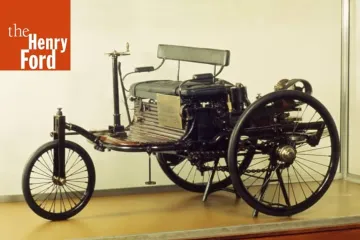
While Otto and Langen were focused on stationary power, other inventors were already leveraging smaller, higher-speed engines to create personal transportation. In 1879, Carl Benz patented a prototype two-stroke gas engine. His subsequent focus was integrating this power source into a vehicle chassis. Benz’s major contribution to automotive history came in 1885 with the construction of the Benz Patent Motorwagen, widely regarded as the world's first automobile. This vehicle was powered by a specialized, compact, single-cylinder, four-stroke engine producing $0.75$ hp (). The official birth certificate, however, was the patent Benz applied for on January 29, 1886. Benz & Cie. became a significant manufacturer, but their focus shifted after Otto had established the principle of the dedicated engine factory.
Simultaneously, Gottlieb Daimler, who had worked with Otto, was also active. In 1885, Daimler built the Reitwagen, often cited as the first motorcycle, powered by a high-speed engine. The focus here was on application rather than just manufacturing the engine as a standalone industrial unit, illustrating the divergence of the industry into specialized sectors—stationary power versus vehicular power—shortly after the core technology was proven.
| Inventor/Company | Key Date(s) | Primary Engine Focus | Manufacturing Claim |
|---|---|---|---|
| Lenoir | 1860 | Non-compression atmospheric gas engine | First engines sold commercially/serially |
| N.A. Otto & Cie. (DEUTZ) | 1864 | Atmospheric gas engine | World's first factory dedicated solely to ICE production |
| Otto (with associates) | 1876 | Four-stroke, compressed-charge engine | Invention of the modern "Otto Cycle" principle |
| Karl Benz | 1886 | High-speed four-stroke engine | Created the first self-propelled automobile, establishing a major vehicle manufacturing lineage |
One perspective to consider when evaluating the "first manufacturer" is the concept of intent versus outcome. While Lenoir achieved the first commercial sales of a working engine, N.A. Otto & Cie. was the first to organize itself purely around the development and mass production of the IC engine as a distinct industrial sector. This organizational structure, which survived and evolved into DEUTZ, suggests a more permanent claim to being the first engine manufacturer in the corporate sense, even if the first units sold were atmospheric engines rather than the eventual four-stroke standard.
# Enduring Legacies
The story of the first engine manufacturer is not just about the inaugural factory, but about sustained expertise. The company founded by Otto and Langen—DEUTZ—continued to build engines, eventually focusing on diesel engines for off-highway applications in modern times, a testament to their specialization away from complete vehicle production. This path highlights a divergence in the German engineering landscape: one branch (Otto/Langen/Deutz) focused on perfecting the stationary and industrial engine, while others, like Benz and Daimler, pivoted that same technology toward the nascent automotive industry.
Furthermore, the legal battles surrounding the four-stroke patent underscore the inherent difficulty in assigning singular credit. When Daimler sought to build his own engines, he found a prior patent for the concept of a four-stroke cycle held by Frenchman Alphonse Beau de Rochas from 1862. Rochas had the theory but never built a functional engine, whereas Otto did. This legal nuance meant Otto lost some patent protection, allowing Daimler to proceed without royalties, yet it does not erase the fact that Otto and his factory were the ones to translate the complex, compressed-charge cycle into a reliable, mass-producible reality starting in 1876.
The ultimate takeaway is that the first engine manufacturer in the sense of an institution dedicated to the craft was N.A. Otto & Cie. in 1864, which later became DEUTZ AG. They successfully commercialized the atmospheric engine, built the factory capable of mass production, and later incubated the development of the four-stroke cycle that truly forms the bedrock of modern engine technology.
#Videos
Running Model of Very First Otto Langen. 1876 internal combustion ...
Related Questions
#Citations
History of the internal combustion engine - Wikipedia
150 years of DEUTZ's Engine No. 1
Benz Patent Motor Car: The first automobile (1885–1886)
Deutz Corporation | Success Story | Michigan Business
Running Model of Very First Otto Langen. 1876 internal combustion ...