What was the significance of the Newcomen steam engine?
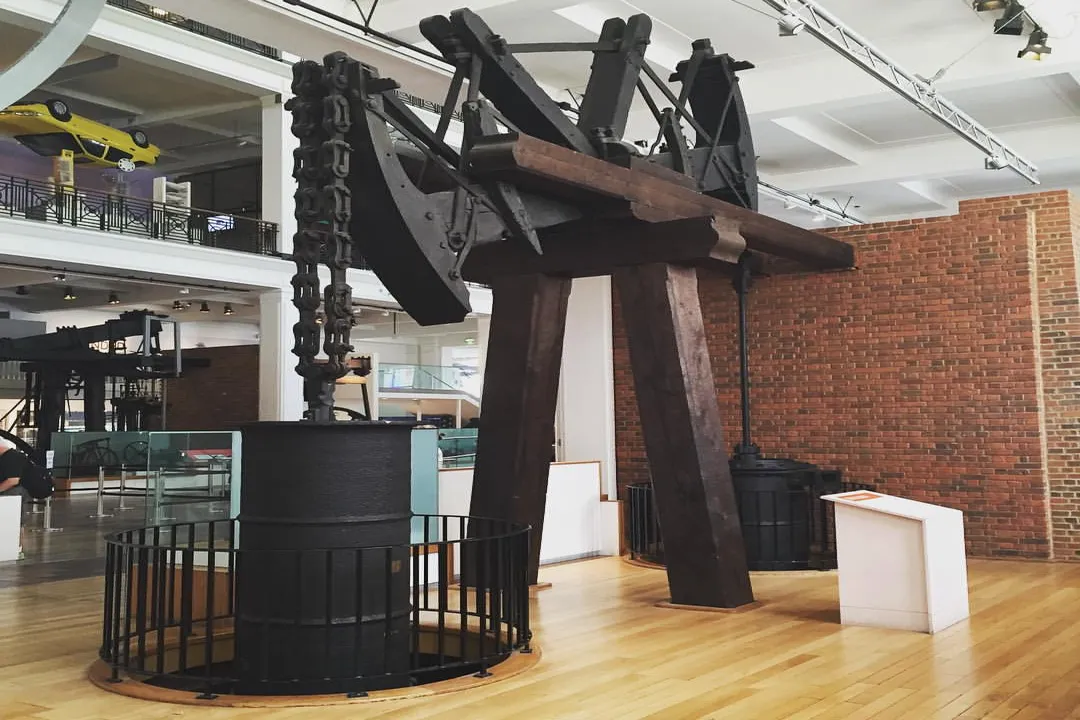
The introduction of the Newcomen atmospheric engine in the early eighteenth century marked a watershed moment, shifting the capability of industry away from the sheer brute force of muscle or falling water toward mechanical power derived from heat. Before this development, the most pressing crisis facing the early industrial age, particularly the burgeoning coal industry, was water. As mines dug deeper to access valuable seams of coal or minerals, they inevitably struck subterranean water tables, rendering the shafts impassable and their contents unreachable. [1][4][7] This environmental barrier constrained economic expansion far more than simple demand alone.
# Mining Crisis Solved
The core significance of Thomas Newcomen’s invention, first successfully deployed around in the British Midlands, was its ability to reliably and powerfully drain deep mines. [4][7] While earlier attempts at steam-powered pumping existed, such as Thomas Savery's engine patented in , those machines were limited in their capacity and prone to failure when lifting water to great heights. [1][8] Savery’s engine relied on steam pressure to force water up, which was inherently dangerous and restricted by the strength of the boilers and pipes. [1]
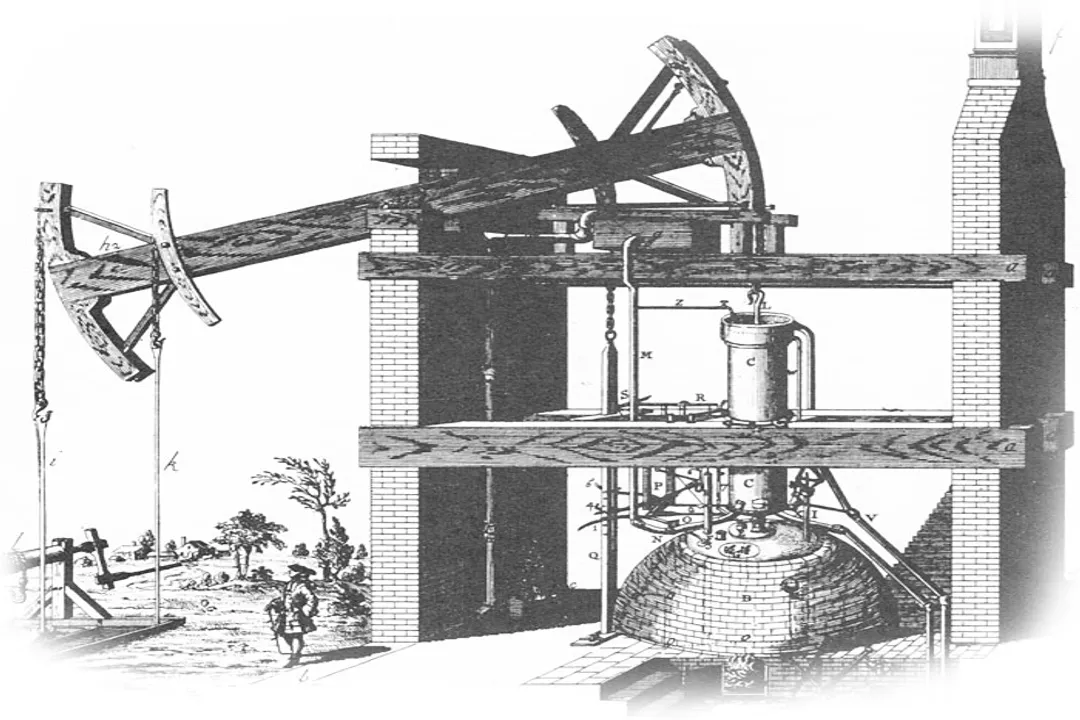
Newcomen’s design approached the problem from an entirely different, and much safer, physical principle: the atmosphere. [3][5] This atmospheric engine essentially used steam as a temporary intermediary to create a vacuum, allowing the weight of the surrounding air to do the actual work. [3][5] This distinction was critical; it meant the engine could be scaled up considerably without immediate catastrophic risks associated with high internal pressure, allowing it to achieve the necessary lift height for deep mines. [1][7]
# Atmospheric Mechanics
Understanding how the Newcomen engine operated explains why it was so transformative, even though it was thermally inefficient by later standards. [9] The operation involved a cyclical process driven by the differential between steam pressure and atmospheric pressure. [5]
First, a large cylinder, open at the top, would be filled with steam from an external boiler, typically raising a massive beam connected to the piston within that cylinder. [3][5] Once the steam filled the volume below the piston, the steam inlet valve was closed, and a jet of cold water was sprayed into the cylinder. [5] This injection immediately condensed the steam, creating a near-vacuum beneath the piston. [3][5] Because the top of the cylinder was open to the atmosphere, the massive pressure of the outside air—approximately $14.7$ pounds per square inch at sea level—pushed the piston down into the cylinder. [3][5]
This downward stroke, powered by atmospheric pressure, was the working stroke. [5] The beam, hinged like a seesaw, had the pump rods attached to one end and the piston rod attached to the other. [7] As the piston was driven down, the opposite end of the beam was lifted, raising the water from the mine sump through a system of pipe rods. [7] Following the downstroke, the condensed water and residual steam were expelled from the bottom of the cylinder, the steam inlet was reopened, and the cycle began again. [5]
The sheer physical dimensions of these machines speak to the low energy density of the system. To generate enough force from atmospheric pressure alone, the cylinders had to be enormous. [1] Engines often featured cylinders perhaps inches in diameter, but larger models existed, sometimes exceeding inches in diameter, requiring a substantial amount of coal to maintain the necessary constant steam supply. [1] A look at the sheer scale reveals that early industrial power infrastructure was less about refined engineering and more about massive material presence, requiring significant investment in iron casting and construction expertise just to build the pump housing. [2][7]
# Industrial Reach
The impact of reliable, mechanical drainage cannot be overstated for the nascent Industrial Revolution. [6] Before Newcomen, mining operations were often halted during wet seasons, or shafts were capped entirely once water infiltration became too severe. [1][9] The engine changed the geographical viability of resource extraction. It allowed miners to access deeper, richer coal and tin deposits that were previously untouchable. [6] This access to greater quantities of fuel, specifically coal, meant that the Newcomen engine, despite its own high fuel consumption, was instrumental in supplying the necessary energy source for the next wave of mechanical innovation. [1][6]
One interesting observation is how localized the early deployment was. While the design was groundbreaking, the initial infrastructure—the need for specialized ironwork and a constant, local supply of fuel to operate the engine—meant that they clustered near major mining districts, particularly in Cornwall, the North East of England, and the Black Country. [6] This early concentration created regional industrial hubs where the engine became the undeniable centerpiece of the local economy, often dictating the rhythm of labor and capital investment in the area for decades. [6] Furthermore, the adoption rate suggests a significant level of trust built over time, as early owners faced a substantial capital outlay for an unproven (though theoretically sound) machine. [9]
# Efficiency and Improvement
While the Newcomen engine was the first practical application of steam power for industrial use, it was far from efficient by modern standards, or even by the standards set within a generation or two. [3][9] Its primary thermal weakness lay in the method of condensation. [1][3] By repeatedly heating and cooling the same large cylinder with steam and then cold water, a tremendous amount of energy—fuel—was wasted heating up the metal walls of the cylinder with every single stroke. [1][5] Much of the heat input was absorbed by the iron itself rather than contributing to the motive force. [9]
Estimates place the thermal efficiency of the Newcomen engine in the range of only about one to two percent. [1][5] This poor performance meant that the engines required enormous amounts of coal to run, tying their operation closely to the very resource they were helping to extract. [1] In regions where coal was scarce or expensive, the engine's operational cost could negate its benefits. [9]
However, the engine’s significance is not diminished by its inefficiency; rather, its existence created the very need for better efficiency. The success of the atmospheric engine proved the concept of converting heat into continuous mechanical motion on an industrial scale. [8] It established the architecture of the reciprocating steam engine—the cylinder, piston, and beam mechanism—which Thomas Watt would later refine. [1][9] Watt’s crucial innovation, the separate condenser, directly addressed the Newcomen engine's greatest flaw by keeping the cylinder hot while condensing the steam in a separate vessel, drastically reducing wasted heat and increasing efficiency by up to percent. [1][9] In essence, Newcomen built the stage, and Watt perfected the performance.
# Legacy and Data
The Newcomen engine remained in use for many decades, sometimes even alongside later, more advanced designs, especially where coal was extremely cheap or where the reliability of the older, simpler machine was preferred over the mechanical complexity of newer types. [1][3]
To illustrate the sheer investment and scale, one can look at the components. A typical early engine required a massive boiler, a large cylinder, and an elaborate beam structure, often made entirely of cast iron. [2] The sheer tonnage of metal in a single installation represented a significant industrial commitment. [7]
| Component Feature | Typical Dimension (Approximate) | Significance |
|---|---|---|
| Cylinder Diameter | to inches | Dictated the size of the atmospheric force available [1] |
| Working Stroke Height | to feet | Determined how much water could be lifted per cycle [7] |
| Thermal Efficiency | % to % | Led to high operational fuel costs [1][5] |
| Primary Power Source | Atmospheric Pressure | Made the engine safer than high-pressure designs [3] |
The Newcomen engine was not just a machine; it was an economic enabler that unlocked subterranean wealth, demonstrating the first sustained, large-scale conversion of thermal energy into kinetic energy applicable to industry. [6][9] It was the foundational technology that proved the potential of steam, making the widespread industrialization that followed inevitable.
Related Questions
#Citations
The Newcomen steam engine - The Roots of Progress
Newcomen Engine, circa 1750 - The Henry Ford
Newcomen atmospheric engine - Wikipedia
Thomas Newcomen and the Steam Engine
Thomas Newcomen's Steam Engine - Physics
The Newcomen engine and its role in Britain's industrial revolution
Newcomen Engine, Historical Landmark - ASME
Steam Engine is Developed | Research Starters - EBSCO
Newcomen steam engine - Britannica