What is the most efficient steam engine?
Determining the single "most efficient" steam engine is complex because efficiency varies drastically depending on the engine’s size, operating pressure, application, and whether the comparison is against contemporary engines or modern power systems. [5] The historical pursuit of efficiency drove significant innovation, moving from simple, early atmospheric engines to sophisticated multi-stage machines and, eventually, to turbines. [3]
# Reciprocating Limits
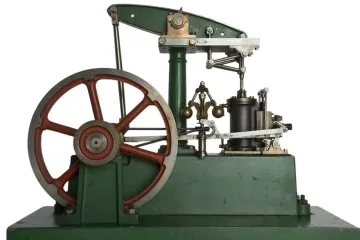
For reciprocating steam engines, efficiency improvements were historically tied to increasing the expansion ratio—the ratio of initial steam volume to final volume before exhausting to the condenser or atmosphere. [1] Early engines, like the Newcomen atmospheric engine, were notoriously inefficient, converting only a small fraction of the fuel's heat energy into mechanical work. [5] James Watt’s improvements, particularly the separate condenser, dramatically boosted performance by allowing the steam to do work during expansion rather than relying on atmospheric pressure to push the piston down after condensation. [1]
The evolution continued through compounding. A simple expansion engine exhausts steam directly to the condenser or atmosphere after one cylinder has extracted work. [1] In contrast, compound engines use multiple cylinders in series: high-pressure steam first expands in a smaller cylinder, then the lower-pressure, higher-volume exhaust steam moves to a larger cylinder for further expansion. [1][2] Double-expansion (two cylinders) and triple-expansion (three cylinders) engines were the pinnacle of this reciprocating design philosophy. [1][2] By using steam at progressively lower pressures across larger cylinders, the engine extracts more total work from the initial high-pressure steam charge. [1]
When discussing the peak efficiency of this reciprocating class, engines designed for marine propulsion often featured highly optimized triple-expansion designs, sometimes achieving thermal efficiencies in the range of 18% to 20% under ideal, large-scale conditions. [1][2] This level of optimization required precision engineering regarding valve timing and cylinder insulation to manage heat loss. [2]
# Condenser Effect
A critical factor separating moderately efficient engines from the best reciprocating designs is the use of a condenser. A condensing engine exhausts its used steam into a vessel where it is rapidly cooled and turned back into water, creating a vacuum (or partial vacuum) on the exhaust side of the piston. [1] This vacuum provides a substantial pressure differential across the piston, resulting in more work extracted per stroke. [1] Non-condensing engines, often called "high-pressure" engines (though the term is relative), simply exhaust the used steam into the atmosphere, limiting their efficiency potential. [1] The superior efficiency of condensing engines is evident when looking at historical benchmarks; an engine designed to use condensation will invariably outperform an equivalent non-condensing version of the same era. [1][2]
# Turbine Gains
The reciprocating engine eventually met its theoretical limit, largely due to the physical constraints of valve chests, ports, and the "wasted" space within the cylinder, which required the steam to fill volume before useful work could begin (clearance volume). [2] The introduction of the steam turbine fundamentally changed the efficiency landscape because it overcame many of these mechanical roadblocks. [2]
Steam turbines use nozzles to direct high-velocity steam onto blades connected to a rotor, generating continuous rotational power rather than pulsating linear power. [2] Because the process is continuous and relies on impulse and reaction forces across many stages, turbines can achieve much higher expansion ratios more smoothly than any reciprocating engine. [2][6] At large scales, such as those used in central power stations, multi-stage steam turbines can achieve thermal efficiencies exceeding 40%, and sometimes approaching 50% when integrated with other technologies. [5][6] The primary design goal for maximizing turbine efficiency involves increasing the initial temperature and pressure of the steam, often utilizing supercritical or ultrasupercritical steam cycles. [3][6]
The contrast here highlights why defining the "most efficient" depends on the category. A high-end, triple-expansion reciprocating engine might top out around 20% thermal efficiency, whereas a modern utility-scale turbine system, operating on advanced cycles, can nearly triple that figure. [5]
# Advanced Cycles
The push for efficiency today moves far beyond simple historical designs and focuses on manipulating the thermodynamic state of the steam itself. Advanced steam technology involves operating at pressures and temperatures far exceeding those of early industrial engines. [3] Modern utility boilers often operate in the supercritical range (above 22.1 MPa or 3,200 psi) or even ultrasupercritical ranges. [3] These conditions allow the water to transition to steam without boiling at a discrete point, enabling higher Carnot efficiency limits. [3] When these high-temperature cycles are paired with highly optimized, multi-stage turbines, efficiencies climb significantly, demonstrating that the process cycle is often more important than the piston mechanism itself. [6]
The difference in operational requirements is stark. While a historical marine triple-expansion engine might have used steam around 300 psi and , a modern ultrasupercritical power plant might push steam temperatures past () and pressures above $4,500$ psi. [3] This severe operational difference means that comparing a historical masterpiece against a modern installation is comparing two different eras of thermodynamics in practice. [3][5]
# Efficiency Benchmarks
To place these figures in context, thermal efficiency measures how much of the energy content in the fuel is successfully converted into usable work, with the remainder lost, mostly as waste heat to the environment. [5]
| Engine Type / Cycle | Approximate Thermal Efficiency Range | Context |
|---|---|---|
| Simple Atmospheric Engine (Newcomen) | $<1%$ | Early Industrial Revolution |
| Simple Expansion Engine (Early Watt) | Late 18th Century | |
| Triple Expansion Reciprocating Engine (Peak) | $15-20%$ | Late 19th/Early 20th Century Marine/Stationary |
| Modern Steam Turbine (Large Scale) | $35-45%$ | Standard Utility Power Generation |
| Advanced USC Turbine Systems | Approaching $50%$ | State-of-the-Art Power Plants |
| Steam Locomotives (Average) | $5-10%$ | Railway Transportation |
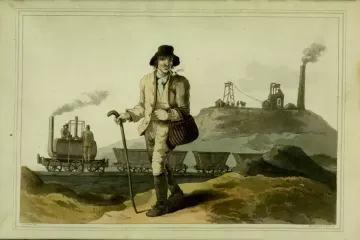
It is interesting to note that railway steam locomotives, despite often running large engines, were generally much less efficient than their stationary or marine counterparts. [9] This gap arose because locomotives had to operate across a massive range of power demands, lacked the space for large, highly efficient condensing systems, and had to prioritize reliability and rapid responsiveness over maximizing thermodynamic performance. [9] A locomotive needed to perform adequately whether pulling a light passenger train up a shallow grade or a heavy freight train up a mountain pass, a design compromise that penalized peak efficiency significantly. [9]
Considering the absolute highest recorded efficiencies for any steam-driven machine, the modern, large-scale, advanced steam turbine utilizing supercritical or combined cycles holds the title for converting the highest percentage of fuel energy into electricity. [5][6] However, if the question is narrowed strictly to the reciprocating type, the peak achievements lie with the best-designed, most highly compounded, and fully condensing marine or central station engines of the early 20th century. [1][2]
The principle that drove reciprocating efficiency was maximizing the area under the pressure-volume curve on an indicator diagram by extending the expansion ratio as far as possible before exhausting the steam, ideally into a vacuum. [1] For turbines, the efficiency driver is maximizing the temperature differential across the entire blade path, which necessitates moving into ultra-high pressure and temperature regimes that were simply impossible for metal cylinders and pistons to handle safely and reliably in the reciprocating era. [3]
# Practical Efficiency Considerations
When looking at historical competition between engine types, the decision wasn't always purely about the percentage figure cited by the design engineer. For instance, a triple-expansion engine might have a better peak efficiency than a simpler double-expansion engine, but the simpler engine might have been chosen for a particular factory because it required less maintenance downtime or was cheaper to build initially. [2] In the context of small, independent power generation, simplicity often trumps marginal efficiency gains; a small, straightforward engine with known wear characteristics might be preferred over a complex machine that requires specialized staff and perfect vacuum conditions to realize its theoretical 20% efficiency advantage over a simpler 15% design. [2][10]
This practical trade-off is a recurring theme. While the world's most efficient steam engine is likely a multi-gigawatt utility turbine operating at near-ultrasupercritical conditions today, the engines that powered the industrial revolution—the ones that changed the world—were those that offered the best balance between initial cost, maintenance accessibility, and usable efficiency for their specific power rating and duty cycle. [5] The most efficient engine is the one that delivers the required power output for the lowest total cost of ownership over its expected lifespan, which is a calculation that the raw thermal efficiency percentage alone cannot answer. [1][2]
#Videos
The most simple and efficient steam engine in history - YouTube
Related Questions
#Citations
What was the most efficient reciprocating steam engine - Reddit
Most efficient steam engine design?
Advanced steam technology - Wikipedia
What was the most efficient steam engine ever built, and how much ...
Maximum efficiencies of engines and turbines, 1700-2000
What is Modern Steam? - Kaw Valley Rail Heritage Conservancy
The most simple and efficient steam engine in history - YouTube
efficient steam engines | Smokstak® Antique Engine Community*
The most efficient engine :: From The Depths General Discussions