Why was James Watt's invention important?
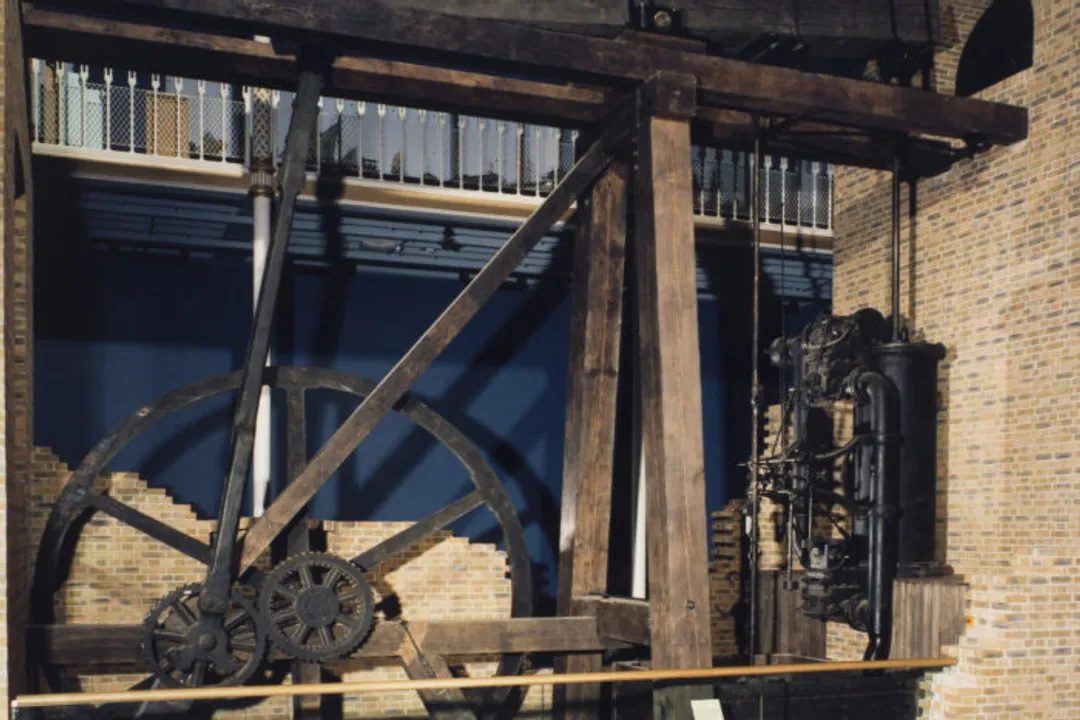
The history of industrial power is fundamentally marked by a single, elegant mechanical refinement conceived on a Sunday walk. Before James Watt, the steam engine, primarily in the form of Thomas Newcomen’s atmospheric engine from the early 1700s, was a crude and limited technology. [6][7] While it successfully pumped water from increasingly deep mines, solving a major problem for coal extraction, its operation was frightfully inefficient. [4][6] It functioned by alternately heating and then cooling the same massive cylinder with steam and cold water, a process that wasted immense amounts of fuel in constantly changing the metal’s temperature. [1][6][7] This thermal inefficiency meant that human enterprise remained largely bound by existing natural constraints—relying on the vagaries of flowing water to power mills or the brute force of animals. [1]
# Efficiency Leap
Watt, an instrument-maker working at the University of Glasgow, encountered this flawed Newcomen model in 1763 while performing repairs. [5][6][8] He quickly grasped the core problem: the wasteful cyclical cooling and reheating of the cylinder consumed most of the steam’s thermal energy rather than converting it into useful mechanical energy. [4][5] The breakthrough moment arrived in May 1765 while walking across Glasgow Green, an experience often likened to Archimedes’ famous leap. [1] Watt realized that condensation—the process that created the vacuum to pull the piston—did not need to happen inside the working cylinder. [4]
His concept, the separate condenser, allowed the main cylinder to operate at a consistent, high temperature, receiving steam repeatedly without shock cooling. [1][4] Condensation would occur in an attached, cooler chamber. [5] This single alteration was revolutionary. Professor Colin McInnes noted that Watt’s condenser effectively tripled the efficiency of the steam engine; mill and mine owners could now achieve three times the mechanical work for every unit of coal purchased. [1] This meant that Britain’s known coal reserves were, in effect, trebled in value, fundamentally altering the economics of industry. [1] The engine, once a marginal device, was transformed into the mechanical workhorse of the Industrial Revolution. [4]
This intellectual shift, derived from applying scientific principles—specifically the concept of latent heat, something Watt learned from his colleague Joseph Black—to a practical mechanical issue, provided the blueprint for harnessing energy-dense fossil fuels effectively. [1][5] It was, as some suggest, the invention that concluded the era defined by pre-industrial, renewable energy sources. [1]
# Expanding Utility
While the separate condenser addressed fuel consumption, the engine still only produced a reciprocating (back-and-forth) motion, making it excellent for pumping but limiting for factory production. [2][5][6] Industrialists increasingly needed power to turn wheels for machinery like looms and grinding stones. [6] Watt spent the next decade building upon his initial success, despite financial constraints that forced him to work as a surveyor for several years. [5]
The partnership with Matthew Boulton, starting in 1775, provided the necessary capital and organizational structure to move beyond the prototype stage. [4] Once financially secure, Watt continued refining the machine, resulting in several key additions that made the engine universally applicable:
- Rotary Motion: In 1781, facing a patent barrier for the obvious solution (a crank), Watt and Boulton developed the sun-and-planet gear. [4][5] This ingenious mechanism converted the up-and-down motion of the piston rod into continuous rotational power, opening the door for steam engines to drive factory machinery directly. [2][6]
- Double Action: Patented in 1782, the double-acting engine used steam pressure to push the piston on both strokes—forward and backward—doubling the power derived from each rotation. [4][5][7]
- Kinematic Precision: To support the double-acting engine, Watt devised the parallel motion linkage in 1784. [4][5] This arrangement of rods ensured the piston rod moved in a perfectly straight line, translating the rocking beam’s circular arc into the required perpendicular action—a feat Watt described as one of his most ingenious mechanical contrivances. [4]
- Regulation: The later addition of a centrifugal governor, suggested by Boulton, allowed the engine to automatically regulate its own speed by modulating the steam intake, ensuring consistent performance for sensitive manufacturing processes. [4][5][6]
Furthermore, recognizing that clients needed a standard against which to measure this new mechanical power, Watt developed the concept of horsepower, allowing them to translate the engine’s output into terms they understood—the equivalent number of draft horses it could replace. [5][8] The sheer scope of these improvements meant that the final Boulton & Watt engines bore little resemblance to the original Newcomen model. [5]
# Commercialization and Partnership
Watt's brilliance as a theorist and mechanic needed a commercial complement, which he found in Matthew Boulton. [4] After Watt’s initial backer, John Roebuck, went bankrupt in 1772, Boulton, an entrepreneur and manufacturer, took over the patent rights. [4][5] The Boulton & Watt partnership, established in 1775, became the engine of the Industrial Revolution. [2][4]
Boulton provided the financial backing, managerial expertise, and access to skilled metalworkers necessary for the difficult task of precision machining, particularly boring the large, tight-fitting cylinders Watt’s design required. [4][6] While Watt focused on design in his workshop, Boulton focused on marketing, negotiating, and standardizing production at the Soho Manufactory. [6] This division of labor was highly effective. While Watt famously confessed to hating bargaining, Boulton thrived on it. [4] By standardizing the manufacture of these complex machines, Boulton & Watt could deliver consistent, high-quality engines across Britain and Europe. [6] By the time their main patent expired in 1800, the firm had installed over 500 engines, cementing steam power as the dominant energy source. [6]
This successful industrial structure, combining pure invention with applied engineering and commercial scaling, set a precedent for future innovation, moving technology from bespoke repair to mass-produced, reliable industrial tools. [6]
# Societal Earthquake
The importance of Watt’s work transcends mere mechanical improvement; it redefined geography, labor, and human scale. [1] By making steam power economical and adaptable—no longer confined to the banks of fast-flowing rivers—Watt’s engine dictated a new pattern of settlement and industry. [1][6]
Manufacturers could now build large, consistent factories in urban centers or inland areas where coal was plentiful and water power was absent. [1][6] This fundamentally accelerated urbanization, fueling the rapid expansion of industrial cities like Manchester. [6] The cotton industry, brewing, and iron production were all transformed as their energy source became reliable, concentrated, and scalable. [1]
The direct and indirect effects cascaded across the economy:
- Fuel Demand: The efficiency of the engines meant they could run more often, leading to a national frenzy for coal consumption, the high-density fuel that made the system viable. [1]
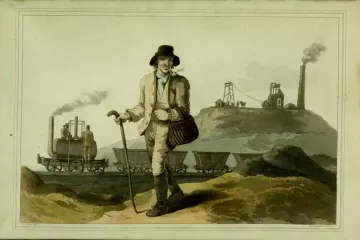
- Transportation Revolution: While Watt himself avoided high-pressure steam due to safety concerns with contemporary boilers, his foundational principles underpinned later breakthroughs in transport. [4][6] Engineers like Richard Trevithick and George Stephenson adapted the mechanics to create steam locomotives and steamships, drastically shrinking distances for moving raw materials and finished goods. [6][7]
- Scientific Measurement: In recognition of his impact on power generation and efficiency, the International System of Units (SI) eventually named its unit of power the watt (W) in his honor. [4][5][8]
# Enduring Measurement
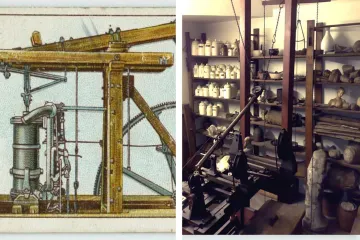
The legacy of James Watt is dual-layered: it is inscribed in the very fabric of modern industrial infrastructure and it is captured in our system of measurement. [4][6] His work transitioned engineering from an artisanal craft to an applied science, providing tangible models for future study. [6]
Perhaps the most profound acknowledgment of his impact lies in a scientific theory about the Earth itself. Many scientists argue that the changes unleashed by Watt—the massive-scale exploitation of fossil fuels—have begun to alter the physical makeup of the planet, leading some to propose that the Anthropocene Epoch should officially begin with the widespread adoption of his highly efficient steam engine. [1][4] The ability to convert stored chemical energy (coal) into mechanical motion so effectively, an ability cemented by the separate condenser and rotary motion, marked the decisive break from reliance on immediate, natural solar energy captured through photosynthesis. [1]
From an economic perspective, Watt's success highlights that invention alone is insufficient for societal overhaul; it requires a productive partnership that integrates technical novelty with commercial drive. The fact that Boulton and Watt appeared together on the fifty-pound note, symbolizing the union of the 'idea' and the 'power to deliver it,' speaks to this essential duality. [2][4] When considering the importance of James Watt, one is looking at the moment the world secured a reliable, transferable, and immense source of non-animal power, changing forever how energy is measured, how goods are made, and ultimately, how humanity interacts with the planet's geology and atmosphere. [1][8]
Related Questions
#Citations
James Watt | Biography, Inventions, Steam Engine ...
James Watt
James Watt - Magnet Academy
History of the Watt Steam Engine
Boulton & Watt engine - Age of Revolution
James Watt's remarkable invention that created the modern ...
James Watt and the sabbath stroll that created ...
James Watt