What did James Watt do and why was it significant?
James Watt began as a Scottish instrument maker, a trade that gave him the mechanical familiarity required to later transform one of the era’s most essential but clumsy machines. [4][2] Born in Greenock, Scotland, in 1736, his early work involved repairing scientific instruments, giving him hands-on experience that few pure theorists possessed. [2][6] This background in precision mechanics positioned him perfectly to see the fundamental flaws in existing technology, rather than just treating the symptoms. [7]
# Early Work

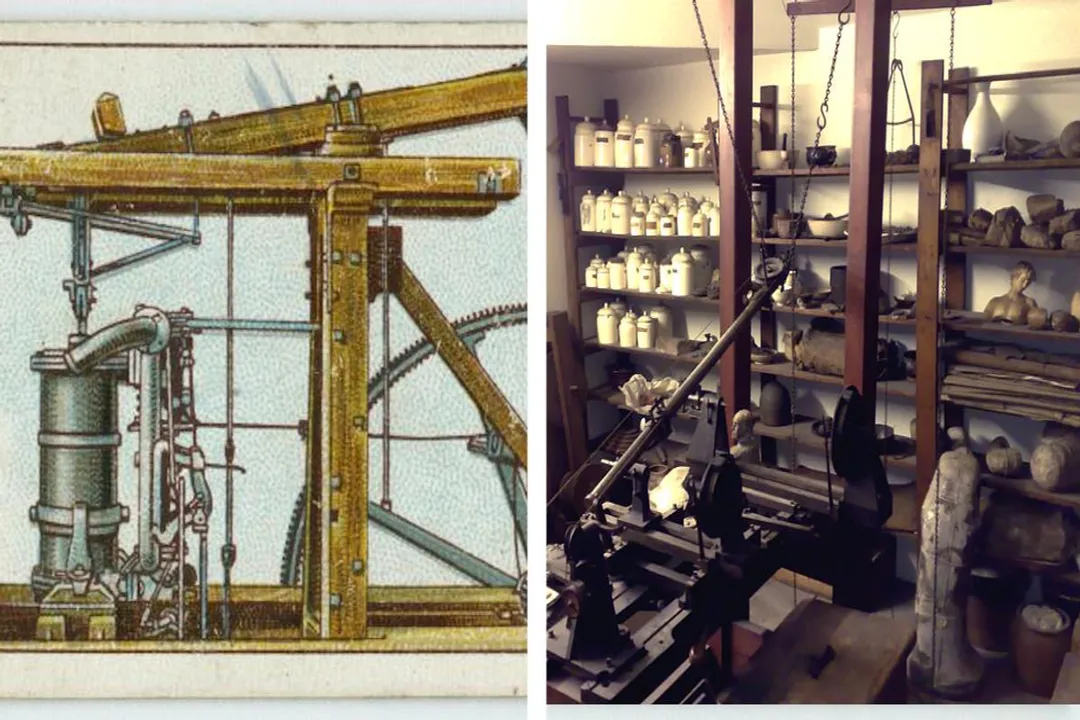
Watt’s initial encounter with the technology that would define his career came while he was employed at the University of Glasgow, working as an instrument maker for the university itself. [6][9] His specific task was repairing a model of the atmospheric engine developed by Thomas Newcomen. [4][6] This engine, developed around 1712, was primarily used for pumping water out of deep mines, a vital necessity as mining operations extended further underground. [2][9]
# Atmospheric Engine Limits
The Newcomen engine, while revolutionary for its time, was incredibly thirsty for fuel, often consuming massive amounts of coal relative to the work it performed. [4][6] The fundamental inefficiency lay in its design cycle. [7] In the Newcomen design, steam was introduced into a large cylinder, then cold water was injected directly into that cylinder to condense the steam, creating a vacuum that allowed atmospheric pressure to push the piston down. [6][7] Immediately after condensation, the cylinder itself was ice-cold. [6] The next stroke required the injection of hot steam to reheat the entire cold cylinder before it could create another vacuum. [7] This constant cycle of heating and cooling the working cylinder wasted enormous amounts of energy, making fuel costs prohibitive outside of the immediate vicinity of a cheap coal source. [2][6]

# Condenser Insight
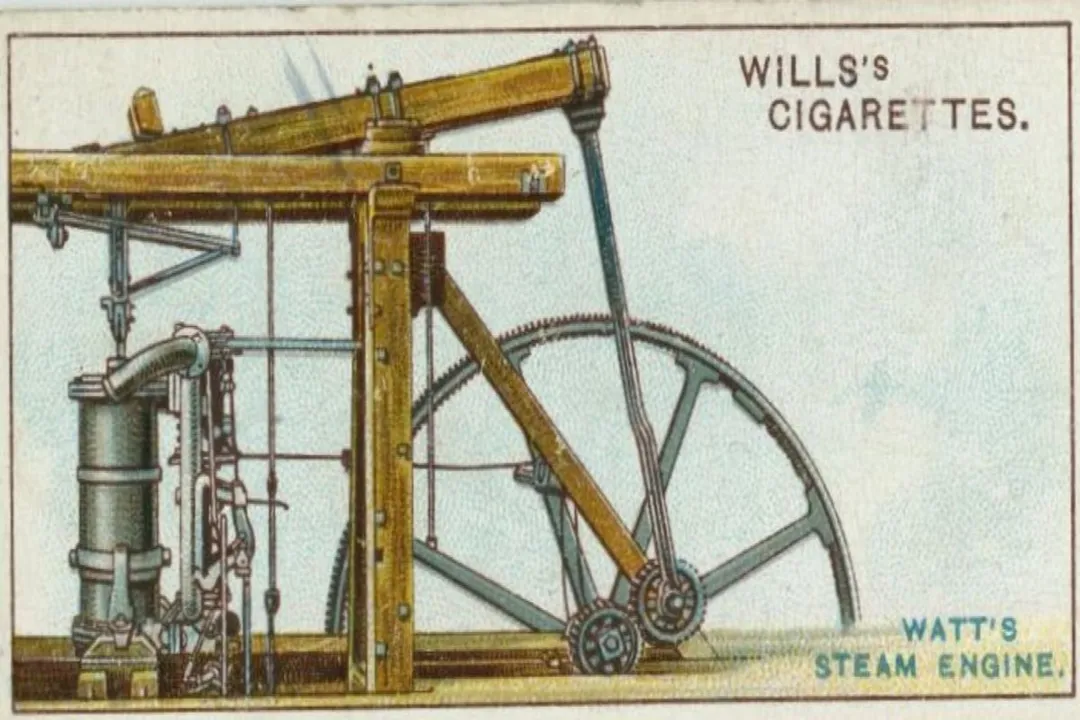
Watt's flash of genius occurred in 1765 while contemplating this wasteful process. [6][7] He recognized that the excessive heat loss from the repeatedly cooled cylinder was the root of the problem. [7] His solution was elegantly simple yet profoundly transformative: the separate condenser. [2][4]
Instead of condensing the steam inside the main working cylinder, Watt proposed routing the spent steam into a separate, permanently cold chamber where condensation would occur. [2][7] This meant the main cylinder could be kept permanently hot, receiving fresh steam for every stroke without the penalty of having to reheat a chilled surface. [6][7] The practical result was staggering. By keeping the cylinder hot, Watt's engine could reduce the amount of coal burned by approximately 75 percent compared to the Newcomen model. [2][6] This efficiency jump immediately made steam power economically viable on a much broader scale. [9] The knowledge gained from repairing and optimizing this machine demonstrated that engineering success often hinges not on creating something entirely new, but on solving a critical, persistent inefficiency in an existing, established technology. [7]
# Commercial Development
While the scientific insight was Watt's alone, translating that invention into a commercially successful product required significant capital, manufacturing capability, and business savvy. [2][4] This necessity led to the formation of the legendary partnership with Matthew Boulton in 1775. [2][4][7] Boulton was a wealthy industrialist and manufacturer from the Midlands, possessing the resources and connections Watt lacked. [2]
The Boulton & Watt firm became the center for developing and patenting Watt's subsequent improvements. [4][7] Boulton understood the market potential, seeing that an efficient engine could revolutionize industries far beyond just mine dewatering, particularly in powering textile mills and factories. [2] Watt's initial patents secured his rights, but Boulton was instrumental in protecting those patents and scaling up production of the sophisticated new engines, moving the technology from theoretical demonstration to industrial mainstay. [4] This collaboration serves as a classic example where pure invention paired with industrial capital creates an exponential leap in technological dissemination. [1]
# Expanding Capability
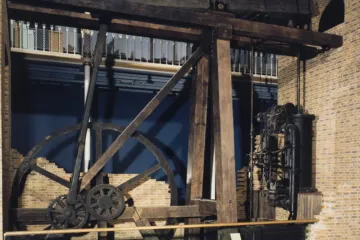
The separate condenser made the engine efficient, but it was still fundamentally a single-acting machine—it only pulled in one direction. [5][7] To power rotary machinery, like the looms and lathes required by manufacturing, the engine needed to produce continuous, circular motion. [7] Watt engineered several further improvements that unlocked the engine's true potential:
# Rotary Motion
The most immediate need was converting the vertical pumping action into a rotating drive shaft. [5] Watt initially avoided using a crank, as the concept was patented by others. [2] Instead, he and his team adopted the sun and planet gear mechanism to achieve rotary motion. [2][5] This allowed the steam engine to drive machinery directly, freeing factories from dependence on rivers for water wheels and allowing industrial centers to spring up wherever labor and raw materials were accessible. [4][2]
# Double Action
A further refinement was the double-acting engine. [5][7] Instead of only using steam pressure on one side of the piston to push it down (with the return stroke relying on the weight of the beam or a pump rod), Watt introduced steam alternately to both sides of the piston. [5] This meant the engine was under powered stroke constantly, leading to smoother operation and greater output from a physically smaller engine. [7] To manage this, he also introduced separate steam ports to direct the steam precisely where it was needed. [5]
# Speed Control
One challenge with the new, powerful engines was maintaining a consistent speed regardless of the load being driven—a variable that could ruin fine textile work or break machinery. [5] Watt addressed this by inventing the centrifugal governor, also known as the flyball governor. [5][7] This ingenious mechanism used rotating weights that rose and fell with the engine speed, using linkages to subtly adjust the steam intake valve, thus self-regulating the engine's pace. [7] It was an early, effective piece of feedback control, a principle that remains central to engineering today. [5]
# Other Devices
Watt’s inventive curiosity also led to other specialized tools that enhanced the usability and understanding of steam power. [5] He developed the Watt Indicator to graphically measure the pressure of the steam acting on the piston inside the cylinder, providing data necessary for further performance optimization. [5] Furthermore, he improved the pressure gauge, allowing operators to monitor steam conditions more accurately. [5] It is worth noting that while Watt focused on mechanical improvements, his colleague, John Southern, may have been instrumental in developing the rotary motion component. [2]
# Industrial Revolution Foundation
The collective impact of these developments cannot be overstated. Prior to Watt’s engine, industrial power was geographically constrained. [2] Water wheels required fast-flowing rivers, and inefficient engines required proximity to cheap coal seams. [4] Watt’s engine, using significantly less fuel, dramatically expanded the economical operating radius for industry. [2]
Consider the difference in operational footprint. A typical Newcomen engine might require 40-50 tons of coal per day for a single mine pump. [6] By cutting that consumption by three-quarters, Watt made steam power economically feasible for smaller enterprises and for industries requiring substantial, continuous power anywhere in the country, not just beside a navigable waterway or a coal pit. [9] This decoupling of power source from geographic feature is perhaps the most profound, if often unstated, consequence of his work. If we were to calculate the energy return on energy invested for an early 18th-century factory relying on a water wheel versus one powered by a mature Boulton & Watt engine, the latter would show a far higher ratio of useful work produced per unit of fuel extracted and transported, making industrial expansion vastly more capital efficient. [1]
This reliable, concentrated source of mechanical energy directly powered the mills, factories, and foundries that defined the Industrial Revolution in Britain and later across the globe. [2][4] His work moved the world from an age powered by muscle, wind, and water to an age defined by steam. [4]
# Legacy and Measurement
James Watt continued to refine his engines and secure his patents throughout his life, eventually retiring from the manufacturing side of the business in 1800. [7] He passed away in 1819. [2][4] His contributions were recognized during his lifetime; he was made a Fellow of the Royal Society of London. [6]
His scientific curiosity extended beyond pure mechanics. He engaged in important chemical research, most notably regarding the composition of water, contributing to debates alongside contemporary chemists. [6] Though there is some historical debate regarding the exact extent of his contributions versus those of Joseph Priestley on this specific chemical matter, his engagement shows a mind interested in fundamental science as well as practical application. [6][8]
Today, the most enduring tribute to his mechanical mastery is the standard international unit of power: the watt. [2][4] A watt is defined as one joule of energy expended per second, a direct measure of the rate at which Watt’s engines performed their work. [3] Recognizing this, the unit of power itself carries his name, ensuring that every time electricity is measured—whether running a home appliance or a massive industrial motor—his role in defining industrial power is remembered. [4][3] While the early engines often operated at very low speeds by modern standards—perhaps only 15 to 20 revolutions per minute—the concept they introduced, continuous, measurable, and scalable mechanical power, remains the foundation of modern engineering. [7]
Related Questions
#Citations
James Watt | Biography, Inventions, Steam Engine ... - Britannica
James Watt - Wikipedia
James Watt - Magnet Academy - National MagLab
History - James Watt - BBC
7 Inventions from James Watt that Changed the World
James Watt - Heritage History
Biography of James Watt - MSU College of Engineering
James Watt: Industrial Revolution Spark Plug and Enlightenment ...
Inventors: James Watt