What were the major discoveries of James Watt?
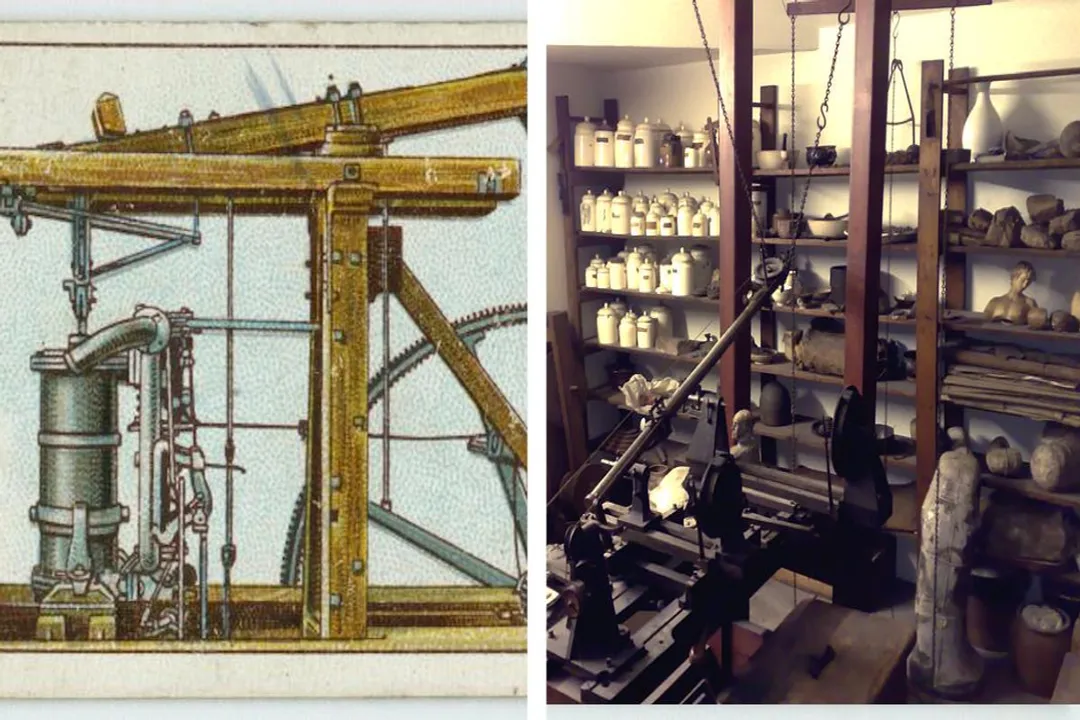
James Watt began his association with the steam engine not as a revolutionary inventor aiming to create something entirely new, but as a repairman looking to fix a known problem. Trained as a mathematical instrument maker, his connection to steam technology began in the early 1760s at the University of Glasgow when he was tasked with repairing a working model of Thomas Newcomen’s atmospheric engine. [1][2][7] This initial engagement revealed the engine's fundamental weakness: its staggering inefficiency in fuel consumption. [1][2] The problem wasn't in the concept of using steam to create a vacuum, but in the execution of condensing that steam. [4]
# Inefficient Engine
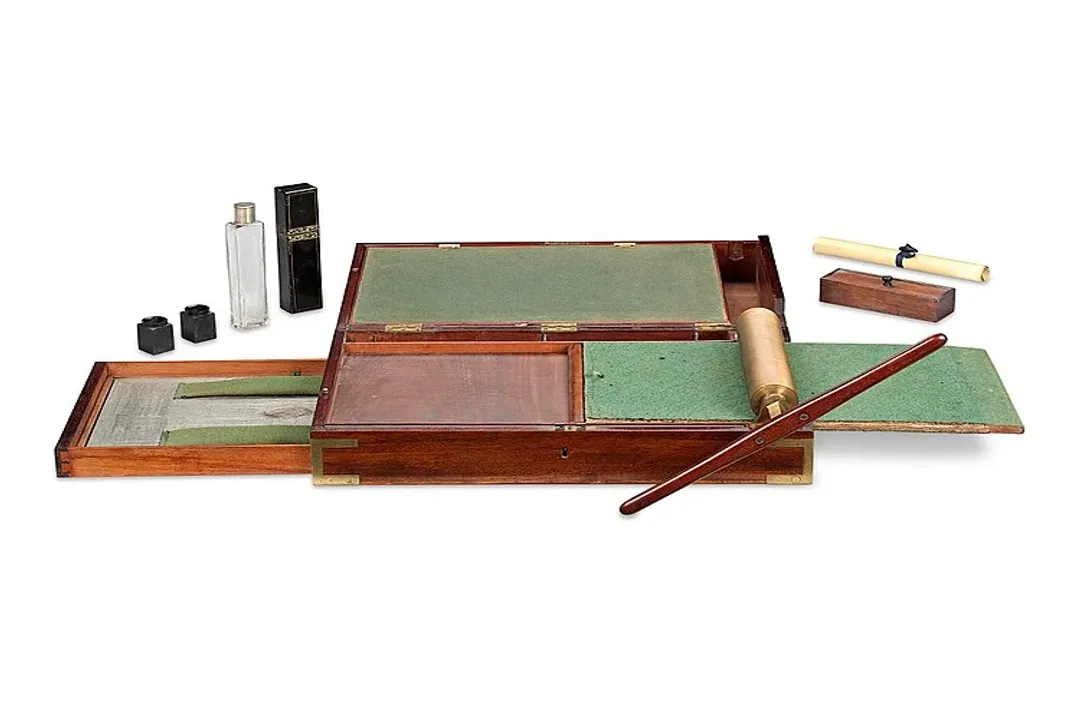
The Newcomen engine operated by injecting steam into a large cylinder, which was then cooled by spraying cold water directly inside it to condense the steam and create a vacuum, allowing atmospheric pressure to push the piston down. [1][2] This cyclical heating and rapid cooling of the main cylinder walls meant that a tremendous amount of the heat supplied by the boiler was constantly wasted simply reheating the cylinder metal on every single stroke. [4][7] Watt quickly recognized that if the cylinder could be kept constantly hot, the engine’s operation would become vastly more economical in terms of coal. [1][2]
# Condenser Insight
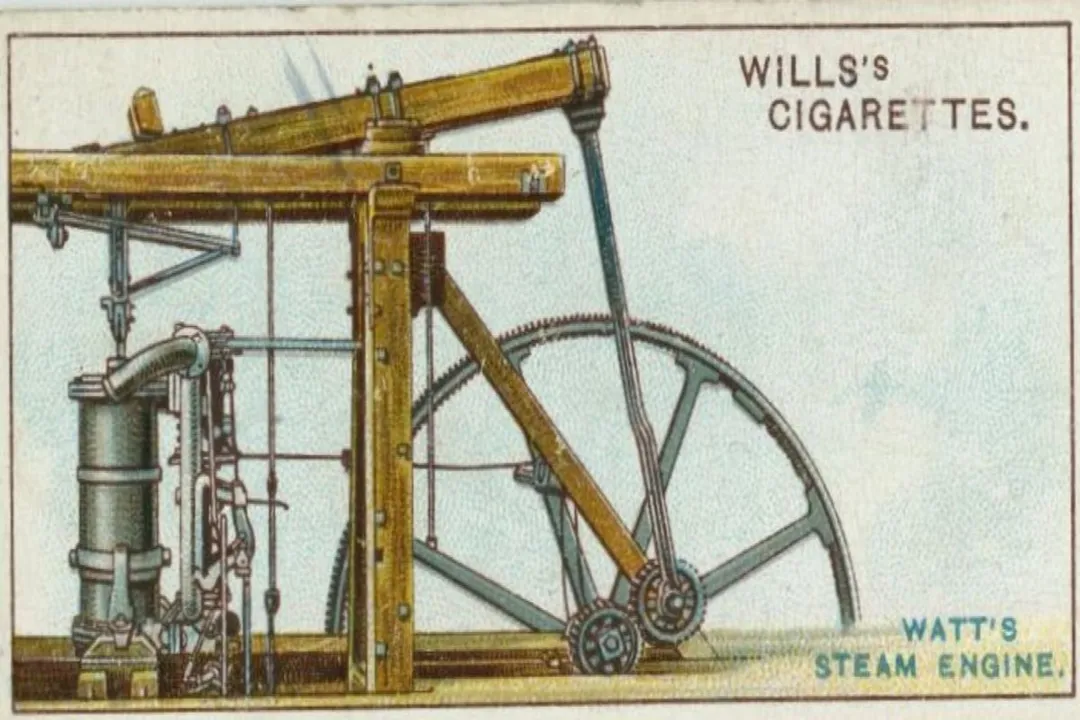
The major breakthrough, achieved around 1765, was the conceptual separation of the condensation process from the working cylinder. [1][4] Watt realized that the steam did not need to be condensed inside the cylinder; it could be drawn off into a separate, permanently cold vessel connected by a pipe. [2][7] By keeping the main cylinder hot, constantly bathed in high-temperature steam, and allowing condensation to occur in this isolated chamber, the massive energy wastage of the previous design was nearly eliminated. [1][4] This single modification, the separate condenser, is widely regarded as Watt's most significant contribution. [2][7]
The immediate effect of this change was profound. Watt's improved engine could operate on less than one-quarter of the fuel required by the Newcomen design for the same amount of work. [4] This economic shift changed the geography of industry. Prior to this, large factories powered by steam needed to be located very close to coalfields because hauling bulky coal over long distances was prohibitively expensive. [9] With Watt's engine slashing fuel consumption, steam power became economically viable in nearly any location, enabling factories to move closer to labor pools, raw materials other than coal, or market centers, profoundly reshaping industrial settlement patterns across Britain and beyond. [4]

# Rotary Power

While the separate condenser solved the efficiency problem for pumping water—the primary use of the Newcomen engine—Watt needed to adapt the machine for driving factory machinery, which required continuous rotary motion rather than the up-and-down reciprocating motion of a pump rod. [9] Early attempts to convert this motion, such as using a crank, proved problematic or legally difficult due to existing patents. [1][7]
To overcome these limitations, Watt and his business partner, Matthew Boulton, developed the Sun and Planet Gear system. [1][7] This arrangement of gearing allowed the engine’s piston movement to turn a central shaft continuously, providing the rotational energy needed for spinning jennies, looms, and grinding stones. [9] This innovation transitioned the steam engine from a localized drainage tool into the universal prime mover of the Industrial Revolution. [4][7] The ability to generate consistent, powerful rotary motion on demand, independent of water flow or wind speed, provided an unprecedented level of control over manufacturing schedules.
# Power Standardization
As Watt refined his engine, the need arose to effectively market and compare its performance against other sources of power, like horses, which were the prevailing source of non-water power. [7] To do this, Watt established a standardized unit of measurement for engine output: horsepower. [1][7]
Although the exact figures varied slightly depending on the source, Watt calculated that a horse could perform about 33,000 foot-pounds of work per minute. [7] This creation of a measurable, transferable metric was essential for commerce. Before this, describing an engine's capability was abstract; afterward, manufacturers could state clearly, "This engine is equivalent to twenty horses working continuously." This standardization turned abstract mechanical energy into a quantifiable commodity, aiding engineers in calculating the precise power requirements for new industrial machinery and allowing industrialists to compare competing power technologies on an equal footing. [7] This move from qualitative assessment to quantitative engineering is a key, often understated, discovery associated with his later career.
# Further Refinements
The quest for improved steam performance did not end with the condenser and the rotary conversion. Watt introduced several other significant improvements that increased the engine's utility and control. [1]
One crucial development was the double-acting engine. [4] In the Newcomen and Watt's early single-acting engines, only the atmospheric pressure pushed the piston down; steam pressure was only used to push it up or lift the weight on the other side of the beam. [1] Watt’s double-acting engine introduced steam alternately on both sides of the piston—first pushing it down, then pushing it up—leading to smoother operation and nearly doubling the effective power output for a given cylinder size. [4]
Additionally, he incorporated mechanisms for better regulation and safety. [1] The introduction of the throttle valve allowed operators to control the speed of the engine by regulating the amount of steam entering the cylinder. [1] He also introduced a steam pressure gauge to monitor the working conditions within the boiler system. [1] These refinements moved the steam engine from an experimental curiosity to a reliable, controllable industrial workhorse. [9]
# Partnership Success
It is difficult to discuss Watt’s technical discoveries without acknowledging the essential role of his business partner, Matthew Boulton. [1][4] Boulton provided the necessary capital and business acumen to scale Watt’s patented inventions. [4] While Watt was the mechanical genius devising the how, Boulton managed the how much and where. [1] The firm of Boulton & Watt did not simply sell engines; they often leased them, charging customers a fee based on a fraction of the fuel savings they realized by using Watt’s engine over older models. [4] This unique business model incentivized the efficient adoption of the new technology and provided a stable financial basis for Watt to continue his inventive work. [1] Watt’s ability to secure strong patent protection and then successfully monetize those protections, often through litigation, further cemented the commercial success of his discoveries. [4]
Related Questions
#Citations
James Watt | Biography, Inventions, Steam Engine ... - Britannica
Discoveries - James Watt - Science Hall of Fame - Digital gallery
James Watt - Wikipedia
7 Inventions from James Watt that Changed the World
James Watt: Architect of Progress Through Innovation - Scotland's Wild
James Watt and the Invention of the Steam Engine - Heritage History
James Watt: Industrial Revolution Spark Plug and Enlightenment ...
What Did James Watt Invent? - History on the Net
Inventors: James Watt