Who is the real father of the steam engine?
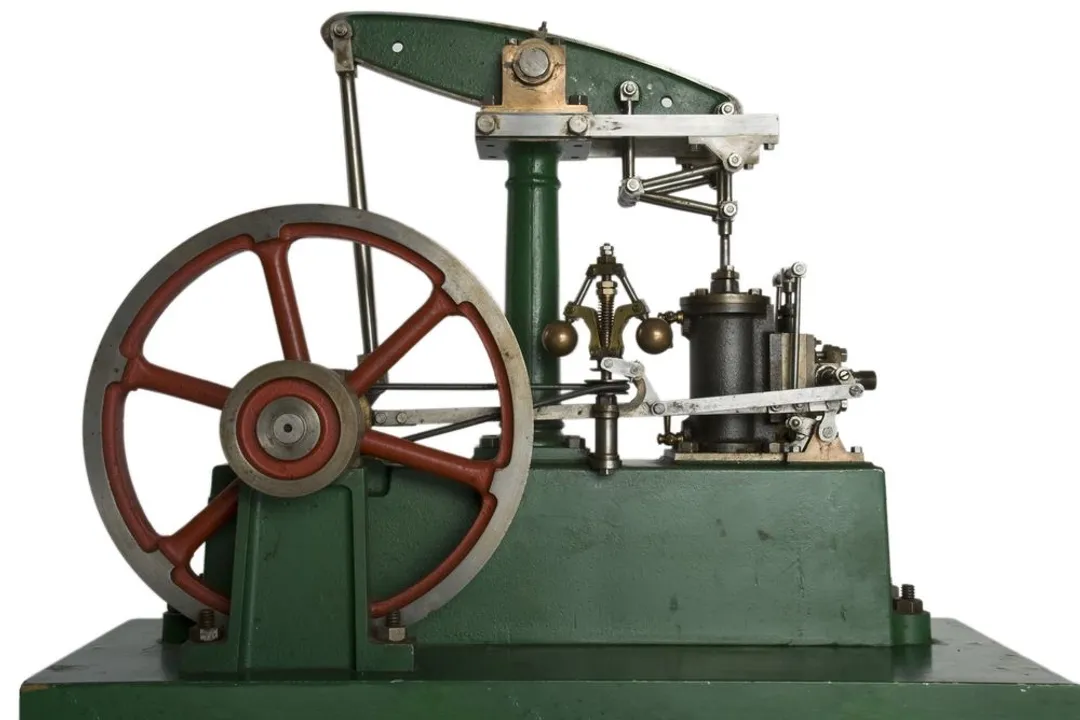
The narrative surrounding the steam engine’s creation is rarely straightforward; it involves brilliant precursors whose groundwork made subsequent, world-changing advancements possible. While many names contributed concepts across centuries, the title of "father" usually narrows down to two principal figures: Thomas Newcomen, who built the first practical machine, and James Watt, whose efficiency breakthroughs transformed it from a localized curiosity into the engine of the Industrial Revolution. [7]
# Early Engines

Before the mid-18th century, mechanical power relied heavily on water wheels, wind, or animal labor. These sources were location-dependent and often limited in scale. [7] The breakthrough that truly launched the age of steam power came from Thomas Newcomen, an English ironmonger. Around 1712, Newcomen designed and built the first commercially successful machine, known as the atmospheric engine. [7]
Newcomen's engine was a large, cumbersome apparatus designed almost exclusively for one purpose: pumping water out of deep mines, particularly tin and coal mines. [7] The mechanism worked by heating water in a boiler to create steam, which was then injected into a cylinder. When the steam condensed by spraying cold water into the cylinder, a vacuum was created, allowing the atmospheric pressure on the top of the piston to push it down, thus powering the pump rod. [7]
While Newcomen’s engine solved a massive industrial problem—flooded mines were collapsing productivity—it suffered from a crippling flaw: inefficiency. [7] To create the vacuum, the entire cylinder had to be heated by steam and then cooled by water injection in every single stroke. This constant heating and cooling wasted enormous amounts of fuel, making it expensive to run and limiting its use to locations where coal was exceptionally cheap, such as right next to a coal mine. [7]
# Watt's Awakening
James Watt, born in Greenock, Scotland, in 1736, was trained as a mathematical instrument maker. [2] His critical encounter with steam technology occurred in 1764 while he was tasked with repairing a working model of a Newcomen engine at the University of Glasgow. [5][7] He quickly recognized the engine’s inherent wastefulness. [5] He noted that the Newcomen cycle wasted about three-quarters of the energy because the cylinder walls were continually being cooled and reheated. [7]
This observation became the foundation of Watt’s eventual fame. He pondered how to keep the cylinder hot at all times while still achieving condensation. His solution, conceived in 1765, was the separate condenser. [1][5] Instead of cooling the main working cylinder, Watt proposed diverting the spent steam into a separate, permanently cooled vessel where condensation could occur. [5] The main cylinder itself could then remain constantly hot, drastically reducing fuel consumption. [2][5]
Watt sought a business partner who could handle the manufacturing and financing necessary to bring his concept to market. This partner turned out to be Matthew Boulton, an established manufacturer in Birmingham. [1][2] Their partnership, formalized in 1775, proved to be one of the most significant collaborations in industrial history. [1][2]
# Key Refinements
The separate condenser was the first major stroke of genius, but Watt and Boulton did not stop there. Watt’s subsequent improvements fundamentally transformed the machine's function, moving it from a simple up-and-down pump into a versatile source of rotary power. [1][5]
# Rotary Motion
For steam power to truly revolutionize industry—moving beyond mining drainage—it needed to drive machinery like the lathes, looms, and mills used in factories. [5] This required converting the reciprocating (up-and-down) motion of the piston into continuous rotary motion. Watt achieved this through the invention of the sun and planet gear mechanism, or later, the crank and flywheel system. [1][2] This innovation allowed steam power to be applied directly to factory shafts, a prerequisite for the factory system that defined the Industrial Revolution. [5]
# Double Action
Another essential refinement was the double-acting engine. [1] Early engines, including Newcomen’s and Watt’s initial improvements, only utilized steam pressure to push the piston in one direction (downward). The return stroke relied on the atmospheric pressure or the engine's own weight. [1] Watt’s double-acting engine admitted steam alternately to both sides of the piston, meaning steam pressure drove the machine on both the forward and return strokes. [1][2] This increased power output, smoothed the engine’s operation, and made the design much more efficient for continuous industrial work. [2]
# Inventor Versus Father
When assessing who deserves the title, one must distinguish between the inventor of the practical machine and the father of the effective, mass-producible, and highly adaptable engine. Thomas Newcomen successfully invented the concept that worked on a working scale, but his atmospheric engine’s inefficiency meant it was tethered geographically to cheap fuel sources. [7]
Consider this comparison of operational profiles:
| Feature | Newcomen Atmospheric Engine (~1712) | Watt Engine (Post-1775 Improvements) |
|---|---|---|
| Primary Mechanism | Atmospheric pressure on a vacuum | Direct steam pressure (double-acting) |
| Condensation | Inside the main working cylinder | In a separate, external condenser |
| Fuel Efficiency | Very low (high coal consumption) | Dramatically higher (using up to 75% less fuel) [7] |
| Motion Type | Reciprocating (pumping only) | Rotary motion achievable (factory application) |
It is the massive leap in efficiency and versatility that anchors James Watt’s claim to the title of "father". [3] Watt’s engine drastically lowered the operational cost of steam power. Where Newcomen’s machine was barely economical near a coal mine, Watt’s engine could operate profitably almost anywhere coal could be delivered. [7] This reduction in fuel dependency meant that factories powered by Watt engines were no longer restricted to riversides or specific coalfields; they could be built near labor pools or raw materials elsewhere, fundamentally reshaping population centers and industrial geography across Britain and the world. [5]
If Newcomen provided the necessary, rudimentary proof-of-concept that steam could do significant work, Watt provided the engineering discipline—the separate condenser, the double action, and the rotary linkage—that made steam power the dominant economic force of the era. [5] His invention wasn't just an incremental update; it was the transformation of a fuel-hungry novelty into a reliable, universal prime mover. [2]
# Global Impact
James Watt’s patents were significant, offering him control over the fundamental technology for decades. [2] The partnership with Boulton allowed them to not only sell engines but also to charge royalties based on the amount of fuel saved—a brilliant business model that tied their success directly to the engine’s proven efficiency gains. [2]
The widespread adoption of Watt’s improved engine did more than just drain mines; it initiated large-scale mechanization. [5] It powered the textile mills of Lancashire, drove the bellows in iron foundries, and eventually paved the way for steam locomotion in trains and ships. [3] The speed with which Watt’s designs spread highlights not just their quality, but the urgent industrial demand for exactly what he engineered: reliable, scalable power not reliant on fluctuating natural forces like wind or water flow. [5]
It is fascinating to track how the very scale of the machine dictated its legacy. Watt’s engine was massive, costing thousands of pounds and requiring a dedicated brick foundation, making it an enterprise decision rather than a simple purchase. [5] This scale, while initially limiting its users to large industrialists, ensured its impact was profound, demanding significant capital investment that further solidified the centralization of industrial production during the 18th and 19th centuries. [5]
# The Continuing Evolution
Even after Watt’s death in 1819, steam technology continued to evolve, moving toward higher pressures and greater speeds, technologies that Watt himself had avoided due to concerns over safety and material strength. [5] Inventors like Richard Trevithick would later develop high-pressure engines, which were smaller and more powerful, making mobile applications like locomotives truly feasible. [5]
Yet, the fundamental architecture that allowed for this high-pressure future—the efficient use of steam cycles and the practical conversion to rotary power—remained rooted in the innovations patented by Watt. He took the atmospheric concept of Newcomen, which relied on the outside air to do the work, and perfected the engine that used the inside steam pressure as the primary driver of work in both directions. [1] Because of this shift from atmospheric engine to true steam engine—a self-contained, highly efficient machine capable of driving almost any form of mechanical industry—James Watt remains deservedly known as the father of the steam engine as we understand its revolutionary impact. [2][3] He provided the necessary engineering discipline to unlock the industrial potential that the earlier atmospheric engine could only hint at. [5]
Related Questions
#Citations
James Watt - Wikipedia
James Watt | Biography, Inventions, Steam Engine ... - Britannica
James Watt invented the steam engine which revolutionized the ...
James Watt and the Invention of the Steam Engine - Heritage History
James Watt - ASME
Thomas Newcomen and the Steam Engine
Who Invented the Steam Engine? | Live Science
Who REALLY invented the steam engine? - YouTube