How did Richard Arkwright's Water Frame fundamentally change factory location in 1769?
Answer
It necessitated a shift from decentralized homes to centralized mills by rivers due to its reliance on water wheels for power.
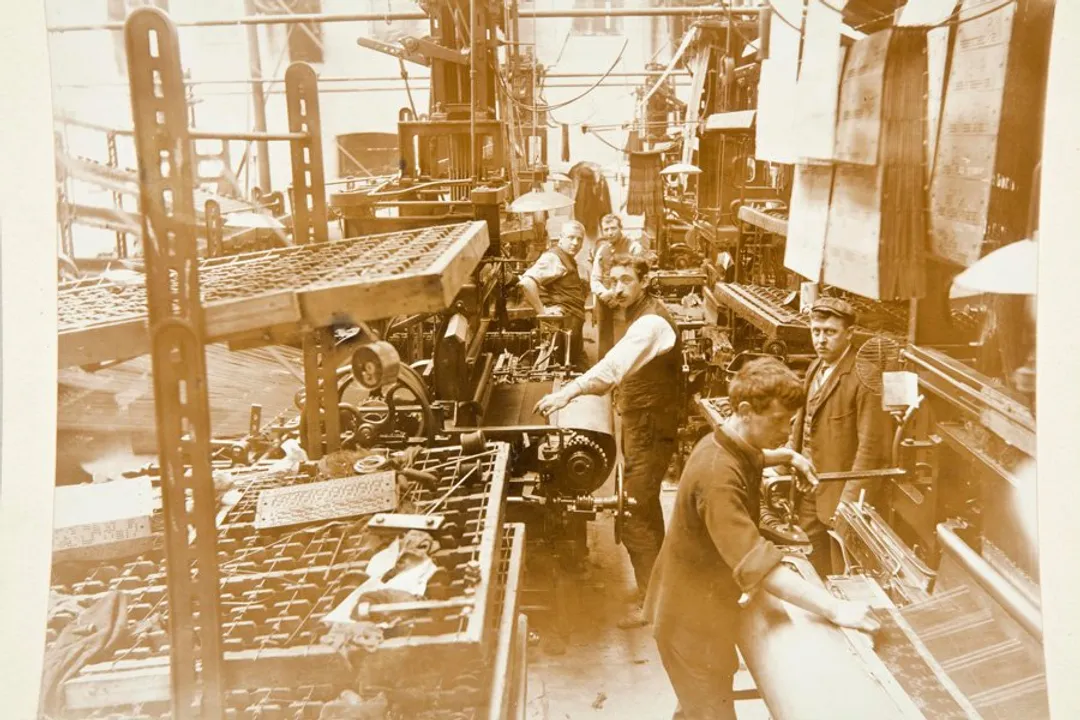
The Water Frame, introduced by Richard Arkwright in 1769, utilized water wheels as its power source. Since these machines were substantial in size and required a consistent, powerful energy supply found in flowing rivers, they could not be operated in small homes or workshops. This requirement inherently forced the centralization of labor and machinery into dedicated factory settings situated near water sources. This shift marked a profound change from decentralized cottage production toward the concentrated industrial mill system, defining a major characteristic of the evolving industrial landscape.
Related Questions
What industry crisis immediately followed John Kay's Flying Shuttle patent in 1733?How did Richard Arkwright's Water Frame fundamentally change factory location in 1769?What specific manufacturing benefit did Samuel Crompton's Spinning Mule provide in 1779?How did Joseph Marie Jacquard's 1801 loom accelerate patterned fabric creation?Which machine, developed around 1764, first addressed the yarn shortage created by the Flying Shuttle?What made Edmund Cartwright's Power Loom revolutionary for sheer volume weaving?Why was the invention of the Flying Shuttle described as creating a 'Weaving Lag' initially?What critical quality advancement did the Water Frame provide over the Spinning Jenny output?What infrastructure change accompanied the adoption of steam power near Manchester around 1787?Did the Jacquard Loom weave plain cloth faster than a standard Power Loom setup?