What invention led to mass production of clothing?
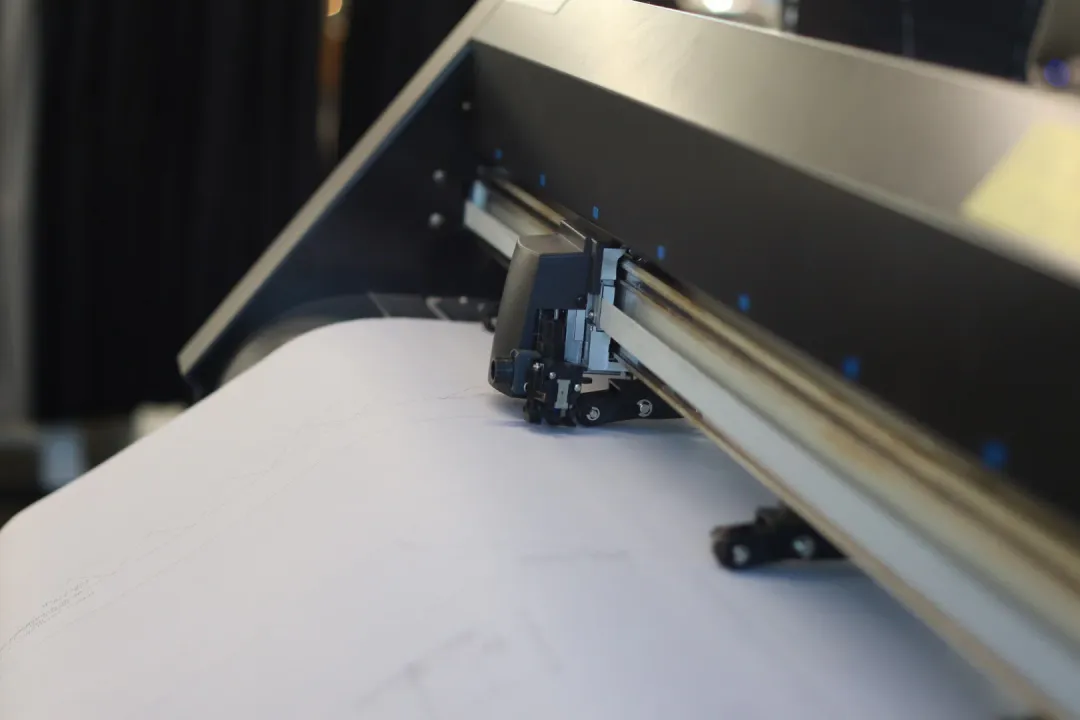
The arrival of cheap, abundant clothing fundamentally reshaped society, altering personal spending habits, labor patterns, and even the very definition of fashion. Before this transformation, acquiring new garments was a laborious, expensive affair. Clothing was primarily made by hand, either crafted at home by family members or commissioned from skilled tailors and seamstresses. [9] This process demanded incredible skill and time, meaning that textiles, once produced, could take ages to be converted into wearable items. [7] The breakthrough that truly unlocked the era of mass production was not a single moment, but rather a chain reaction, though one specific machine stands out as the final key to unlocking the scale required for modern ready-to-wear apparel.
# Fabric Foundation
To create clothes cheaply and quickly, you first needed vast quantities of fabric made cheaply and quickly. The initial phase of the Industrial Revolution focused heavily on mechanizing textile production. [4][6] Before the sewing machine could revolutionize garment assembly, spinning and weaving needed exponential increases in output. [4] Inventions like James Hargreaves' Spinning Jenny, Richard Arkwright’s Water Frame, and the power loom dramatically sped up the creation of thread and cloth. [4][6] These machines, often powered by water or steam, moved production out of cottages and into the specialized setting of mills and factories. [4][2] This innovation meant that yards of cloth could be produced faster than any team of hand-sewers could reasonably stitch together, creating a new kind of imbalance in the supply chain. [4] While fabric became cheaper, the assembly bottleneck remained firmly in place. [7]
# The Assembly Bottleneck

Even with an abundance of machine-made cloth available by the early 19th century, turning flat pieces of woven material into a three-dimensional garment was still governed by the speed of the human hand. [7] A highly skilled tailor might take days to complete a single suit or dress. [9] The stitch that formed the backbone of all clothing construction—the lockstitch—was painstakingly replicated thousands of times by hand. [7] The sheer time commitment meant that even if the raw materials were inexpensive, the final cost of labor kept clothing relatively costly and reserved for those who could afford regular replacements or repairs. [9] The transition from textile manufacturing to clothing mass production required overcoming this deep-seated limitation in construction speed. [7]
# The Machine Key
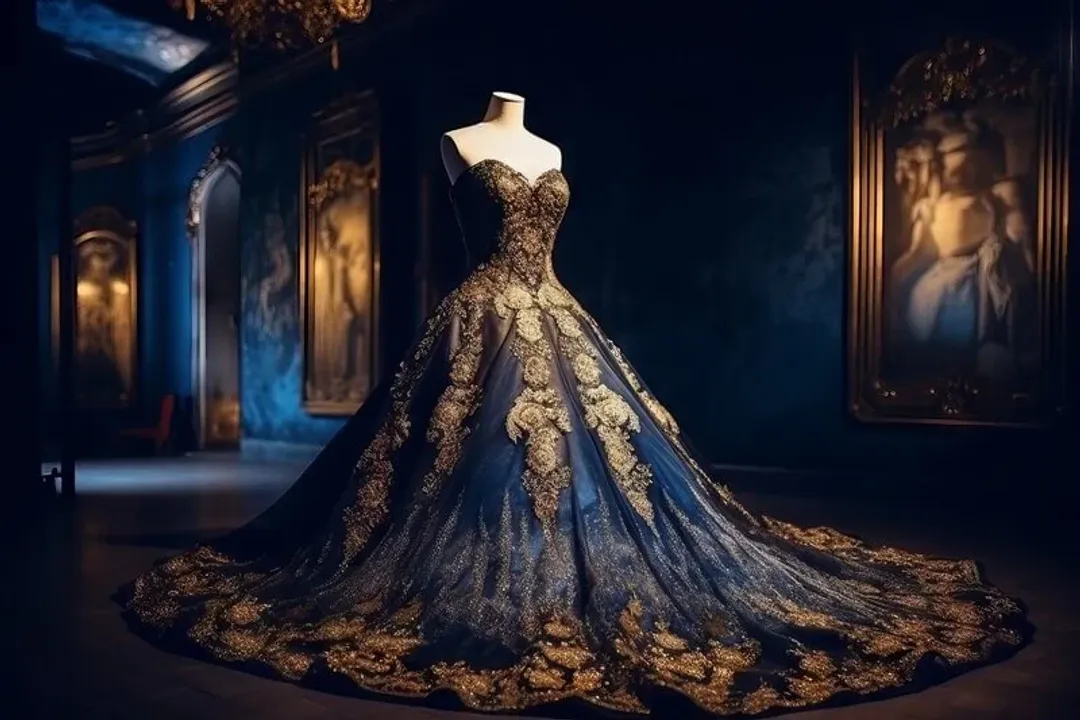
The invention that broke this centuries-old barrier was the sewing machine. [7] While many individuals contributed to the technology—with historical debate swirling around precise priority—it was the development of reliable, functional machines in the mid-1800s that signaled the true start of ready-to-wear clothing at scale. [7][1] The sewing machine used a double thread, creating a secure lockstitch that was both stronger and faster than the chainstitch or running stitch produced by hand. [7] Elias Howe and later, the commercial success driven by Isaac Singer, played major roles in popularizing and perfecting these mechanisms. [7] When a skilled operator sat at one of these new devices, the speed difference compared to hand sewing was staggering. One estimate suggests that a machine could stitch about 500 stitches per minute, whereas a very fast hand sewer managed perhaps 100. [7] This five-fold increase in speed, when applied across a factory floor with dozens of operators, translated almost immediately into drastically lower per-unit labor costs. [7]
It is fascinating to consider the relative value shift. Before the 1850s, the true value in a garment lay in the labor required to cut and sew it. After the widespread adoption of the machine, the value rapidly migrated to the design, the fabric, and the management of the production line. An individual tailor needed years of apprenticeship to master their craft; a factory worker, conversely, could be trained in the basic operation of a sewing machine in a matter of days or weeks, fundamentally democratizing the skills required to be part of the clothing industry. [9]
# Factory Growth
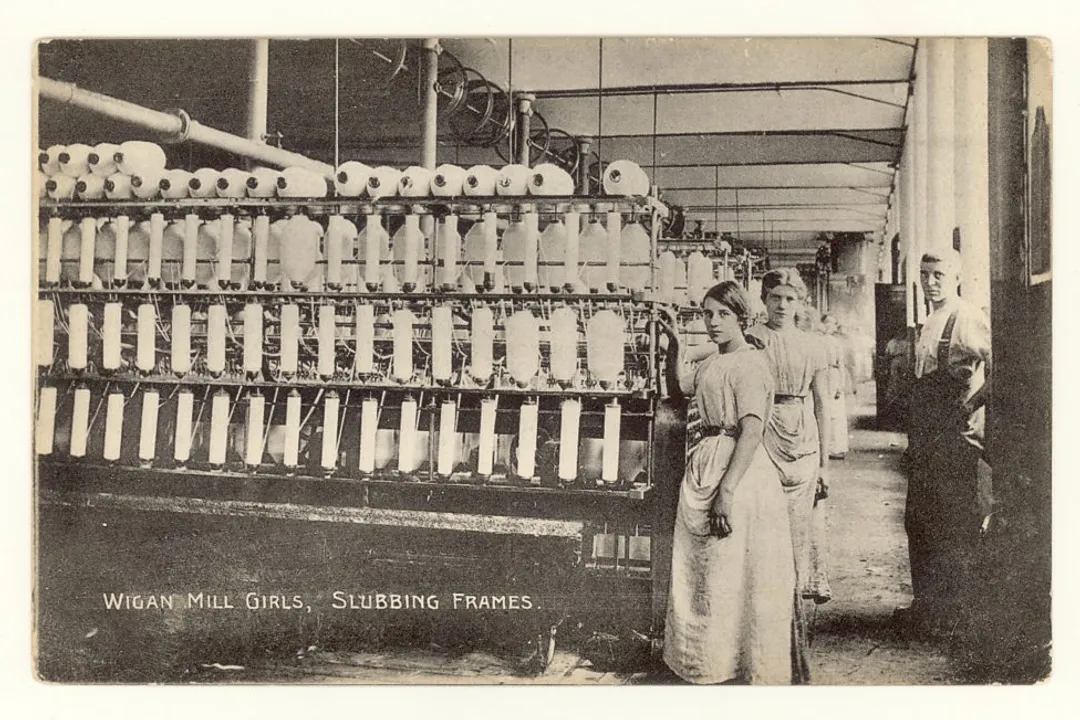
With the sewing machine in place, the final step toward mass production was the centralization of labor in factories, particularly in locations like the United States and Great Britain. [2] Instead of clothes being made piecemeal—cut by one person, assembled by another, finished by a third—the assembly line structure began to take hold. [1] This allowed for division of labor, where workers specialized in single, repetitive tasks, increasing efficiency even further beyond the speed of the machine itself. [1] This movement created the first true "ready-to-wear" industry, focused initially on durable goods like military uniforms and men's workwear, where standardized sizing could be applied with relative ease. [1] The ability to produce hundreds of identical shirts in the time it once took to create a handful meant that inventory could be built up, creating the concept of off-the-rack purchasing that is commonplace today. [1]
# Standardization Emerges
The existence of mass production necessitated, and in turn drove, the creation of standardized sizing. When a tailor made a suit for a specific client, every measurement was bespoke, unique to that individual body. [9] When a factory needs to produce 10,000 pairs of trousers to sell to the general public, they must work from a set of predefined measurements. [1] This shift required collecting large amounts of anthropometric data—measurements of the human body—to create the grading systems we rely on today. [1] Without the uniform speed and output of the sewing machine forcing this organizational structure, the incentive to develop comprehensive, standardized size charts would have been far less pressing; the market would have remained dominated by custom orders. [9]
If we look at a simple comparison of time required for a basic garment like a man's shirt, the impact of these inventions becomes starkly visible. While precise historical figures vary by garment complexity and skill level, the transformation is clear:
| Production Stage | Pre-Industrial Method | Industrial Revolution Method (Post-1860s) |
|---|---|---|
| Fabric Creation | Hand spinning/hand loom | Power Loom/Factory System |
| Garment Assembly | Hand stitching (running/backstitch) | Sewing Machine (Lockstitch) |
| Labor Type | Skilled craftsman/domestic labor | Semi-skilled factory operator |
| Time Estimate (Single Shirt) | Days of skilled labor | Hours of assembly time |
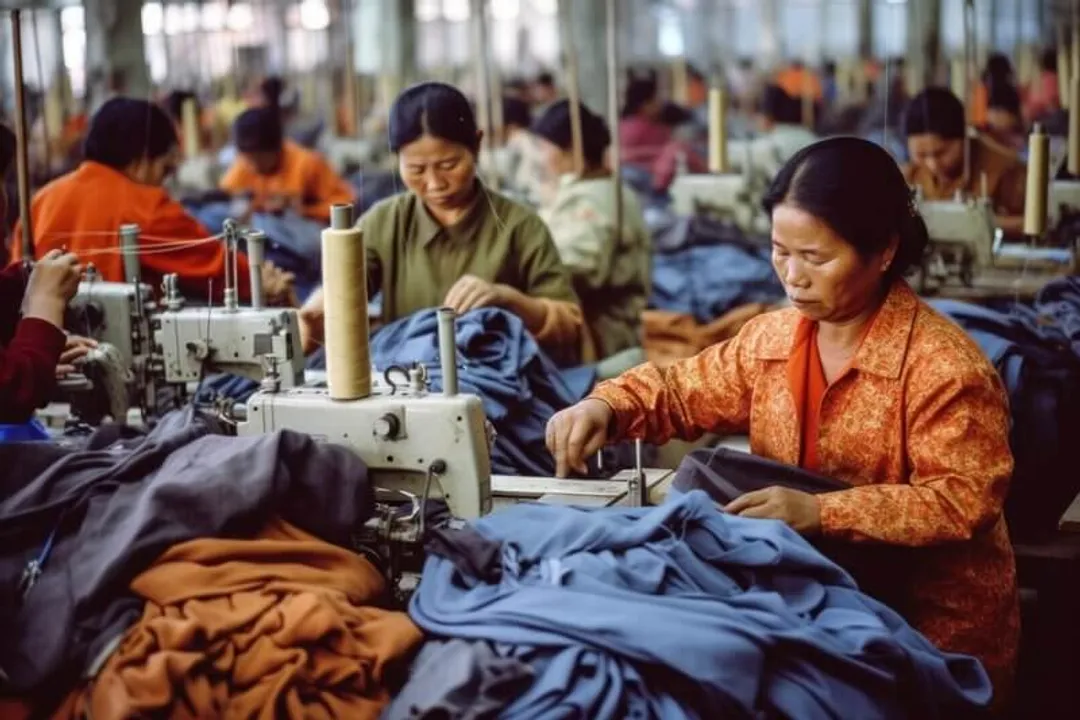
This move into factories, however, was not without significant social cost. The experience of the early garment worker, often women and children working long hours in poor conditions to keep the machines running continuously, became a defining feature of the late 19th-century industrial landscape. [6] The speed of the machine dictated the pace of human life in a way that traditional piecework rarely had. [6]
# Modern Refinements
While the sewing machine was the primary invention that allowed for the mass production of the garment itself, the process continued to evolve. The later 20th century saw further specialization in machinery, moving beyond general-purpose lockstitch machines to specialized equipment dedicated to buttonholes, serging, and hemming. [9] These specific tools further drove efficiency and quality control within the factory setting. [9] The invention of synthetic fibers also played a background role, providing durable, low-cost materials that paired perfectly with high-speed mechanized assembly. [4] Today, while computer-aided design and automated cutting systems represent the cutting edge, they are all built upon the foundation established when the mechanical needle first outperformed the human hand. The legacy of that breakthrough is the ability for most people globally to afford clothing that is designed to be replaced, rather than repaired indefinitely. [1]
Related Questions
#Citations
A Brief History of Mass-Manufactured Clothing - Literary Hub
The history of the apparel industry: Industrial Revolution to now
History of clothing and textiles - Wikipedia
TEXTILE MANUFACTURING IN THE INDUSTRIAL REVOLUTION
What invention led to the mass production of clothing? A. Steam ...
How Industrial Revolution Changed Fashion - Fashinnovation
How Did the Sewing Machine Impact the Industrial Revolution?
How did the Industrial Revolution change the textile industry? - BBC
The Evolution of The Garment Industry: From Handcrafted to High ...