What was the first machine used to record audio?
The concept of capturing sound waves and holding them in a physical medium is one of the most profound technological achievements in history, marking the transition from ephemeral performance to permanent artifact. Pinpointing the absolute first machine used for this purpose requires a careful definition of "recording," as the earliest successful device did not allow for immediate audition of what it captured. The honor of creating the first apparatus designed explicitly to transcribe sound waves belongs to the French inventor Édouard-Léon Scott de Martinville. [2]
# The Visual Trace
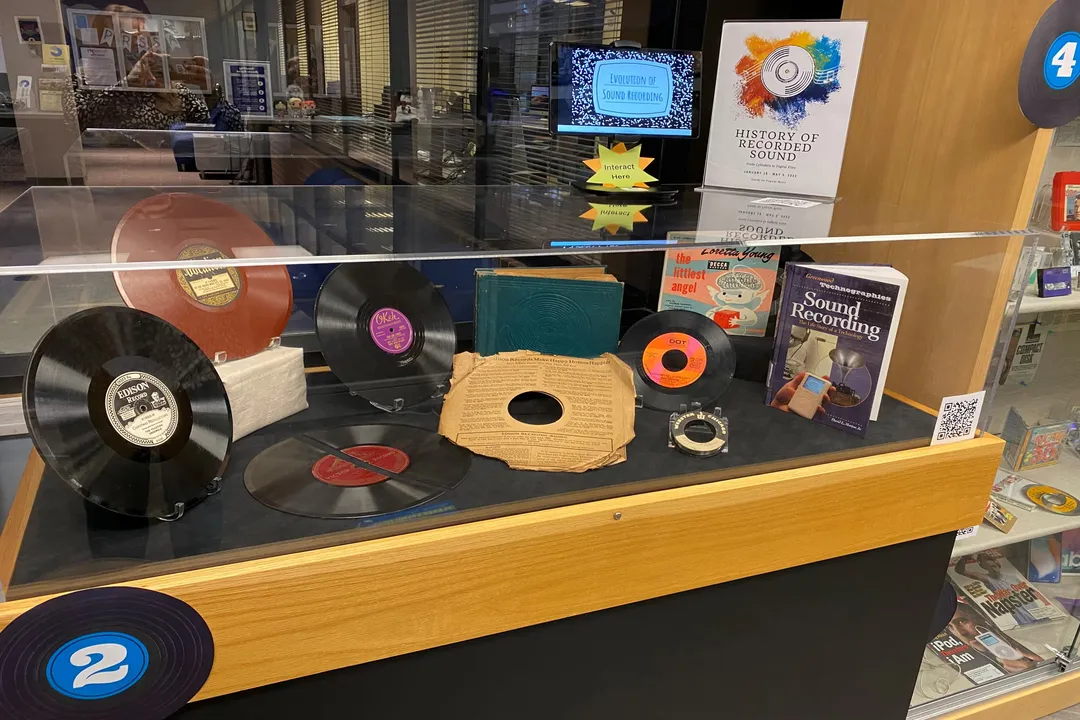
Scott de Martinville created his groundbreaking device, the Phonautograph, around 1857. [2] This invention predated Thomas Edison’s famous Phonograph by two full decades. [1] The Phonautograph was not intended for entertainment or communication in the way we understand sound recording today; rather, Scott was a passionate student of acoustics and sought a way to visualize sound waves. [2] He saw the machine as a way to study the mechanics of sound, much like a seismograph studies earth tremors. [2]
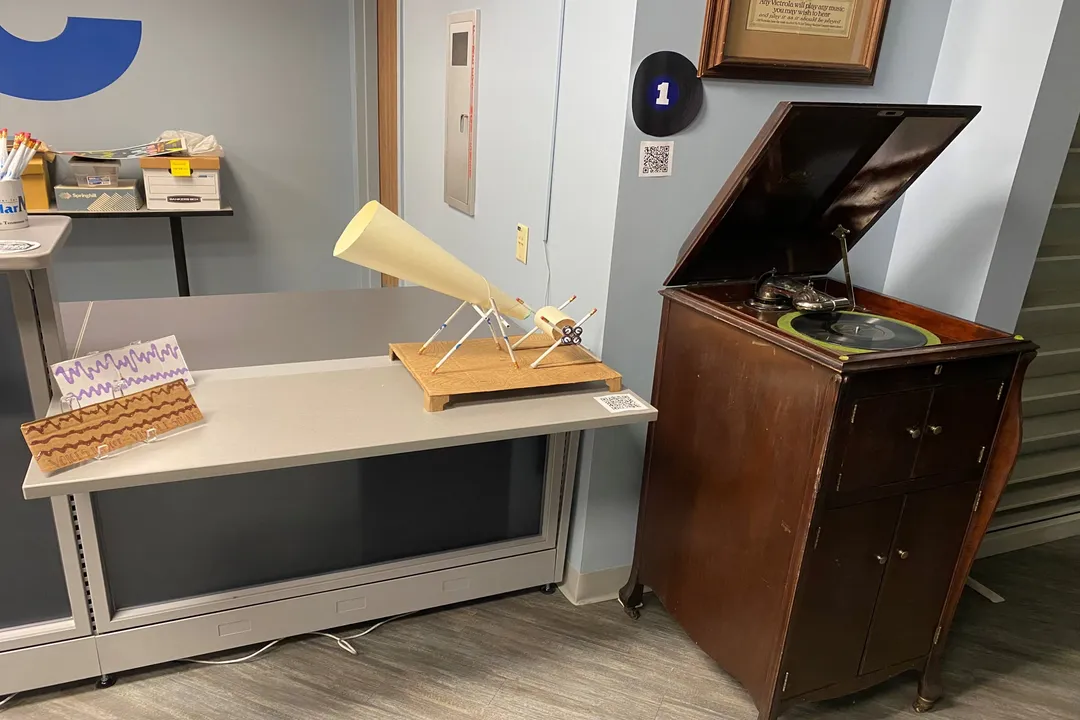
The mechanism itself was ingeniously simple, relying on basic physics principles. Sound waves would strike a flexible diaphragm, similar to the membrane in a human ear. [2] Attached to this diaphragm was a stylus—often a light hog bristle or a sharpened piece of ivory. [2] This stylus would then trace the vibrations onto a surface coated with lampblack, or soot, usually applied to a sheet of paper or a cylinder of ivory. [2] The result was a physical, undulating line representing the varying air pressure of the sound waves that hit the diaphragm. [2]
When examining the resulting trace, one could see the patterns created by a shout, a musical note, or even just the noise of a room. [2] This confirmed the theoretical understanding that sound was indeed a physical wave phenomenon that could be mapped onto a material surface. [2] The initial purpose was purely scientific illustration, making the Phonautograph a recording device in the strictest sense: it made a permanent inscription of an acoustic event. [1][2]
# The Playback Question
What immediately separates the Phonautograph from nearly every subsequent audio recording device is its inability to reproduce the sound it recorded. [1][2] Scott’s intention was to draw sound, not to play it back. [2] Therefore, for decades, the output of the Phonautograph was treated as a graphic representation, studied under a microscope or viewed as abstract art, rather than something to be listened to. [1][2] If the definition of a "recording machine" requires the ability to capture and replay audio, then Scott’s invention falls short of the common expectation. [1]
This distinction highlights a fundamental separation in the early history of sound capture. Scott was pursuing acoustical optics—the study of visualizing sound—whereas later inventors, most notably Edison, were focused on acoustic mechanics designed for auditory recall and mass reproduction. [1] Scott successfully charted sound; Edison mastered its resurrection.
It is worth noting that the historical significance of Scott’s work was only fully realized long after his passing. Using modern digital imaging and processing technology, researchers in the early 21st century were able to scan these delicate soot-covered surfaces. [1] By translating the visual tracing back into digital audio data, they effectively achieved playback of the earliest known sounds ever recorded, including a segment of a woman singing the French folk song "Au clair de la Lune" from 1860. [1] This posthumous success proves that the potential for playable audio recording was latent in Scott’s machine all along.

# Edison's Breakthrough
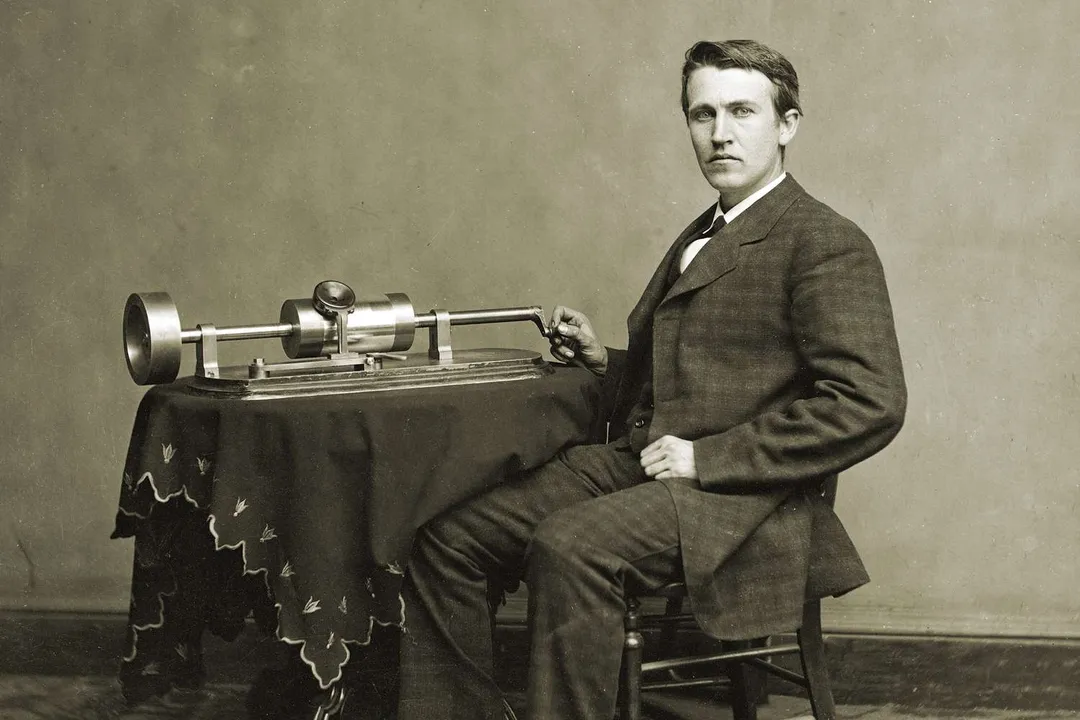
The device that fundamentally changed the trajectory of audio history—the first machine capable of capturing sound waves and reproducing them immediately—was Thomas Edison’s Phonograph. [1][6] Edison conceived of the machine in 1877. [6] While Scott worked with soot and paper, Edison worked with mechanics and metal, aiming for utility and durability. [7]
Edison’s initial design was famously inspired by the idea of a "speaking telegraph," a device that could record messages and play them back for later transcription. [7] The breakthrough came when he realized that a diaphragm vibrating in response to sound could simultaneously move a stylus that embossed indentations onto a moving medium. [6]
The early Phonograph used a cylinder wrapped in tinfoil as its recording medium. [6][7] When a person spoke or sang into the horn attached to the machine, the sound waves caused the diaphragm to vibrate, which in turn moved the stylus, etching a physical groove into the soft foil. [6] To play back the sound, the stylus was placed back into the groove, and as the cylinder was rotated at the correct speed, the stylus vibrated the diaphragm again, recreating the original sound waves through the horn. [6] This was the first time an audible, reproducible acoustic event was truly captured and released on demand. [1][6]
# Mechanics Compared
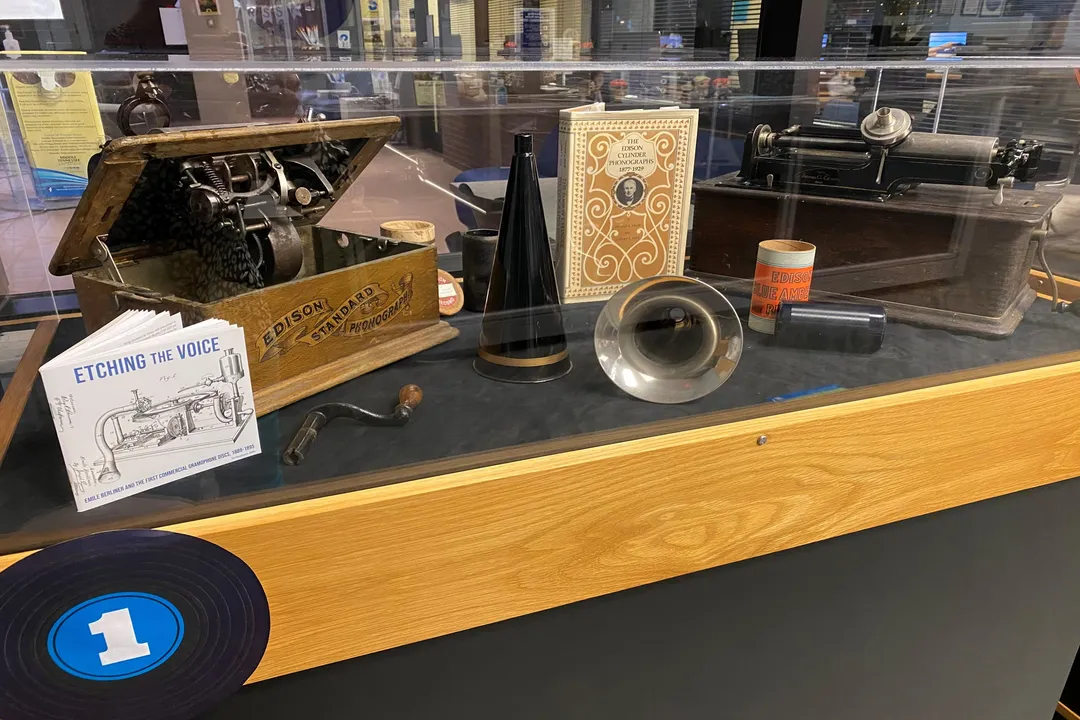
The divergence in engineering philosophy between the two primary inventors is fascinating, especially when considering the materials they chose to interact with the sound energy.
| Feature | Phonautograph (Scott, c. 1857) | Phonograph (Edison, 1877) |
|---|---|---|
| Primary Goal | Scientific visualization of sound | Recording and immediate playback |
| Recording Medium | Soot-covered paper or ivory | Tinfoil wrapped around a cylinder |
| Output | A static visual trace (a wave line) | A physical groove containing sound information |
| Playback | None (requires modern scanning) | Immediate mechanical reproduction |
| Key Component | Diaphragm and stylus tracing on soot | Diaphragm, stylus embossing/tracing on foil |
| Primary Inventor | Édouard-Léon Scott de Martinville | Thomas Alva Edison |
The fact that Scott was documenting sound waves purely for scientific illustration while Edison was driven by the commercial potential of recording messages and music suggests a different starting motivation informed the hardware. Scott's Phonautograph was an instrument of pure observation, using extremely delicate materials like soot that were inherently non-durable for repeated use. [2] Edison, conversely, needed a hard, yet yielding, surface—tinfoil—that could withstand the mechanical forces required for both deep embossing and precise tracing during playback. [6]
This contrast in approach is an important insight: the first recording machine was built by someone looking backward at sound (mapping its past vibrations), whereas the first playable machine was built by someone looking forward to its future use as a communication tool. [2][7] Scott invented a sound recorder; Edison invented the sound record.
# From Tinfoil to Mass Market
While the tinfoil Phonograph was revolutionary, it was inherently fragile and difficult to mass-produce reliably. Tinfoil stretched and tore easily, meaning recordings often degraded significantly after only a few plays. [7] This limitation spurred rapid evolution in the technology almost immediately after Edison’s initial success.
The next significant evolution involved replacing the tinfoil with a more substantial medium. Later iterations of Edison’s machine, and competing devices that emerged quickly, adopted wax cylinders. [7] Wax offered greater fidelity and durability than the early tinfoil, allowing the recording to survive more playback cycles. [7] This shift was essential for establishing sound recording as a viable technology, moving it from a laboratory curiosity toward a consumer product. The ability to create a durable, positive mold from the original cylinder—a concept that grew out of these early mechanical experiments—paved the way for the mass-produced shellac disc records that would dominate the market later on. [7]
Understanding the Phonautograph's place in history offers a richer appreciation for the entire field. It reminds us that invention often happens in stages: first, the idea of capturing the phenomenon; second, the ability to manipulate the captured data; and finally, the means to share it widely. Scott achieved the capture in 1857, demonstrating the foundational physics, even if the playback technology required waiting until the era of advanced optics and computing to truly hear his initial efforts. [1][2] Thus, the first machine to record audio was the Phonautograph, while the first machine to record and reproduce audio was the Phonograph.
#Videos
The First Man To Record Sound - YouTube
Related Questions
#Citations
History of sound recording - Wikipedia
Origins of Sound Recording: The Inventors - Thomas Edison ...
In 1877 Thomas Edison announces his invention of the phonograph ...
The First Man To Record Sound - YouTube
History of Recorded Sound - Center for Popular Music
a look back at the first sound recording - EverPresent
History of the Cylinder Phonograph | Articles and Essays
The First Phonograph - The Talking Machine Forum
The History of the First Sound Recording - Legacybox