What innovation made Richard Arkwright's 1769 Water Frame the first powered textile machine?
Answer
Its reliance on water power necessitated placement near rivers.
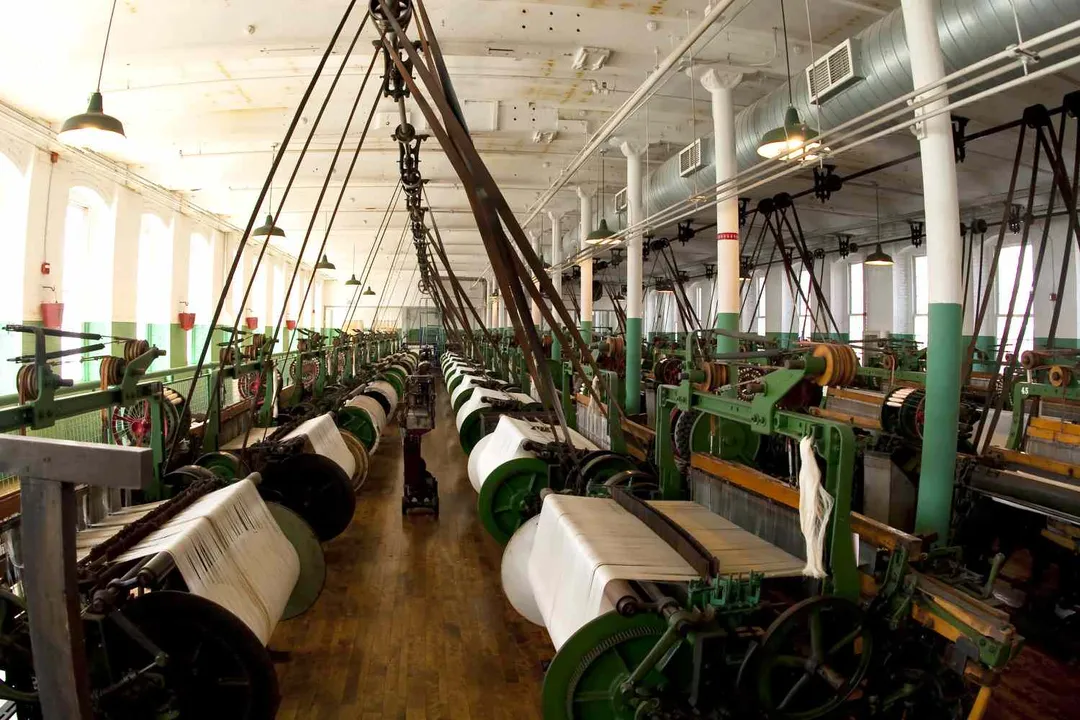
The Water Frame, patented by Richard Arkwright in 1769, achieved a breakthrough in thread strength using multiple, differently-speeded rollers to draw and twist fibers. Crucially, due to its size and operational requirements, it could not be effectively run by hand, leading its developers to harness water power. This reliance on harnessing natural water flow for motive energy marked it as the first powered textile machine. Placing these machines near rivers established the physical footprint and operational requirement that firmly defined the early factory system.
Related Questions
What immediate problem followed John Kay’s 1733 Flying Shuttle invention?How did James Hargreaves' 1764 Spinning Jenny improve upon traditional spinning wheels?What innovation made Richard Arkwright's 1769 Water Frame the first powered textile machine?What defined Samuel Crompton's 1775 Spinning Mule as a hybrid solution?What was the primary bottleneck for production that Edmund Cartwright's 1785 Power Loom solved?How did the integration of steam engines change factory building locations?What impact did Eli Whitney's 1793 Cotton Gin have on British textile mills?What revolutionary concept did Joseph Marie Jacquard's 1804 loom introduce to weaving?What organizational structure was the culmination of the Water Frame, Jenny, Mule, and Power Loom innovations?Which later 19th-century invention mechanized the assembly of cut fabric into finished outfits?