Who was nicknamed The Sun Queen after she invented a solar-powered water desalination machine during World War II?
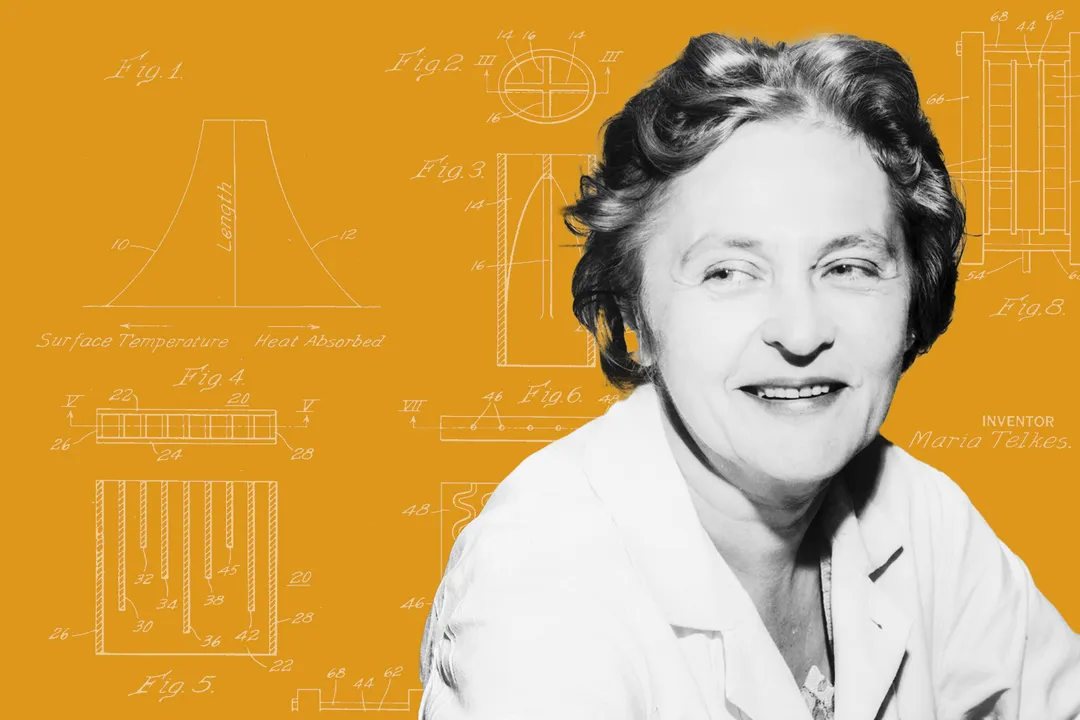
The scientist who came to be known across the United States as the “Sun Queen” for her lifelong dedication to harnessing solar power was Mária Telkes, a Hungarian biophysicist whose most urgent work arrived not in a laboratory but in response to the desperate needs of World War II. Born in Budapest in 1900, Telkes developed a fascination with energy sources early on, ignited by a book that noted how traditional fuels were geographically limited, whereas the sun offered universal access, especially in tropical regions. After earning her doctorate in physical chemistry in 1924, she immigrated to America, eventually landing at the Cleveland Clinic Foundation before moving to Westinghouse. It was in 1939, after successfully demonstrating a highly efficient thermopile for converting sunlight to electricity to an initially hesitant, all-male committee, that she joined the Massachusetts Institute of Technology (MIT) Solar Energy Conversion Project.
# Wartime Task
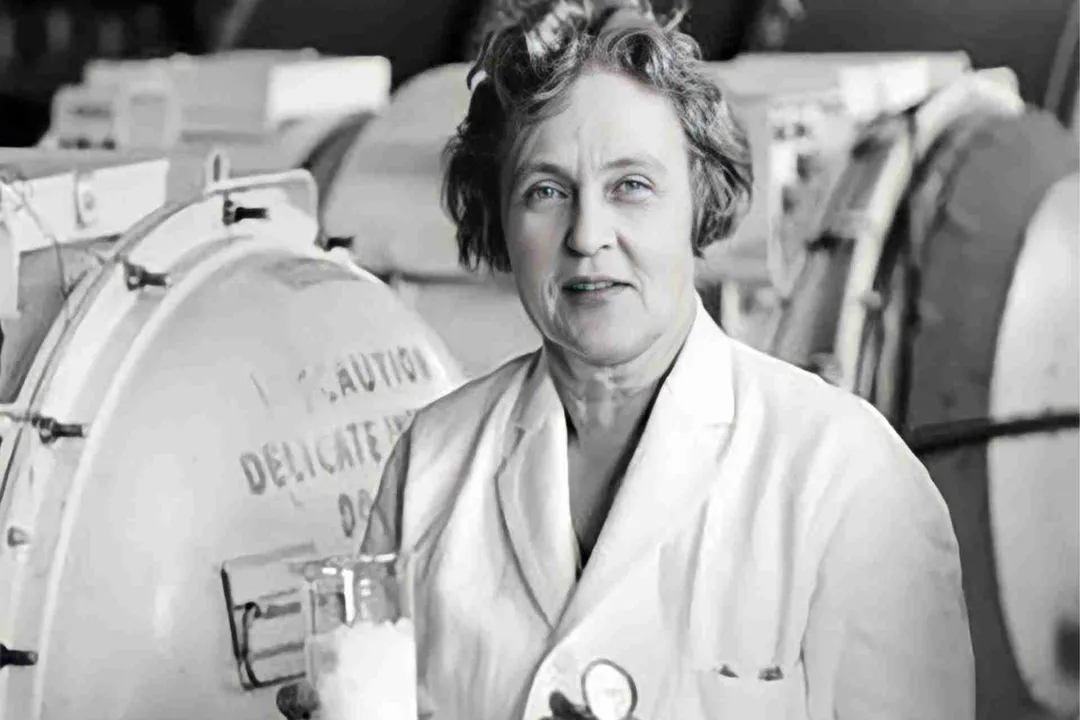
When the United States entered the Second World War, the research priorities at MIT sharply realigned toward the war effort. Telkes, bringing her expertise in energy conversion, was reassigned as a civilian advisor to the Office of Scientific Research and Development (OSRD). Her assignment was not about building bigger engines or better weapons; it was about mitigating a silent killer in the Pacific theater: dehydration. Air crews who were shot down over the open ocean could survive the initial crash only to succumb to thirst before rescue, surrounded by water they could not drink. The military needed a small, portable mechanism to convert saltwater into potable water—a device that needed to be both effective and light enough for survival kits.
# Still Design

The concept for the solution struck Telkes while she was sailing, inspired by observing a large jellyfish. Her answer was an elegant, simple piece of applied science: the solar still. This desalination kit was designed as an inflatable, balloon-like plastic film package that would fit into a space no larger than a paper cup when empty. The mechanism relied on the sun’s natural energy. A stranded survivor would place the still in the water, pour seawater into the transparent envelope, and expose it to the sun. The sun’s heat would cause the water inside to evaporate, leaving the salt and impurities behind as the vapor rose. Once the water vapor condensed back into liquid form on the cooler inner surface of the plastic, it dripped down, resulting in pure, drinkable water. This design perfectly embodied Telkes’s core belief: science should serve humanitarian needs and improve the real-world conditions of existence. It is striking that while many of her MIT colleagues, like Professor Hoyt Hottel, were wrestling with complex, large-scale theoretical applications of solar heating, Telkes delivered a compact, deployable technology designed to save lives immediately.

# Production Failure
The immediate response from the U.S. government demonstrated profound confidence in her pragmatic invention: they placed an order for 100,000 solar stills. This high-volume order, driven by a genuine wartime necessity, represents a significant, though unfulfilled, vote of confidence in her applied engineering. It is a noteworthy point that the military recognized the utility of this seemingly simple device enough to order such a massive quantity, signaling a prioritization of frontline survival technology over the more academic, long-term energy research dominating internal MIT projects.
However, the delivery timeline faltered severely. By the summer of 1945, when the war concluded, MIT had delivered virtually none of the stills. The hold-up was attributed to the meticulous perfectionism and skepticism of her project leader, Hoyt Hottel. Hottel, who famously doubted the commercial viability of solar power, repeatedly switched manufacturers and engaged in protracted arguments with Telkes over minor design details, refusing to sign off until his exacting standards were met. This academic hesitation meant the stills were unavailable when the need was most acute. Although Telkes eventually received a patent for the design (No. 3,415,719), and the stills ultimately entered the military’s standard emergency medical kits, the delay kept them from serving their immediate, intended purpose during the height of the conflict.
# Academic Clash
The friction between Telkes and Hottel was symptomatic of a wider philosophical divide at MIT. For Hottel, solar energy was an engineering problem subject to strict economic constraints; he often criticized proponents like Telkes for relying on "emotion, not on natural law". Conversely, Telkes viewed solar energy as a humanitarian imperative—a clean, abundant resource that could liberate populations from geographically limited, polluting, and dangerous fossil fuels. Her directness, drive, and willingness to engage the press to promote her humanitarian vision often put her at odds with the more cautious, academic establishment. After the war, this ideological gap widened when Telkes pursued solar heat storage using Glauber’s Salt (sodium sulfate) for the experimental Dover Sun House project, an endeavor Hottel strongly opposed. Even when Telkes’s work on the Dover House—a collaboration with architect Eleanor Raymond and philanthropist Amelia Peabody—garnered immense public fascination, internal MIT reviews often focused on her "strong opinions" and refusal to "submit willingly to direction," reflecting the era's difficulty in accepting an assertive woman scientist leading applied research.
# The Humanitarian Second Act
Despite being removed from Hottel’s main solar project, Telkes used the publicity surrounding the Dover Sun House to advance her own vision. She was already demonstrating that her commitment extended well past home heating, focusing on basic human needs. In 1953, while at New York University (NYU), she secured a grant from the Ford Foundation to tackle another fundamental issue facing energy-poor regions: cooking.
The result was a revolutionary, low-cost solar oven. This device was designed for simplicity, durability, and affordability, costing around four dollars to construct from common materials like wood, glass, and metal plates. It used an insulated metal box, covered with glass, amplified by four angled metal plates and internal mirrors to concentrate the sun's rays, capable of reaching temperatures up to 400 degrees Fahrenheit. This eliminated the daily burden for millions in developing nations who spent hours gathering wood or dung for cooking fires, which also contributed to deforestation, soil erosion, and severe respiratory illnesses within homes. Telkes’s work on the solar oven provided a tangible, immediate benefit to quality of life, echoing the life-saving intent behind her earlier work on the solar still. Her conviction that solar energy offered an accessible alternative to traditional fuels never wavered, leading her to continue inventing and consulting deep into her seventies and eighties.
# Lasting Reach
Telkes’s prolific career spanned over 20 U.S. patents, ranging from her work on phase-change materials to developing systems that would eventually aid NASA and build Solar One at the University of Delaware, the first house to generate both heat and electricity from the sun. While the active solar heating systems she pioneered eventually gave way to photovoltaic technology, her core philosophy proved prescient. She insisted that the long-term, humanitarian benefits—cleaner air, safer living conditions, and energy independence—were worth pursuing even if the short-term economics were slightly less favorable than fossil fuels.
Her technical achievements were recognized throughout her life with honors like the Society of Women Engineers Achievement Award in 1952 and lifetime achievement awards in 1977 from the National Academy of Science and the International Solar Energy Society. These accolades solidified her standing as one of the foremost pioneers in solar energy. Mária Telkes passed away in 1995 in her native Hungary, just shy of her 95th birthday. Even decades later, scientists working in Central America continued to use adapted versions of her simple, life-changing designs for solar ovens, proving that her focus on practical, foundational devices—whether distilling water or cooking food—had a profound and lasting impact on the basic needs of humanity. Telkes often saw a direct correlation between the untapped potential of the sun and the untapped potential within women scientists, encouraging her peers to reach for both with the same determined vision she possessed.
Related Questions
#Citations
The Marvelously Inventive Life of Mária Telkes | American Experience
The Sun Queen and the Skeptic: Building the World's First Solar ...
A solar life - USPTO
Dr. Mária Telkes: The Hungarian Sun Queen - Culture.hu
SWE Magazine Feature: Celebrating the Sun Queen
How Mária Telkes Became 'The Sun Queen'