What machine was used to spin cotton?
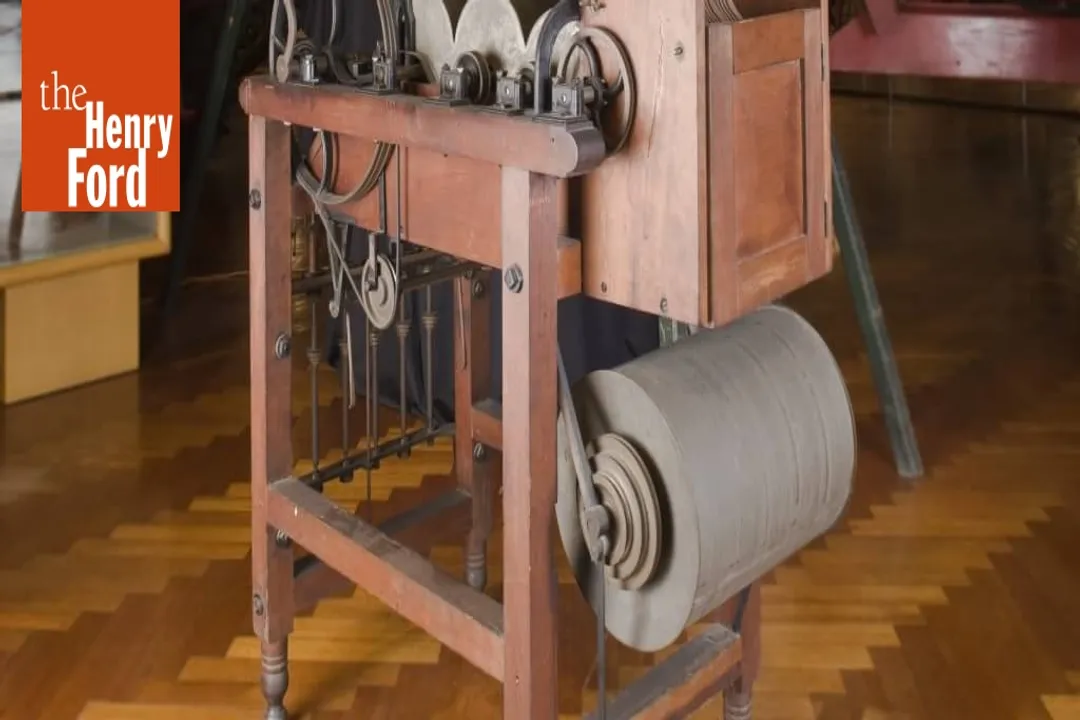
The process of turning fluffy raw cotton fibers into strong, usable thread marks one of the most significant turning points in industrial history. Before the widespread adoption of specialized machinery, spinning was a slow, labor-intensive task typically performed by individuals, often women, using simple hand spindles or the traditional spinning wheel. [1][7] This manual method severely limited the volume of cloth that could be produced, acting as a bottleneck for the burgeoning textile market that could produce fabric faster than it could produce the necessary thread. [1] The real transformation began in the mid-eighteenth century in Great Britain, driven by the pressing need for a faster, more efficient method to produce yarn suitable for weaving into finished goods. [1][5]
# First Leap
One of the earliest and most recognizable answers to this demand was the Spinning Jenny, credited to James Hargreaves around 1764. [7] This ingenious machine represented an immediate, if incremental, improvement over the single-spindle wheel because it allowed a single operator to spin multiple threads simultaneously. [7] Initially, the Jenny could handle about eight spindles, a number that later increased to as many as 120 spindles on later iterations of the design. [1][7] While it provided a marked boost in output capacity, the yarn produced by the Jenny was notoriously relatively weak and brittle, making it best suited for use as weft—the filling thread woven through the warp—rather than the stronger warp thread needed for the structural length of the cloth. [1] It was still largely a hand-operated machine, relying on the spinner’s dexterity, but it heralded the beginning of multi-spindle production. [1]
# Water Power
A crucial development that directly addressed the weakness of the Jenny's yarn came from Richard Arkwright. [8] In 1769, Arkwright patented his Water Frame, a device that spun significantly stronger and harder yarn than was previously achievable. [8] The core innovation within this apparatus was the introduction of pairs of rollers that drew out the cotton fibers; one set rotated at a slower speed than the following set, effectively thinning the strand before it was twisted. [1] Because this mechanism required consistent, high rotational power to operate the rollers and spinning action efficiently, it necessitated a major geographical shift—moving production out of small domestic settings and into dedicated mills situated close to reliable sources of running water. [1][8] This relocation is fundamental to understanding the birth of the modern factory system, where machinery dictated the location of labor rather than the reverse. [5] Records show Arkwright’s prototype from 1769 demonstrated the mechanical principles that would power an entire industry. [8]

# Blended Machine
The next great advancement sought to combine the superior features of its predecessors: the high-volume output capability of the Jenny and the exceptional strength characteristic of the Water Frame. [1][3] This technological synthesis was achieved by Samuel Crompton, resulting in the creation of the Spinning Mule around 1779. [1][3] The machine earned the moniker "Mule" precisely because it was a hybrid cross between the Jenny and the Water Frame design principles. [3][4] It adopted the speed-controlled drawing rollers much like the Water Frame, but it incorporated a movable carriage that traveled back and forth, allowing the fibers to be attenuated very finely before being twisted, which mirrored the delicate action of hand spinning. [1][3] Crompton's resulting invention could produce yarn that was both exceptionally fine and remarkably strong, making it the superior choice for virtually every textile application imaginable. [1][4] Early versions of the Mule, however, still required significant manual dexterity from the spinner to pull the spinning frame out across the floor to draw the thread correctly before returning it to wind up the finished yarn. [3]
# Automation Advances
The story of cotton spinning did not end with Crompton’s initial drawing-frame design. The process continued to be refined to remove the need for constant human intervention. A landmark improvement arrived with the Self-Acting Mule, patented by Richard Roberts in 1825. [1] This upgrade took over the complex drawing and twisting motion that previously demanded skill and attention from the human operator, automating the entire cycle. [1] This high degree of automation allowed production to speed up considerably and reduced the specialized skill threshold required for factory work, making massive scaling much easier to manage. [5] Concurrently, other designs persisted; the Throstle, which was essentially a modernized and improved version of the Water Frame, remained in use, particularly where slightly coarser, durable yarns were the objective. [1] The proliferation of these varied, powerful machines demonstrates that textile production was an intensely competitive arena of mechanical innovation, not a single, static invention. [1][6]
# Comparative Mechanics Chart
To better appreciate the distinct contributions of these revolutionary machines, it is helpful to see their core mechanics side-by-side. While the overarching goal remained consistent—to create a continuous thread—how they achieved the critical steps of drawing out the fiber (attenuation) and then twisting it (setting the strength) varied significantly, directly impacting yarn quality and the power demands placed on the machinery. [1]
| Machine Name | Inventor | Primary Drawing Method | Yarn Quality | Power Requirement |
|---|---|---|---|---|
| Spinning Jenny | James Hargreaves | Multiple spindles, hand-powered draft | Fine but weak (best for weft) | Manual |
| Water Frame | Richard Arkwright | Speed-controlled rollers | Strong and hard | Water Wheel/Steam |
| Spinning Mule | Samuel Crompton | Rollers combined with moving carriage | Fine and strong (versatile) | Manual initially |
| Self-Acting Mule | Richard Roberts | Automated carriage movement | Fine and strong | Water/Steam Power |
| [1][3][8] |
# Industrial Restructuring
The widespread acceptance and deployment of these mechanical spinners acted as a primary catalyst for the complete reorganization of labor and geography across industrial centers. [5] When Arkwright's Water Frame demanded consistent water power, the factory system solidified, forcing workers and machinery into centralized locations near rivers. [8] The Spinning Mule, particularly once it became self-acting, amplified this effect, enabling a single operator to supervise dozens of spindles that would have previously required numerous people working by hand. [5] This intense concentration of mechanized spinning meant that the production of cotton thread, once a decentralized task performed in homes, became the definitive archetype of industrial mass production. [1] This new system placed immense demands on power sources, typically driving the shift from water wheels to the much more flexible and powerful steam engine as the century wore on. [1][5] The sheer volume of yarn produced then placed renewed pressure on the stages preceding it—cotton cleaning and carding—which in turn spurred further automation in those preparation steps to keep the hungry spinning frames fed. [5]
# Enduring Principles
Although the grand, noisy mills of the 19th century are now often preserved as historical sites or have been replaced by entirely different technologies, the fundamental engineering principles established by Crompton and Arkwright remain surprisingly relevant in contemporary fiber processing, even in smaller, specialty settings. [1] For instance, the concept of drafting—the controlled differential speed between the point where fibers are fed into the machine and the point where they are twisted—is the core operational mechanism still used today in high-speed ring spinning frames and even in modern extruders designed for processing synthetic fibers. [1] Observing an older Mule in action, with its rhythmic in-and-out motion, demonstrates a clear, mechanical understanding of how viscoelastic materials behave; the slow, controlled draw of the carriage mimics the gentle, precise movements a skilled hand-spinner used to achieve fine yarn, something modern high-speed machinery attempts to replicate using complex electronic feedback rather than purely mechanical linkages. [3] The primary challenge Arkwright faced—creating a thread strong enough to withstand the tension required for warp weaving—is still met today by applying greater drafting ratios and controlled tension, a direct methodological inheritance from his early roller design. [8]
#Videos
Monticello Spinning Jenny Operation - YouTube
Related Questions
#Citations
Cotton-spinning machinery - Wikipedia
Cotton Ginning, Carding, & Spinning Machine, 1835-1840
The Spinning Mule - Strutts North Mill Belper
spinning mule - Britannica Kids
Automating Cotton Production | Baltimore Industry Tours
Cotton-spinning machinery Facts for Kids
James Hargreaves' Spinning Jenny and the Industrial Revolution
Arkwright's prototype spinning machine, 1769.
Monticello Spinning Jenny Operation - YouTube