Did the Greeks invent vending machines?

The genesis of automated dispensing devices often traces a surprising path back through history, far removed from the brightly lit convenience stores of the modern era. While the contemporary vending machine is a product of 19th and 20th-century industrialization, the first recorded instance of a coin-operated mechanism designed to deliver a product automatically is attributed to ancient Greek ingenuity. This groundbreaking device wasn't designed to sell chewing gum or soft drinks; instead, it served a distinctly religious purpose within the temples of the time.
# Hero’s Device
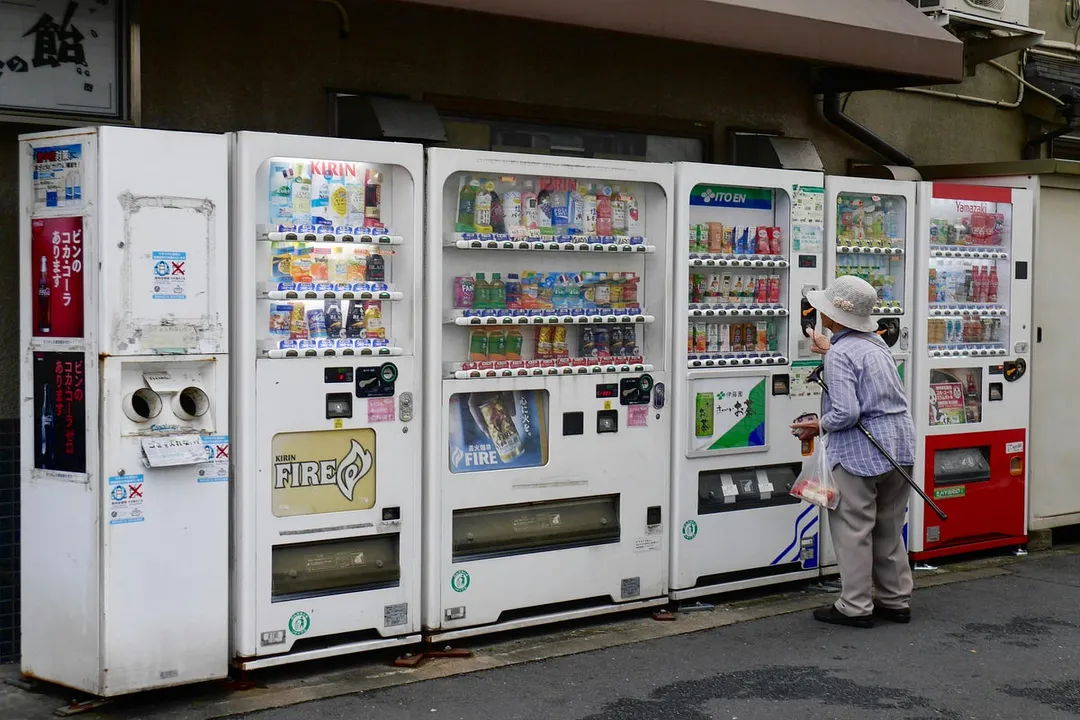
The inventor behind this remarkable piece of early engineering was Hero of Alexandria (also known as Heron), a brilliant Hellenistic mathematician and engineer who lived around the first century AD. Hero is credited with designing numerous ingenious mechanical devices, many of which were powered by steam, air pressure, or hydraulics, demonstrating an advanced understanding of mechanics for the era.
The specific machine in question was created to dispense holy water in Egyptian temples. This act of automation served to regulate the distribution of a sacred commodity, ensuring that worshippers received a set amount without direct human intervention.
# Mechanical Explanation

Understanding how Hero’s invention functioned reveals a surprising sophistication, built entirely on principles of leverage and gravity rather than springs or electricity. The system required the user to insert a coin, specifically a five-drachma coin, into a slot. This coin would fall onto a pan or lever.
The weight of the inserted coin would depress the lever, which in turn opened a valve that allowed a precise measure of holy water to flow out. Once the water had dispensed, the coin would slide off the lever, allowing a counterweight—or perhaps the mechanism itself—to return the valve to its closed position, stopping the flow. This intricate sequence of events—input (coin), action (dispensing), and reset—mirrors the fundamental logic of every vending machine used today. The ability to automate a service based on a specific monetary input is the core concept, regardless of whether the product is water or a snack bar.

# Modern Timing
The gap between Hero’s first dispenser and the next documented commercial vending machines is vast, spanning nearly two millennia. While Hero’s device was a singular, almost ceremonial application of automation, true vending as a commercial or convenience practice took much longer to materialize.
In the modern world, the concept gained traction much later. One of the first known mechanical vending machines was used in England in the early 1800s, specifically on steamships, to dispense tobacco or postcards. By the late 19th century, coin-operated machines were becoming more common, dispensing items like stamps or postcards. In the United States, the first known vending machines started appearing in the 1880s, selling chewing gum. These later iterations relied on springs, clocks, and mechanical counters, a marked departure from the simple, gravity-and-lever action of the Greek predecessor.
It is fascinating to observe that the very first application of this technology was not rooted in profit maximization or customer convenience in the modern sense, but rather in managing a sacred resource. The goal was ritualistic consistency and perhaps deterring petty theft or dispensing abuse by making the offering mandatory and metered. This places the Greek invention in a unique category: an automation device designed for piety rather than profit.
# Inherited Concepts
The enduring legacy of Hero's work isn't necessarily in a direct line of technological descent, as the knowledge or tradition of this specific design did not immediately spawn a widespread industry. Instead, its importance lies in establishing the foundational concept of automated transactional delivery. The challenge for later inventors was less about if a machine could dispense something for a coin, but rather how to scale that mechanism to handle mass-produced, non-liquid goods reliably.
Consider the difference in required engineering precision. Hero's machine managed a liquid, whose flow could be controlled by a simple valve opening dependent on weight. Modern machines handle solid, often irregularly shaped products where friction, jamming, and product density must be accounted for—a far more complex mechanical problem that required advances in metallurgy and spring tension that weren't available in the first century AD. The sheer elegance of Hero's solution, however, remains a testament to early mechanical problem-solving.
# Historical Documentation Gap
One interesting question that arises when studying Hero's device is why the idea appears to have lain dormant for so long before commercial interests revived it. While Hero's Pneumatica documents dozens of inventions, this specific water dispenser represents an isolated instance of transactional automation. A potential insight is that the widespread use of standardized, universally accepted, small-denomination coinage—necessary for high-volume public vending—might have been less established or less necessary for daily life in the Hellenistic world compared to the structured economies that emerged in the 19th century. In an age where personal service or barter might have been more common, the need to pay a machine for a small amount of water simply didn't drive further invention or popular adoption, despite the proof of concept existing.
The Greeks, through Hero, proved that the principle worked: a physical token could initiate a pre-programmed mechanical action resulting in a defined output. This theoretical groundwork, even if not commercially exploited at the time, forms the earliest chapter in the history of automated retail, predating the industrial revolution by hundreds of years.
Related Questions
#Citations
Vending Machine Was Invented in Ancient Greece
TIL The first vending machine was created two thousand years ago ...
The first known vending machine dispensed holy water. - History Facts
Vending machine - Wikipedia
Introducing the Ancient Vending Machines. - Facebook
Did You Know…The World's First Recorded Vending Machine Was ...
Vending Machine Fun Facts | BEVCO Service Inc
Who invented the first vending machine and what was it for? - Quora