Which machine helped to manufacture cloth faster?
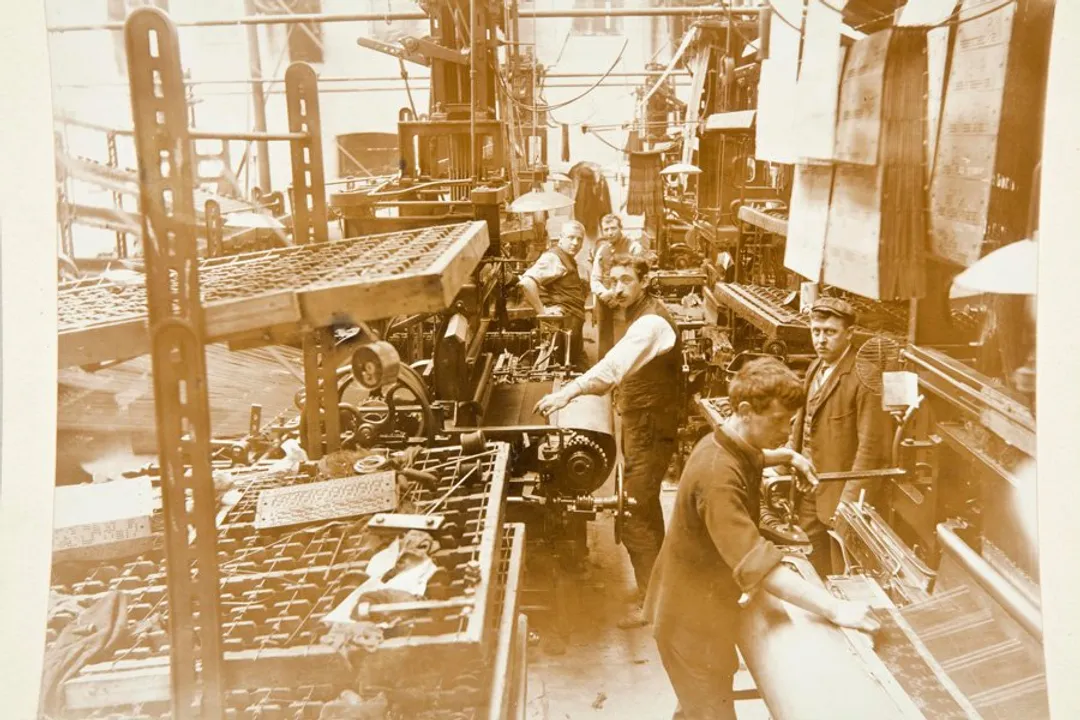
The quest to manufacture cloth faster has been a defining theme across centuries of human endeavor, culminating in a profound transformation during the Industrial Revolution. Before mechanized systems took hold, making textiles was a painstaking, slow process, often done by hand in homes or small workshops. The real acceleration began when specific innovations managed to break the production bottlenecks that were constantly appearing. One machine might double the output of one stage, only to reveal that the next stage was now the limiting factor, demanding an immediate, faster solution. The machine that ultimately brought about the most dramatic, sustained increase in sheer volume for general weaving was the Power Loom, but understanding its success requires looking back at the spinning crisis it was built to solve. [1][2]
# Weaving Lag
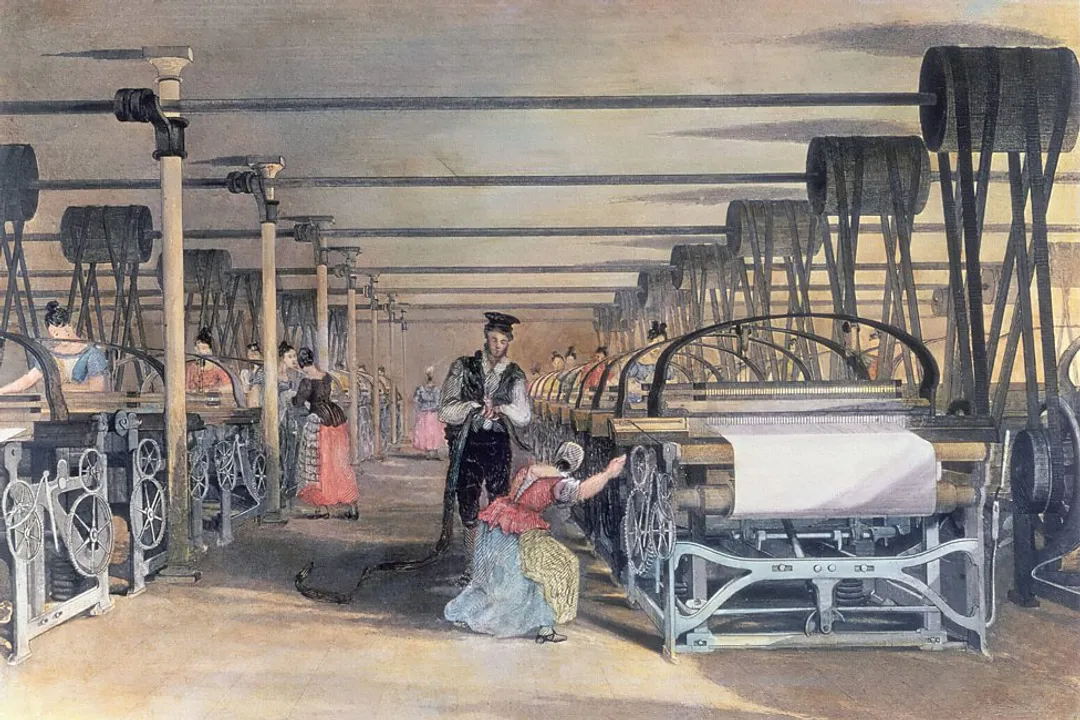
The first major disruption to the traditional, slow rhythm of cloth making came not from the spinning wheel, but from the loom itself. In 1733, John Kay patented the Flying Shuttle. [1][3] This simple, yet ingenious, mechanical aid allowed a weaver to propel the shuttle carrying the weft thread across the warp threads using a system of ropes and hammers. [1] Suddenly, a single weaver could produce much wider cloth, or complete standard-width fabric in about half the time. [1][3]
The immediate result was chaotic for the industry. Kay's invention created a massive imbalance. Weavers were now operating at unprecedented speeds, demanding yarn faster than the existing manual spinners could possibly produce it. [1][3] This bottleneck shifted the entire industry's focus from weaving speed to yarn supply. The spinning stage—the preparation of the yarn—became the crucial constraint holding back textile production rates. [3]
# Spinning Breakthroughs
To meet the soaring demand created by the Flying Shuttle, inventors scrambled to mechanize spinning, aiming to produce many threads simultaneously rather than one by one. Several key machines emerged in rapid succession, each representing an incremental leap in speed and quality.
# The Multi-Spindle Start
James Hargreaves’ Spinning Jenny, developed around 1764, was the first true answer to the yarn shortage. [1][3] By mounting several spindles vertically, a single operator could spin multiple threads at once—initially eight, though later versions held many more. [1] This invention drastically increased the number of threads a worker could manage, mitigating the initial crisis caused by the Flying Shuttle.
However, the yarn produced by the early Jenny was relatively soft and weak, often requiring the stronger thread made on traditional spinning wheels to be used as the warp (the lengthwise threads). [1]
# Water Power
The next major advance came in 1769 when Richard Arkwright introduced the Water Frame. [1][3] This machine used water wheels for power, which allowed it to spin thread that was far stronger and harder than the Jenny’s output, making it suitable for use as warp yarn. [1]
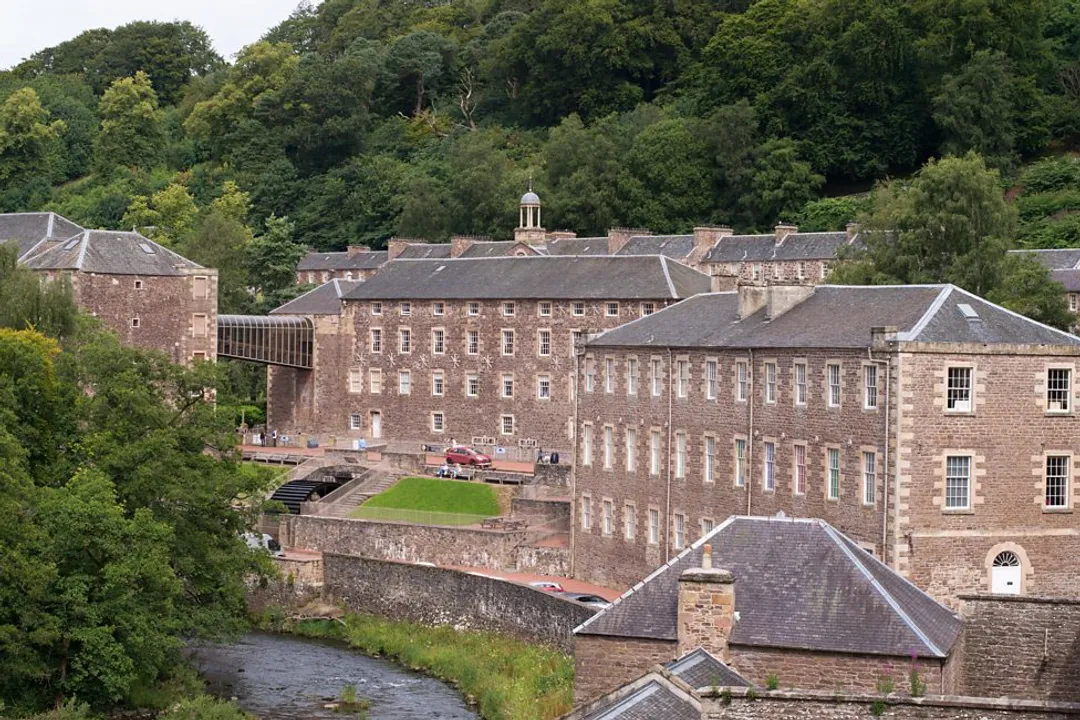
The Water Frame didn't just improve quality; it fundamentally changed where cloth was made. Because these machines were large and required a reliable power source like a river, they necessitated the shift from decentralized cottage production to centralized factory settings. [1] This consolidation of labor and machinery under one roof was a defining feature of the new industrial landscape.
# Fine Thread Production
The final piece of the spinning puzzle arrived in 1779 with Samuel Crompton's Spinning Mule. [1][3] The Mule cleverly combined the best features of both the Jenny (producing many threads) and the Water Frame (producing strong threads). [1] It could spin yarn that was not only strong enough for warp but also incredibly fine and soft, perfect for high-quality muslin fabrics. [3] The Mule was significantly faster than manual spinning and allowed for the mass production of high-quality thread, finally aligning the supply side with the new weaving demands. [1]
By the late 18th century, the bottleneck was resolved. Spinning was incredibly fast, meaning the weavers, even those using the faster Flying Shuttle, began to feel the pressure again.
| Machine | Inventor | Approximate Year | Primary Contribution to Speed/Quality | Power Source |
|---|---|---|---|---|
| Flying Shuttle | John Kay | 1733 | Doubled weaving speed | Human |
| Spinning Jenny | J. Hargreaves | c. 1764 | Spun multiple threads simultaneously | Human |
| Water Frame | R. Arkwright | 1769 | Produced strong, hard yarn suitable for warp | Water |
| Spinning Mule | S. Crompton | 1779 | Produced fine, strong yarn quickly (best of both) | Human/Water |
This sequence shows a clear progression: a weaving speed increase forces a spinning speed increase, which in turn demands another weaving speed increase to keep pace. The historical pattern strongly suggests that the most transformative speed machine is the one that breaks the current industry-wide logjam.
# Power Loom Acceleration
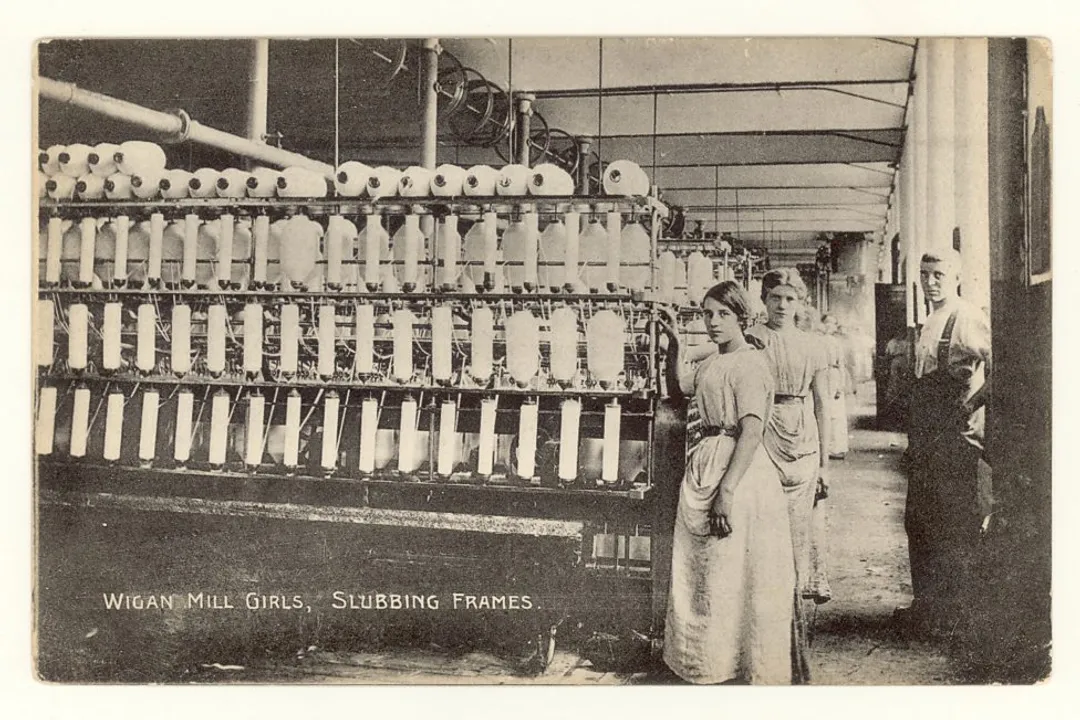
With spinning output now massive, the industry needed an equally fast method for weaving. This need was met by Edmund Cartwright’s Power Loom, patented in 1784. [1][3] Although early versions required significant human adjustment and were initially slower than a skilled hand weaver, the concept was revolutionary: weaving mechanized by power. [1]
Over the next few decades, inventors refined the design, eventually driving the looms with steam engines or water power, mirroring the shift seen earlier with the Water Frame. [2] This fully mechanized weaving mechanism was the apparatus that truly accelerated cloth manufacture to industrial scales. Once the Power Loom was perfected and widely adopted, the speed of cloth production jumped exponentially, far surpassing anything achievable by the manual methods that preceded it. [1][2] A single operative could oversee multiple Power Looms running at high speed, turning out yardage that would have taken dozens of traditional weavers weeks to complete. [3]
The impact of the Power Loom cannot be overstated; it made mass-produced textiles economically viable for the first time, driving down costs and making fabric widely accessible. [6]
# Automated Patterns
While the Power Loom conquered sheer speed for plain cloth, creating patterned fabric remained slow and intricate, requiring skilled workers to manually set up the harnesses and treadles for each design change. [7] The next great leap in textile manufacturing speed wasn't just about how fast the thread was laid down, but how automatically complex designs could be executed.
In 1801, Joseph Marie Jacquard introduced his revolutionary loom, which used a system of punched cards to control the movement of the individual warp threads. [2][7] Each card represented one row of the pattern; by sequencing the cards, the loom could automatically weave incredibly elaborate and precise designs without constant manual intervention. [7]
The Jacquard Loom didn't necessarily weave faster than a perfectly set-up Power Loom making plain cloth, but it drastically accelerated the time required to switch between patterns and eliminated the need for highly specialized, time-consuming manual setup associated with complex weaves. [2] This automation of complexity was a profound speed improvement for patterned goods and stands as an early, iconic example of automated control in manufacturing, predating many other automated systems by decades. [7]

# The Infrastructure Shift
It is impossible to discuss which machine helped manufacture cloth faster without acknowledging the necessary infrastructure changes that accompanied them. These machines were not standalone improvements; they demanded power and space. [1][6]
When Arkwright's Water Frame required a river, production moved to the riverside mill. When later Power Looms and Mules grew more demanding, the shift to steam power—first documented in Manchester mills around 1787—meant that factories could be built anywhere coal was accessible, not just near fast-flowing water. [9] This switch centralized production, allowing for much larger operations managed by fewer supervisors, a change that fundamentally defined the scale of speed achievable.
When we look at the progression—shuttle, spinner, loom—we see a pattern of increasing input requirements. The early inventions were clever mechanical additions to existing manual setups. [3] The later, truly fast machines, like the Power Loom driven by steam, demanded an entirely new industrial ecosystem. Therefore, the system enabled by the Power Loom and the steam engine was the fastest cloth manufacturer overall, even if the Power Loom was the single mechanism at the center of the weaving process.
It’s interesting to observe that while modern textile machinery operates at speeds unimaginable in the 19th century, utilizing computerized control systems that far surpass the mechanics of the Jacquard cards, the principle remains the same: the fastest machine is the one that requires the least human attention per unit of output. [4][5] The Jacquard Loom’s reliance on physical, changeable cards meant that even automated patterning had an element of physical replacement and manual handling time—a downtime modern, computer-driven textile machinery has almost entirely eliminated through digital file transfers and sensor monitoring. The historical transition from human decision-making to mechanical instruction, and finally to programmed instruction, traces the line of ever-increasing speed in cloth production.
Related Questions
#Citations
Power loom - Wikipedia
Power Loom: An Essential Industrial Revolution Invention
How did the Industrial Revolution change the textile industry? - BBC
The Power Loom Machine: Revolutionizing the Textile Industry
How Fabric Making Machines Are Transforming the Textile Industry
A History of the Textile Revolution - Acme Mills
Programming patterns: the story of the Jacquard loom
Sew, How Was Sewing Modernized? - Pioneer Village - Minden, NE
The Industrial Revolution: The Inventions of the Industrial Age