What problem did the sewing machine solve?
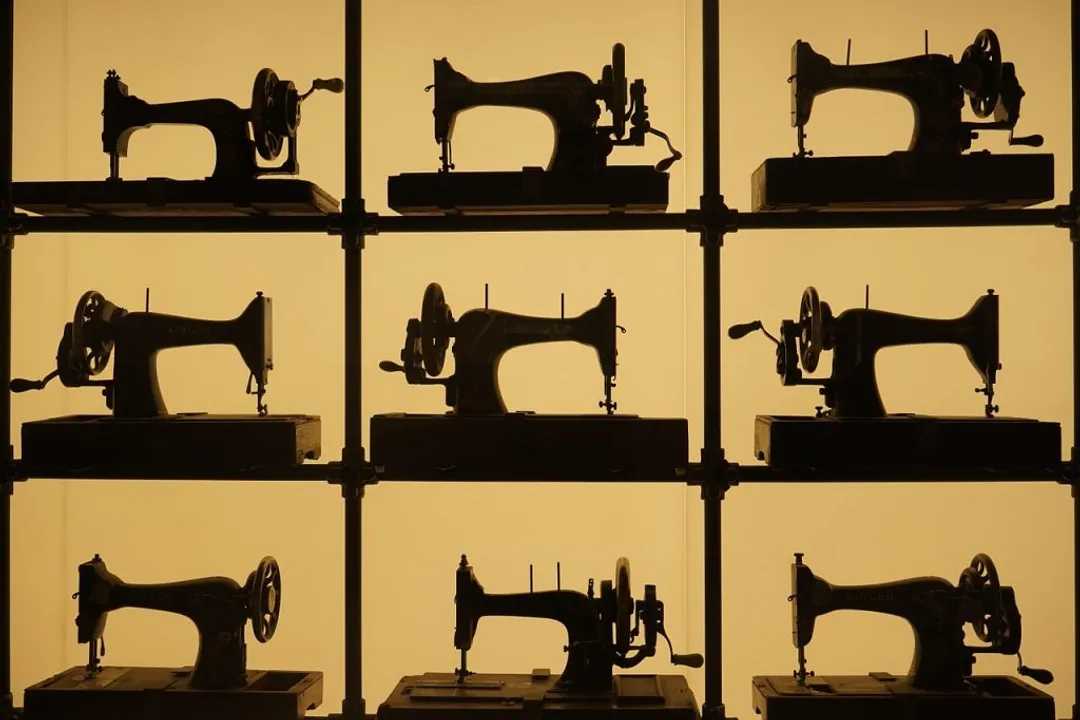
The labor of fastening two pieces of fabric together, stitch by agonizing stitch, represented one of humanity’s most enduring and necessary domestic and industrial bottlenecks for centuries. Before mechanized sewing, the creation of even a simple shirt required an immense investment of time, making clothing a scarce and costly commodity for the masses. [6][8] The problem the sewing machine solved was fundamentally one of time, scale, and physical endurance in textile creation. [3][4] Anyone who has ever tried to mend a tear or sew a straight hem by hand understands the tedious nature of the running stitch—a simple line of thread passing over and under the material repeatedly, leaving a relatively weak seam. [3] This manual process was inherently slow, often taking upwards of a dozen hours to complete a single garment, which severely limited how many items could be produced and how quickly they could be brought to market. [6]
# Hand Stitching Ordeal
The difficulty of hand sewing was not just a matter of slight inconvenience; it was a significant economic barrier. [6] In the early nineteenth century, producing clothing relied on home-based piecework or small tailor shops. Seamstresses and tailors, often working long hours in poor conditions, were paid meager wages because the output was so intrinsically limited by the speed of the human hand. [6][9] For the average family, purchasing new clothing was a rare event, and mending was a constant, necessary chore to extend the life of existing items. [6] This reality meant that access to quality, durable clothing was largely a privilege of the wealthy, while the working classes often wore ill-fitting, rapidly deteriorating garments. [6][9] Think, for a moment, about a standard shirt made entirely by hand versus one made by the earliest machines—the manual production required hundreds, if not thousands, of individual, measured insertions of a needle, a process highly susceptible to fatigue and inconsistency. [3]
For context, consider the sheer output difference. A skilled seamstress might manage to sew perhaps five straight stitches per second, and even that rate is generous for a full day's work while maintaining quality. [1] If a simple seam required 1,000 stitches to secure, that single seam alone demanded several minutes of focused, precise effort, multiplied across every seam, dart, and hem of a garment. [1] This massive time sink was the direct problem the inventors sought to overcome. The desire was to automate the most repetitive part of the process: creating a durable, interlocking line of stitches quickly and consistently. [3][4]
# Inventive Race
The quest to mechanize stitching began long before the widespread success of the later inventors, pointing to a recognized, pressing need across the textile world. [1][8] Early concepts involved machines that mimicked the action of a hand needle, but these often only scratched the surface of the problem. [1] One crucial hurdle was figuring out how to create a stitch that held securely without relying on the simple over-and-under method of hand sewing. [3] Many early attempts produced a running stitch that could unravel easily if the thread broke at any point. [4]
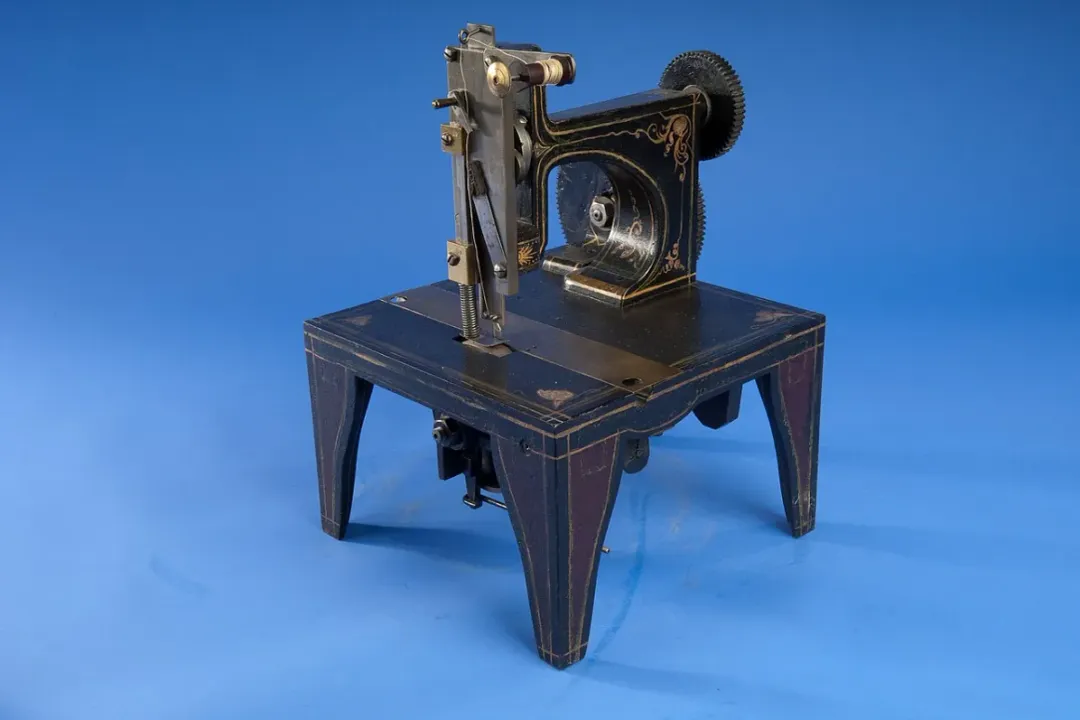
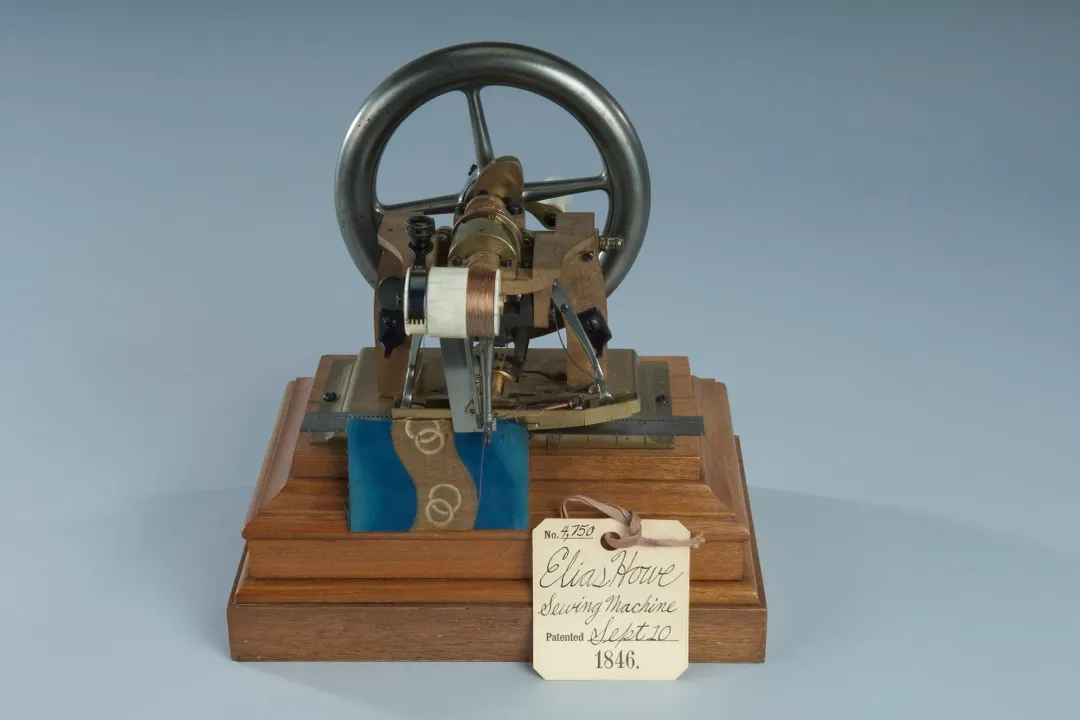
The breakthrough required moving past the single-needle, single-thread concept. Elias Howe is widely credited with patenting a functional machine in 1846 that utilized a lockstitch mechanism. [10] Howe's design incorporated two essential components that set it apart: a needle with an eye near the point, which allowed the thread to be driven through the fabric from above, and a shuttle that carried a second thread underneath to interlock with the first. [4][10] This combination created the lockstitch, a far superior and more durable seam than the running stitch produced by earlier models or hand sewing. [4] While Howe invented the effective mechanism, others quickly refined and popularized the machine. Isaac Singer’s contributions, particularly his refinement of the mechanism, the addition of a presser foot, and his savvy business practices, made the machine accessible to a broader market. [1] The rapid proliferation of patents and subsequent legal battles over intellectual property, such as Howe's fight to defend his 1846 patent, underscored just how valuable this solution had become to the burgeoning industrial landscape. [5][10]
# Lockstitch Superiority
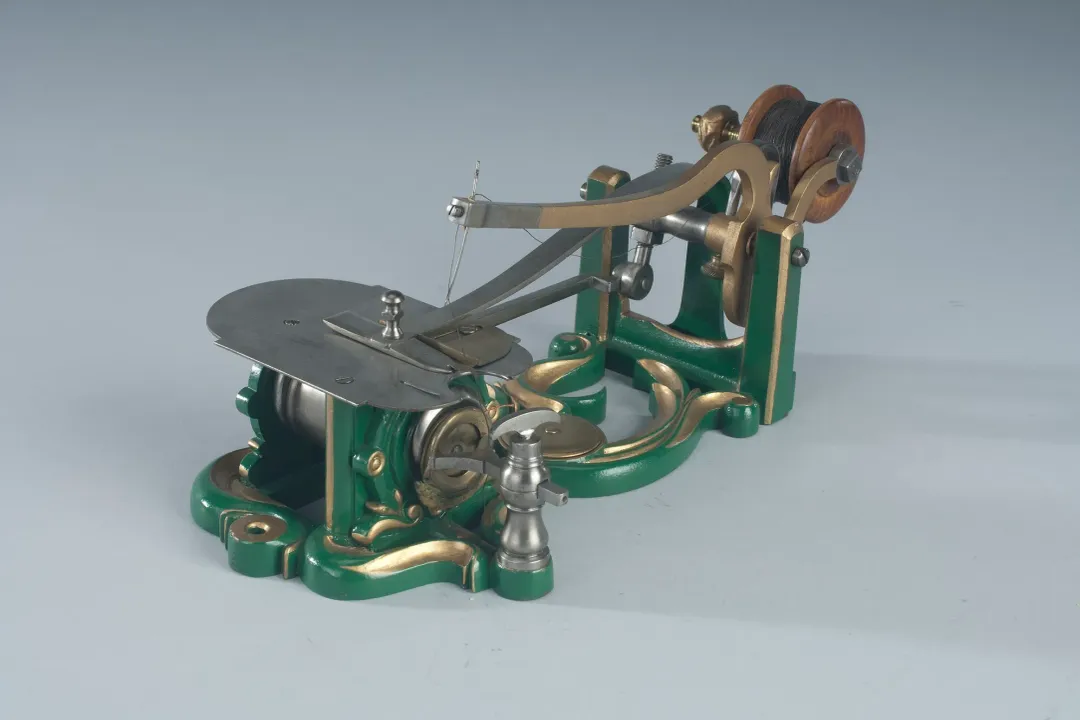
The shift from a running stitch to a lockstitch was not merely an incremental improvement; it was a fundamental change in seam integrity that enabled mass production. [3][4] The lockstitch, as employed by Howe and refined by Singer, creates an interlocking mechanism where two threads cross in the middle of the fabric layers. [4] This design meant that if one thread snapped, the entire seam would not immediately fall apart, a critical factor when garments were expected to endure heavy use in factories or daily life. [3]
To illustrate the mechanical advantage, consider a simple comparison:
| Feature | Hand Sewing (Running Stitch) | Lockstitch Machine |
|---|---|---|
| Thread Used | One (top only) | Two (top and bobbin) [4] |
| Seam Strength | Low; prone to unraveling [3] | High; interlocking security |
| Speed | Very slow (a few stitches per second) [1] | Very fast (hundreds or thousands per minute) |
| Consistency | Highly variable based on operator skill | Extremely consistent stitch length and tension |
This consistency offered an entirely new baseline for quality control in manufacturing. [4] An operator using a machine could achieve the same, reliable seam strength and appearance thousands of times a day, something utterly impossible for a human working with a simple needle and thread. [4] An analytical observation here is that the sewing machine, by establishing a reliable, consistent stitch as the norm, effectively redefined 'quality' in clothing construction. Prior to this, quality meant intricate handwork; afterward, quality meant machine-level precision and material durability. This mechanical uniformity became the expected standard, pushing hand-sewn items into the niche of luxury or heirloom goods rather than everyday necessities. [9]
# Factory Acceleration
The immediate and most dramatic consequence of solving the sewing problem was the transformation of the ready-made clothing industry and its relationship with the Industrial Revolution. [2][6] Factories that had previously focused on weaving and spinning cloth could now see their materials converted into finished goods at an unprecedented pace. [2][4] The bottleneck moved from the spinning wheel to the seamstress's table, and the sewing machine blew that bottleneck wide open. [2]
In the early days of mechanized sewing, many factories simply hired large numbers of seamstresses and provided them with a machine, often on credit, turning small workshops into larger manufacturing centers. [4] This rapid increase in output drastically lowered the cost of clothing, moving it from an item of significant expenditure to a readily available commodity. [6] This impacted everyone, but especially the burgeoning urban working class who needed durable, affordable clothing for their demanding factory jobs. [6] Before the machine, it was often cheaper to buy a new, cheap garment overseas than to repair an old one locally; the machine reversed this equation for mass-produced items. [2]
The factory setting itself became synonymous with the machine. The noise, the rhythm, and the sheer volume of production redefined the work environment for countless individuals, particularly women who entered the mills and shops in greater numbers to operate these new devices. [2][4][9] The work shifted from isolated domestic labor to centralized, monitored industrial production. [9]
# Labor Shifts
The impact on the labor force was complex and multifaceted, simultaneously creating new jobs while changing or eliminating others. [4][9] For skilled tailors and seamstresses accustomed to charging high prices for slow, bespoke work, the machine posed an existential threat to their traditional business model. [6] Their expertise was suddenly devalued as an average operator could produce far more quantity. [9]
Conversely, the demand for operators, mechanics to repair the complex new devices, and factory managers skyrocketed. [4] Women, historically associated with textile work, flocked to these new factory positions. [9] While the work was faster and often monotonous, it offered an independent wage outside the home, which was a significant, albeit often difficult, social change. [9] This created an entirely new class of industrial wage earners reliant on the machine's efficiency. [6]
Another point of analysis is the geographical concentration of industry. Because the machines required power—first steam, later electricity—garment production, which was previously dispersed across homes and small towns, became heavily concentrated in urban centers where factories could be established. This demographic shift fueled urban growth and created the large, densely populated garment districts seen in major cities throughout the late 19th and early 20th centuries. The sewing machine didn't just sew clothes; it helped redraw the map of where people lived and worked. [2]
# Clothing Availability
Perhaps the most profound, if less technical, problem solved by the sewing machine was providing ready-to-wear clothing to the masses. [6] The availability of inexpensive, standardized clothing revolutionized personal presentation and hygiene. People could now own several outfits instead of just one or two that had to last for years, which was particularly important in industrial environments where clothes soiled quickly. [6] Uniformity in sizing also began to emerge, driven by the need to produce standardized patterns that fed the machines efficiently, leading to the concept of modern, measurable clothing sizes. [9]
The entire supply chain was affected. Textile mills could produce cloth faster knowing there was a hungry market of sewing machines ready to convert it into salable garments, creating a virtuous cycle of increased output and decreased cost. [2] What was once a luxury—having a wardrobe suited for different occasions or seasons—became an expectation for many working families by the turn of the century. [6] The sewing machine democratized dress, allowing workers to affordably purchase functionally appropriate clothing for their new industrial lives, directly solving the problem of scarcity and expense that defined the pre-machine era. [6][9] The legacy of this invention is that the vast majority of textiles we interact with today, from bedsheets to blue jeans, owe their cost structure and availability to the successful automation of the stitch nearly two centuries ago. [1][8]
Related Questions
#Citations
The Complete History of a Sewing Machine | GoldStar Tool | Blog
How Did the Sewing Machine Impact the Industrial Revolution?
Elias Howe's Sewing Machine - Cambridge Historical Society
Sewing Revolution: The Machine That Changed America
Behind the Seams: The Industrial Age Battle for the Sewing Machine
How the sewing machine transformed society - Farm and Dairy
Invention of the sewing machine inspired by a dream - Facebook
History of the Sewing Machine: A Story Stitched In Scandal - Contrado
15.17 The Sewing Machine - Her Half of History
Howe Patents His Sewing Machine | Research Starters - EBSCO