When was the first gear cycle invented?
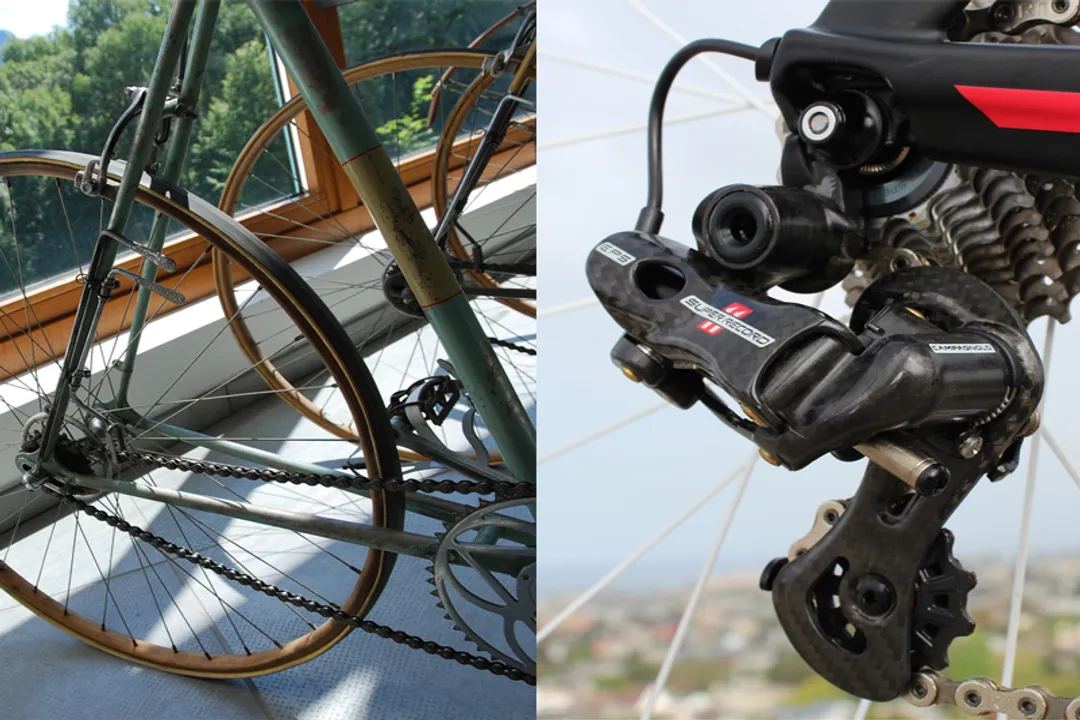
The genesis of the geared bicycle is not marked by a single, definitive flash of inspiration on one specific day, but rather by a slow, mechanical evolution that paralleled the transformation of the bicycle itself from a heavy, cumbersome novelty into a practical machine. To ask when the first gear cycle was invented is to first decide what counts as a "gear." Was it the first machine to use a chain drive, which allowed for gearing ratios fundamentally different from direct drive? Or was it the first machine to offer multiple ratios selectable by the rider? The answers pull us through several decades of mechanical tinkering, starting well before the familiar safety bicycle even appeared on the scene. [2][5]
# Early Concepts
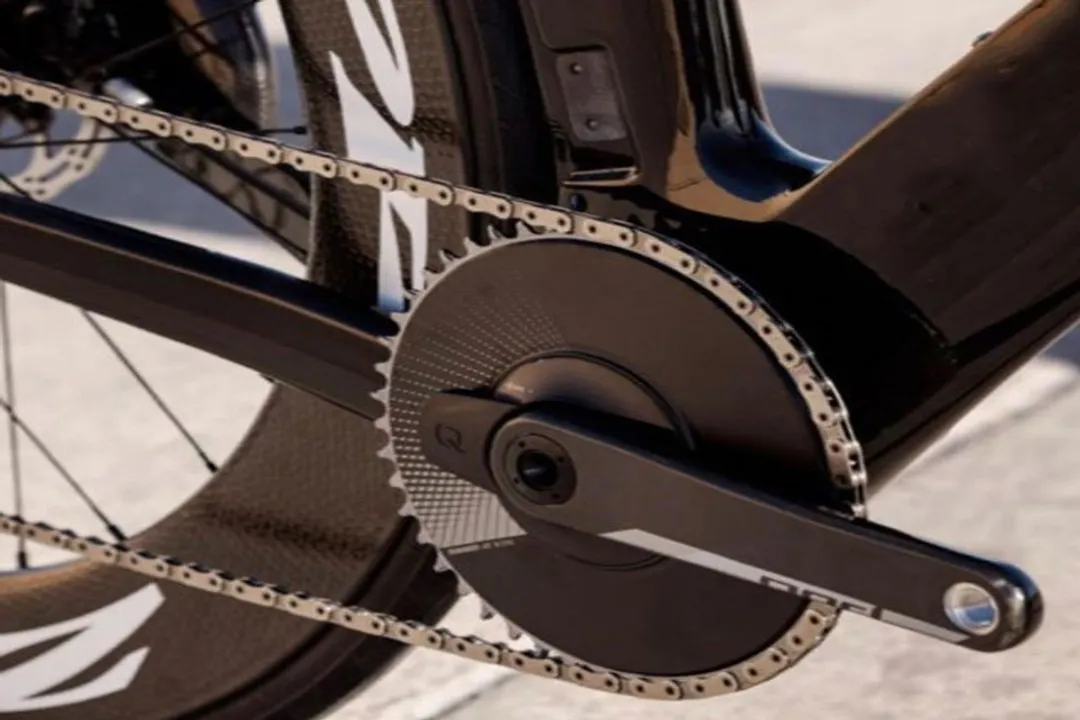
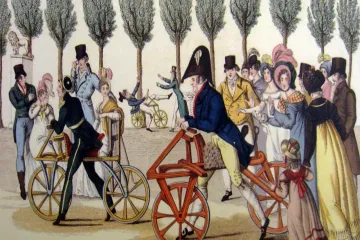
Before thinking about gear systems, we must acknowledge the critical shift from direct-drive pedals attached to the front wheel, common on early designs like the 'boneshaker' velocipede and the terrifying high-wheel or 'penny-farthing' bicycle. [2] These early forms were inherently limited: the speed of the bicycle was entirely dependent on how fast the rider could pedal, as one turn of the pedals equaled one turn of the wheel. [5] This meant hill climbing was miserable, requiring the rider to either stand and exert enormous torque or simply dismount. [5]
The earliest true attempts to separate pedal speed from wheel speed involved placing a gear mechanism between the cranks and the wheel axle. Some of the very first devices that incorporated a form of gearing were not necessarily multi-speed in the modern sense, but rather systems designed to increase the wheel's rotation relative to the pedals, or to introduce a freewheeling mechanism. [5] The concept of variable transmission began to take shape as inventors sought ways around the physical limitations of the high-wheeler.
# Starley's Contribution
A significant marker in this history is often attributed to James Starley. In reports spanning the history of cycling, Starley is credited in 1871 with inventing the first gear cycle. [3] It is important to contextualize what this machine likely was. In 1871, the dominant form of personal transport was still the high-wheeler. While Starley was famous for his work on these machines, his "geared cycle" probably refers to an early, perhaps experimental, application of gearing—likely a reduction or increase in drive ratio—applied to a machine of that era or a precursor to the safety bicycle. [3][2]
This claim positions the first geared attempt quite early, predating the widespread adoption of the chain-driven safety bicycle by over a decade. [2] If this 1871 machine utilized a chain and sprockets to achieve a different ratio than 1:1, it qualifies as a geared cycle, even if it wasn't a multi-speed system. However, without a mechanism for the rider to change that ratio mid-ride, it remains a fixed-ratio geared bicycle.
# The Safety Bicycle Shift
The true mechanical revolution that made practical gearing widespread possible was the advent of the safety bicycle in the mid-1880s. [2] This machine introduced two fundamental features that paved the way for effective gearing: equally sized wheels and the use of a chain to drive the rear wheel. [2] This chain drive itself constituted a form of gearing, allowing the front sprocket (connected to the pedals) to be smaller or larger than the rear sprocket (connected to the wheel). [4] This provided a fixed mechanical advantage—a single gear ratio—that was vastly superior to the direct drive of the high-wheeler.
Suddenly, inventors could experiment with gearing ratios without having to physically change the wheel size, a dangerous and impractical proposition on a high-wheeler. [5]
# Early Multi-Speed Experiments
Once the chain drive was standardized on the safety bicycle, the focus shifted from getting a ratio to changing the ratio. Inventors began exploring how to offer riders a choice, particularly for ascending hills.
# Internal Hub Gears
One of the earliest successful solutions for providing multiple, selectable gear ratios was the internal hub gear. [4] These mechanisms place the gears inside the rear wheel hub, protecting them from the elements. While the concept evolved over time, early versions appeared in the late 19th and early 20th centuries. The introduction of a reliable three-speed hub gear, for example, offered riders a choice between a high gear, a direct drive, and a low (climbing) gear. [4] These systems were robust and relatively simple to operate, making them popular for utility cycling where durability mattered more than absolute performance.
# The Derailleur Emerges
The mechanism that most modern riders recognize—the derailleur, which physically moves the chain between sprockets of different sizes—also has roots stretching back to the turn of the 20th century, though its perfection took much longer. [4]
Different inventors laid claim to early derailleur designs. Some early devices were incredibly cumbersome, involving levers and sometimes even removing the chain by hand to move it to a different sprocket. [5] One notable early iteration, sometimes cited as a predecessor to modern systems, was developed in the 1900s. However, widespread adoption and reliability were not achieved until after World War I. [4]
Imagine trying to manage an early derailleur system that required the rider to stop, dismount, physically lift the chain off one cog, and settle it onto another, perhaps while standing on the side of a muddy country lane. This friction highlights a crucial point about mechanical progress: invention is only half the battle; practical usability determines adoption. [5] For years, the fixed gear remained the standard for many competitive and utility cyclists precisely because gearing systems were either too unreliable, too heavy, or too complex for everyday use. [8]
# A Tale of Two Systems
The history of gearing can be effectively split into two competing paths that emerged in the early 20th century: the internal hub and the external derailleur.
| Feature | Internal Hub Gear | External Derailleur System |
|---|---|---|
| Mechanism Location | Inside the rear hub [4] | Chain moves between exposed cogs on the rear wheel |
| Shifting Operation | Usually a twist-grip or lever on the handlebar | Levers (early) or shifters (modern) move a mechanism |
| Durability | Very high; sealed from dirt and weather | Lower; susceptible to damage, dirt, and poor adjustment |
| Weight | Generally heavier due to internal mechanism | Generally lighter, especially in early racing applications |
| Gear Range | Traditionally limited (e.g., 3 speeds) | Capable of very wide gear ranges |
This comparison reveals why both systems found their niches. For the commuter or the utility cyclist, the hub was king for its low maintenance. [4] For the racer, who needed the widest possible range and the lightest weight—and who had mechanics available for tuning—the derailleur eventually won out, despite its initial flaws. [4]
It is interesting to consider that for a long time, the concept of a truly modern multi-speed bike—one with a wide gear range that could be shifted instantly under load—was largely absent. When James Starley’s 1871 concept is discussed, we are likely looking at a fixed-ratio modification or a very rudimentary clutch mechanism, rather than a system offering a dozen distinct ratios accessible on the fly. [3] The ability to easily tackle varied terrain without stopping is what truly defines the modern "gear cycle," a capability that took decades to fully materialize. For instance, on a flat European city route today, a fixed gear is a simple, efficient choice. [8] But tackling the Alps requires the mechanical sophistication born from these very early, often frustrating, experiments.
# The Evolution of Control
The physical act of shifting gears also evolved dramatically. Early multi-speed systems, whether hub-based or derailleur-based, often required the rider to stop pedaling momentarily to avoid breaking the chain or damaging the mechanism. The development of reliable indexed shifting—where a click on the shifter corresponds precisely to moving the chain to the next cog—was a mid-to-late 20th-century refinement, making the experience nearly foolproof. [4]
Before indexing, shifting a derailleur was an art form. A slight hesitation, an overly aggressive push on the shifter, or pedaling too hard could lead to the chain jamming between gears, or worse, dropping off the sprocket entirely. This mechanical difficulty meant that many cyclists stuck to single-speed or fixed-gear bikes for decades simply due to the lower cognitive load required to operate them. [8] The real breakthrough wasn't just the gears themselves, but the creation of a control system that integrated seamlessly with the physical demands of cycling.

# Gear Ratios and Application
The initial drive to create gears wasn't just about climbing; it was also about cruising at higher speeds without over-spinning the legs. On a high-wheeler, if the front wheel was 50 inches in diameter, the rider was physically capped on how fast they could spin the cranks before their legs were moving too quickly to maintain power. [5] By using a chain and sprockets, an inventor could, in theory, create a gear where one pedal revolution moved the rear wheel forward by a distance equivalent to a 60-inch wheel, achieving higher speeds without requiring an impossibly fast cadence. [5]
This insight into cadence is vital. If a modern cyclist can maintain a comfortable 90 revolutions per minute (RPM) cadence on a flat road, they are working efficiently. If forced onto a direct-drive 50-inch wheel, they might max out at 70 RPM, losing power simply because their legs cannot move faster. The introduction of a gear system, even a fixed one, provided the mechanical advantage needed to keep the rider in their optimum physiological power band for longer periods. [4]
In summary, while James Starley's 1871 contribution marks an early instance of applying gearing theory to a cycle, [3] the true invention of the practical geared cycle—the multi-speed machine that could be shifted on the go—was a gradual convergence of the safety bicycle design, the invention of the robust chain drive, and the decades-long refinement of both hub gears and derailleurs into the reliable systems we know today. [2][4] The first chain-driven safety bike established the platform, but the first reliable, easy-to-use multi-speed system truly defined the geared cycle era. [2][4]
Related Questions
#Citations
When were bicycle gears invented?
History of the bicycle
James Starley, in 1871 changed the world of cycles by ...
A brief and fascinating history of road bike gears
Science of Cycling: History of Drives & Gears
When did bicycles first get gears?
The History & Evolution of the Bicycle
Looking for info on how fixed gear bikes fit into bicycle ...