Who invented the first microprocessor?
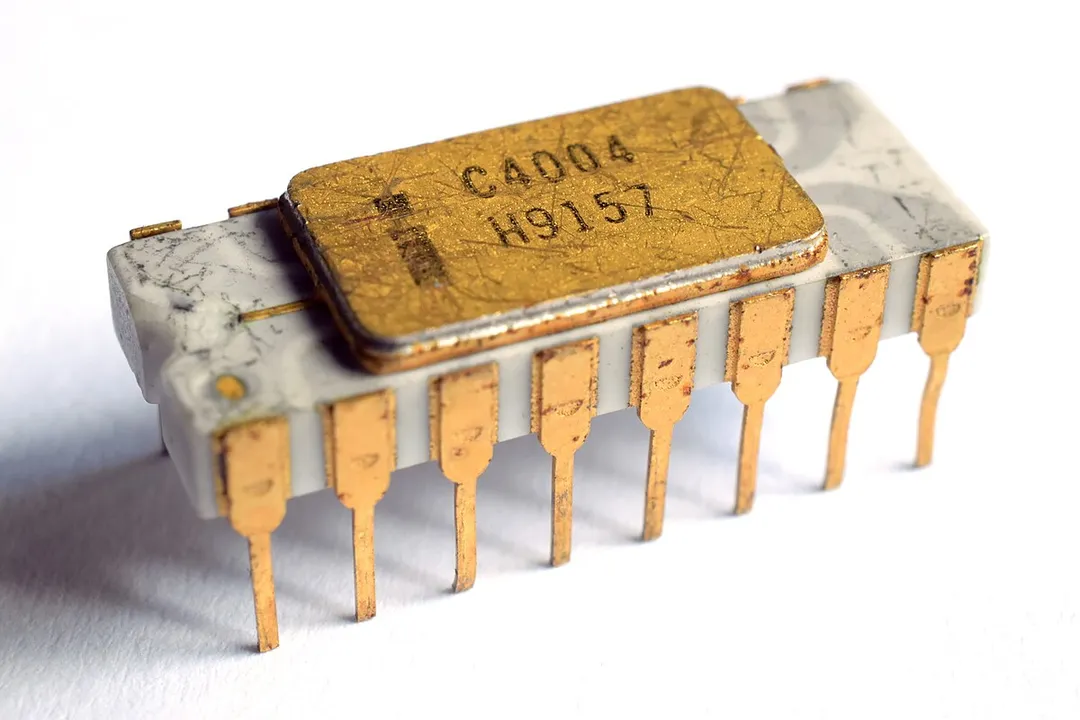
The creation of the integrated circuit chip that could function as a central processing unit—the microprocessor—represents one of the most profound technological shifts of the latter half of the 20th century. This single piece of silicon, small enough to rest on a fingertip, fundamentally changed the trajectory of computing, moving processing power from large, specialized mainframes into the hands of individuals and small businesses. The story of its origin is not about a single flash of genius, but rather a convergence of architectural insight, process expertise, and an urgent commercial need.
# Early Need
The immediate commercial driver for the first microprocessor came from a Japanese calculator manufacturer, Busicom. In 1969, Busicom approached Intel with a request to design the custom logic chips for a new line of advanced electronic calculators. The initial design specification was ambitious, requiring the creation of approximately twelve custom integrated circuits (ICs) to handle all the necessary functions for the machine.
At the time, designing a new calculator, or any piece of specialized equipment, often meant laying out custom silicon for every logical function, resulting in a proliferation of unique chips that were costly and slow to produce. This project, therefore, presented a significant challenge in terms of manufacturing complexity and turnaround time.
# Architectural Seed
The key shift in thinking that led away from the dozen-chip solution and toward a single-chip CPU is often attributed to Intel engineer Ted Hoff. Hoff, who joined Intel in 1968, was tasked with looking at the Busicom project specifications. Instead of proceeding with the custom logic approach, Hoff proposed a more abstract, general-purpose design.
Hoff’s insight was revolutionary: if the logic could be described using a set of general instructions—a basic instruction set—then that logic could be implemented on a smaller number of, or even a single, general-purpose chip. He envisioned a small, flexible central processor that could be programmed to perform the necessary arithmetic and control functions for the calculator, rather than being hardwired to do so.
Stanley Mazor, another Intel engineer, worked alongside Hoff and contributed significantly to developing this architectural concept. Their initial concept laid the groundwork, but translating this abstract design into working silicon required specialized process expertise that was still maturing at Intel.

# Execution and Technology
While Hoff and Mazor provided the conceptual blueprint for a programmable processor, the actual physical design, layout, and successful fabrication of the first working chip fell to Federico Faggin. Faggin joined Intel in 1970 and was the engineer who took the architectural ideas and turned them into a tangible product.
Faggin brought crucial manufacturing expertise, specifically in Silicon Gate Technology (SGT). He was instrumental in developing the necessary design methodology, known as the Silicon Gate Process, which was essential for realizing the complexity required on a single die. He led the design and layout of the first true microprocessor, integrating all the components of a CPU onto one chip.
An additional engineer, Masatoshi Shima from Busicom, also assisted in the logic design process, working closely with Faggin to ensure the design met the functional requirements of the calculator.
This collaboration resulted in the Intel 4004, which was formally announced on November 15, 1971. It was the first commercially available single-chip microprocessor. The chip was based on a 4-bit architecture and contained approximately 2,300 transistors.
It is fascinating to consider that a design born from the need to streamline a calculator quickly became the foundation for everything else. While the 4004 was explicitly designed for calculation, the fact that it was programmed rather than hardwired meant that the same physical chip could theoretically be repurposed for an entirely different application with a new set of instructions. This philosophical leap—from custom circuitry to programmable logic—is perhaps more important than the transistor count itself.
# Defining the First
The debate over who invented the microprocessor often hinges on the definition: was it the conceptual architect or the person who successfully laid out and fabricated the integrated silicon implementation?.
- The Architectural View: Ted Hoff is widely recognized for proposing the concept of a general-purpose processing unit to replace the custom logic requested by Busicom. This conceptual groundwork established what was needed.
- The Implementation View: Federico Faggin is credited with the actual invention of the first true microprocessor because he designed the architecture and created the physical layout using the SGT process necessary to make the 4004 functional. His process innovation was key to squeezing the required logic onto a single die.
Intel acknowledged the contributions of all key figures, including Hoff, Mazor, Shima, and Faggin, in the product's announcement. Faggin’s leadership in the physical design phase, however, places him in a unique position regarding the silicon realization.
| Role | Key Contributor(s) | Contribution Type |
|---|---|---|
| Architectural Concept | Ted Hoff, Stanley Mazor | Proposed general-purpose CPU design to replace custom logic |
| Physical Design/Layout | Federico Faggin | Led design, layout, and utilized SGT process for fabrication |
| Logic Assistance | Masatoshi Shima | Aided in logic design based on Busicom requirements |
When viewing the historical record, it becomes clear that the 4004 was a team effort built on sequential innovation: the need, the architectural solution, and the fabrication mastery.

# From Calculator to Computer
The immediate successor to the 4004 in the Intel lineup was the 8008, introduced in 1972, which was an 8-bit processor. This move to 8 bits signaled a clear pivot away from purely specialized calculator use toward general-purpose computing applications, even if the initial instructions were still relatively limited.
The sheer integration density achieved with the 4004 was staggering for its era. For perspective, the 4004 packed about 2,300 transistors. Modern high-end processors often contain billions of transistors. This initial density leap, however, represents the most difficult step: proving that a functional CPU could coexist on one piece of silicon, a concept previously thought impossible by many in the industry. The 4004’s ability to interface with external memory and I/O chips (forming what Intel called the MCS-4 set) showed that it was more than just a calculator engine; it was a foundation.
A small observation on the engineering timeline shows that Faggin and Shima eventually left Intel to co-found Zilog in 1974, where they developed the Z80 processor, a chip that became even more widespread in early personal computing and embedded systems than its direct predecessors. This trajectory underscores the powerful momentum generated by the initial 4004 breakthrough—the architects and designers immediately went on to create even more powerful iterations based on their foundational experience.
# Lasting Imprint
The invention of the microprocessor marked the beginning of the microcomputer revolution. Before 1971, computers were discrete systems, built up from dozens or hundreds of separate chips. The 4004 collapsed this architecture into a single component, making electronics smaller, cheaper, and far more accessible.
This invention is what allowed computers to move out of dedicated climate-controlled rooms and into offices, homes, and eventually, our pockets. The shift meant that design engineers could suddenly conceptualize products that were previously constrained by the physical size, power draw, and cost of multiple specialized chips.
The legacy of the 4004, and the team that designed it, is not just the chip itself, but the model of generalized computing architecture it validated. It proved that complex processing could be centralized on one inexpensive, mass-produced item. Even today, whether you are looking at a complex server, a modern smartphone, or a tiny microcontroller managing a microwave oven, you are witnessing the direct descendant of that initial 4-bit design breakthrough from Intel in 1971. The journey from a dozen custom ICs for a calculator to a single integrated CPU defined the digital age we now inhabit.
Related Questions
#Citations
Microprocessor - Wikipedia
Who Invented the Microprocessor? - CHM - Computer History Museum
Ted Hoff: the birth of the microprocessor and beyond
How Ted Hoff Invented the First Microprocessor - IEEE Spectrum
Who Invented the Microprocessor? Meet Federico Faggin
The First Intel Microprocessor - The Chip that Changed Everything
Federico Faggin and the microchip: the Italian invention that ...
50 years ago, on November 15 1971 the first microprocessor was ...
The Chip that Changed the World - Intel Newsroom