When was the first ironing board invented?
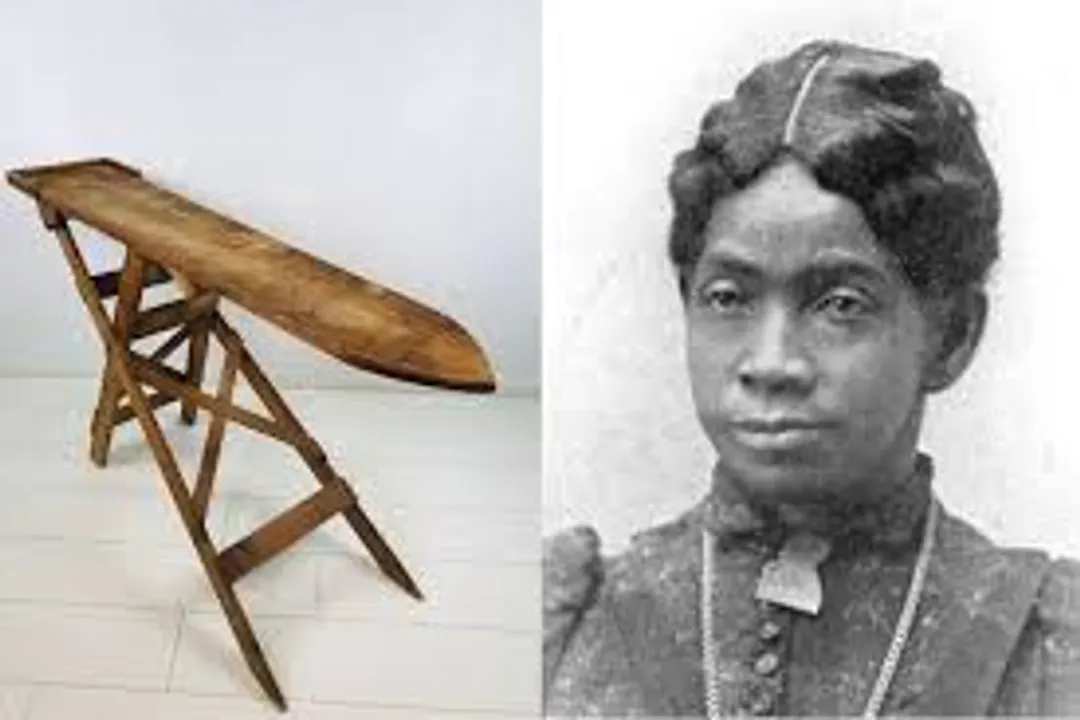
The simple act of removing creases from fabric has been a domestic necessity for centuries, yet the specialized tool we call the ironing board is a surprisingly modern invention, or rather, a series of significant improvements upon earlier concepts. Before a dedicated, portable, and adjustable surface existed, people relied on whatever flat, stable surface they could manage—a sturdy table, the top of a stove, or even a wooden plank balanced across chairs. [4][5] These improvised setups often presented ergonomic challenges; the user had to contort themselves around the object being pressed, making tasks like smoothing the sleeve of a shirt an exercise in awkward maneuvering. [6]
# Smoothing Fabrics
Ironing itself predates the structured board by a considerable margin. Early methods involved heating heavy metal irons, often shaped like sadirons, on a heat source and applying them directly to the cloth. [5] The real problem wasn't the heat application, but the platform. Trying to press a shoulder seam or a delicate cuff against a large, flat kitchen table meant that the rest of the garment often dragged on the floor or became wrinkled again as the user tried to reach a difficult area. [4] This necessity—the need to get into tight spaces comfortably—drove the invention of specialized surfaces designed specifically for this repetitive chore. [6]
# Prior Art
While Sarah Boone is often highlighted, particularly for her groundbreaking patent, the concept of a foldable or specially designed ironing surface was already taking shape in the mid-19th century. [6] Evidence suggests that attempts to patent such devices occurred earlier. For instance, some historical records point to an 1858 patent for an ironing board design. [4] While the specifics of that 1858 model are less frequently detailed, its existence confirms that inventors recognized the need for a dedicated appliance beyond the standard kitchen table long before the turn of the century. [4] These earlier designs likely addressed the basic need for a raised surface, but perhaps lacked the specific refinements necessary for modern garment construction. [6] One early idea sometimes associated with an inventor named Oliver Evans involved a non-folding, specialized table, though this is often considered a precursor rather than the recognizable ironing board form. [4]
# Boone's Design
The significant evolution in this domestic technology is most powerfully attributed to Sarah Boone, an African American woman born into slavery in Kentucky around 1832. [3][5] In the late 19th century, she conceived of and patented an improved version of the ironing table. [3][6] Boone received the official U.S. patent for her "Ironing Table" in 1892. [2][6] This patent secured her place in history as the first African American woman to be granted a U.S. patent. [3][6][7]
What made Boone's design superior was its focus on practicality and efficiency for the user. Her ironing table featured a narrow, curved board structure that was specifically engineered to allow for the pressing of shirt sleeves effectively. [3][6] Furthermore, the device was constructed to be foldable, allowing for easy storage in smaller living quarters, which was a considerable advantage in homes where space was at a premium. [3][6] Considering the era, many homes, particularly those occupied by working-class families or individuals living in cramped urban settings, lacked dedicated utility rooms. Boone's design, therefore, was not just an incremental improvement in hardware; it was an adaptation to the scale of domestic life, prioritizing compactness alongside functionality. [3] The folding nature transformed the device from a permanent fixture into a readily deployable tool.
# Historical Milestone
Sarah Boone’s patent stands as a testament to innovation born out of necessity within the domestic sphere. While industrial inventions often garnered more attention and wealth during that period, patents for household items like the ironing board solved daily friction points for millions of people. [4] Her achievement is noteworthy not just for the device itself, but for the barrier she broke. Being the first Black woman to receive a U.S. patent is a profound historical marker, demonstrating intellectual property ownership against significant societal obstacles. [3][7]
It is interesting to note the contrast between the effort required to secure a patent for a mechanical device intended for the factory floor versus one designed for the home, especially for a woman of color at the time. While the 1858 patent may have established the idea of a dedicated board, Boone’s patent represented the successful commercialization and formal recognition of a solution that actually worked well for the user, particularly concerning sleeves—a notoriously difficult part of any shirt to press cleanly. [6] Her design likely influenced subsequent generations of ironing boards, establishing the fundamental shape and feature set we still see today, even if modern versions are made of lighter materials and feature adjustable height mechanisms that Boone’s original design might not have included. [4]
# Post-Boone Refinements
Following the establishment of the improved, patented ironing table, the development continued. The core concept—a narrow, padded, elevated surface—remained, but subsequent inventors focused on making the board lighter, easier to adjust, and more stable. [5] The addition of built-in temperature resistance and adjustable height mechanisms were critical later developments that transformed the board from a sturdy piece of furniture into the lightweight, ergonomic tool familiar to modern users. [5] These subsequent advancements built directly upon the foundational problem solved by earlier inventors, including Boone: how to manage the curves and tight spots of clothing efficiently on a stable, portable platform. [6]
In assessing the timeline, we see a clear progression: first, the application of direct heat to fabric on any flat surface; second, the patenting of early, likely static, specialized surfaces (like the 1858 example); and finally, the patented, functionally improved board with sleeve attachments offered by Sarah Boone in 1892. [3][4][6] The "first" ironing board is thus a layered answer, but the first recognized, improved, and patented version designed with modern garment needs in mind belongs to Sarah Boone.
Related Questions
#Citations
Ironing - Wikipedia
A brief history of ironing boards - Kitten Vintage
Sarah Boone, born into slavery in 1832, invented an improved ...
History of Ironing Boards, Ironing Tables, Smoothing Boards
The History of the Ironing Board
Sarah Boone: the 'Ironing Table', Perfected - IPWatchdog.com
Who Invented the Ironing Board? - IroningLab
zBH-sarah — UCRP - United Church of Rogers Park