Who first invented buttons?
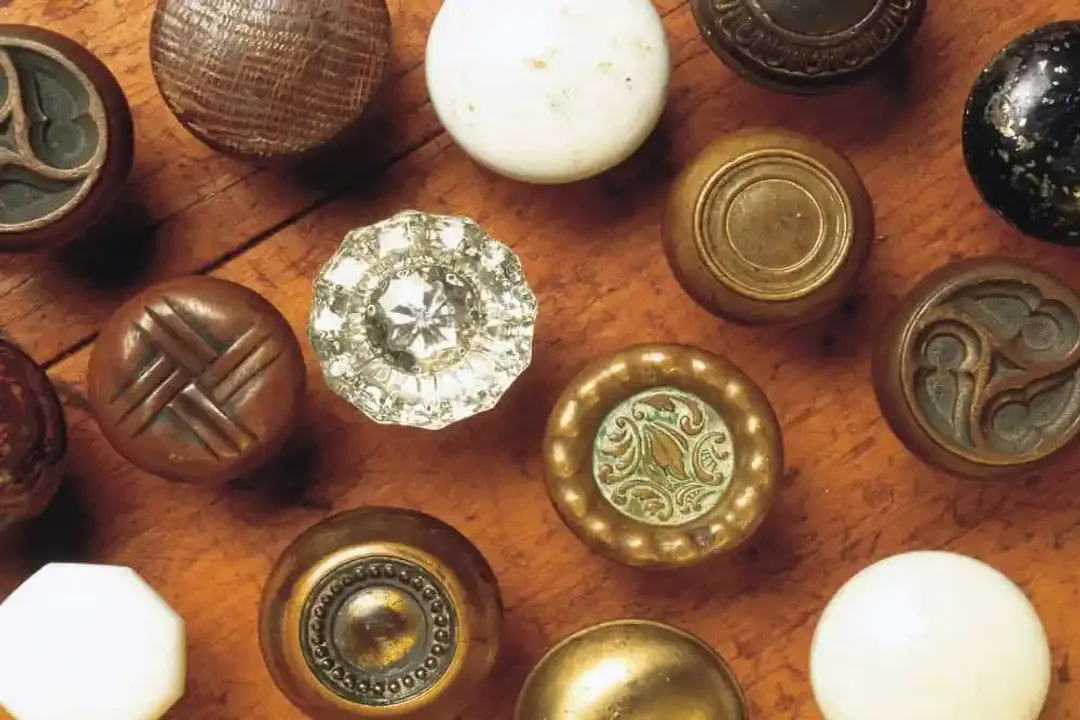
The concept of fastening clothing with a small, discrete object seems so fundamental to modern dress that pinpointing a single moment of invention is nearly impossible. The button, in its current, dual-role capacity as both fastener and decoration, evolved over millennia, morphing from simple ornamentation into a critical piece of hardware for securing garments. Its history is less about a single inventor and more about a long sequence of material innovations and changing social needs across diverse cultures.
# Ancient Ornamentation
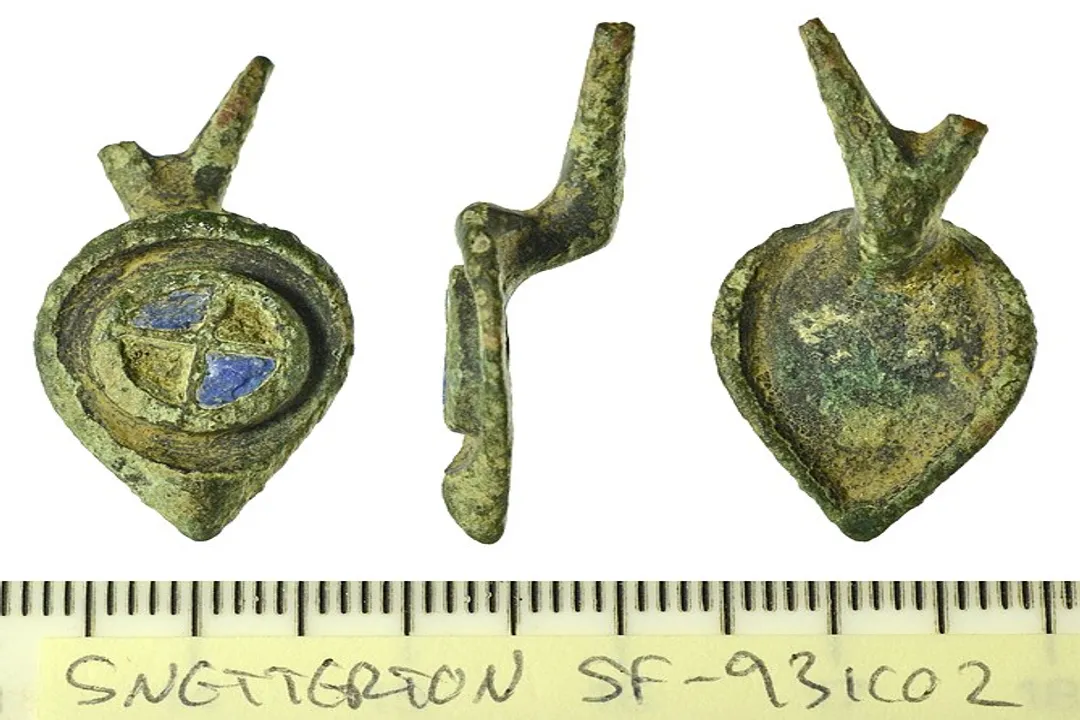
Archaeological evidence suggests that the very first iterations of what we might call buttons were not used to actually close clothing, but rather to adorn it. These earliest forms date back thousands of years, appearing in ancient civilizations long before tailored garments required sophisticated closures. For example, remnants dating back to the Indus Valley Civilization, around 2500 BCE, show buttons made from shell, often featuring perforations, though these seem to have served primarily as decorative toggles or for attachment to jewelry or straps, rather than being passed through a buttonhole.
In ancient China, during the Shang Dynasty (c. 1600–1046 BCE), button-like objects made from bone and stone have been discovered, again suggesting their initial function leaned toward decoration or signaling status rather than practicality. These early artifacts highlight a crucial distinction: an object that looks like a button is not the same as a functional button closure system. The necessity of a true button arises only when clothing is cut closely enough to require securing, a development that took much longer to appear universally.
# Early Fasteners
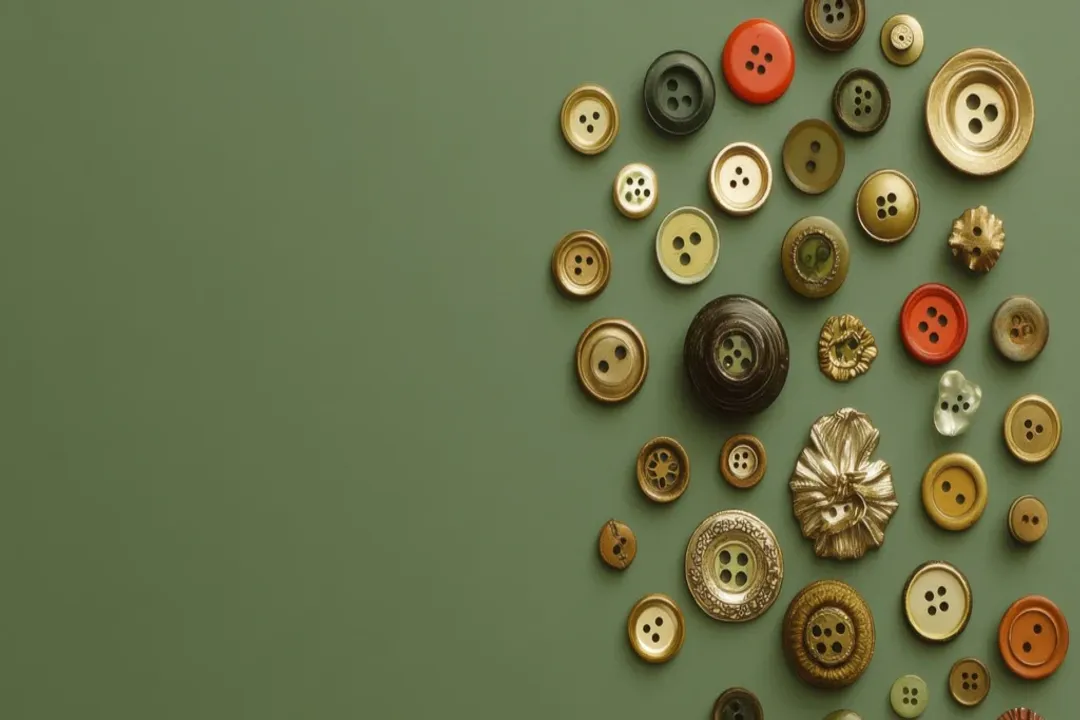
As tailoring techniques advanced, particularly in the Bronze Age, the practical application of these small disks began to emerge, though often alongside existing closure methods like pins, ties, and toggles. The Greeks and Romans incorporated buttons, often made from bronze or other metals, into their dress, frequently using them near the neck or shoulders of robes like the toga or chiton. However, even in these advanced societies, the button was not yet the primary closure mechanism; it often augmented existing ties or was purely ornamental, especially for higher social classes.
A key moment in button evolution involved the development of the buttonhole. Until the advent of a reliably sewn, reinforced slit in the fabric designed specifically to accommodate a button shank, the button was severely limited in its utility as a fastener. The widespread adoption of buttonholes, particularly in Europe during the Middle Ages, transformed the button from a decoration into an essential component of garment construction.
Consider the historical context: before functional buttons were common, garments often relied on draping, tying, or simple pinning. The introduction of the true button-and-buttonhole system allowed for far more fitted and structured silhouettes, which became increasingly desired in medieval Europe, especially after the 13th century. For instance, by the 14th century in parts of Europe, clothing fashions for men began to feature long, closely fitted sleeves fastened entirely by rows of buttons—a true testament to the technology's success and the mastery of the buttonhole stitch.

# Material Evolution
The material used dictated the button's accessibility and perceived value throughout history. In the early medieval period, materials were dictated by local availability and the wearer's means. Common choices included:
- Natural Materials: Wood, bone, shell, and horn were readily available and formed the bulk of everyday buttons.
- Precious Materials: Royalty and the very wealthy utilized buttons made of gold, silver, crystal, or even ivory, often encrusted with gems to denote extreme affluence.
During the Renaissance, the artistry applied to buttons increased dramatically, turning them into miniature works of art, particularly those made of metal or intricately carved wood. Metalworking techniques allowed for decorative motifs—heraldry, religious symbols, or simple patterns—to be stamped or cast directly onto the button face.
It is interesting to observe how button materials mirrored societal technological progress. When steel became easier to produce, metal buttons saw a surge in popularity for military and utilitarian wear because of their durability. Conversely, the slow, meticulous carving of bone or ivory meant that these buttons remained expensive tokens, accessible primarily to the elite until industrialization changed the equation. The very cost of the material dictated the number of buttons used; a high-status noble might have dozens of costly pearl buttons down a doublet, whereas a common laborer relied on a few wooden toggles.
# Industrialization's Impact
The true revolution that democratized the button—making it accessible to everyone—occurred with the Industrial Revolution, primarily in the 19th century. This era shifted production from artisanal workshops to factories, enabling mass production and drastically lowering costs.
One significant early industrial material was vegetable ivory (tagua nut), which could be carved and dyed much like natural ivory but was cheaper and more sustainable to source in volume. Metal buttons also benefited hugely from automated stamping and finishing techniques, allowing uniform sizes and styles to be produced rapidly for military uniforms and ready-made clothing lines.
However, the most transformative development came with the invention of synthetic plastics in the late 19th and early 20th centuries.
# Rise of Synthetics
The first plastic-like buttons began appearing in the late 1800s, often derived from natural substances that were chemically processed. Celluloid, derived from cellulose, was one of the earliest true synthetics used for buttons, offering vibrant colors and easy moldability that natural materials could not match.
This was swiftly followed by Bakelite in the early 1900s, the first fully synthetic plastic, invented by Leo Baekeland. Bakelite was incredibly durable, heat-resistant, and could mimic expensive materials like tortoiseshell or jade, yet be produced cheaply and quickly. This material, along with later innovations like Urea-Formaldehyde, fundamentally changed the button landscape. Suddenly, a garment could feature a dozen brightly colored, intricately patterned buttons for mere pennies, making high fashion accessible to the middle class.
If we map the transition of manufacturing speed, the change is staggering. A skilled craftsman in the 17th century might take an entire day to carve, shape, and polish a dozen high-quality horn buttons. By the 1920s, a machine using Bakelite could produce thousands of identical, colored buttons in the same timeframe. This efficiency is why, for instance, a 1950s shirt might have five matching, colorful plastic buttons, an aesthetic luxury that would have been financially prohibitive a century prior. This democratization is perhaps the most significant "invention" related to buttons—the invention of mass availability.
# Who Gets the Credit?
When asking who first invented the button, the sources consistently point toward an evolutionary path rather than a singular Eureka moment. There is no single historical record crediting one person with the "invention" of the button, much like crediting one person for inventing the wheel or the nail.
The historical narrative suggests the invention was a three-part process, each stage developed by different peoples at different times:
- The Ornament: Attaching a disk to fabric for decoration (Ancient Near East, Indus Valley).
- The Fastener: Using the disk in conjunction with a slit or loop (Bronze Age/Classical Civilizations).
- The Closure System: Perfecting the matched button and reinforced buttonhole (Medieval Europe).
If one were forced to name the most critical advancement that made the button what it is today, it would likely be the perfection of the buttonhole around the 12th or 13th century CE. Without that standardized, durable opening, the button remains merely an ornament or a toggle; with it, the button becomes the standard means of closure that defines its modern identity.
# Modern Use and Legacy
Today, the button coexists with mechanical alternatives like zippers, snaps, and Velcro, which often handle high-stress closures like those on trousers or jackets. Despite the competition, the button endures, especially on shirts, blouses, and coats, largely due to aesthetic preference and tradition.
The shift from natural to synthetic materials also changed how we treat buttons today. Vintage clothing enthusiasts understand that a button made from natural shell or horn can react poorly to harsh modern detergents or high dryer heat, often cracking or warping in ways a modern polyester or resin button will not. As a practical tip for anyone preserving older garments: if the buttons feel organic—like wood, bone, or early plastics like Bakelite—treat them gently. Hand-washing the garment and air-drying flat is the best way to ensure these historical fasteners survive the next few decades, preserving the craftsmanship of the eras they represent.
Ultimately, the story of the button is a story of human adaptation—from using carved shell purely for beauty to employing mass-produced plastic for daily convenience. It is a small object with a massive, layered history, proving that the most effective inventions are often those that evolve quietly alongside us.
Related Questions
#Citations
Button
The History of the Button
Who invented buttons? - Joni Scott Books
The Evolution of the Button - Learn the History ...
Button Definition, History & Types
The History of Buttons
A Century of Plastic Buttons
The History of Buttons and How It's Used in Renaissance ...
Button History | Edwardian Steampunk Victorian