Who first invented the water bottle?
The simple act of carrying a drink, specifically water, has a history far older than the plastic containers we grab at the checkout counter today. While the modern, single-use plastic bottle is a relatively recent invention tied to the boom of the beverage industry, the desire to transport and store potable liquid has driven ingenuity for millennia. Pinpointing one singular inventor for the water bottle is impossible because the object evolved alongside human technology, moving from natural receptacles to sophisticated manufactured goods. [1]
# Ancient Carryalls
Long before glassblowing or polymer chemistry, early civilizations relied on nature to keep water on hand. The earliest forms of water carrying devices were likely natural containers. Think of hollowed-out gourds, animal skins, or perhaps even large, sealed leaves. [1] These were not manufactured in the modern sense, but they served the essential function of a personal, portable reservoir. The shift from these organic materials to something more permanent began with early civilizations mastering containment technology. [3]
# Glass Vessels
The next major leap involved using fired clay or blown glass. Clay pots offered durability for storage, but glass, once perfected, provided a clear, non-porous, and reusable vessel. [1] Although glass bottles have been around for centuries—with an ancient history dating back thousands of years—their role in the commercial distribution of water is what truly sets the stage for the modern concept. [3]
In the 18th and 19th centuries, bottled water started appearing more frequently, often associated with mineral springs believed to have therapeutic properties. [3] These early commercial endeavors utilized sturdy glass bottles, sometimes engraved or elaborately shaped, which speaks to the value placed on the contents and the intended reuse of the container. [5] The glass bottle represented an era where the container was often an investment, meant to be returned or kept, contrasting sharply with today’s disposable culture. [1]
# Wyeth's Breakthrough
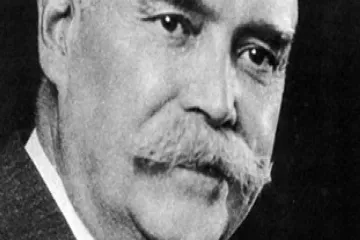
The transformation from heavy, breakable glass to something lighter and more adaptable for mass production required a materials science revolution. This is where the story of the modern water bottle—the plastic one—finds a crucial figure: Nathaniel Wyeth. [2]
Wyeth, an inventor based in Elwood, New Jersey, is credited with creating the first plastic water bottle. [2] While the initial development of plastics involves several key figures across different decades, Wyeth’s specific contribution centered on making these containers practical and commercially viable. [2][4] He didn't invent plastic itself, but rather the process or the form that made the water bottle concept accessible to the masses. [2]
A key development often associated with plastic innovation was the invention of the plastic-coated paper bottle, which Wyeth contributed to in the early 20th century. [2] This innovation moved away from breakable glass toward a lighter, more economical material for liquids. However, the true game-changer for the ubiquitous, clear plastic bottle we see today came later, driven by advancements in polymer chemistry, particularly with polyethylene terephthalate (PET). [7]
To visualize the materials shift that defined the water bottle's evolution, consider this comparison of the primary container types:
| Era | Primary Material | Key Characteristic | Portability/Fragility | Commercial Scale |
|---|---|---|---|---|
| Pre-History | Gourd/Skin | Natural, Biodegradable | High Portability, Low Durability | None |
| 19th Century | Glass | Non-Porous, Clear | Low Portability, High Fragility | Specialized/Spa Market |
| Mid-20th Century | Plastic (Early) | Lighter Weight | Medium Portability, Moderate Durability | Growing |
| Late 20th Century | PET Plastic | Lightweight, Mass-produced | Very High Portability, Single-Use | Massive Global Market |
# Plastic Proliferation
The real explosion of the bottled water market hinged on materials that were cheap to produce and easy to transport, meaning they had to be lightweight and durable enough to survive shipping across long distances. [5] Plastic filled this need perfectly. The introduction of low-density polyethylene (LDPE) and later PET resin allowed manufacturers to create bottles that were incredibly light—often containing more water than the container weighed—and shatterproof. [4][7]
The ability to mass-produce these thin-walled plastic containers, often using injection stretch blow molding techniques, drove costs down dramatically. [4] This manufacturing capability meant that water was no longer something people sought out at a specific spring or refilled from a communal pump; it became a convenient, disposable commodity available everywhere. [5] This democratization of portable hydration—making water accessible instantly, even in areas with safe tap water—is the direct legacy of the plastic bottle inventor(s) and the process engineers who scaled production. [3]
For example, imagine a scenario from the 1980s versus today. In the earlier period, bringing a reusable glass or metal canteen on a hike was standard because disposable options were either too heavy or did not exist in convenient formats. Today, grabbing a half-liter PET bottle is almost unconscious, a habit born from the extremely low perceived cost and high convenience of the packaging. [5]
# Industry and Infrastructure
The invention of the plastic bottle was intrinsically linked to the rise of the modern bottled water industry. Early pioneers realized that if they could reliably package water cheaply, consumer demand would follow convenience. [5] While early companies focused on the perceived health benefits of specific mineral waters, [3] the convenience offered by plastic containers shifted the focus to hydration on demand—for sports, travel, and daily commuting. [1][5]
One interesting way to view this industrial shift is through the lens of logistics. A glass bottle requires thicker walls, heavier packaging, and more fuel to transport the same volume of product compared to a lightweight plastic alternative. [4] This economic advantage, driven by Wyeth's material evolution and subsequent industrial scaling, made bottled water a truly global product, available far from its source. [5] The entire supply chain, from bottling plants to retail shelves, was restructured around the efficiency of the plastic vessel.
# Modern Containers
Today, the conversation around water containers has circled back, partly in response to the environmental consequences of single-use plastics. [9] While the convenience of the disposable PET bottle remains unmatched for certain applications, there is a clear resurgence in reusable bottles. [9]
Modern reusable bottles draw inspiration from both the durability of early materials and the lightweight nature of plastic. Materials like stainless steel, Tritan, or high-density BPA-free plastics are now favored by consumers prioritizing longevity and sustainability. [9] When considering which bottle to carry daily, the choice often reflects an attempt to balance the convenience that plastic pioneered with a renewed sense of responsibility regarding waste. [9]
The invention narrative, therefore, is not a single moment but a continuum. It moves from the necessity of survival (gourds), to the luxury of health (mineral glass), to the convenience of modern life (plastic), and now perhaps toward a sustainable middle ground (high-quality reusables). [1][9] Nathaniel Wyeth provided the essential material breakthrough that unlocked the modern, disposable standard, allowing water to be truly divorced from its local source and packaged for anyone, anywhere. [2]
Related Questions
#Citations
The History of Water Bottles
Nathaniel Wyeth - Lemelson-MIT Program
Bottled water - Wikipedia
The History of Plastic Bottles - Aco Recycling
Birth of the Bottled Water Industry - BCC Research Blog
Who invented watered bottles? - Quora
History of Plastic Water Bottles: How Did They Become So Ubiquitous?
Nathaniel Wyeth; Invented Plastic Soda Bottle - Los Angeles Times
How Water Bottles Came to Rule the World - and Why They May ...