Which cycling niche ultimately favored the external derailleur system over the internal hub gear?
Answer
Racers, due to the requirement for the lightest possible weight and the widest gear range.
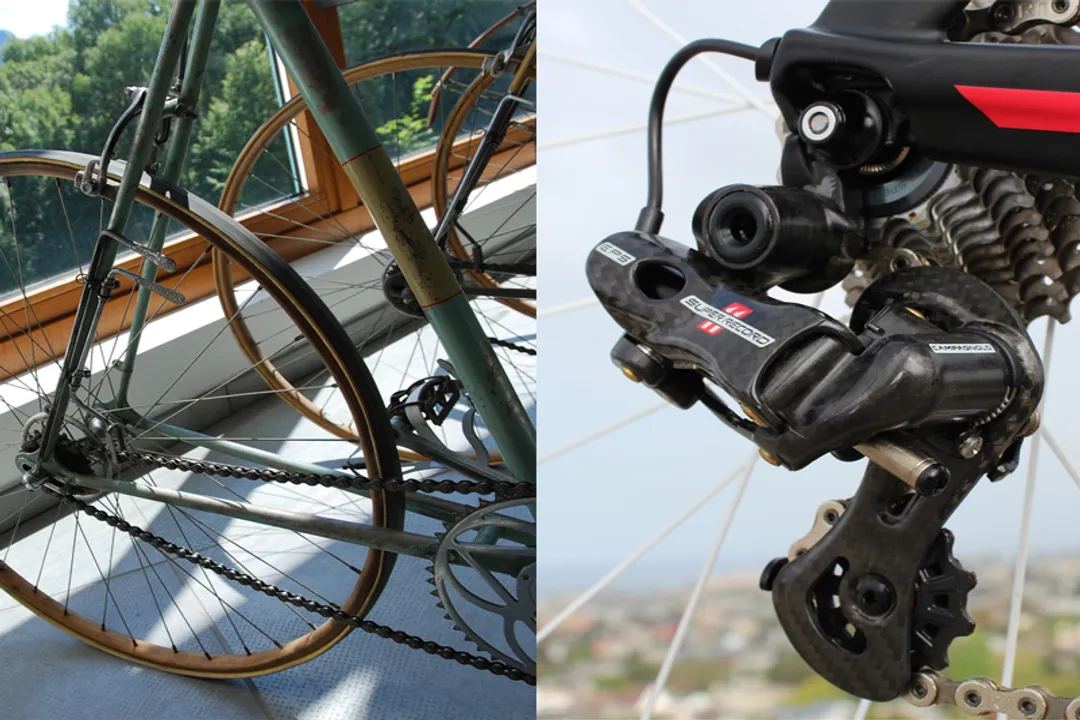
The comparison between the two major systems shows they carved out distinct niches based on their inherent trade-offs. While the internal hub offered superior protection and robustness suitable for daily commuting where maintenance was a concern, the external derailleur system, despite being more susceptible to dirt and damage, allowed for a significantly wider variety of gear ratios combined with a lighter overall weight. For racing applications, where maximizing speed range and minimizing mass were paramount priorities, the derailleur eventually became the dominant choice, even if it required mechanics for frequent tuning.
Related Questions
What characterized James Starley's 1871 invention described as the first gear cycle?What inherent limitation defined the direct-drive pedals on the 'boneshaker' or 'penny-farthing'?What two fundamental features did the safety bicycle introduce to enable widespread practical gearing?Which gearing system generally offered very high durability because it was sealed from dirt and weather?Besides making hill climbing easier, what primary speed goal did early gearing systems help riders achieve?How does the external derailleur system physically accomplish shifting between different gear ratios?What practical difficulty often caused many cyclists to stick with fixed-gear bikes for decades?What refinement, developed in the mid-to-late 20th century, made derailleur shifting nearly foolproof?What was the initial function of the earliest devices separating pedal speed from wheel speed?Which cycling niche ultimately favored the external derailleur system over the internal hub gear?According to the comparison table, which system generally carried more weight?