Who invented the first bicycle without pedals?
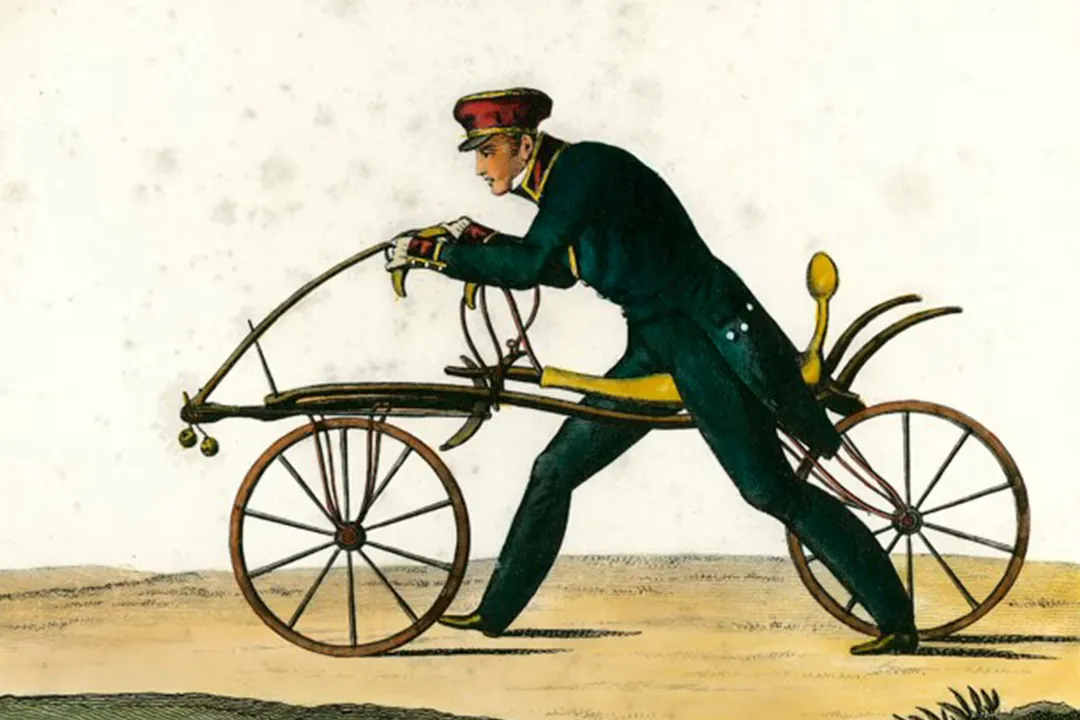
The concept of personal, human-powered wheeled transportation has a surprisingly long and often bumpy history, predating the familiar diamond-frame bicycle by decades. The initial spark for self-propulsion on two wheels didn't involve cranks or chains; it involved running, but much faster. The individual credited with this foundational step into modern cycling was the German inventor Karl Freiherr von Drais. His creation, developed in the early 19th century, removed the need to walk while still relying entirely on the rider's feet touching the ground for forward momentum.
# Drais's Debut
The milestone moment for the machine that would eventually lead to the bicycle occurred on June 12, 1817. On this date, the German inventor, Karl Freiherr von Drais, presented his invention to the public. This initial presentation marked the first documented successful operation of a steerable, two-wheeled personal vehicle that required dynamic balance from the operator. While modern cycling is associated with pedaling, this precursor relied purely on a striding motion, earning it several descriptive, if less romantic, names.
# Machine Details
The apparatus that Drais unveiled was a simple yet revolutionary piece of engineering for its time. It consisted of a wooden frame connecting two in-line wheels. Unlike later designs that would incorporate complex mechanisms, this machine featured a steerable front wheel. Propulsion was achieved when the rider sat astride the frame and pushed off the ground with their feet, effectively using their legs as a pair of quick-moving pistons for acceleration. Once enough speed was gained, the rider could lift their feet and coast, relying on the machine's inherent stability—or lack thereof—to maintain balance until they needed to power up again. The whole process can be visually mapped out as the direct predecessor to how children learn to ride a modern balance bike, a fact that offers a fascinating insight into early biomechanics.
# Nomenclature Confusion
It is important to note that this original, pedal-less device was not universally called a "bicycle" immediately. The term "bicycle" generally refers to a machine with two wheels of equal size and a chain drive, which came much later. Drais’s creation went by several distinct titles, reflecting its novelty and the different languages in which it was discussed. It was commonly known as the Laufmaschine (running machine) in German, or the Draisine in his honor. In other contexts, it was frequently called a velocipede. Understanding these different names is key to tracing its history, as many early historical accounts refer to the velocipede when they are actually describing Drais’s original, non-pedaled concept.
If we compare the initial weight and material to what we see today, the Draisine must have been a considerable physical commitment for the rider. Given that it was constructed largely of wood, an inherent limitation of 19th-century manufacturing capabilities, its structural integrity likely demanded a solid, perhaps heavy, frame to handle the forces generated by a striding rider. This early reliance on dense materials, even without the added weight of complex gearing, contrasts sharply with the high-strength, lightweight aluminum and carbon fiber frames common in contemporary cycling, suggesting that managing the device’s inertia was a primary challenge for early adopters.
# Post-Drais Evolution

Although the Draisine was a significant step, it was not the final product. Its immediate successor began to incorporate mechanical improvements, even while maintaining the basic two-wheeled principle. The next major iteration often involved adding cranks and pedals directly to the front wheel hub, leading to what some sources refer to as the boneshaker. This transition marked a crucial shift: moving the propulsion source from the feet on the ground to a direct mechanical linkage via the pedals. This evolution, while an improvement in continuous motion, introduced rougher riding due to the lack of pneumatic tires and often very rigid construction, which necessitated the use of iron frames and wooden wheels with iron tires.
The shift from Drais's Laufmaschine to the pedal-driven machine illustrates a fundamental divergence in personal transport philosophy. Drais focused on assisted walking—a means of covering ground faster than running while retaining a physical connection to the surface for security and control. The later inventors focused on continuous mechanical drive, aiming to eliminate the need for foot-ground contact entirely. Looking back, the genius of Drais was isolating the balance and steering elements as the primary engineering challenge, solving those before the power transmission question was fully addressed by others.

# Insights on Early Adoption
Considering the historical context surrounding Drais’s debut, one must look at the environmental backdrop of 1817. While the sources confirm the who and when, the why often points to a period of climate disruption. Major volcanic eruptions, such as Mount Tambora in 1815, caused the infamous "Year Without a Summer" in 1816, leading to widespread crop failures and the starvation of horses used for personal transport. This situation likely created an immediate, albeit temporary, market demand for a viable, non-animal-dependent means of travel. The Draisine was, in this sense, an invention born not just of mechanical curiosity but of acute environmental necessity.
This immediate pressure to find alternatives to horse transport likely influenced how the Draisine was received and marketed. It wasn't just a toy for the wealthy; it was potentially a substitute for equine travel during a period when fodder was scarce and expensive. An interesting thought exercise involves calculating the efficiency gain for an average person. If a fit person could maintain a brisk walk at about 3 miles per hour (about 5 km/h), the Draisine, utilizing long, gliding strides, could potentially double that speed over flat ground for sustained periods before exhaustion set in from the unique running motion required. This speed advantage, even if marginal by modern standards, would have been significant when horses were prohibitively costly or unavailable.
# Legacy of the Foot-Powered Start
The pedal-less bicycle, the Draisine, served its purpose as a bridge technology. It proved that two wheels aligned in tandem could be balanced and steered by a human operator. This fundamental proof-of-concept was essential for all subsequent developments in cycling, including the later invention of the chain drive, the solid rubber tires, and even the safety bicycle configuration that closely mirrors today's designs. Without the initial acceptance of the two-wheeled concept demonstrated by Drais, the adoption curve for geared, pedal-driven machines might have been significantly slower. The very act of learning to balance on the Draisine conditioned a new generation of riders to the necessary motor skills for cycling.
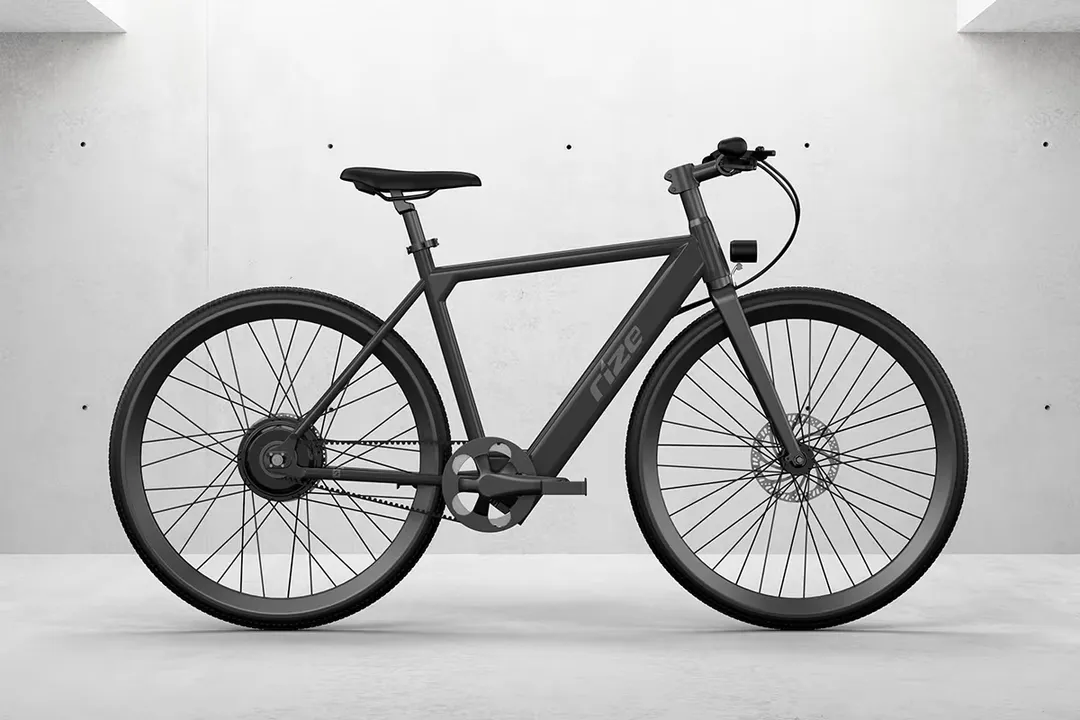
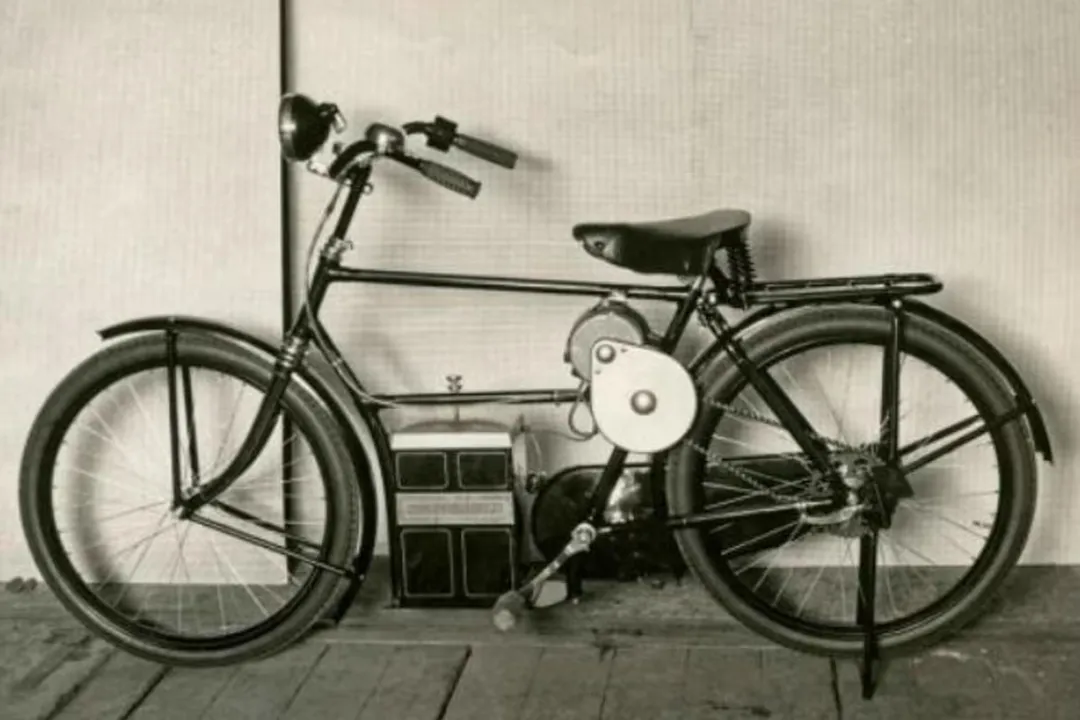
Even as the industry moved toward electric assistance centuries later, the core principles of steering geometry and weight distribution established by Drais remained relevant, though heavily refined. The initial machine, born from wood and necessity, established the essential relationship between the rider, the frame, and the ground—a relationship that the Draisine masterfully demonstrated lacked the need for a complex chain drive to initiate movement. It remains a pure example of two-wheeled locomotion, a starting line in the long history of personal mobility.
Related Questions
#Citations
The guy who invented the bicycle must have thought it didn't work for ...
The first bicycles | Bricsys Blog
History of the bicycle - Wikipedia
The secrets of the first bicycle: its inventor and history | Upway
The 12th June 1817, and German inventor Karl Freiherr von Drais ...
The Story of the FIRST Ever Bicycle. - YouTube
Science of Cycling: History of Bicycle Frames - Exploratorium
The Bicycle's Bumpy History
The History of The Electric Bike - Rize Bikes