Who invented the first fuel?

The search for the "first fuel" reveals less about a singular moment of discovery and more about humanity’s evolving relationship with stored energy. If we consider the fuel that powered the first controlled human application of energy, the answer is likely wood for fire, but in the context of engineered, refined energy sources designed for industrial or mechanical purposes, the timeline splinters into distinct, fascinating eras. The narrative pivots on whether the invention in question was the substance itself, or the process that made the substance useful.
# Gaseous Foundation
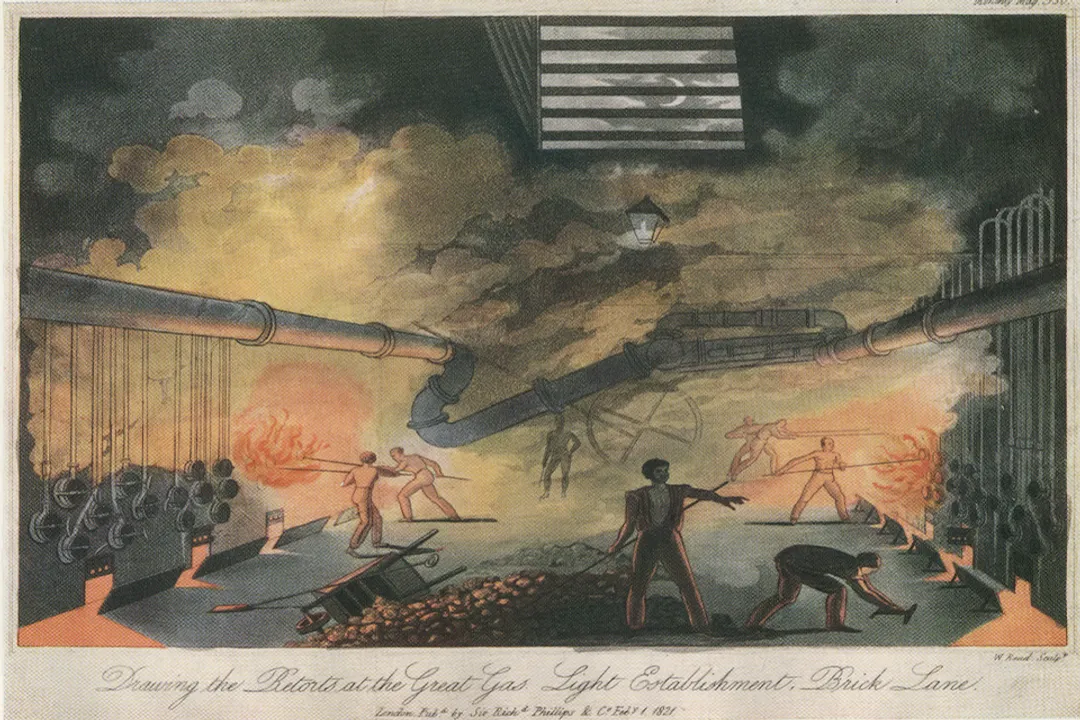
Before petroleum became the titan of the energy world, the 19th century saw the rise of manufactured fuel gases, which represented the first widespread, systematic attempt to create a portable, controlled chemical fuel on an industrial scale for civic use. This era was driven not by mechanical power in vehicles, but by the fundamental human need for light and heat.
These "synthetic fuel gases"—or manufactured gas—were created by heating combustible materials, most commonly bituminous coal, in enclosed ovens with an oxygen-starved atmosphere, a process known as carbonization or pyrolysis. The resulting gas was a complex chemical mix containing hydrogen, methane, and carbon monoxide. The technology began taking shape around 1795–1805 with the commercial development efforts of Philippe LeBon in France and William Murdoch in England. Murdoch, working for the firm of Boulton & Watt, experimented with lighting his own house with coal gas around 1792–1794.
Frederick Winsor was instrumental in transforming this technology into a public service, incorporating the London-based Gas Light and Coke Company by royal charter in 1812. By the 1820s, gas utilities were established across Europe and North America, using coal gas for street lighting, serving as a convenient substitute for oil lamps and candles. The technology rapidly matured, demanding sophisticated engineering to handle the toxic byproducts. Purifiers, often employing lime or iron ore, became critical to remove noxious sulfur compounds, which, if left untreated, would create sulfuric acid upon burning or tarnish silver goods in homes. This entire industry, while predating modern liquid fuels, established the foundational concept: taking a raw carbon source and chemically transforming it into a distributed, measurable, and controllable fuel source.
# Liquid Byproducts
The transition to petroleum-based fuels, which would eventually eclipse manufactured gas, began with a focus on a different product entirely: kerosene for lighting. When Edwin Drake drilled the first commercial crude oil well in Pennsylvania in 1859, his primary objective was to distill oil to produce kerosene.
At this stage, the substance we now call gasoline was simply one of the lighter fractions produced during distillation, and because there was no immediate application for it, it was frequently discarded. Similarly, the heavier distillate that would later become diesel fuel was also often thrown away. The initial value derived from early petroleum processing was placed squarely on kerosene, a product that held immediate utility in the widespread replacement of candles.
The concept of an "inventor" for gasoline is therefore tricky; it was not invented in a chemical sense, but rather discovered as a necessity through technological evolution. The shift occurred with the advent of engines requiring a more volatile fuel than kerosene, notably the Otto engines developed in Germany in the late 19th century.

# The Age of Mechanical Power Fuels
The late 1800s saw two critical parallel developments that defined the modern fuel landscape: the rise of the high-compression internal combustion engine demanding gasoline, and the distinct, deliberate invention of a compression-ignition engine requiring its own specific fuel.
# Gasoline's Ascent
The automobile, emerging in 1892, created the demand that rescued gasoline from the discard pile. However, early straight-run gasolines, obtained purely by distillation, varied widely in quality, causing significant engine problems like knocking and pre-ignition when engineers tried to raise compression ratios for better efficiency.
This instability meant that the invention of usable gasoline was a series of chemical and engineering solutions rather than the initial refining step. Key process inventions included:
- Thermal Cracking (1913): William Meriam Burton patented this process to break down heavier hydrocarbons into lighter, more volatile gasoline components, significantly increasing yield.
- Catalytic Cracking: Developed by Eugene Houdry in 1937, this method improved gasoline quality beyond thermal cracking, producing a higher-octane base stock.
- Anti-Knock Agents: Research led by Charles F. Kettering culminated in Thomas Midgley Jr.’s discovery of tetraethyllead (TEL) in 1921. TEL allowed for higher compression ratios without knocking, cementing high-performance gasoline as the standard, despite early, severe health warnings about lead.
By 1916, gasoline production finally surpassed kerosene production in the United States, marking its victory as the primary petroleum product.
# Diesel's Independent Birth
In stark contrast to gasoline, which was a byproduct seeking an engine, the fuel associated with Rudolf Diesel was intrinsically linked to a specific engine concept invented simultaneously. Diesel patented his compression-ignition engine in 1893. A key difference was Diesel's initial design intent: his engine was remarkably flexible, designed from the outset to run on a diverse range of fuels, including whale oil and ammonia. Diesel fuel, called "distillate" before he named it, relies on extreme pressure to cause auto-ignition, unlike gasoline engines that require an external spark. Although Rudolf Diesel himself was tragically murdered in 1913—historians have speculated this may have been related to opposition from coal magnates whose industry was threatened—his engine and its primary fuel source secured dominance in commercial and industrial sectors due to their efficiency with heavy loads.
# The Nature of Fuel Invention
When considering the first fuel, the difference between discovery and invention becomes crucial. The manufactured gas industry of the early 1800s solved a clear problem: lighting. They invented the necessary apparatus—retorts, hydraulic mains, and purifiers—to create a reliable, distributed product from coal. This was an invention of utility.
The development of modern liquid fuels, however, was an invention of refinement and optimization. For both gasoline and diesel, the raw material existed as a low-value stream from distillation. The "inventors" weren't the drillers; they were the chemists and engineers like Burton and Houdry who found ways to manipulate molecular structures to fit the evolving demands of the internal combustion engine.
A fascinating aspect of this parallel evolution is how the adoption curve was shaped by engine sensitivity. The early gasoline engine was highly sensitive to fuel quality, demanding extensive and often conflicting state specifications until cooperative research committees formed to establish standards like octane rating. Conversely, the diesel engine’s fundamental design tolerated a wider spectrum of heavy distillates from the start, allowing it to dominate heavy transport (trains, ships) quickly once scaled up, even before diesel fuel itself was fully standardized post-WWII.
To frame the earliest chemical energy use, even the fuel cell concept precedes both the refined petroleum age and even the gas utility boom. Sir William Grove invented the first fuel cell in 1838, using hydrogen and oxygen in an electrochemical process, a reaction that later underpinned NASA programs. While not a combustion fuel, this demonstrates that the intellectual pursuit of harnessing chemical energy through precise, engineered reactions began well over a century before usable gasoline became common.
| Fuel Type | Primary Historical Purpose | Key "Inventor" (Process/Engine) | Status of Fuel at Invention Point |
|---|---|---|---|
| Manufactured Town Gas | Illumination/Heating | Murdoch, LeBon, Winsor (Gasification/Utility) | Intentionally manufactured from coal/wood |
| Kerosene | Illumination | Drake (Drilling/Distillation) | Primary goal of petroleum processing |
| Gasoline | Mechanical Power | Burton/Houdry (Cracking); Kettering/Midgley (Additives) | Discarded byproduct; invention was in enhancement |
| Diesel Fuel | Mechanical Power | Rudolf Diesel (Engine Design) | Byproduct; engine designed to accept it |
This comparison underscores that the initial "fuel" was the one that solved the most pressing societal need with the technology available at the time. The first gas utility solved lighting, while the first liquid fuel solved mechanical power.

# Other Contenders
It is also worth noting that other chemical fuels were being developed concurrently in the 19th century, demonstrating that the search for better energy density was not singular. For example, ethanol—an alcohol fuel—was present in the energy timeline alongside early gasoline development. As early as the 19th century, ethanol was being explored, and later, in the 21st century, it would be mandated as a renewable additive to gasoline blends in the US, showing a full-circle return to alternative feedstocks.
Ultimately, there is no single inventor for the "first fuel." If the definition demands a fuel created deliberately and distributed as a service, the inventors of manufactured coal gas (like Murdoch and Winsor) in the early 1800s lay claim to establishing the first engineered fuel utility. If the definition demands the fuel that powers the bulk of modern transportation, the title must be shared by the chemists who perfected the cracking and anti-knock processes that transformed discarded gasoline into a high-energy commodity. If the measure is the first fuel designed to exploit high compression without external ignition, then the "distillate" later named diesel fuel, inseparable from Rudolf Diesel’s vision, takes that honor. The continuous refinement across these eras shows that "fuel" is always a moving target, defined by the engine it serves.
Related Questions
#Citations
History of gasoline - Wikipedia
History of gasoline - U.S. Energy Information Administration (EIA)
History and Invention of Gasoline - ThoughtCo
History of Gasoline and Diesel Fuel: A Brief Summary
The First Fuel | PDF - Scribd
The History And Origin Of Diesel Fuel - Kendrick Oil