Who invented the first magnetometer capable of measuring the absolute magnetic intensity?
The journey to accurately quantify the invisible forces surrounding our planet required centuries of observation, refinement, and, critically, the development of instruments that moved beyond mere indication to true measurement. The pivotal moment in this history—the creation of the first magnetometer capable of determining the absolute magnetic intensity—is credited to the brilliant German mathematician and physicist, Carl Friedrich Gauss, around 1832 or 1833. This achievement marked a fundamental shift, moving the study of terrestrial magnetism from qualitative observation to quantitative science.
# Field Characterization
Before we detail Gauss’s breakthrough, it helps to understand what a magnetometer does and what "absolute intensity" truly means. A magnetometer is fundamentally a device designed to measure a magnetic field, characterized by both its strength and its direction, making it a vector quantity. Units like the tesla (SI unit) or the gauss (CGS unit, where 10,000 gauss equals one tesla) are used to express this strength.
Instruments are categorized by what they measure and how they are calibrated. Absolute magnetometers are the gold standard because their measurement is calibrated by means of their own known internal physical constants or settings. In contrast, relative magnetometers, sometimes called variometers, only measure the change in a field relative to a fixed, uncalibrated baseline. Achieving an absolute measurement means establishing a fixed, universally comparable standard, independent of any other reference field.
# Early Approaches
The simplest form of a magnetometer, the magnetic compass, has been known since antiquity, helping sailors determine the direction of the Earth's ambient magnetic field using a magnetized needle. By the 19th century, the scientific pursuit was much more ambitious: quantifying the field’s strength. Earlier scientists made important strides. For instance, Christopher Hansteen developed earlier, more primitive instruments in 1819, and the English explorer, scientist, and clergyman William Scoresby published a paper in 1823 describing an instrument for measuring magnetic attractions and finding the dip (inclination) of the needle. These instruments, while vital steps, paved the way for Gauss to define the absolute standard. The ability to measure intensity required linking the magnetic effect to a known mechanical standard—a link Gauss successfully forged.
# The Absolute Breakthrough
Carl Friedrich Gauss, then heading the Geomagnetic Observatory in Göttingen, published his findings on measuring the Earth’s magnetic field in 1833, detailing a novel instrument. This was the first instrument widely regarded as successfully measuring the absolute strength of the Earth’s magnetic field.
The design was elegantly mechanical: it consisted of a permanent bar magnet suspended horizontally from a gold fibre. The measurement was derived not from a single static reading, but from analyzing the oscillation of the suspended magnet. Gauss cleverly measured the difference in the magnet’s oscillation period when it was magnetized versus when it was demagnetized. By correlating the change in oscillation frequency (which is related to the square-root of the field strength) with the known mechanical properties of the suspension fiber and the magnet’s own magnetic moment, he could calculate an absolute value for the field’s strength. This method established the first absolute standards for magnetic measurement.
The significance of this contribution is cemented in the naming convention of physics: the gauss, the CGS unit of magnetic flux density, was named in his honor.
This initial absolute measurement device, though primitive compared to later electronic sensors, represented an enormous intellectual leap. While modern instruments like the Proton Precession Magnetometer (PPM) utilize the precise, inherent frequency of nuclear resonance (NMR) for their accuracy, Gauss’s method relied on constructing a macroscopic mechanical system (magnet and fiber) whose properties were precisely determined and then observed in action against the Earth’s field. It is fascinating to consider that the initial path to absolute accuracy required such exacting mechanical and observational precision—timing minute changes in a swinging magnet—whereas later 20th-century physics allowed for the direct measurement of fundamental atomic properties to achieve a similar, yet vastly more sensitive, result.
# Continuous Recording and Refinement
Gauss’s work provided the absolute anchor point, but observing magnetic variations in real-time remained a challenge, requiring constant human observation of the instruments. This changed in 1846, when Francis Ronalds and Charles Brooke independently invented magnetographs. These instruments were revolutionary because they used photography to continuously record the movements of the magnet attached to the apparatus. This innovation eased the burden on observers and allowed scientists, including Edward Sabine, to conduct the first global magnetic surveys by comparing data collected simultaneously across different locations. This networked approach, based on an absolute standard set by Gauss, allowed for the mapping of Earth’s field variations across space and time.
# The Evolution of Absolute Measurement
The principles laid down by Gauss initiated a long line of instrument development, each seeking better sensitivity, stability, or speed. While Gauss's device was the first absolute magnetometer, later techniques proved more practical for routine geophysical work:
| Instrument Type | Measurement Basis | Key Feature/Advantage |
|---|---|---|
| Gauss's 1832 Magnetometer | Oscillation period of a suspended magnet | Established the first absolute standard |
| Magnetograph (1846) | Photographic recording of magnet movement | Allowed for continuous, long-term data logging |
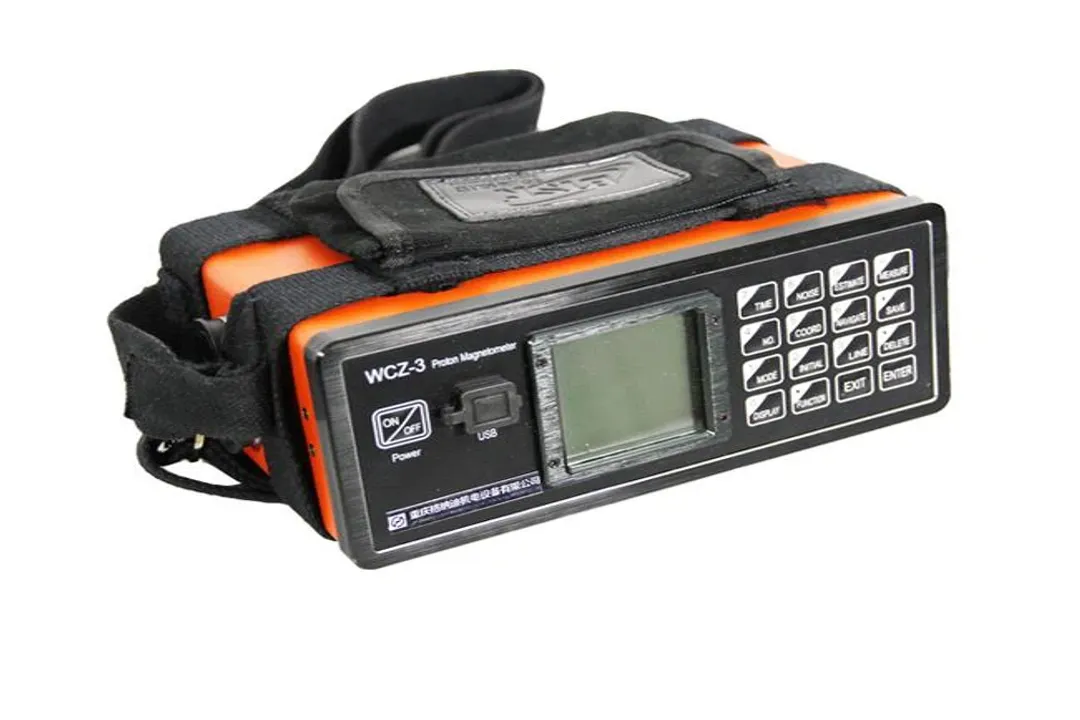
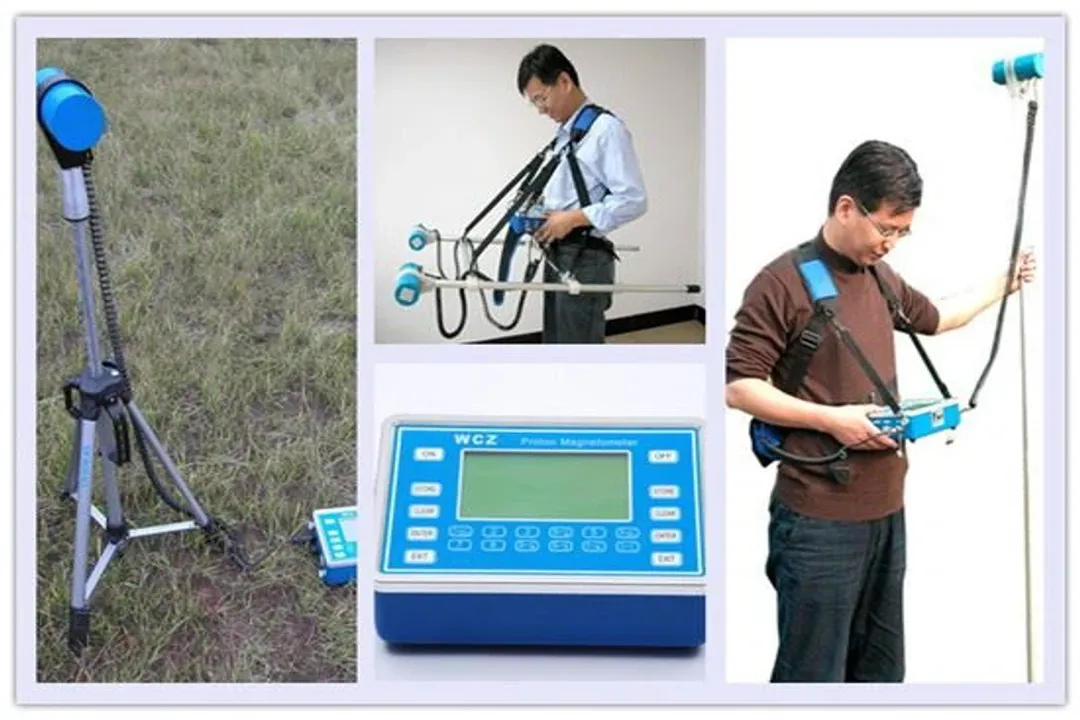
| Proton Precession Magnetometer (PPM) | Nuclear Magnetic Resonance (NMR) frequency of protons | High accuracy (1 ppm) derived from atomic constants |
| Caesium Vapor Magnetometer | Optical pumping and change in atomic transparency/frequency | High sensitivity and fast measurement rate |
The advent of the PPM in the 1950s, relying on quantum mechanical principles (NMR), offered an order of magnitude improvement in accuracy for field surveys without requiring the constant mechanical maintenance of earlier devices. The PPM’s precession frequency depends only on fundamental atomic constants and the ambient field strength, making it an absolute instrument in a modern sense.
Thinking about the global impact, the standardization provided by Gauss’s absolute measurement was indispensable for the coordination of these later surveys. Without an agreed-upon baseline—a method to translate local observations into a common system—the work of Sabine and others in creating global magnetic maps would have resulted in incompatible datasets, making worldwide correlation impossible. The establishment of the unit, the gauss, ensured that a measurement taken in Göttingen could be directly compared with one taken in London or Paris, fostering a truly international science of geomagnetism.
# Modern Context and Vector Measurement
Today, magnetometers are vital across geology, aerospace, archaeology, and consumer electronics. While scalar magnetometers (like PPMs or vapor magnetometers) measure total field strength, vector magnetometers measure the field components along orthogonal axes. By using three orthogonal sensors, the total magnetic intensity (TMI) can be calculated using the Pythagorean theorem. Historically, vector instruments often suffered from issues like temperature drift and dimensional instability, which is why scalar instruments are often preferred for broad surveys.
However, the core principle—a system calibrated against known constants—remains the defining characteristic that separates modern absolute devices from their purely relative predecessors. Gauss, through his clever arrangement of a suspended magnet and the measurement of its periodic behavior, provided the intellectual and practical foundation upon which all subsequent, more sensitive magnetic intensity instruments, from the fluxgate to the SQUID, were built. His work in 1832 was not just an invention; it was the creation of a new scientific metric for the magnetic world.



Related Questions
#Citations
Magnetometer - Wikipedia
Who invented the first magnetometer... | Trivia Questions | QuizzClub
Magnetometer – 1832 - Magnet Academy - National MagLab
What is the history of magnetometers? - Blog
Magnetometer - Invented by Carl Friedrich Gauss - Edubilla.com