How does the external derailleur system physically accomplish shifting between different gear ratios?
Answer
By physically moving the chain so it rests on sprockets of different circumferences attached to the rear wheel.
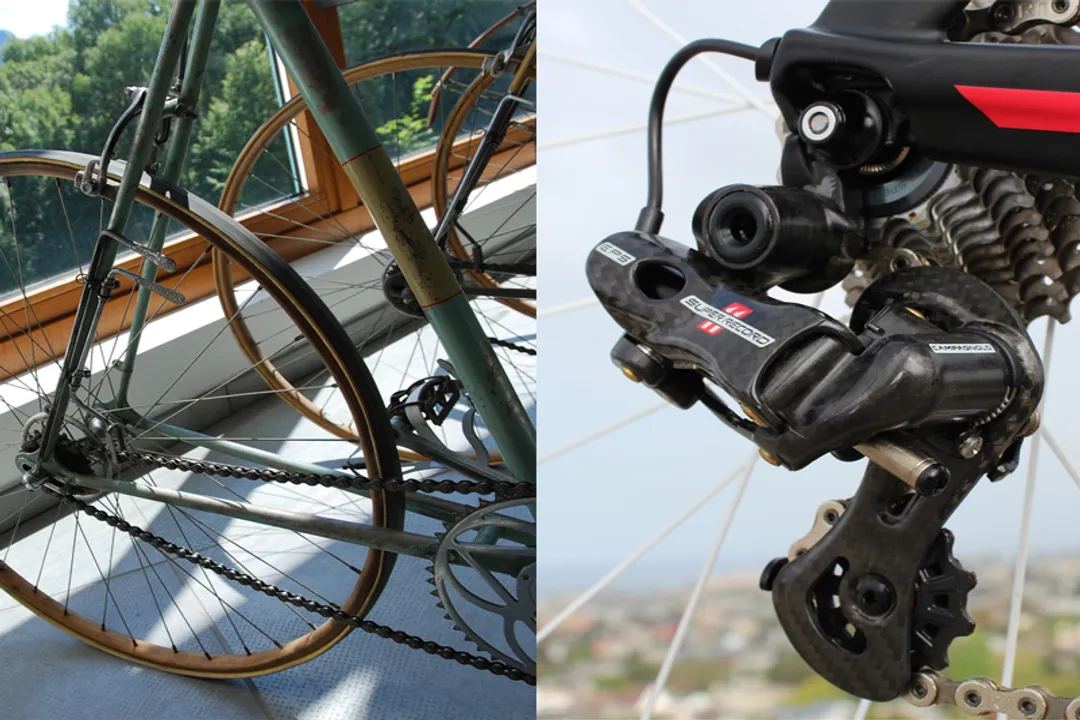
The derailleur system operates externally, relying on a mechanism that physically pushes or guides the chain laterally across the cluster of exposed cogs, known as sprockets, mounted on the rear wheel. Each sprocket has a different number of teeth, thus creating a different mechanical ratio when the chain is engaged on it. Shifters manipulate this mechanism to force the chain from one cog size to another, allowing the rider to select a different ratio based on terrain needs.
Related Questions
What characterized James Starley's 1871 invention described as the first gear cycle?What inherent limitation defined the direct-drive pedals on the 'boneshaker' or 'penny-farthing'?What two fundamental features did the safety bicycle introduce to enable widespread practical gearing?Which gearing system generally offered very high durability because it was sealed from dirt and weather?Besides making hill climbing easier, what primary speed goal did early gearing systems help riders achieve?How does the external derailleur system physically accomplish shifting between different gear ratios?What practical difficulty often caused many cyclists to stick with fixed-gear bikes for decades?What refinement, developed in the mid-to-late 20th century, made derailleur shifting nearly foolproof?What was the initial function of the earliest devices separating pedal speed from wheel speed?Which cycling niche ultimately favored the external derailleur system over the internal hub gear?According to the comparison table, which system generally carried more weight?