When pressure is introduced into the Bourdon tube, what action causes the mechanism to move?
Answer
The flattened cross-section attempts to force the tube into a more circular shape.
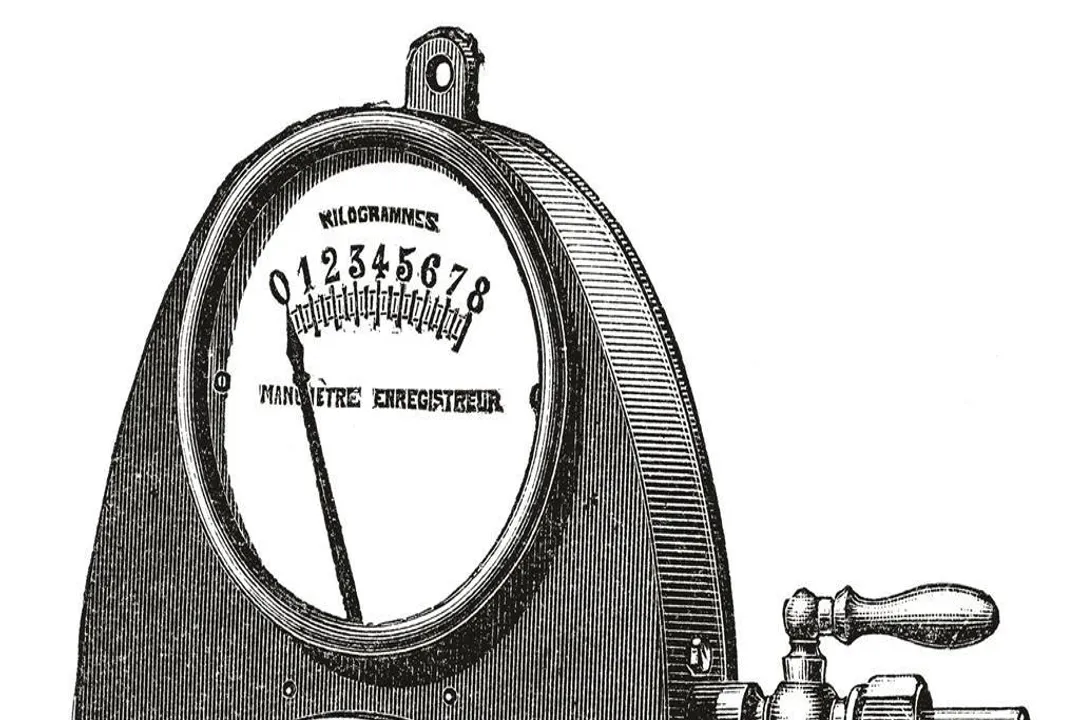
Because the tube's cross-section is flattened (slightly oval), the internal pressure attempts to make the cross-section more circular, causing the entire curved tube to try and straighten out.
Related Questions
Who is most widely credited with inventing the recognizable pressure gauge utilizing the curved tube principle?Around what year did Eugène Bourdon develop and patent his breakthrough pressure gauge design?What shape is the hollow, flattened metal tube that forms the heart of the Bourdon gauge mechanism?When pressure is introduced into the Bourdon tube, what action causes the mechanism to move?How is the small straightening motion of the Bourdon tube translated into a readable indication?What major technological feedback loop did the Bourdon gauge provide for steam engine management?Besides the Bourdon tube, what alternative mechanical assemblies are mentioned for sensing pressure changes?What capability did the Bourdon gauge enable that was vital for the scaling of industrial processes?How do digital pressure gauges fundamentally differ from Bourdon mechanical gauges in terms of output?What advantage of the fundamental Bourdon gauge contributes to its enduring presence in harsh industrial environments over some modern instruments?