Who invented the most inventions?
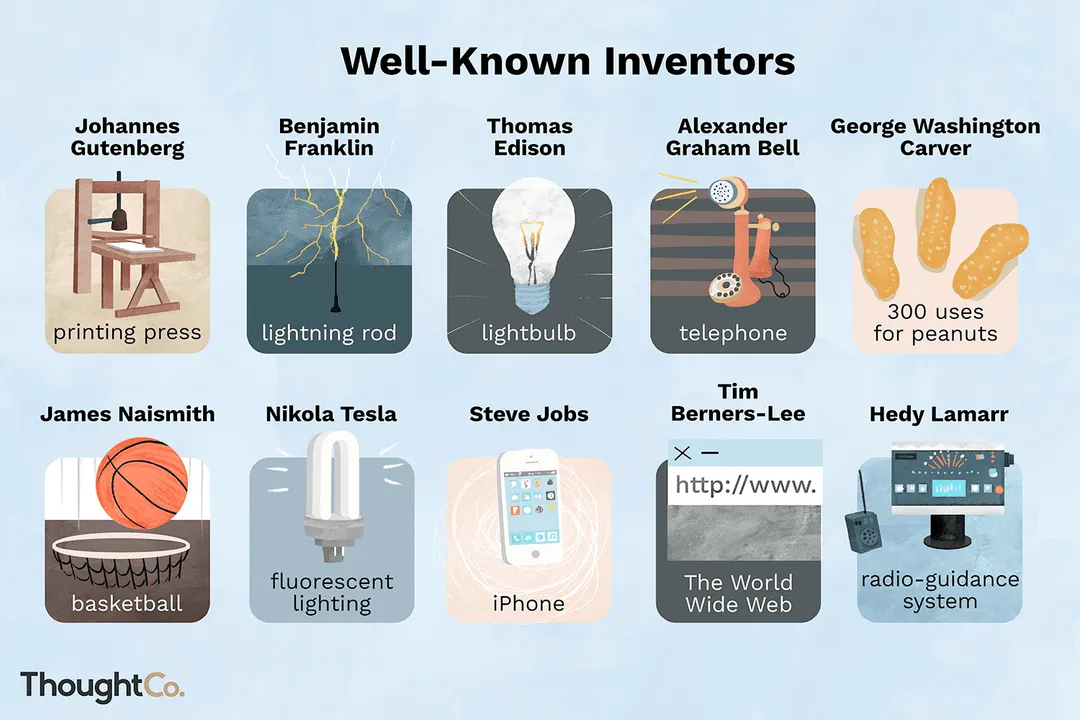
Pinpointing the single individual responsible for the most inventions is surprisingly complex, hinging almost entirely on how one defines "invention" versus a patented concept or a widely recognized "innovation". While cultural recognition often falls on figures like Thomas Edison, the sheer volume of recorded intellectual property points to others whose output vastly outpaced their fame. The quest for the ultimate prolific inventor often dissolves into a contest of patent tallies, a measurable, if imperfect, metric for tracking creative output over time.
# Patent Records
When relying strictly on patent documentation, the numbers quickly climb into the thousands, dwarfing the counts associated with household names. For instance, historical lists of prolific inventors frequently name individuals who secured hundreds, sometimes thousands, of patents across their careers. These numbers often reveal a pattern: the most prolific patentees tend to operate within highly specialized or rapidly industrializing fields where incremental improvements can be patented repeatedly.
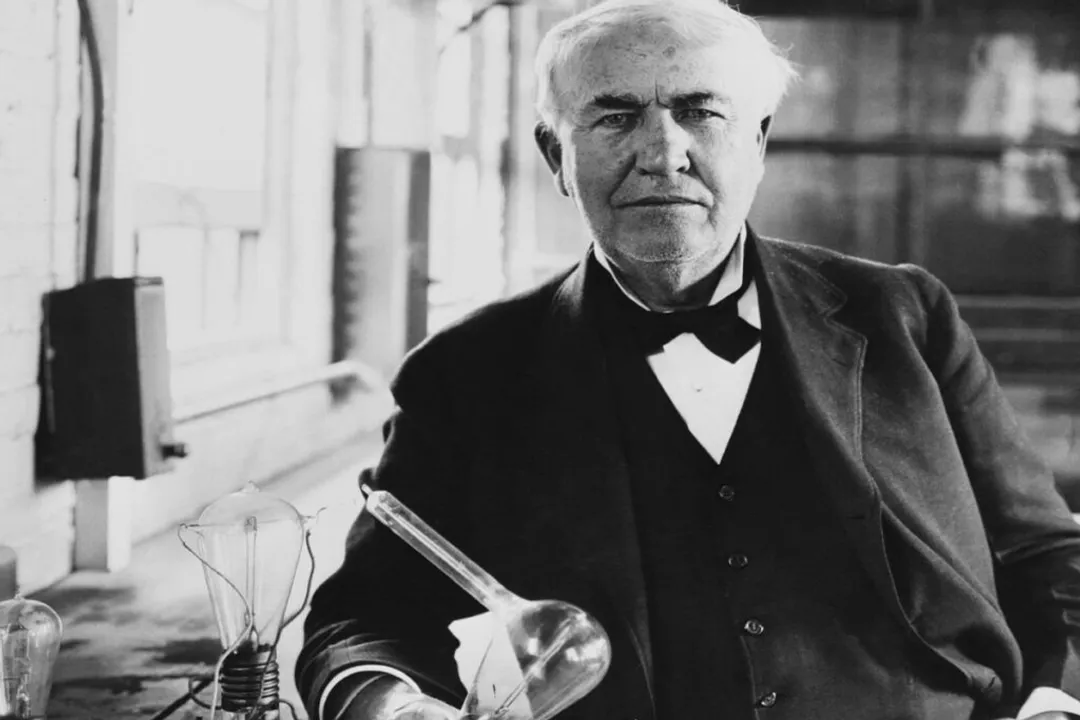
One notable figure who consistently appears at the top of these rankings is Thomas Edison, though his total count is sometimes debated depending on whether one includes his collaborators or only patents issued directly in his name. However, even Edison’s well-publicized total of around 1,093 U.S. patents is often surpassed by individuals with extremely high figures, such as Georg Christoph Karl Böttcher, a German inventor sometimes credited with over 2,000 inventions, or Shunpei Yamazaki, a Japanese inventor whose patent filings are in the thousands. Examining patent records reveals that the title of "most inventive" frequently belongs to industrial engineers and technical specialists rather than the single-focus inventors celebrated in popular history.
# Edison's Legacy
Thomas Edison remains synonymous with invention in the public imagination, often cited as having secured over a thousand patents. His work profoundly changed the way society operated, particularly through the development of practical electric lighting and the phonograph. While Edison may not hold the absolute highest patent count when compared to some modern industrial figures, his impact is undeniable. His process epitomized the shift toward organized research and development; he established the famous Menlo Park laboratory, creating one of the first industrial research facilities dedicated to continuous innovation. This laboratory setting meant that many of the "inventions" credited to Edison were the result of team efforts, though he typically received the principal patent rights.
It is worth contrasting Edison’s output with others celebrated for impact, such as Nikola Tesla. While Tesla held hundreds of patents and his conceptual leaps in alternating current systems were revolutionary, the sheer volume of his filings generally sits below the peak industrial patent holders. The cultural emphasis placed on individuals like Edison or the Wright brothers, who created paradigm-shifting systems, often overshadows the incremental but numerous technical refinements patented by others.

# Innovation vs. Volume
The disparity between the highest patent holder and the most impactful inventor highlights a key distinction: quantity versus transformative effect. An original insight here involves recognizing that the value of an invention often decays differently based on its nature. A software algorithm patent filed today, for example, might represent a single clever line of code but could be fundamental to an entire industry; conversely, someone holding fifty patents for slight variations on a single mechanical fastener might have a higher count but a lower collective industrial impact. This difference in effect suggests that the most meaningful inventor is perhaps not the one with the most patents, but the one whose inventions have the highest sustained impact-to-patent ratio.
Many figures celebrated as great innovators, such as those who shaped the last millennium, did so through foundational concepts rather than sheer numerical output. For example, while the individual contributions of many inventors are listed, the development of the printing press or the steam engine represents breakthroughs that fundamentally altered civilization, irrespective of whether the primary inventor filed hundreds of ancillary patents.
# Lesser Known Giants
Diving into the specific lists reveals inventors whose prolific nature is less common knowledge. For instance, some records point to figures like Hedy Lamarr, an actress who, alongside composer George Antheil, co-invented an early form of frequency-hopping spread spectrum technology, which is foundational to modern Wi-Fi and Bluetooth. Her contribution demonstrates that high inventiveness isn't restricted to traditional engineering fields, though her patent count may not rival career industrial inventors.
Another example lies in the realm of business machinery. Inventors focused on office technology in the early to mid-20th century often amassed huge patent portfolios because office needs demanded constant, incremental standardization and automation improvements. These specialized inventors often built an entire ecosystem of interconnected, patented devices, making their total count extremely high but their names largely unknown outside their specific industrial niche.

# Historical Shifts
The historical context surrounding invention is critical to understanding these numbers. The 19th and early 20th centuries, often seen as the golden age of invention, had legal and economic structures that favored the individual inventor or small partnerships. If an idea was conceived, the inventor could secure a patent and build a business around it, leading to intense individual output in areas like mechanics and chemistry.
This leads to a second key observation about the evolution of invention: the modern landscape strongly favors the corporate R&D lab. Today, most significant technological advancements are made by large teams within multinational corporations, where the resulting intellectual property is credited to the entity rather than a single engineer. This structural change inherently suppresses the individual "most prolific inventor" record for contemporary eras. In the past, an inventor might work for decades building a personal portfolio; now, a company might file 500 patents in a year, but those belong to the corporation, making it difficult to track individual human contribution accurately. Therefore, the inventors with the highest personal patent counts are almost always from a pre-2000 industrial era, when the system was geared toward individual recognition.
Related Questions
#Citations
List of prolific inventors
Which scientist has done the maximum number of ...
The Most Prolific Inventors That Changed Humanity
The 20 greatest innovators of all time
The Greatest Inventions In The Past 1000 Years - eHistory
The 15 Most Popular Inventors and Their Inventions
Thomas Edison Inventions
Why were most inventions in the past made by single ...