When were fuel gauges invented?
The earliest days of motoring were characterized by a wonderfully rugged simplicity, a trait often romanticized but less appreciated when one is stranded on the side of a dusty road. Back then, when open-top cars rattled along on wooden wheels, the internal workings of the machine were far less complex than they are now, and the driver was expected to possess a much higher degree of mechanical intuition—and tolerance for inconvenience. Among the missing amenities of these pioneering vehicles was the fuel gauge. If you wanted to know how much gasoline remained in your tank, you had to resort to solutions that seem utterly absurd in the modern context.
# Primitive Measurement

For the first generation of automobile owners, fuel level indication was less about electronics and more about manual labor and mathematics. The most straightforward, if messy, method was to physically dip a stick into the fuel tank and measure how much of it became wet. As automobiles gained popularity, this evolved slightly. Car manufacturers and even petrol stations began producing specialized measuring rulers designed to fit specific tank shapes perfectly. If a driver didn't have the exact ruler for their particular model, they were often left to guess-timate based on the mileage covered since their last fill-up, perhaps converting the remaining liquid volume into inches.
This era demanded a certain kind of fortitude from the driver. Consider the early Ford Model T, which utilized gravity feed from a rear-mounted tank. Running out of gas on a hill was a genuine, high-stakes problem, sometimes requiring drivers to back up the incline just to coax the remaining fuel toward the engine. The lack of a gauge meant that running out of fuel was less of a warning and more of a sudden, final event.
# Glass Bottles
Even before the standardization of dashboard instrumentation, inventors tinkered with ways to give the driver a visual cue without requiring them to carry a dipstick. One fascinating, albeit seemingly terrifying, solution mentioned in historical accounts involved a windshield-mounted gauge. This device purportedly acted like an intravenous drip system connecting the main fuel tank to the carburetor. A small glass bottle, perhaps holding a known quantity like a gallon, was mounted near the driver’s eye level, often adjacent to the A-pillar. As long as fuel was slowly dripping into this sight glass, the driver knew they had reserve fuel behind them. When the drip stopped, that small bottle became the absolute last gasp for the engine—a high-stress way to monitor one's progress toward the next sparse filling station.
# Mechanical Dawn
As the automotive industry matured, manufacturers realized that relying on drivers to carry calibrated sticks or nervously watch dripping fuel was unsustainable for mass-market acceptance. A more integrated solution was needed.
The first noticeable step toward onboard fuel monitoring arrived in 1914 with the Studebaker. This model introduced what is considered the first dash-mounted fuel gauge that drivers might recognize today. Crucially, this early device was entirely mechanical, not electrical. While we don't have extensive details on its internal mechanism, it represented a shift from external measurement to an internal, driver-facing indicator.
In the decade following Studebaker’s innovation, the market saw a proliferation of aftermarket solutions aimed at making roadside surprises less frequent. One popular item for drivers of this time—and still familiar to some motorcycle owners today—was the gauge integrated into a replacement fuel cap. This typically involved a float, often made of cork, connected directly to a gauge on the cap itself. As the fuel level dropped, the float descended, moving the indicator. The obvious limitation, however, was accessibility. Since filler caps were—and often remain—located at the rear of the vehicle, a driver could not safely check the reading while underway. This forced drivers back toward the old methods or the hope that they could pull over safely to check their supply.

# The Electrical Leap
The technology that truly set the stage for the modern gauge arrived in 1925 when Rickenbacker put the first electrical fuel gauge into production. This was a significant transition, moving away from purely mechanical linkages to harness the vehicle's nascent electrical system for remote sensing.
However, this 1925 electrical iteration was far from the automated convenience we know. The system was primitive and required active participation from the driver: the operator had to press a button. This action momentarily closed an electrical circuit, allowing the current to flow to the indicator and display the fuel level only while the button was depressed. This was a breakthrough, allowing the tank to be located anywhere, but it still demanded a deliberate action from the driver every time they wanted an update.
It took about a decade for this technology to evolve from a push-button accessory to an automated standard. By the 1930s, electrical gauges began to appear as standard equipment, automating the measurement process so that the reading was constantly available without the driver needing to activate a circuit.
# Designing for Peace of Mind
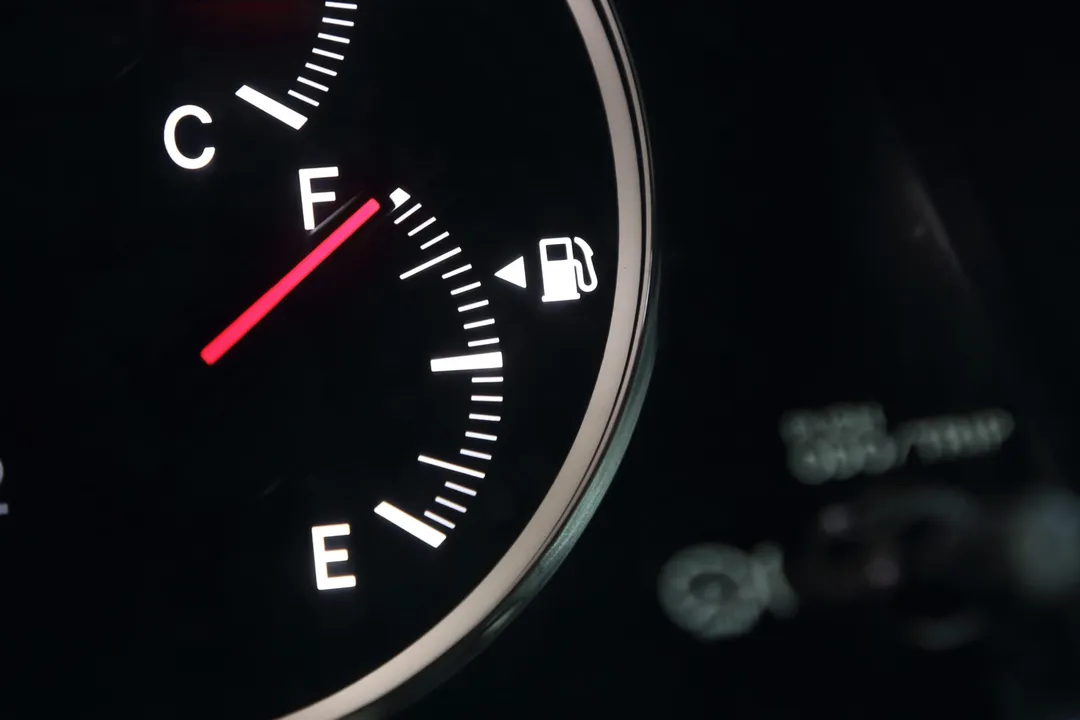
The basic electrical design established in the 1930s remains the core principle for analog fuel gauges today, consisting of two main components: the sending unit inside the tank and the indicator on the dashboard. The sending unit typically utilizes a float arm connected to a potentiometer—a variable resistor. As the fuel level drops, the float drops, causing the contact point on the resistor to slide, which changes the electrical resistance sent back to the dashboard.
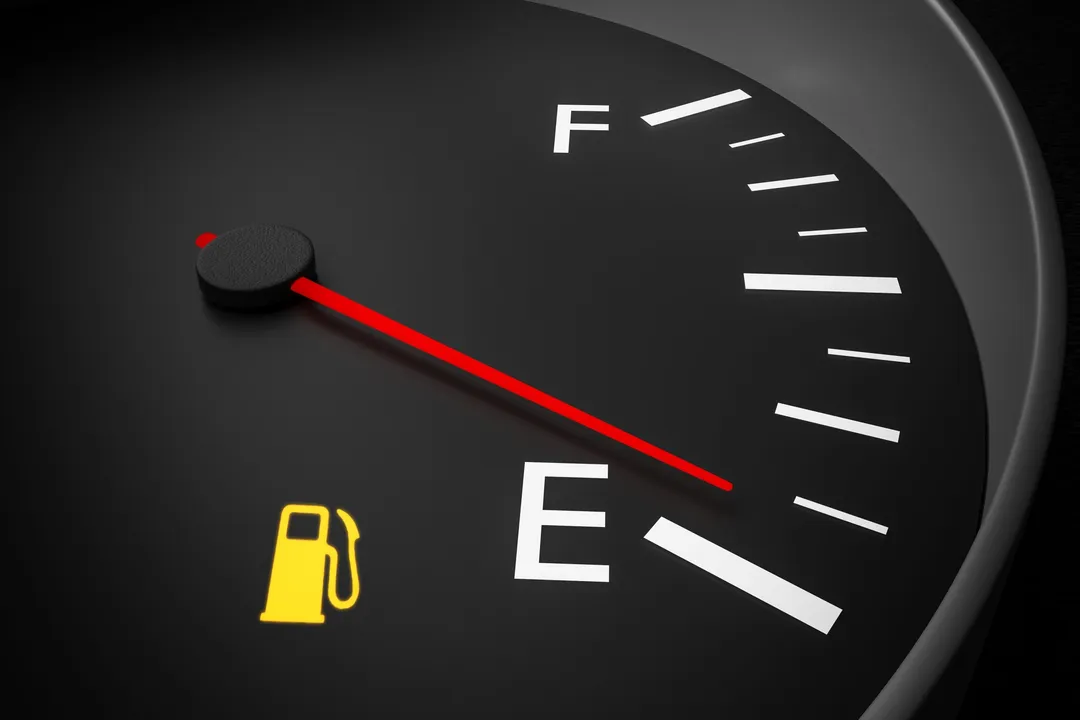
Automakers deliberately introduced slight inaccuracies into this system, which serves as an interesting, if slightly manipulative, piece of automotive psychology. For instance, after a fill-up, the needle often remains pegged at "F" for a surprisingly long distance before beginning to move steadily downward. Conversely, many gauges are engineered to read well below the "E" mark before the vehicle actually runs dry. These deliberate buffer zones help drivers feel better about the money they just spent by making the tank seem full for longer, and provide an illusion of extra leeway before the true emergency point.
This system does possess an inherent safety feature regarding failure. If the electrical circuit opens due to corrosion or wear on the potentiometer, the resulting lack of current causes the indicator to read "Empty." This is preferable because it warns the driver to refill, rather than reading "Full" and allowing the driver to run out unexpectedly. Still, having electrical components submerged in fuel presents risks. Modern gasoline blended with alcohol can increase the corrosion rate of the internal resistor, leading to erratic readings and raising fire or explosion concerns. This has spurred interest in safer, non-contact methods for newer applications.
The continued reliance on resistance sensors within the tank—which are susceptible to degradation by modern fuel additives—means that every driver who has noticed their gauge acting strangely after a fill-up is witnessing a conflict between mechanical design, chemical reality, and marketing psychology.
# The Moylan Arrow
While the basic measurement technology matured between the 1920s and 1930s, a persistent problem for drivers crossing regions or using unfamiliar rental cars remained: Which side is the gas cap on?
This common frustration was finally resolved nearly six decades after the first electrical gauge appeared. The solution came from Jim Moylan, a designer working for the Ford Motor Company. In 1986, Moylan conceived of the simple yet brilliant icon: a small drawing of a fuel pump with an arrow pointing toward the side of the car where the filler neck was located.
The 1989 Ford Escort and Mercury Tracer were the first vehicles to feature this indicator on the dashboard. Moylan’s idea was so immediately useful that other manufacturers quickly noticed and adopted it across their own lineups. An interesting footnote to this widespread convenience is that Mr. Moylan chose not to patent the design, allowing for its rapid, near-universal integration into vehicle instrument clusters.
The adoption of the Moylan arrow represents a fascinating point in automotive history where a small piece of information design, which required no major technological overhaul, provided an immediate and tangible benefit to the user experience, a kind of low-tech solution to a high-volume problem.

# Post-Gauge Evolution
The fundamental principles of the float-and-resistor gauge have persisted, but modern vehicles have layered digital technology on top of them. Digital gauges often provide a segmented display or even a calculated distance-to-empty reading alongside the traditional analogue sweep.
In commercial fleet management today, even the accuracy of these modern indicators is sometimes found lacking. Telematics systems used by fleet operators often require sensors more precise than the factory-installed gauges, which are primarily designed for driver reassurance rather than exact metric tracking. To combat potential fuel theft or to calculate consumption with extreme accuracy, commercial operators sometimes install aftermarket sensors. These specialized, non-contact sensors—like capacitive or ultrasonic types—offer a much higher degree of precision, directly contrasting with the built-in intentional vagueness of the standard consumer dashboard display.
For the average driver, however, the lineage is clear: from sticking a stick in the tank, to watching a drip, to pushing a button, to relying on a subtle arrow pointing to the right side of the pump, the fuel gauge’s history is a perfect microcosm of the automobile’s evolution from a temperamental hobby into an indispensable, though sometimes flawed, piece of everyday technology.
Related Questions
#Citations
Fuel gauge - Wikipedia
History Hits: Forgotten Technology—Early Fuel Measurement
Car History: When did fuel gauges become available on cars?
Fuel Gauge - Drivers Education
TIL that Jim Moylan invented the gas tank indicator arrow ... - Reddit