What was the primary cause of the Newcomen engine's poor thermal efficiency?
Answer
Wasting energy heating and cooling the same large cylinder repeatedly.
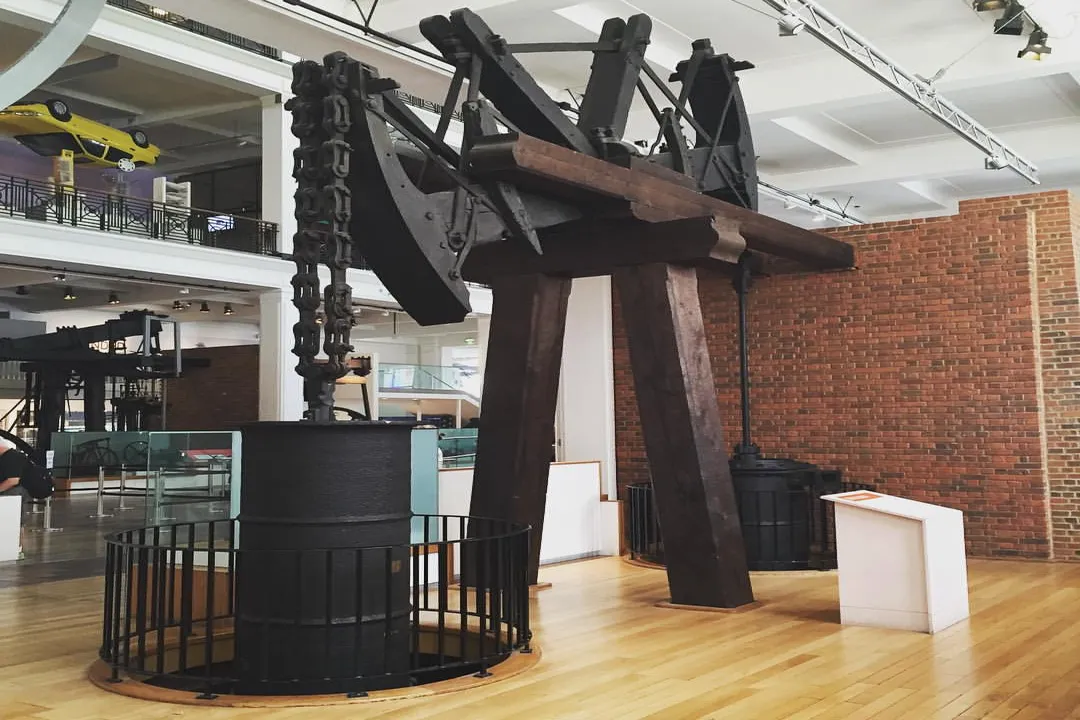
The fundamental thermal weakness of the Newcomen engine stemmed from its operational method, which mandated condensation occur directly inside the main working cylinder. With every cycle, the massive iron cylinder had to be heated by incoming steam and then rapidly cooled by an injection of cold water. This process meant that a significant amount of the heat input energy was absorbed by the iron walls of the cylinder itself, raising their temperature, rather than contributing effectively to the motive force required for the power stroke. This continuous heating and cooling cycle resulted in substantial, unavoidable energy waste tied directly to the metal mass.
Related Questions
What major environmental barrier did the Newcomen engine solve for the coal industry?How did the Newcomen atmospheric engine generate its working stroke?What limited the capacity of Thomas Savery's engine patented in 1698?Which action constituted the actual working stroke of the Newcomen engine cycle?What was the primary cause of the Newcomen engine's poor thermal efficiency?Why did Newcomen engine cylinders need to be enormous, sometimes exceeding 60 inches?What crucial innovation did Thomas Watt introduce to improve efficiency?What approximate range of thermal efficiency characterized the Newcomen engine?What factor led to the initial clustering of Newcomen engines in regions like Cornwall?What foundational industrial concept did the Newcomen engine successfully demonstrate?