What was significant about the invention of steam power?
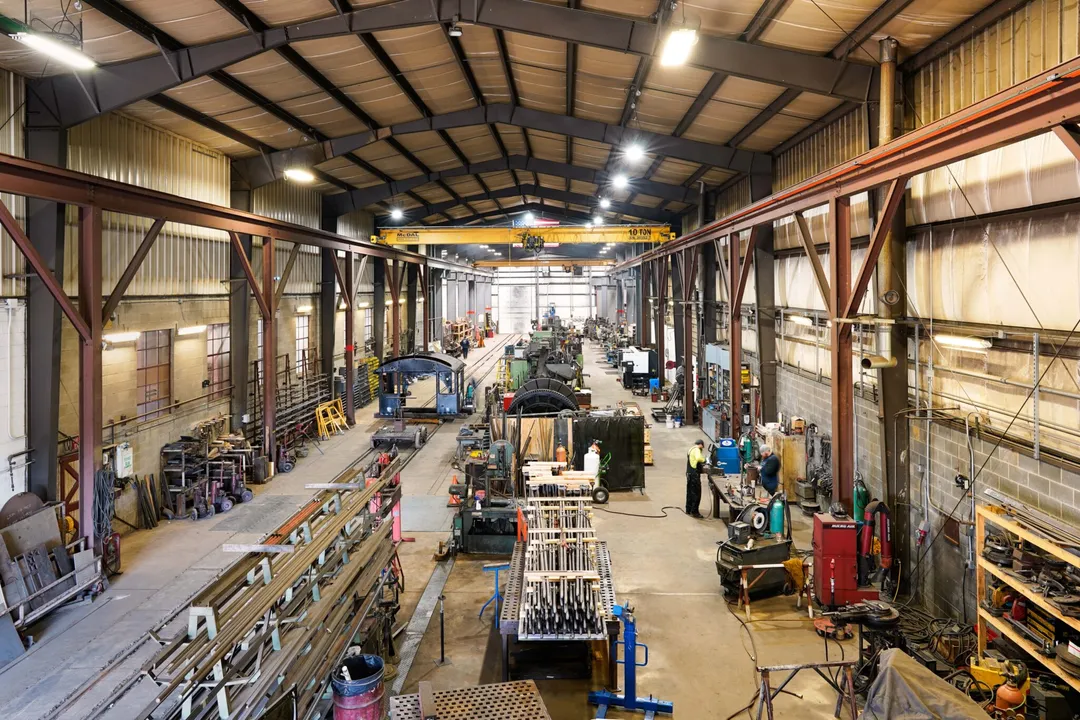
The significance of steam power cannot be overstated; it represents a fundamental shift in how humanity harnessed energy, moving away from dependence on muscle, wind, and water to a mechanical force that could be generated on demand, almost anywhere. [1][3] This technology served as the primary engine of the Industrial Revolution, transforming manufacturing, transportation, and the very structure of society across the globe. [2][8] Before its widespread adoption, industry was largely tethered to natural power sources—water wheels required proximity to flowing rivers, and wind power was inconsistent. [1] The ability to create an artificial, controllable power source changed the geography of production forever.
# Early Concepts
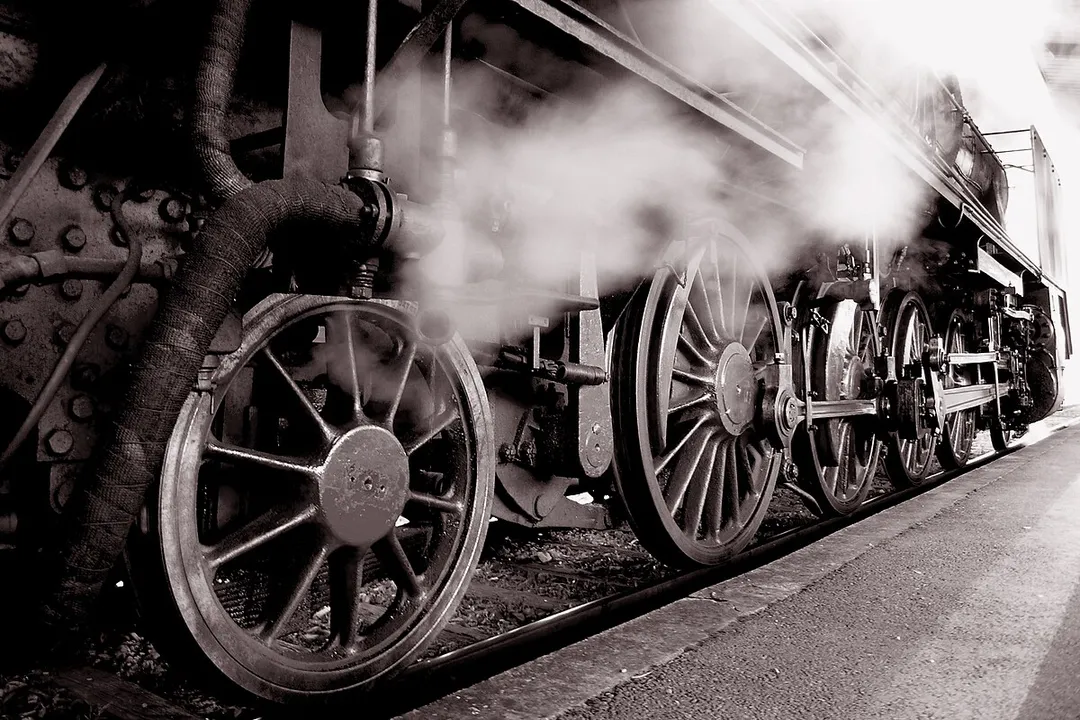
The theoretical groundwork for steam power predates the practical application by nearly two millennia. [3] As early as the first century CE, Hero of Alexandria described a device called the aeolipile, a spinning sphere turned by jets of steam emitted from nozzles. [1][3] While impressive as a demonstration of reactive force, this ancient mechanism was essentially a novelty, not a source of practical work. [3]
Centuries later, innovators began to envision harnessing steam's expansive force for real-world tasks. [7] By the late 17th century, the increasing difficulty and expense of draining deep coal and tin mines—as water tables rose and traditional methods became inadequate—created an urgent practical need that mechanical solutions might finally meet. [2][8] This economic pressure, rather than pure scientific curiosity, drove the next wave of invention. [2]
# Pumping Water
The first commercially successful apparatus to apply steam to practical work was developed by Thomas Savery in 1698. [3][8] His engine worked by creating a vacuum. Steam was introduced into a vessel to expel the air, and then cold water was sprayed onto the outside of the vessel to condense the steam, creating a vacuum that allowed atmospheric pressure to push water up a pipe. [3][8] While innovative, Savery’s engine was limited in its lift height, as the pressure of the atmosphere could only push water so high, making it suitable primarily for pumping water from shallow depths. [3]
A much more powerful machine arrived with Thomas Newcomen around 1712. [2][3] Newcomen’s atmospheric engine used steam to fill a cylinder, then injected cold water directly into the cylinder to condense the steam, causing the atmospheric pressure outside to drive the piston downward. [3][8] This downward stroke powered a beam that pumped water out of the mine. [3] Newcomen’s design was a major step forward; it could operate much deeper than Savery’s invention and was reliable enough to be implemented widely in mining districts. [2][8]
However, the Newcomen engine suffered from a significant inefficiency. Because the cylinder itself had to be heated and cooled with every stroke, a great deal of coal was consumed simply reheating the metal walls rather than doing productive work. [3] This inefficiency limited its use primarily to collieries, where fuel was cheap and plentiful. [1]

# Watt’s Refinement
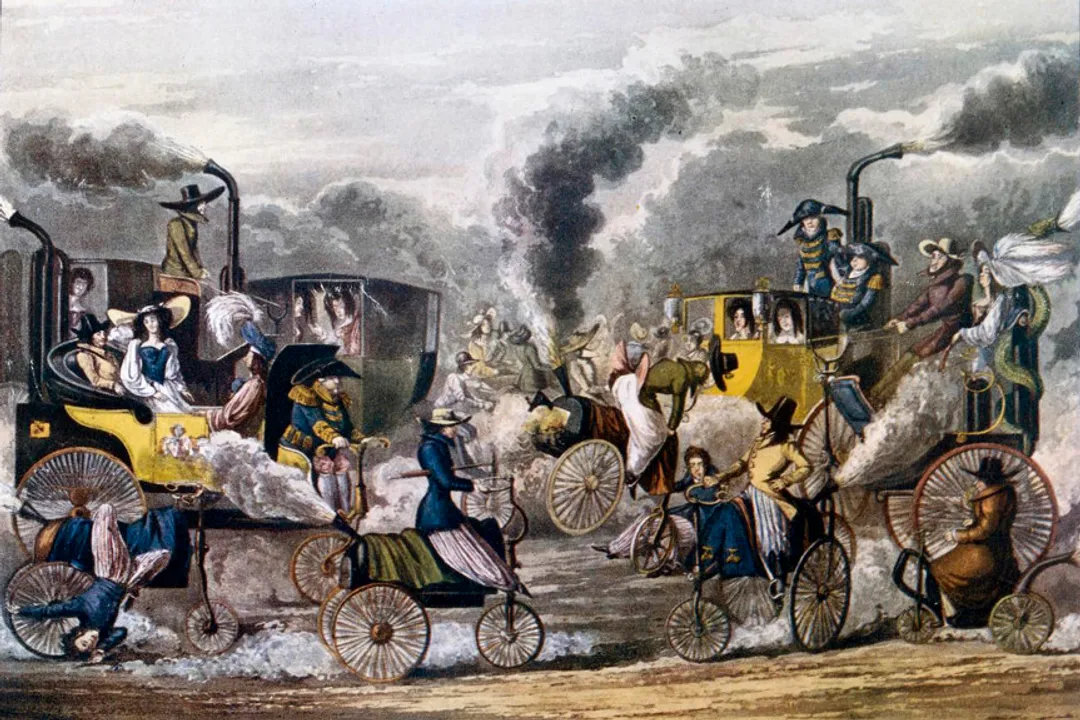
The next crucial development came from James Watt, beginning in the 1760s, which fundamentally changed the economic viability of steam power. [1][3] Watt recognized the massive waste inherent in repeatedly heating and cooling the same cylinder. [1] His solution, patented in 1769, was the separate condenser. [3][5]
Watt’s engine design kept the cylinder hot by allowing the spent steam to pass into a separate, constantly cooled vessel where condensation occurred. [1][3] This single modification drastically reduced fuel consumption—by some accounts, up to 75 percent compared to Newcomen’s engine. [1][5] This efficiency leap meant that steam power was no longer restricted to coal mines; it became economically feasible to run engines wherever industry needed them, even far from coal sources, provided fuel costs were manageable. [1]
Beyond the separate condenser, Watt introduced other vital improvements that transformed the engine from a simple pump into a general-purpose rotary machine. [1][5]
# Rotary Motion
To make the steam engine suitable for factories, it needed to provide rotational motion rather than just up-and-down pumping action. [1] Watt achieved this by developing the sun and planet gear mechanism, which converted the reciprocating (back-and-forth) motion of the piston beam into circular motion that could drive machinery like spinning jennies or millstones. [1][5] Later, the use of a flywheel helped smooth out the jerky motion inherent in piston-driven power, ensuring a more continuous drive. [1]
Comparing the evolution of these early power sources reveals a stark progression in energy management.
| Engine Type | Primary Action | Key Innovation | Fuel Efficiency Impact |
|---|---|---|---|
| Savery Engine | Vacuum Suction | First practical steam apparatus | Limited depth, atmospheric pressure reliance [3] |
| Newcomen Engine | Atmospheric Pressure | Direct condensation in cylinder | High fuel waste due to thermal cycling [3] |
| Watt Engine | Separate Condensation | Thermal separation of heating/cooling | Drastic reduction in fuel needs, enabling wider application [1][5] |
The shift represented by Watt’s engine was less about creating power and more about preserving fuel while broadening the utility of that power. [1] This efficiency breakthrough effectively lowered the energy cost barrier for nearly every type of manufacturing process.
# Industrial Transformation
The most immediate and profound consequence of efficient, rotative steam power was the reshaping of industry, marking the true start of what we now call the Industrial Revolution. [2]
# Factory System
Before steam, manufacturing concentrated near fast-flowing rivers to access water wheels. [1] Steam engines allowed factories to be built anywhere—near raw materials, labor pools, or ports—leading to the rapid growth of urban industrial centers like Manchester and Birmingham. [1][8] This new freedom from geography meant that capital, rather than geography, dictated factory placement. [8]
The ability to power multiple machines from a single central engine via belts and shafts meant mass production became technically viable. [5] Textile mills, which were among the first industries to adopt steam power, could operate at unprecedented scales, requiring larger buildings and concentrating thousands of workers under one roof. [2] This concentrated labor force fundamentally altered social structures and the nature of work itself. [8]
Consider the implications for labor migration. When a textile mill relied on a river, workers had to live near that specific stretch of water. Once steam took over, the factory owner could build near a canal junction or a growing town center where housing and existing labor were already present. This resulted in an unprecedented, rapid concentration of populations in industrial hubs, a demographic shift that continues to influence urban planning today. [8]
# Metallurgy
Steam power also had critical feedback loops in other industries, notably iron and steel production. Steam engines were used not only to power the bellows for blast furnaces, thereby creating hotter and more consistent heat, but also to drive rolling mills used to shape iron into rails and structural beams. [1] This symbiotic relationship meant that as steam engines became more common, the metal required to build better steam engines and associated machinery became cheaper and more available. [1]

# Transportation Revolution
While the factory floor was transformed, the movement of goods and people saw perhaps the most visible and culturally impactful change brought by steam: the locomotive and the steamship. [1][6]
# Railways
The adaptation of the stationary steam engine for locomotion began with engineers like Richard Trevithick, who built a full-scale working railway steam locomotive in 1804. [5][6] Early efforts faced challenges: the track infrastructure was not yet robust enough to support the weight, and engineers debated whether flanged wheels on smooth rails or rack-and-pinion systems were superior. [6]
George Stephenson’s Rocket, built in 1829, proved the viability of the smooth-railed design, using advanced features like a multi-tubular boiler and a blast pipe to improve fire efficiency and power output. [1][6] The opening of the Liverpool and Manchester Railway in 1830 marked the true beginning of the railway age, connecting industrial centers and dramatically cutting the cost and time required for overland freight and passenger travel. [1][6]
The significance here was speed and reliability. A horse could pull a wagon at a few miles per hour, subject to weather and terrain. A steam train could maintain speeds often exceeding 30 miles per hour, regardless of the season, over pre-laid track. [6] This connectivity broke down local economies, allowing for national and eventually international markets to function efficiently. [1]
# Steamships
Similarly, steam power liberated water transport from the constraints of wind and current. [9] Early attempts at steamboats faced skepticism, as paddle wheels were initially bulky and engines unreliable. [9] Pioneers like Robert Fulton eventually demonstrated commercial success, particularly on rivers in America, where currents favored upstream travel that sailing ships struggled with. [9]
The application of steam to ocean voyages was slower due to the need for vast amounts of coal storage, but once that logistical hurdle was overcome, steamships offered reliability that sailing vessels simply could not match. [9] Transatlantic travel became predictable; voyages were no longer dictated by the vagaries of the prevailing winds, shrinking perceived distances between continents. [9]
# Power Beyond Industry
Steam power wasn't confined to production and transit; it was also applied to civic and scientific endeavors, expanding its sphere of influence. [5]
# Agriculture
Steam engines found their way into the fields, powering machinery for tasks such as threshing grain, allowing farmers to process larger harvests more quickly than ever before. [5] Traction engines, later developed from locomotive designs, provided mobile power sources on farms, though they were heavy and required specialized operators. [5]
# Public Works
Early applications also touched public works, such as steam-powered fire engines, which were far more powerful than their horse-drawn predecessors, offering a mechanical response to urban emergencies. [5] In many cities, steam pumps were eventually adapted to provide clean, pressurized water to residential areas, improving public sanitation and health. [1]
# The Enduring Legacy
While the internal combustion engine and the electric motor have replaced the reciprocating steam engine as the primary drivers of personal and light industrial work, the fundamental principle of steam power remains critically important today. [4]
# Modern Steam
The steam engine was the direct ancestor of the steam turbine, which now generates the vast majority of the world’s electrical power. [4][7] In modern power stations—whether burning coal, natural gas, or using nuclear fission—the heat source is used to boil water into high-pressure steam, which then spins a turbine connected to an electrical generator. [4][7]
The efficiency has improved dramatically since Watt’s time, but the core concept—using thermal energy to create a motive force via fluid expansion—is identical. [4] For instance, a modern gas turbine plant might involve a primary gas turbine, but it often incorporates a "combined cycle" where the waste heat from the gas turbine is used to raise steam to run a second steam turbine, maximizing the work extracted from the initial fuel. [4]
This continuity is important to recognize. When we look at a light switch or an electric heater, we are indirectly interacting with a sophisticated descendant of the machine that first pulled water from a Cornish mine. [4] The significance is that the Industrial Revolution, born from the first inefficient steam pumps, set humanity on an irreversible path toward centralized, high-density energy production that underpins modern infrastructure. [8]
# Societal Pace
The steam engine fundamentally changed the pace of life. Before steam, most activities were limited by the speed of a walking person, a flowing river, or the direction of the wind. [1] Steam power introduced unprecedented mechanical speed into logistics and production. [6] This acceleration had profound social effects, creating the concept of "time is money" in a literal, measurable sense for industry, and shrinking the world through faster communication (via telegraph lines strung along railways) and travel. [1] The relentless, rhythmic chuffing of the steam engine became the soundtrack to the modern age, dictating shift work and scheduled arrivals that organized daily existence in a way agrarian life never had. [2] This transition from cyclical, nature-based time to linear, mechanical time is perhaps the deepest societal impact of the invention.
Related Questions
#Citations
Steam power | History, Uses, & Facts - Britannica
The Rise of the Steam Engine - National Coal Mining Museum
Steam engine - Wikipedia
Steam power is not just a relic of the past - Museums Victoria
5 Steam-Powered Firsts - ASME
The Evolution & History of Steam Locomotives
SCIplanet - Steam Power and the Industrial Revolution (1760-1840)
The Steam Engine | Environment & Society Portal
Steam power | Royal Museums Greenwich