What was the first car with an engine?
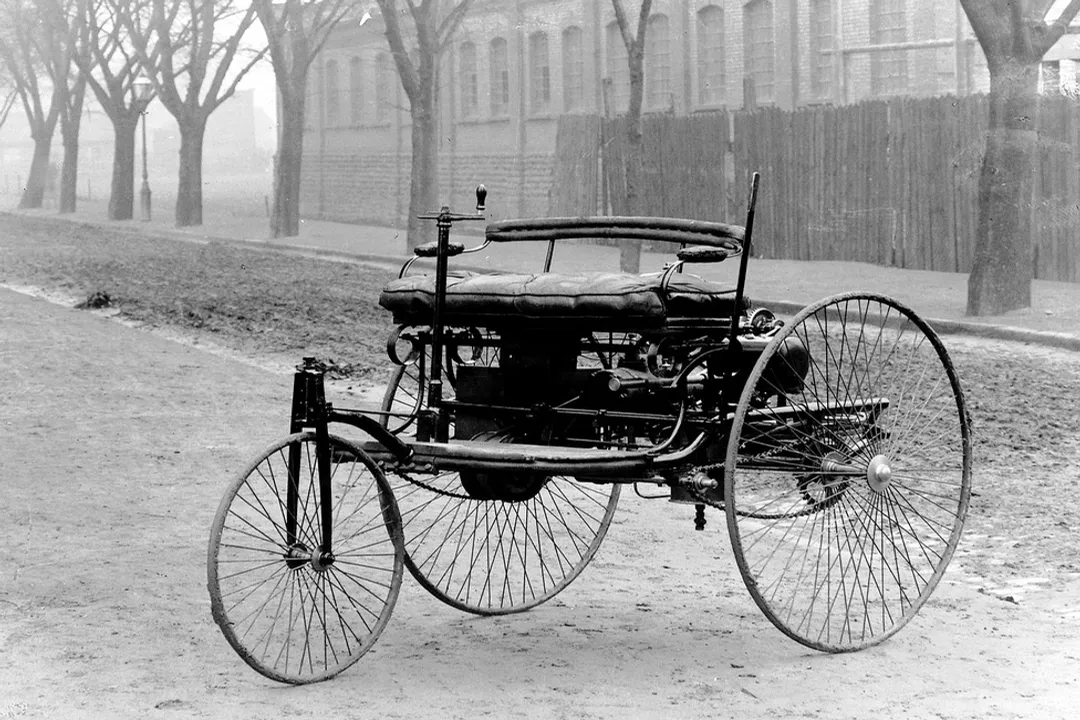
The genesis of the modern automobile is often traced back to a single, revolutionary three-wheeled machine patented in the late 19th century. While inventors had experimented with self-propelled carriages for decades, often powered by steam or, in some niche cases, electricity, the vehicle that truly birthed the automotive age was one designed from the ground up around an internal combustion engine. This distinction is vital: it wasn't simply an engine placed onto an existing carriage, but a holistic creation built for the purpose of personal motorized transport, earning its inventor, Carl Benz, the title of father of the car.
# The Patent Date
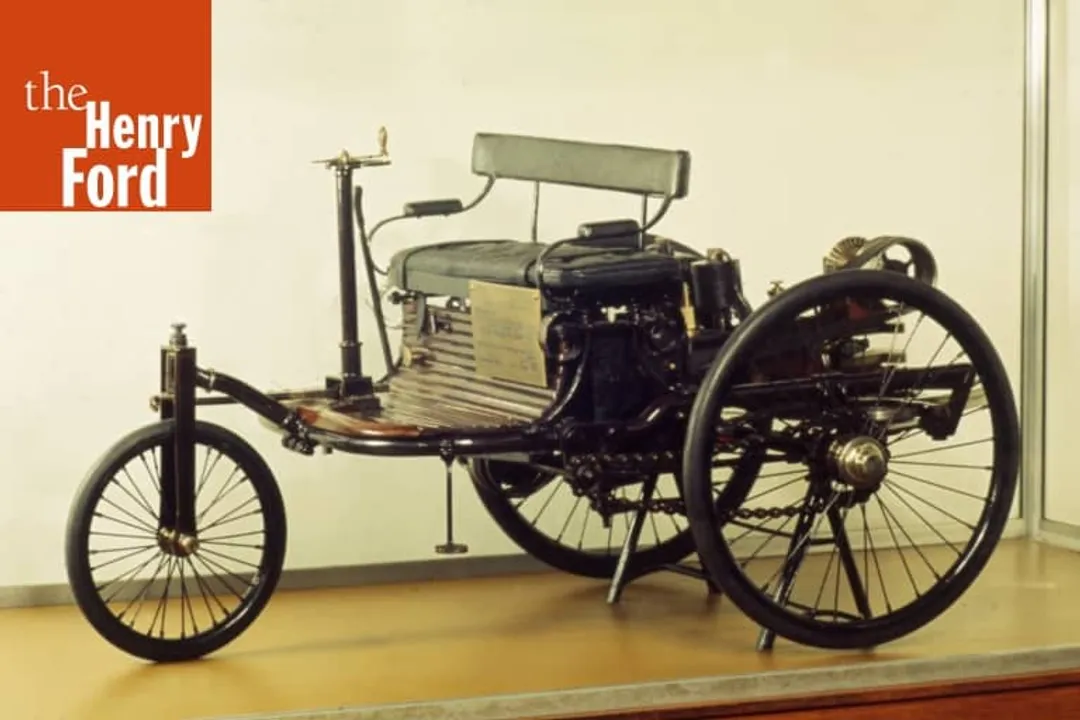
The landmark moment occurred on January 29, 1886, when Carl Benz applied for German patent DRP 37435 for his "vehicle powered by a gas engine". This specific date and patent filing are why the Benz Patent-Motorwagen is universally recognized as the first automobile. The vehicle itself, officially known as the Motorwagen Model No. 1, had actually been built the year prior, in 1885. The delay between construction and the patent application highlights the formal establishment of the concept—Benz sought to legally protect the entire integrated system, not just one component.
# Engineering Marvel
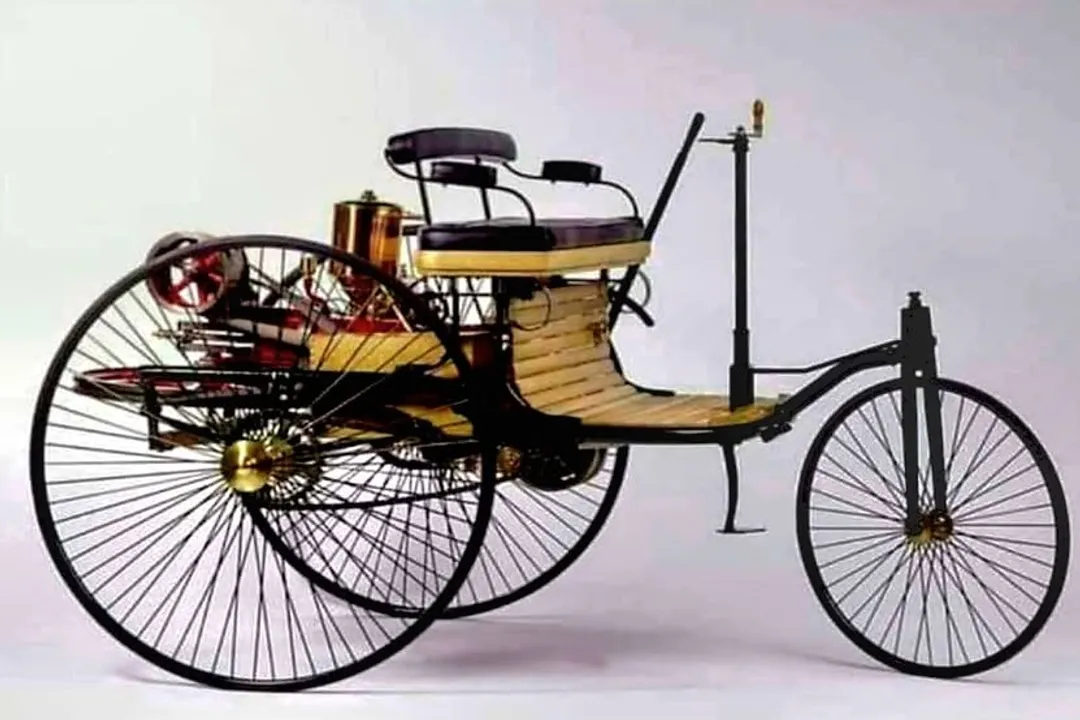
What exactly was this groundbreaking machine? It looked nothing like the boxy automobiles that would follow just a decade later. The Benz Patent-Motorwagen was a three-wheeled vehicle. It featured a horizontal, single-cylinder, four-stroke engine mounted at the rear. This engine had a bore of 95.4 mm and a stroke of 150 mm, giving it a displacement of 954 cubic centimeters.
The power output seems laughably low by today's standards, generating only about $0.75$ horsepower at 400 revolutions per minute. To put that into perspective, a modern electric toothbrush likely produces more peak power than this foundational machine. Yet, that small burst of harnessed energy was enough to move the lightweight vehicle forward. The fuel used was ligroin, a petroleum ether available at the time. Benz designed the entire apparatus, meaning the engine, the chassis, the transmission, and the steering mechanism were all conceived as an integrated unit meant to work together.
# Chassis Integration
One fascinating aspect often overlooked when discussing the first car is the close relationship between the power unit and the frame. Unlike earlier attempts where an engine might have been bolted onto a converted horse-drawn wagon chassis—a setup often seen with steam power—Benz built his frame specifically to cradle his new engine. The frame itself was essentially a steel tube construction.
This approach created a difference that sets it apart from many predecessors: it was purpose-built for the engine it housed. When considering the lineage of automotive design, this move from adaptation to dedicated engineering marks a significant conceptual leap. The engine wasn't an accessory; it was the reason for the vehicle's existence, dictating its form and function. We can see this principle mirrored in modern design, where specialized chassis are developed around large battery packs for electric vehicles, repeating Benz’s initial integrated philosophy, albeit with vastly different technology.
# The Technological Precursors
To fully appreciate why the Benz Motorwagen is the first car, it helps to understand what came before it and why those earlier inventions didn't earn the same designation. Before 1886, self-propelled vehicles existed, notably those running on steam power. Inventors like Nicolas-Joseph Cugnot in the late 18th century built steam-powered road vehicles. These machines were heavy, required lengthy startup times to build up steam pressure, and were complex to operate, often resembling oversized, slow-moving boilers on wheels.
Then there were early electric carriages, which had a brief moment in the spotlight, particularly in urban settings, due to their quiet operation. However, these were limited by battery technology—their range was severely restricted, making them impractical for true personal transportation beyond short trips.
Carl Benz’s contribution was applying the relatively new, lightweight, and relatively powerful internal combustion engine (ICE) to a vehicle designed to use it as its sole source of motive power. While others were building engines, Benz was building the automobile—a vehicle where the engine was the heart and the chassis the body, made for sustained personal travel away from fueling stations like contemporary horse routes.
# Proving the Concept
A patent is one thing; a functioning, reliable vehicle is another. Early critics were skeptical, and the machine was not immediately accepted as a practical mode of transport. For a vehicle to be considered a success, it had to prove its utility beyond short, supervised jaunts on private grounds.
This proof arrived not from Carl Benz, but from his wife, Bertha Benz, in an act of sheer entrepreneurial spirit and mechanical bravery. In August 1888, without her husband’s knowledge, Bertha took the improved Model III Motorwagen on the first long-distance journey, traveling approximately 66 miles (about 106 kilometers) from Mannheim to Pforzheim to visit her mother.
Bertha's drive was a true test under real-world, albeit unpaved, conditions. She had to act as mechanic, procuring supplies and making field repairs along the way. She used a hairpin to clean a clogged fuel line and even bought spirit from a pharmacy to use as emergency fuel. This demonstration was arguably as important as the initial patent. It transformed the Motorwagen from a scientific curiosity into a viable concept for personal mobility. A comparative look at the early reception shows that while the engineering was novel, it was the demonstration of endurance that convinced a skeptical public and potential investors.

# Technical Comparison Data
To better visualize the Motorwagen’s place in history against other early powered road vehicles, one might look at a very simplified comparison of their core power delivery systems:
| Vehicle Type | Primary Power Source | Typical Range/Operation Time | Key Limitation |
|---|---|---|---|
| Steam Carriage (e.g., Cugnot) | External Combustion Boiler | Dependent on water/fuel supply; long start-up | Weight, complexity, long warm-up |
| Electric Carriage | Lead-acid Batteries | Very limited (under 10 miles) | Battery density and range |
| Benz Patent-Motorwagen | Internal Combustion Engine (ICE) | Longer, relative to fuel capacity | Low power output, rudimentary handling |
This comparison clarifies that the ICE offered the best power-to-weight ratio and operational independence of the contemporary options. The Motorwagen, while fragile by modern standards, was designed for relatively quick refueling using common liquid fuels available in apothecaries, which Bertha later confirmed.
# The Question of Precedence
The historical record confirms Benz’s primacy as the creator of the first purpose-built automobile powered by an ICE. However, because the history of invention is often layered, sometimes other names surface in discussions. When people ask who made the first engine, the answer branches into metallurgy and thermodynamics, pointing toward names like Étienne Lenoir or Nikolaus Otto, who perfected the four-stroke cycle engine that Benz adapted. Benz’s genius lay not in inventing the engine, but in successfully miniaturizing and integrating it into a vehicle chassis designed specifically for that engine's operation.
If we were to analyze the design from a manufacturing perspective—a view that differs from a pure engineering one—we might observe that the Model 1 was essentially a sophisticated one-off prototype built by a skilled engineer. It was the subsequent models, like the Model III used by Bertha, that began to show signs of standardization and readiness for mass production, even if production numbers remained minuscule.
An interesting insight arises when considering the driver's experience versus the engineer's design goal. Benz sought personal transport, a carriage without horses. Yet, the vehicle's low power and three-wheel configuration meant it was intrinsically less stable and required constant driver input, especially on uneven roads. The original design prioritized the novelty of the engine's integration over passenger comfort or advanced handling dynamics. This setup required the driver to be intimately familiar with mechanical systems, turning early motoring into an active mechanical pursuit rather than passive transport—a stark contrast to the driver experience of even the first mass-produced vehicles that followed shortly after.
# Establishing Automotive Identity
The legacy of the Benz Patent-Motorwagen is cemented not just by its components, but by the identity it established for the future automobile. It standardized several key features that persisted for decades. For instance, it featured a differential gear system, essential for allowing the wheels to turn at different speeds when cornering, a concept adapted from traditional wagon design but integrated into the new motorized system. It also used solid rubber tires on its spoked wheels, a necessary stopgap before pneumatic tires became common.
The success of the concept led Benz to rapidly evolve the design. The initial three-wheeler soon gave way to four-wheeled designs, recognizing the superior stability and load-bearing capacity of that layout. However, the foundational principle remained: a lightweight, gasoline-powered ICE propelling the vehicle directly.
Thinking about the context of the time, the invention must be viewed as a high-risk venture. While the sources detail the machine's specifications, it is important to recognize the capital required for such an endeavor. Patenting, prototype construction, and the continuous refinement (like the improvements made between Model I and Model III) demanded significant financial backing, which Carl Benz secured through his wife's inheritance and later partnerships. This commercial reality underscores that the first car wasn't just a scientific breakthrough; it was a successful, albeit precarious, business proposition.
The Benz Patent-Motorwagen, built in 1885 and patented in 1886, remains the undisputed starting point for the history of the car as we know it. It introduced the combination of the integrated chassis and the ICE that defines automotive engineering to this day. The daring road test undertaken by Bertha Benz sealed its fate as a practical reality, moving it from the realm of invention into the everyday world of travel.
#Videos
The FIRST IN 1886 | BEFORE MERCEDES, THERE WAS BENZ
Related Questions
#Citations
Benz Patent Motor Car: The first automobile (1885–1886)
Benz Patent-Motorwagen - Wikipedia
Working Model of First Automobile Built by Karl Benz, Presented to ...
The FIRST IN 1886 | BEFORE MERCEDES, THERE WAS BENZ
Why is Carl Benz commonly believed to have invented the car?
THE FIRST INTERNAL COMBUSTION CAR PATENTED IN ...
The First Automobile? - The Engines of Our Ingenuity
Who made the first car engine? - Quora