What is the correct sequence of operations in the four-stroke Otto cycle?
Answer
Intake, compression, power, exhaust
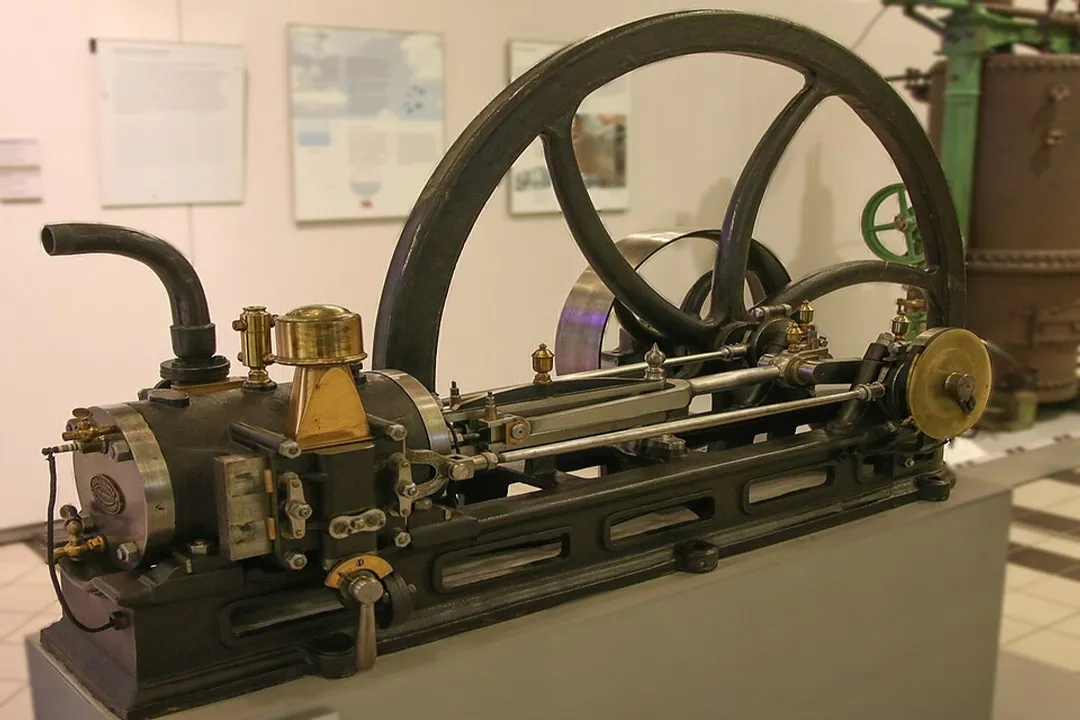
The four-stroke cycle, perfected in 1876, organizes the engine's movement into four specific phases. First, the intake stroke draws the fuel and air mixture into the cylinder. Second, the compression stroke squeezes this mixture to increase potential energy. Third, the power or ignition stroke occurs when the mixture is ignited, driving the piston with great force. Finally, the exhaust stroke clears the spent gases to prepare the cylinder for the next cycle, creating a repeatable and efficient loop.
#Videos
Running Model of Very First Otto Langen. 1876 internal combustion ...
Related Questions
What did the 17th-century physicist Christiaan Huygens attempt to use as a power source in his early engine design?Which key principle did Philippe Lebon patent in 1799 that later became critical for engine efficiency?What fuel source did the Pyreolophore, developed by Nicéphore and Claude Niepce, utilize to power a boat?How did Samuel Brown's gas vacuum engine, introduced in the 1820s, generate motion?Why is the 1860 engine created by Etienne Lenoir considered a significant historical breakthrough?What was the approximate thermal efficiency of the engine developed by Etienne Lenoir?What is the correct sequence of operations in the four-stroke Otto cycle?What primary benefit does the compression stroke provide in the four-stroke engine cycle?What role did Nicolaus August Otto play in the development of the internal combustion engine?Why is determining the single inventor of the internal combustion engine considered a complex historical challenge?