Who was the first to make a combustion engine?
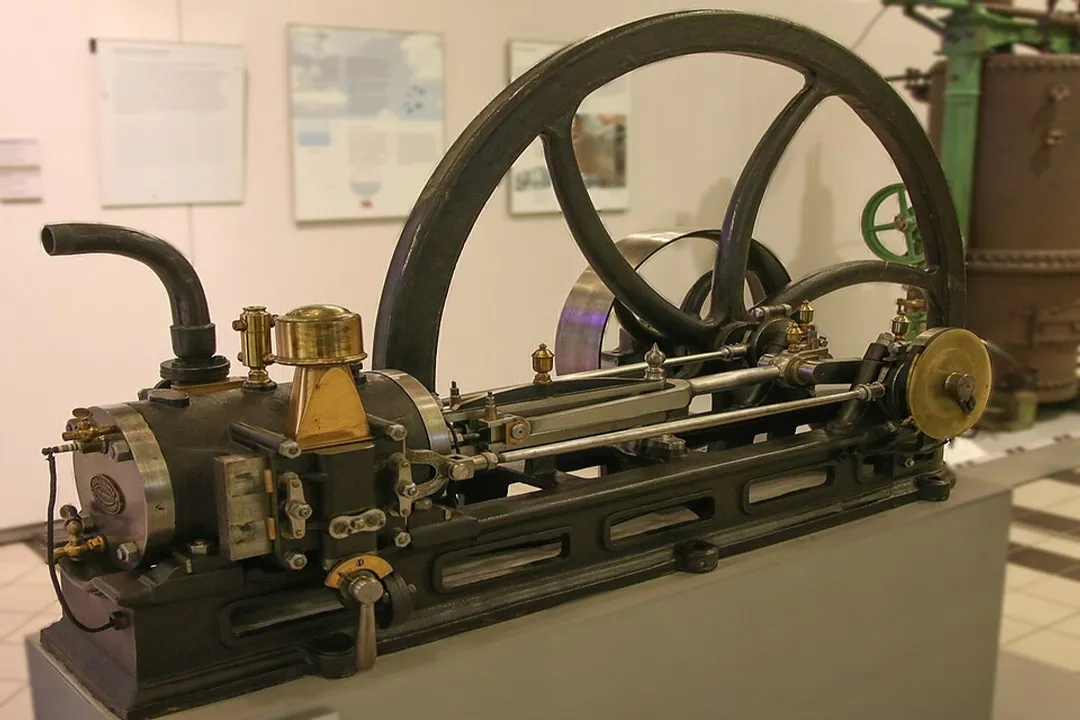
The genesis of the internal combustion engine—the device that fundamentally reshaped industry and personal transport—is not marked by a single flash of genius but rather a long series of theoretical leaps and practical failures stretching across centuries. Pinpointing the absolute first creator is challenging because the concept evolved from theoretical thermodynamics into a functional machine through the work of numerous individuals, each contributing a necessary piece to the puzzle. [1][7] Early ideas often involved using gunpowder to drive pistons, recognizing the immense power locked within rapid expansion, though these early designs remained largely conceptual demonstrations rather than practical power sources. [1]
# Gunpowder Concepts
One of the earliest documented attempts to harness the energy of an explosion for mechanical work came from the Dutch physicist Christiaan Huygens in the late 17th century. [1] Huygens designed an engine intended to be powered by the combustion of gunpowder, attempting to use the vacuum created after the explosion to lift a weight or drive a piston. [1] While demonstrating an understanding of the potential energy release, this design never moved past the theoretical or very rudimentary experimental stage, as safely and efficiently controlling the detonation of gunpowder within a mechanical device proved exceedingly difficult. [1]
The necessary shift from an explosive power source to one based on controlled, repetitive combustion required a different approach to fuel handling and ignition. Around 1799, Philippe Lebon in France received patents for processes involving the compression of gas and air mixtures before ignition, an advance critical to the later successful designs. [1][7] Lebon's work introduced the idea of using a compressed charge, though his designs did not immediately result in a working engine. [1] This groundwork, however, established the principle that high-pressure, controlled burning was the path forward.
# Early Practical Builds
As the 19th century dawned, inventors began translating theory into machinery, often using flammable gases rather than solid explosives. [1] One notable early machine was the Pyréolophore, developed by the French brothers Nicéphore and Claude Niépce in the early 1800s. [1] This device utilized finely ground coal dust or spores as fuel and was successfully used to power a boat on the Saône river in France. [1] Though an internal combustion machine, the Pyréolophore's path to commercialization was limited compared to later designs. [1]
Around the same period, inventors like Samuel Brown in England introduced gas vacuum engines in the 1820s. [1] Brown's engine utilized an external flame to heat air within a cylinder, causing expansion that pushed a piston; the subsequent cooling and vacuum then drew the piston back. [1] While Brown managed to secure a patent and even install some of his engines for industrial use, these machines were large, inefficient, and still relied on an external heat source rather than strictly internal ignition of a mixed charge. [1]
What separates these early attempts from the machine that truly launched the engine age is the concept of the two-stroke cycle implemented with an actual fuel/air mixture ignited inside the cylinder. The first engine to achieve a degree of commercial success and widespread recognition as an internal combustion engine was created by Étienne Lenoir. [6][8]
# Lenoir Engine
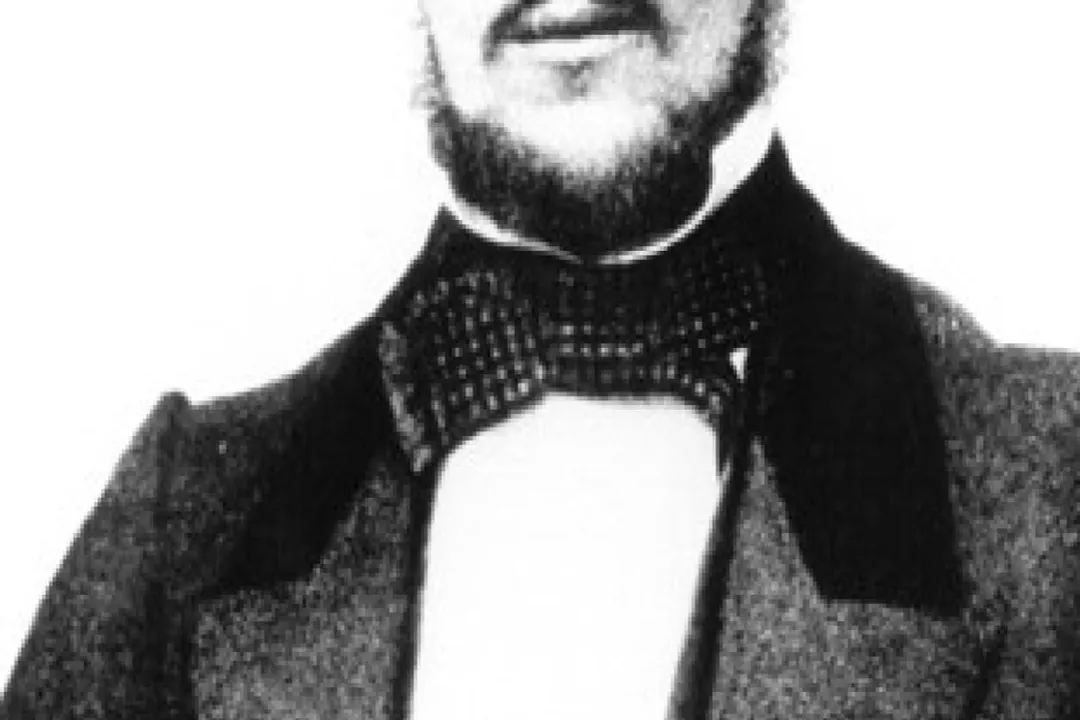
The true breakthrough into commercial viability arrived in 1860 with Étienne Lenoir. [6] Building upon previous theoretical work, Lenoir introduced an engine that ran on illuminating gas (a common byproduct of coal gas lighting). [6][8] His design was a two-stroke engine, meaning it completed its power cycle in one revolution of the crankshaft. [1] Lenoir’s engine utilized an electric spark to ignite a mixture of gas and air compressed only slightly, if at all, within the cylinder. [1][6]
Lenoir’s great achievement was making the internal combustion engine sellable. [6] He established a factory, and by the mid-1860s, hundreds of his engines were in use across Europe, powering small workshops, printing presses, and even a small vehicle. [6] His engine, while mechanically simple and relatively reliable for its time, was notoriously inefficient, converting only about 4% of the fuel's energy into actual work. [6] Despite this low thermal efficiency, the fact that it operated reliably enough to be purchased and used for industrial tasks solidifies Lenoir’s place as the inventor of the first commercially successful internal combustion engine. [6][8]
It is an interesting historical divergence that while Lebon patented the concept of gas compression decades earlier, it was Lenoir who first successfully marketed a functional, albeit imperfect, ICE based on gas ignition. [1][7] This highlights a common theme in technological history: the difference between a prescient theoretical idea and the engineering maturity required to make that idea economically viable. The world was not quite ready for Lebon’s compressed gas, but it was ready for Lenoir’s gas-fired, non-compressed workhorse. [1]
# Otto Cycle
While Lenoir’s engine proved the concept, it was heavy, slow, and terribly wasteful of fuel, limiting its application primarily to stationary tasks. [9] The next giant leap required a fundamental rethinking of the engine's operating sequence to improve efficiency dramatically. This advancement came from Nicolaus August Otto. [3][9]
In 1867, Otto, along with Eugen Langen, developed an atmospheric engine that was more efficient than Lenoir's, though it still operated on a different principle. [3][9] However, Otto’s most enduring contribution arrived in 1876 with the perfection of the four-stroke cycle, often referred to as the Otto cycle. [3][9]
The four-stroke principle formalized the sequence that has governed most piston engines ever since:
- Intake: Drawing the fuel/air mixture into the cylinder. [3]
- Compression: Squeezing the mixture before ignition. [3]
- Power (Ignition/Expansion): Igniting the compressed charge, driving the piston down. [3]
- Exhaust: Pushing the spent gases out. [3]
The critical step here is compression. [3] By compressing the fuel-air mixture before ignition, the resulting expansion—the power stroke—generates significantly more force and converts a much higher percentage of the fuel's potential energy into mechanical work. [3][9] Otto’s engine, based on this cycle, achieved a thermal efficiency that made it vastly superior to Lenoir’s earlier design, enabling the lighter, more powerful engines that would soon revolutionize transportation. [3] This efficiency gain was so profound that the four-stroke layout quickly became the international standard for internal combustion development. [9]

# Defining the Pioneer
To answer who made the first combustion engine, one must first define "first." If "first" means the earliest theoretical description of using an explosion for mechanical work, the answer points toward Huygens in the 17th century. [1] If "first" means the inventor of the first commercially successful, sold, and operated ICE, then the credit belongs to Étienne Lenoir in 1860. [6][8]
However, if the definition requires the first engine using the principle that made modern engines possible—controlled internal ignition leading to an efficient power stroke—then the focus shifts toward the innovations of Nicolaus August Otto. [3] Otto's 1876 design wasn't just an engine; it was the template for the future. It is worth noting that Otto’s initial 1876 engine used an early form of compressed gas rather than liquid fuel, setting the stage for petroleum-based fuels later on. [9]
When considering the lineage of power, it is helpful to view it as a relay race rather than a single sprint. Huygens ran the first leg theoretically, Lebon drew the map for a more advanced design, Lenoir won the race for commercial viability using a simple mechanism, and Otto perfected the machine by engineering in the necessary efficiency via the compression stroke. [1][3][6] Without Lenoir’s market success proving there was demand, the resources for Otto's later, more complex development might not have materialized as quickly. Conversely, without Otto’s efficiency leap, the engine would have remained a stationary curiosity rather than becoming the driving force behind the automobile age. [3][9] The true impact of the engine relies less on the very first sketch and more on the standardized blueprint that proved practical and scalable. [9]
#Videos
Running Model of Very First Otto Langen. 1876 internal combustion ...
Related Questions
#Citations
History of the internal combustion engine - Wikipedia
First Internal Combustion Engine | History & Inventor - Study.com
NIHF Inductee Nicolaus Otto Invented the Gasoline Engine
Running Model of Very First Otto Langen. 1876 internal combustion ...
The First Motor Cars - CHEST Journal
Birth of an idea: Etienne Lenoir and the internal combustion engine
Invention of the Internal Combustion Engine
Lenoir's Internal Combustion Engine | Research Starters - EBSCO
Nikolaus Otto | Internal Combustion, Automobile Engines & Inventor