Who patented the first ballpoint pen?
The lineage of the modern writing tool we casually call a ballpoint pen is not a single, straight path but a winding route featuring early failures, a critical wartime application, and the eventual mass-market refinement by commercial giants. To ask who patented the first ballpoint pen is to invite two different, equally important answers, depending on whether you mean the first working concept or the design that truly changed how the world writes.
# The First Patent
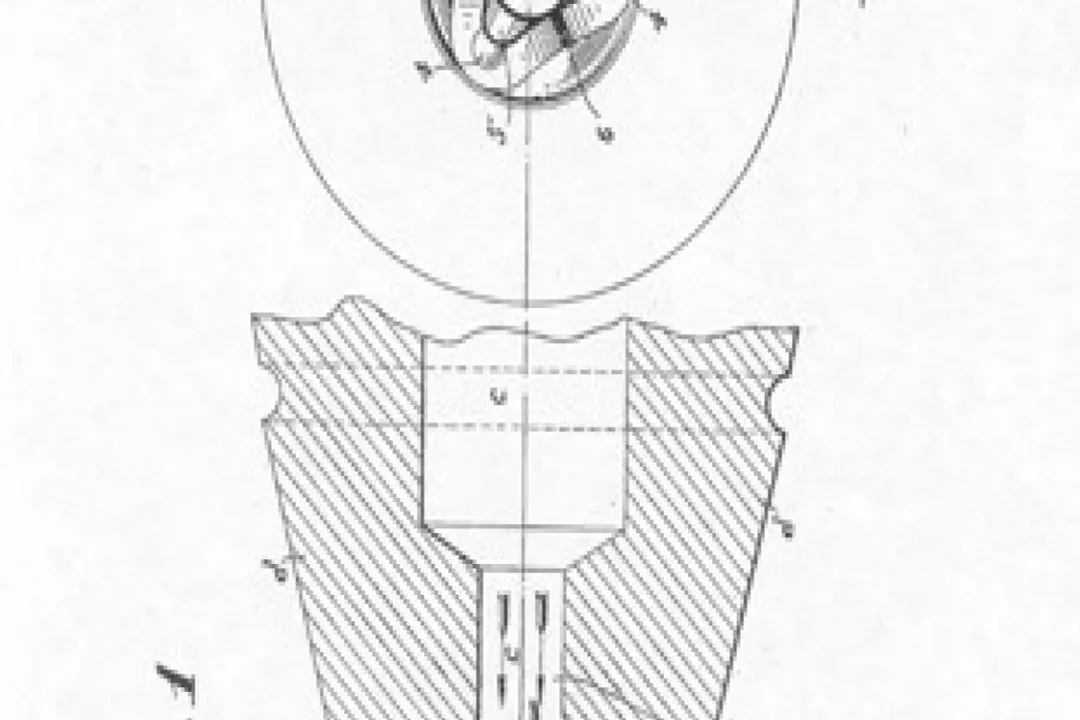
The distinction for the very first patent concerning a ballpoint writing instrument belongs to John J. Loud, an American leather tanner, lawyer, and inventor. Loud secured U.S. Patent No. 392,046 on October 30, 1888. His motivation was entirely practical and specific to his trade: he needed a marker that could write on irregular, rough surfaces like wood or coarse wrapping paper, something the contemporary fountain pen could not manage without smearing or failing entirely.
Loud’s invention featured a small, rotating steel ball held firmly within a socket. As the pen moved, the ball rotated, transferring ink from an internal reservoir to the surface below. While this mechanism achieved its goal—it could mark leather effectively—it proved too coarse for the delicate texture of everyday writing paper. Because it could not function for common letter-writing, the concept was not commercially viable, and the patent eventually expired without seeing widespread adoption. This set the stage for decades of further experimentation where inventors struggled with the core problem: how to combine a reliable rolling ball with an ink that flowed correctly and dried quickly.
# A Pressing Need
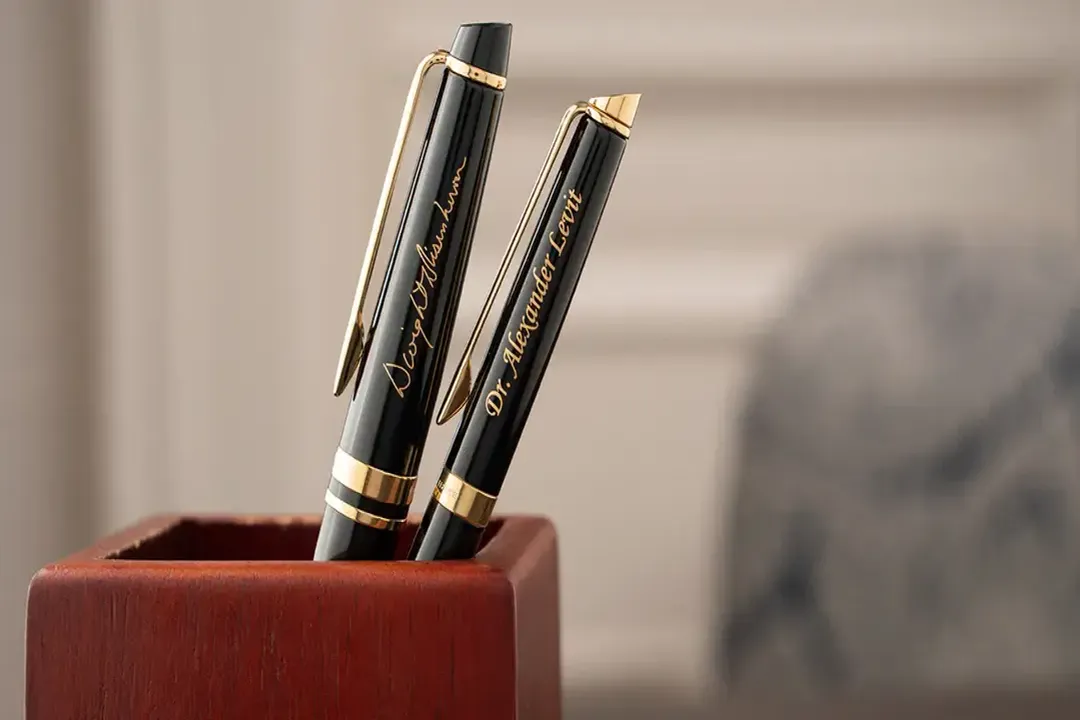
Before the ballpoint pen achieved ubiquity, the writing world was dominated by the fountain pen, a device that, despite its elegance, was notoriously temperamental. For the growing literate population of the early 20th century, the reliance on fountain pens presented significant hurdles. The water-based ink required time to absorb into the paper fibers, meaning writers had to pause and wait, or use abrasive powder to speed the drying process, lest they smudge their work. Furthermore, fountain pens often required complex maintenance, were messy, and had a major functional failure point: they were dependent on gravity to feed the ink to the tip, making them prone to leaking or failing entirely at high altitudes or when writing upside-down. Inventors attempted fixes using springs, piston-pressurized systems, and capillary action, but a universally reliable solution remained elusive.
# The Hungarian Breakthrough
The true renaissance of the ballpoint design came from a Hungarian journalist, László Bíró. Frustrated daily by the smudges and constant refilling required by his fountain pen, Bíró observed the ink used in newspaper printing presses. This oil-based newsprint ink dried almost instantly, leaving a crisp, smudge-free result.
Bíró realized the key to a successful ballpoint lay in marrying this fast-drying ink with the correct dispensing mechanism. He enlisted his brother, György Bíró, a dentist with chemical knowledge, to tackle the formulation. The initial challenge was that the thick newspaper ink was too viscous to flow through a standard fountain pen nib and clogged the ball-and-socket mechanism. The brothers' success lay in developing a specific, viscous, oil-based ink that could be reliably distributed by the rolling ball, yet was thick enough to resist drying out inside the reservoir when not in use.
# Successful Patent
László Bíró successfully coupled this novel ink formula with the ball-and-socket design. They first introduced their working prototype at the Budapest International Fair in 1931. The innovation was protected when the Bíró brothers filed for a British patent on June 15, 1938. They later filed for an Argentinian patent in 1943 after fleeing persecution in Europe. In the United States, László Bíró was ultimately issued U.S. Patent No. 2,390,636 on December 11, 1945, for his "Writing Instrument," which specified the use of dense ink and an airtight reservoir.
This modern design solved several pre-existing issues: the ink dried quickly, it prevented oxidation/evaporation due to the sealing mechanism of the ball, and the controlled flow made it far more versatile than its predecessors.

# Military Endorsement
The functional advantage of the Bíró pen became immediately apparent in the demanding environment of World War II. A British clerk noted that the pen’s lack of dependence on gravity for ink distribution made it perfect for airplane navigators who needed to make precise marks on maps at high altitudes where fountain pens failed due to pressure changes. This military application led to the British government ordering an initial supply of 30,000 pens for the Royal Air Force, providing the first significant commercial success and proof of concept for the device. In Argentina, the pen was marketed as the "Birome," a combination of the names Bíró and Meyne (their Argentinian business partner).
# Commercial Chaos
The post-war era saw the ballpoint pen race to the American market, marked by legal maneuvering and rapid consumer adoption that quickly soured into disappointment. Eversharp acquired the North and Central American rights to the technology. However, American entrepreneur Milton Reynolds bypassed the complex patent structure by making sufficient design alterations, allowing him to launch the "Reynolds Rocket" ahead of the license holders.
The Reynolds Rocket debuted at Gimbels department store in New York City on October 29, 1945. It was instantly popular, with thousands sold in the first week, but it commanded a luxury price tag of **200 in 2024 dollars). The critical flaw was that Reynolds’ pen used gravity feed, leading to widespread issues with leaking and poor consistency, causing consumer interest to plummet shortly after the initial novelty wore off.
The concept of the ballpoint pen, having briefly been a high-end curiosity, transitioned rapidly toward becoming a low-cost consumable, a shift that bankrupted Reynolds’ company. The pen’s history shows a classic tension in innovation: an early, high-priced market introduction based on a functional but unrefined design, followed by a consumer backlash when that design failed to meet daily expectations. The initial cost of the Reynolds pen, at over twelve dollars, is a fascinating data point; it shows that in 1945, the ballpoint was sold purely as a marvel of miniaturized engineering, not as a disposable tool. This extreme initial pricing was entirely dependent on the novelty of overcoming the fountain pen’s ink limitations before competitors could refine the mechanics and slash costs.
# Refining Ubiquity
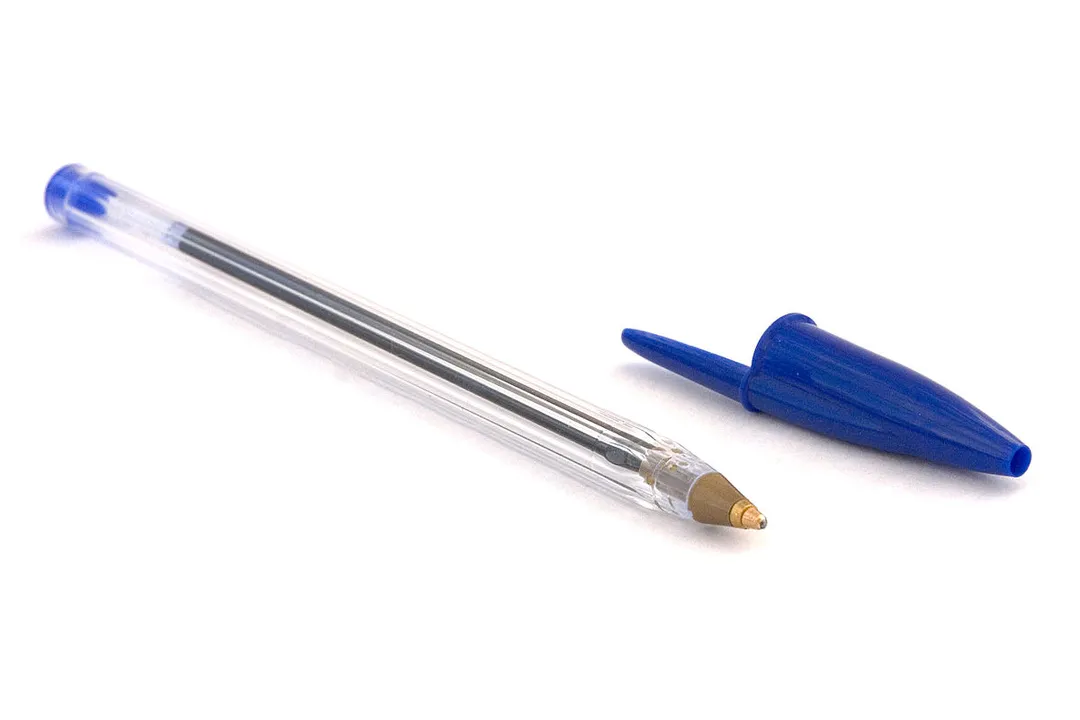
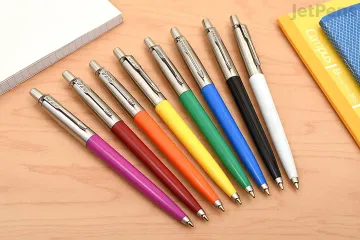
To achieve true mass-market dominance, the reliability had to match the convenience. Several companies stepped in with technological improvements to make the ballpoint a truly dependable everyday item. Paper Mate focused on ink reliability, advertising their formulas as "banker-approved". A major step forward came in 1954 when Parker Pens introduced "The Jotter," which featured technological advances like the use of tungsten-carbide textured ball-bearings. Parker sold millions quickly, signaling a market ready for quality at a more reasonable price.
Even with these improvements, the final step to the ubiquitous, inexpensive pen involved Marcel Bich. Bich, a French manufacturer, acquired the license to Bíró’s technology. He perfected the production process, focusing on achieving high quality while making the pen cheap to manufacture through mass production. His resulting pen, the Bic Cristal, launched in the early 1950s and became the most widely sold pen in history, often cited as synonymous with the company itself. Bich’s success was cemented by the famous 1960s advertising campaign: “Writes First Time, Every Time!”.
# Enduring Impact
The patent for the first ballpoint pen belongs to John J. Loud in 1888. However, the patent that defined the object we use today belongs to László Bíró in 1938 (and later U.S. registration in 1945). Bíró’s contribution was not just mechanical but chemical—the correct ink was the missing piece that allowed the ball-and-socket to work consistently.
The evolution from Loud’s leather marker to Bíró’s RAF instrument, and finally to Bich’s disposable commodity, illustrates a common pattern in applied science: an initial invention solves a narrow problem, but it is the subsequent optimization for a broad market that achieves historical significance. It is almost surprising to note that the core mechanics of the ballpoint have changed little since Bíró’s design, yet the ink composition has evolved significantly, leading to smoother hybrid inks and specialized formulas for everything from erasable pens to those designed for zero gravity—like the Fisher Space Pen which uses pressurized reservoirs to function underwater or in microgravity.
The journey from Loud's coarse industrial marker to the sleek, precise Bic Cristal reveals an interesting reversal of fortune in utility. Loud sought a pen for rough surfaces; Bíró sought one that didn't smudge on smooth paper. Ironically, the descendant of Bíró’s smooth-writing pen has inspired a vibrant genre of ballpoint pen artwork, where artists like James Mylne create photo-realistic images. This is a testament to the precision achieved in the final product, where fine lines rivaling airbrush work can be laid down with a cheap, everyday tool. The pen that was initially deemed too rough for fine paper ended up becoming a fine art instrument due to engineering refinement over the decades. The story of the ballpoint pen, therefore, is less about a single inventor and more about a sequence of individuals—Loud, the Bíró brothers, and Bich—each solving the preceding failure to create a writing utensil that has written itself into the fabric of global daily life.
Related Questions
#Citations
Ballpoint pen
NIHF Inductee Laszlo Biro, Who Invented the Ballpoint Pen
Who Invented the Ballpoint Pen: History's Unsung Hero
The Inventor Behind the Modern Ballpoint Pen
Happy National Ballpoint Pen Day
Who invented the ballpoint pen?
The Evolution of Modern Ballpoint Pen: A Patent History