Who invented the first locomotive engine?
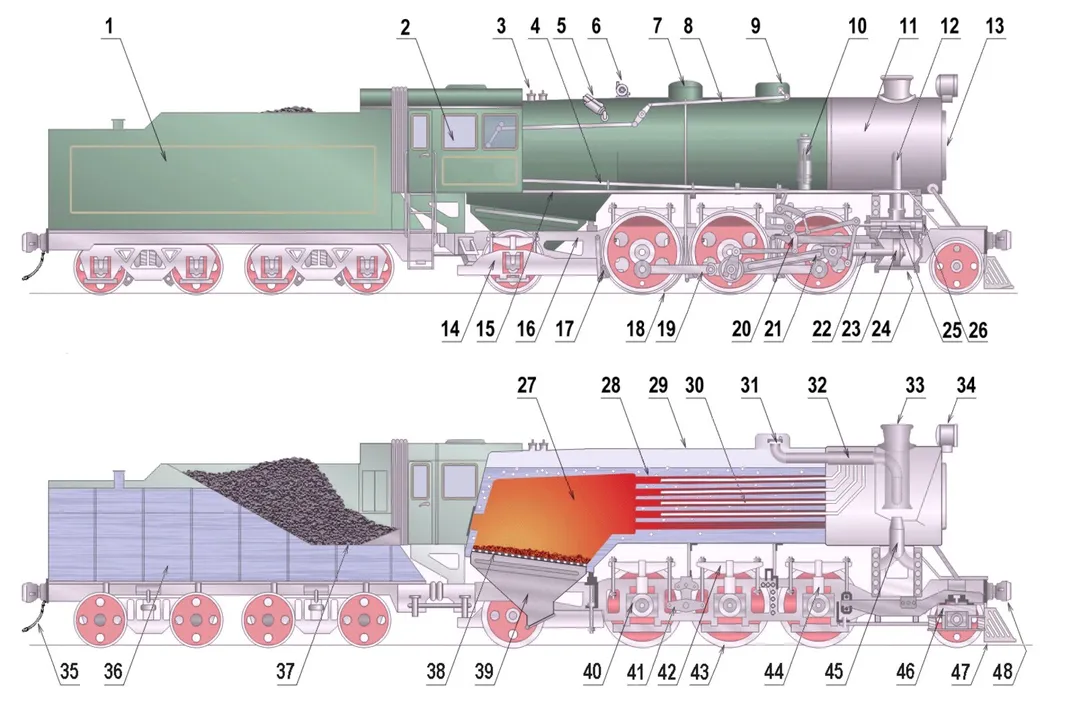
The quest to harness steam power for movement stretches back further than many realize, involving a succession of inventors tinkering with principles long established in stationary engines. Before the age of railways truly began, the idea of a self-propelled road vehicle was already being explored, often fueled by the relentless pursuit of greater mechanical efficiency and power output. When the discussion turns specifically to the very first engine designed to pull rolling stock along a track—the locomotive—the historical spotlight shines most brightly on one individual whose ambition often outpaced the infrastructure of his time: Richard Trevithick. [2][5]
# Trevithick's Ascent
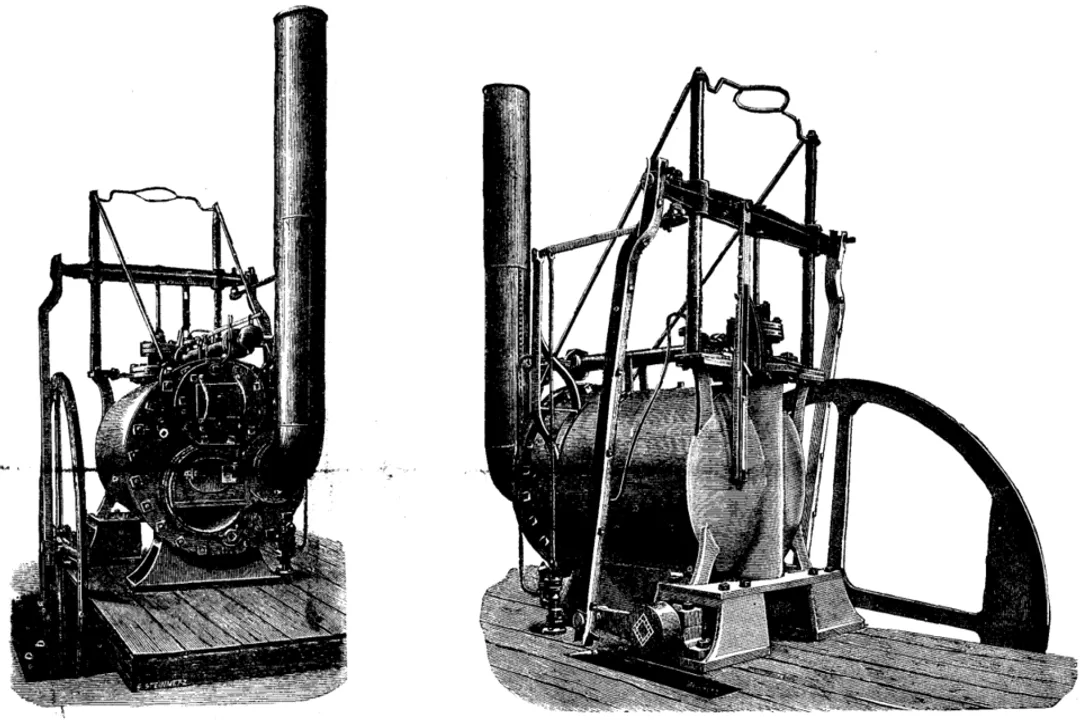
Richard Trevithick, a Cornish mining engineer born in 1772, possessed a particular genius for mechanics and an almost stubborn belief in the superiority of high-pressure steam. [2][5][6] At the time, the dominant figure in steam technology was James Watt, whose engines operated at very low pressure, making them massive and suitable primarily for pumping water out of mines or powering factories with fixed machinery. [5] Trevithick saw the inherent limitations in this low-pressure design. He reasoned that higher steam pressures could produce far more power from a smaller, lighter engine, which was the key requirement for creating a practical road or rail vehicle that wasn't tethered to a static power source. [2][5][10]
Trevithick’s early experiments involved developing boilers capable of safely containing this greater pressure, a significant engineering hurdle in itself. [2] His dedication to this concept led him to build several self-propelled road locomotives before successfully applying the technology to rail. One of his notable early creations, which some accounts identify as the "Puffing Devil," appeared around 1801 or 1802, designed for hauling carriages on roads. [7] This early machine was a testament to his conviction that steam could replace horse-drawn transport entirely. [6] It was a bold vision for the turn of the 19th century.
An interesting point of comparison arises when looking at Trevithick’s methodology versus that of his contemporaries. While Watt’s innovations focused on economy and reliability for established industrial uses, Trevithick was focused purely on power density—the sheer force generated per unit of weight. [5][10] This placed him in a slightly adversarial position within the engineering community, as his reliance on high-pressure steam was viewed by many as inherently dangerous until proven otherwise. [2] Trevithick’s work, therefore, wasn't just an invention; it was a fundamental challenge to the established conservative wisdom of contemporary steam practice. [10]
# First Engine
The critical juncture in railway history, when the steam engine first successfully moved itself and a load along rails, occurred in Wales. On February 21, 1804, Richard Trevithick debuted his creation at the Penydarren ironworks near Merthyr Tydfil. [8] This machine, often simply referred to as the Penydarren locomotive, is widely credited as the world's first full-scale working steam locomotive. [8][9]
The demonstration was remarkable for its time. The locomotive successfully hauled an astonishing load: ten tons of iron and approximately 70 men along the iron road. [8] The entire journey covered a distance of about 9.75 miles. [8] This feat proved, beyond a doubt, that steam traction on rails was technically feasible, capable of moving substantial weight over significant distances using an internal power source. [5][8] The initial momentum and excitement surrounding this test were considerable, demonstrating a technology ready to revolutionize heavy transport. [8]
# Design Hurdles
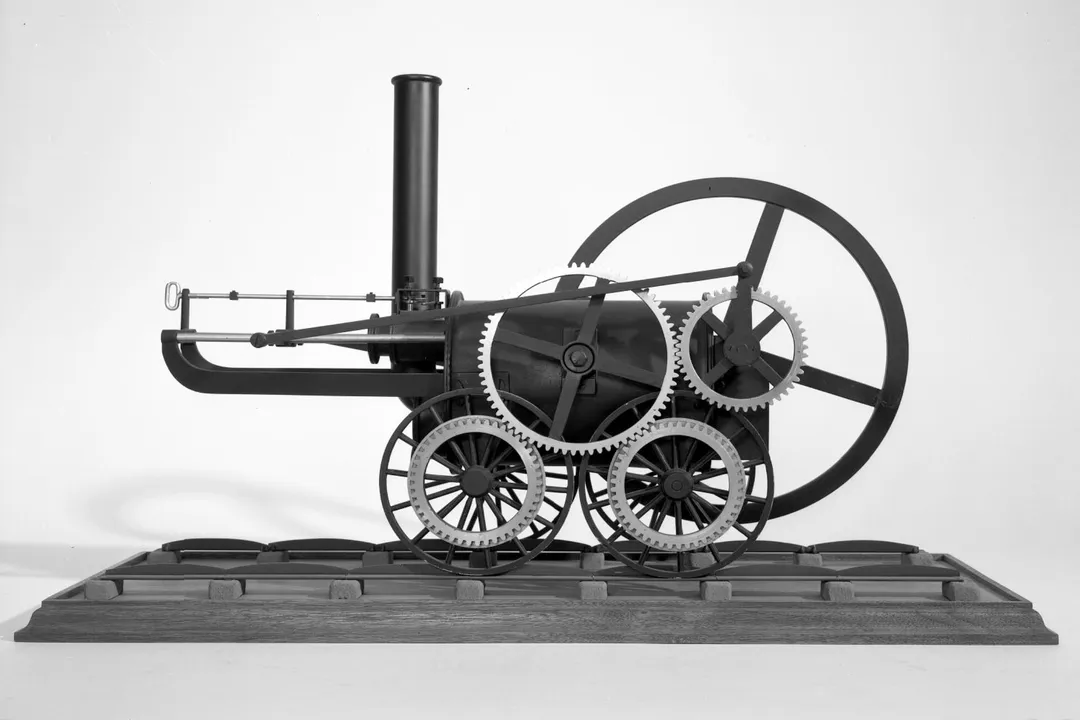
Despite this spectacular debut, Trevithick’s locomotive did not immediately usher in the railway age. The reason was not the power of the engine itself, but rather the track it ran on. [2][10] The Penydarren railway was constructed using cast-iron plates, typical of the "plateways" used for horse-drawn carts carrying raw materials. [2][10] These early tracks were not designed to withstand the significant concentrated weight of a high-pressure steam engine. [2]
The engine was simply too heavy for the existing infrastructure. [2][10] After completing its initial successful run, the locomotive reportedly broke the cast-iron plates under its weight, leading to its withdrawal from service on the line after only a few short trips. [2] This unfortunate technical failure highlights a crucial aspect of technological adoption: an invention is only as useful as the environment it can operate within. Trevithick had invented the locomotive, but the necessary complementary railway technology—the strong, jointed rails designed for adhesion and bearing heavy loads—had yet to be standardized. [2]
# Further Attempts
Trevithick was not deterred by the failure at Penydarren. Recognizing the track issue, he soon built a second locomotive intended specifically for road use, which was shown in London in 1808. [5] This machine, nicknamed the "Catch Me Who Can," operated on a circular track laid in a public exhibition ground near Euston Square. [5] It was designed to haul passengers at speeds up to 10 mph, providing a more direct, albeit temporary, commercial demonstration of self-propelled movement. [5] While it attracted public interest and showed off his engineering prowess—a British inventor creating the first full-scale working locomotive [9]—it too was eventually dismantled, unable to secure the necessary commercial backing or infrastructure improvements to transition into a sustained enterprise. [5]

# Contextualizing Innovation
It is vital to place Trevithick’s work in the context of broader steam locomotive development. While he built the first true locomotive, others followed who achieved greater commercial success, leading to occasional confusion about true primacy. [1][4] For instance, the concept of steam power for locomotion existed in earlier, smaller, or non-working models, such as Nicolas-Joseph Cugnot’s self-propelled steam artillery tractor built in France in 1769. [1] Cugnot’s vehicle was a mechanical curiosity, not a practical railway engine, but it established the idea of steam-driven personal transport. [1]
Another name frequently associated with early steam power is George Stephenson. [4] Stephenson's contribution, coming decades after Trevithick’s initial efforts, was to perfect the practical, commercially successful locomotive, such as the Locomotion No. 1 used on the Stockton and Darlington Railway in 1825, and later the Rocket. [1][4] The difference lies in the application: Trevithick proved the principle using high-pressure steam for heavy hauling on iron tracks; Stephenson succeeded by refining boiler design, using better-spaced rails (which Trevithick’s weight had damaged), and creating an economically viable machine that could operate reliably on the new infrastructure. [1][4]
This comparison brings forth a curious observation about the history of invention. Trevithick achieved the technical first—the actual building and running of the working machine. However, Stephenson achieved the market first—the establishment of the technology as a permanent, profit-generating mode of transport. [4] It is an excellent example of how the inventor who solves the core physics problem is not always the one who solves the system integration problem that leads to widespread adoption. [1]
# Legacy and Steam Practice
Trevithick’s immediate impact on rail transport was limited by the infrastructure constraints already mentioned, but his influence on steam engineering itself was profound. [5][10] His insistence on high-pressure steam became the accepted standard for almost all future steam engines, both mobile and stationary, because it offered superior power-to-weight ratios necessary for mobility. [2][5] His patents and designs informed the next generation of engineers who were better equipped, both financially and technologically, to build upon his foundational work. [10]
The development of the locomotive, as seen through Trevithick's work, highlights the necessary sequence in engineering breakthroughs:
- Conceptualization: Identifying the need (self-propelled rail transport).
- Proof of Concept: Building a machine that works under ideal conditions (Penydarren, 1804).
- System Adaptation: Modifying the environment or the machine until they are mutually compatible (The required development of stronger rails and better wheel/rail adhesion systems).
If we consider the lifespan of his designs, Trevithick's initial locomotive was operational for only a short period on the Penydarren line. Yet, the very fact that his engine could haul ten tons across nearly ten miles is the defining technical achievement. [8] It wasn't a slow, low-pressure pumper; it was a true, powerful locomotive built to perform heavy industrial work. [2]
The sheer force and complexity of early steam engines meant they often required substantial crews and careful maintenance, even for short runs. While the records show Trevithick’s early road engines occasionally caused minor local disruptions—like one that reportedly frightened a horse and destroyed property near Euston Square [5]—these incidents underscored the raw, untamed power he was commanding, power that was still being understood by the public and regulators alike. [5]

# Enduring Principles
Ultimately, when answering who invented the first locomotive engine, the consensus in engineering history lands firmly on Richard Trevithick for designing and building the first full-scale, working steam locomotive in 1804. [2][6][8] His contribution was establishing the form—a steam engine on wheels designed for rail traction. [10] While figures like Stephenson made the technology ubiquitous later on, Trevithick provided the spark that proved the entire concept was viable, even if the contemporary roads and rails were not yet ready to support his powerful creation. [2][4] His high-pressure steam philosophy became the bedrock upon which the entire future of steam rail travel, from massive mainline express engines to smaller industrial shunters, would eventually be built. The transition from a groundbreaking demonstration to an everyday necessity took time, capital, and further refinement, but the initial, monumental step belonged to the Cornish innovator. [5][10]
#Videos
Trevithick - The World's First Locomotive - YouTube
Related Questions
#Citations
Steam locomotive - Wikipedia
Richard Trevithick | Inventor of Steam Locomotive & High-Pressure ...
04. Locomotives - Linda Hall Library
Trevithick - The World's First Locomotive - YouTube
The Evolution & History of Steam Locomotives
Richard Trevithick introduces his “Puffing Devil” | December 24, 1801
1800-1849 - February 21, 1804 - World's First Steam Locomotive
Richard Trevithick, a British inventor, built the world's first full-scale ...
Richard Trevithick - ASME