Who was the first person to make a hoverboard?
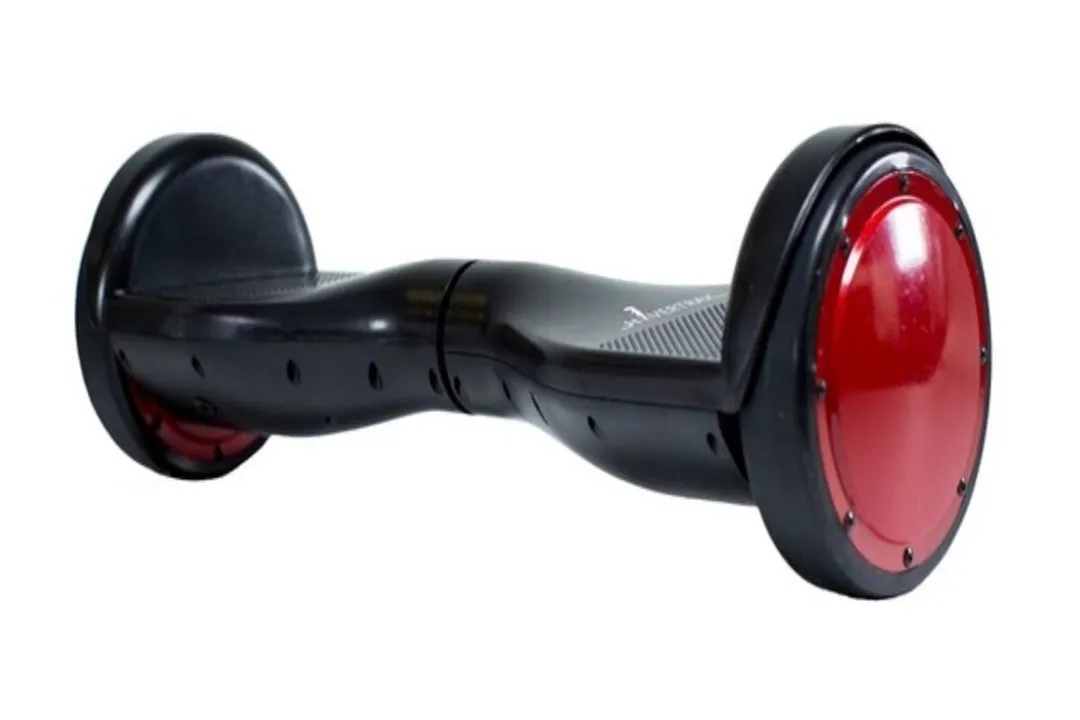
The story of the "hoverboard" is less about a single flash of futuristic inspiration and more about a focused technical development that rapidly devolved into a global intellectual property nightmare. While many people associate the term with the levitating footwear seen in Back to the Future Part II, the personal mobility device that captured the world’s imagination in the mid-2010s—the two-wheeled, self-balancing scooter—owes its existence to one inventor: Shane Chen. [2][6]
Chen, an inventor based in the Pacific Northwest, is credited with creating the original self-balancing board, which he named the Hovertrax. [4][6] This device is the direct technological ancestor of nearly every product subsequently sold under the colloquial name "hoverboard". [4] The process of innovation often involves taking existing principles—in this case, gyroscopic balancing—and applying them to create a viable consumer product, which is exactly what Chen achieved with his design through his company, Inventist. [4]
# Inventor Identified
Shane Chen is the recognized innovator behind the device that became the modern hoverboard phenomenon. [6] His work focused on creating a practical, portable means of personal transportation that relied on internal sensors to keep the rider upright. [4] This was not merely a conceptual drawing; Chen successfully engineered a functional prototype that demonstrated the necessary two-wheel, tilt-based locomotion. [4] The success of his invention, however, did not immediately translate into control over its production or distribution.
The specific product that Chen patented was the Hovertrax. [4] It utilized the same core technology that allowed the subsequent influx of look-alike devices to function: two wheels mounted on pivoting platforms connected by a central axle, all managed by an internal gyroscope system. [4][5] This foundational design represented a significant leap in personal mobility technology that was accessible to the average consumer, unlike earlier, larger, or more complex levitation concepts. [5]
# The Hovertrax Design
The Hovertrax, as described by Chen's company, Inventist, was engineered to be a self-balancing scooter. [4] It relies on the user shifting their weight to control movement, a mechanism requiring precise sensor input to maintain stability. [4] While the public quickly adopted the much simpler, catchier name "hoverboard," Chen's actual invention was fundamentally different from the movie version that actually hovered above the ground. [2] This semantic confusion is crucial to understanding the subsequent market chaos. [2] The reality is that Chen created an electric skateboard with integrated self-balancing technology, not a device that defied gravity in the traditional sense. [2]
Considering the timeline, many similar concepts or prototypes might have existed globally, as balancing technology itself is not new. [9] However, the specific configuration that exploded in popularity—the compact, two-wheeled platform—is tied directly to Chen’s patented engineering. [6] One perspective on its development suggests that various inventors were working on self-balancing concepts, often related to Segways or unicycles, but Chen streamlined and miniaturized the concept into the dual-footpad format that took over retail shelves. [5][9]

# Patent Battles Lost
The true tragedy of the hoverboard story, as far as Shane Chen is concerned, lies in the immediate and overwhelming piracy of his design. [2][6] Chen held the patent for the self-balancing scooter technology. [6] When the Hovertrax started gaining traction, it triggered an immediate response from overseas manufacturers. [2] These knockoffs flooded the market, often at significantly lower prices, because they bypassed the research and development costs borne by Inventist. [2]
It is reported that Chen lost millions of dollars due to these infringements. [6] The ease with which Chinese manufacturers could copy the design, sometimes creating near-identical units, meant that the global market was quickly saturated with unauthorized versions. [2] For an inventor whose proprietary technology became a worldwide sensation virtually overnight, the ability to defend that intellectual property proved to be an immense, and ultimately losing, battle. [2][6] The sheer volume of counterfeit goods often overwhelmed legal challenges, rendering patent enforcement exceptionally difficult on an international scale. [2]
This situation highlights a recurring challenge for independent inventors operating in rapidly developing technological fields. While they secure the core innovation, they often lack the massive legal and logistical infrastructure required to stop mass-produced copies once the product gains mainstream exposure. [2]
# Market Chaos
The influx of unapproved boards created more than just a financial problem for Chen; it created a public safety crisis. [6] Because the counterfeit units were produced cheaply, they often cut corners on critical components, most notably the lithium-ion batteries. [6] This resulted in numerous highly publicized incidents involving battery fires and explosions. [6]
These safety failures stained the reputation of the entire product category. It is fascinating to observe how quickly the public perception shifted from "amazing new personal transport" to "dangerous fire hazard," largely due to the compromised quality of the copycat versions. [6] While the original Hovertrax was designed with safety standards in mind, the copycats did not adhere to those same rigorous testing protocols. [6]
To illustrate the difference in manufacturing focus, consider a simplified comparison between the patented original and the common counterfeit:
| Feature | Patented Hovertrax (Inventist) | Generic Counterfeit |
|---|---|---|
| Design Origin | Direct intellectual property of Shane Chen | Direct copy of patented design |
| Battery Quality | Adhered to specified safety standards | Often used cheaper, substandard cells |
| Market Price | Higher (R&D costs included) | Significantly lower (costs cut) |
| Initial Public Image | Innovative personal mobility | Rapidly became associated with fire risk |
This breakdown shows that the primary driver for the product's negative press wasn't the concept of the self-balancing scooter itself, but the unregulated execution of the concept by unauthorized entities. [6]
# Nomenclature Evolution
The term used to describe these devices offers an interesting case study in popular linguistics overriding technical accuracy. The public called them hoverboards because the name was catchy and referenced established science fiction. [2] For the general consumer, the name stuck immediately, irrespective of the technical reality that the board was rolling on wheels rather than gliding on an air cushion. [2]
This disconnect between the name (hoverboard) and the function (self-balancing scooter) meant that the inventor, Shane Chen, was often fighting a battle on two fronts: defending his patent against infringers and correcting the public understanding of his invention. [2] When news outlets reported on the fires, they used the universally recognized term, effectively attributing the failures of the counterfeit products to the idea of the hoverboard, an idea whose tangible realization was Chen's work. [6] This linguistic phenomenon effectively diluted the recognition of the original inventor amid the noise of the market explosion.
It is noteworthy that while the initial massive hype cycle faded somewhat after the safety scares, the underlying technology itself did not disappear. Instead, it matured. Many companies, including those that initially produced cheap knockoffs, refined their internal components and adopted better safety certifications. This maturation is a testament to the fundamental viability of Chen's core mechanism—it proved itself worthy of industry improvement, even if the initial rollout was chaotic. [5] The technology evolved into more stable forms, like single-wheel electric unicycles or more sophisticated, safer two-wheeled versions, all built upon the foundation laid by the original self-balancing concept that Chen championed. [5]
In summary, while the concept of personal levitation has been dreamed about for decades, the first person to successfully engineer and patent the device that the world universally recognized and purchased as the "hoverboard" was Shane Chen with his Hovertrax design. [4][6] His experience underscores the intense difficulties faced by innovators when their creations achieve runaway commercial success before adequate legal defenses can be established globally. [2]
#Videos
Inside the Mind of Shane Chen: The Creator of the Hoverboard
Shane Chen, inventor of the hoverboard, on creating the first 2 ...
Related Questions
#Citations
Shane Chen - Wikipedia
The inventor of the hoverboard says he's made no money from it
Inside the Mind of Shane Chen: The Creator of the Hoverboard
Original Hoverboard - Inventist
The History and Emergence of Hoverboards - hyper gogo
The U.S. Patent System Is Broken, Says The Inventor Of ... - Forbes
Who created the hoverboard? - Quora
How the hoverboard was created - Witness History - Apple Podcasts
Who invented "hoverboard"? PatentYogi Research finds out the ...